

Benefits of Eco-Friendly Handbags: Complete Guide
Did you know that one eco-friendly handbag can prevent hundreds of plastic bags from entering landfills? As awareness of fashion’s environmental footprint grows, consumers are rethinking what sustainability really means in everyday accessories. By choosing bags crafted from plant-based alternatives, recycled materials, and ethical processes, people are shaping a more responsible future for style. Discover how eco-friendly handbags blend modern design, lasting quality, and real environmental impact without sacrificing personal taste.
Key Takeaways
| Point | Details |
|---|---|
| Sustainable Materials | Eco-friendly handbags utilize renewable and recycled materials, promoting minimal environmental impact compared to traditional leather and synthetic options. |
| Ethical Production | Opting for these handbags supports fair-trade practices and ethical labor, ensuring transparency throughout the manufacturing process. |
| Environmental Benefits | These accessories significantly reduce plastic waste and carbon footprint, contributing to a circular economy and promoting long-term sustainability. |
| Style and Durability | Eco-friendly handbags combine aesthetic appeal with high durability, proving that sustainable choices can also meet modern consumer demands for style and function. |
Table of Contents
- Eco-Friendly Handbags Defined And Debunked
- Types Of Eco-Friendly Handbag Materials
- Sustainability And Environmental Impact Explained
- Style, Durability, And Practical Features
- Comparing Eco-Friendly And Traditional Handbags
- Ethical, Financial, And Lifestyle Advantages
Eco-Friendly Handbags Defined and Debunked
Eco-friendly handbags represent a transformative approach to fashion accessories that prioritise sustainability, ethical production, and environmental consciousness. According to research from The Guardian, these accessories go beyond traditional manufacturing by emphasising natural fibers like organic cotton, linen, and certified wool over petroleum-based synthetic materials.
The core characteristics of genuine eco-friendly handbags include several critical elements:
- Made from sustainable, renewable materials
- Produced using minimal environmental impact processes
- Crafted with ethical labour practices
- Designed for extended durability and reduced waste
- Easily recyclable or biodegradable
Consumers must be particularly cautious about greenwashing, a marketing technique where brands misleadingly present products as more environmentally friendly than they truly are. According to the Consumer Energy Center, authentic eco-friendly handbags substantively reduce carbon footprint by repurposing waste materials like recycled plastics and minimising demand for new raw resources. This approach not only conserves natural resources but also supports a circular economy where materials are continuously reused and regenerated.
Types of Eco-Friendly Handbag Materials
Eco-friendly handbag materials represent a revolutionary approach to sustainable fashion, offering innovative alternatives that significantly reduce environmental impact. According to Eco Bag Supply, these materials range from recycled polyester (rPET) to natural fibres, each providing unique benefits in durability, water resistance, and carbon footprint reduction.
Key sustainable materials for handbags include:
- Recycled Polyester (rPET): Transformed from plastic bottles, offering water-resistance
- Organic Cotton: Grown without harmful pesticides, reducing environmental damage
- Canvas: Often created from recycled textile blends
-
Natural Plant Leathers: Innovative alternatives made from:
- Apple leather
- Cactus leather
- Mushroom leather
As Vayu Earth highlights, emerging plant-based leather alternatives provide cruelty-free, biodegradable options that challenge traditional leather production. These materials not only minimise environmental harm but also introduce exciting textile innovations that appeal to environmentally conscious consumers seeking stylish, responsible accessories.

Sustainability and Environmental Impact Explained
Eco-friendly handbags represent a critical solution to the growing environmental challenges posed by traditional fashion accessories. According to Adams Carry Bags, these sustainable accessories play a pivotal role in reducing plastic pollution while supporting a circular economy by minimising single-use waste and promoting long-term reuse.
The environmental benefits of eco-friendly handbags are substantial and far-reaching:
- Dramatically reduces plastic waste
- Requires less energy to manufacture
- Decomposes without toxic residues
- Can eliminate hundreds of disposable bags annually
- Supports sustainable production practices
Research from Ravi Art reveals that a single reusable handbag can prevent potentially hundreds of single-use plastic bags from entering landfills and marine ecosystems. By choosing eco-friendly materials and design approaches, consumers directly contribute to reducing carbon emissions, protecting wildlife habitats, and promoting a more sustainable fashion ecosystem that values long-term environmental preservation over short-term convenience.
Style, Durability, and Practical Features
Eco-friendly handbags break the misconception that sustainable fashion compromises style or functionality. According to The Guardian, consumers are increasingly encouraged to invest in high-quality, versatile accessories made from certified sustainable materials that offer both aesthetic appeal and long-lasting performance.
Key practical features of eco-friendly handbags include:
- Enhanced durability compared to traditional designs
- Versatile carrying capacities
- Resistance to wear and tear
- Multiple compartment configurations
- Lightweight yet robust construction
Research from Eco Bag Supply highlights that materials like canvas, organic cotton, and recycled polyester provide exceptional strength and practicality. These innovative textiles not only support environmental sustainability but also deliver sophisticated designs that meet the demanding needs of modern consumers who refuse to compromise between ethical choices and personal style. The result is a handbag that looks great, performs brilliantly, and makes a positive statement about environmental responsibility.
Comparing Eco-Friendly and Traditional Handbags
The landscape of handbag production reveals stark differences between traditional and eco-friendly approaches. According to the Consumer Energy Center, sustainable handbags represent a transformative alternative to conventional manufacturing methods, fundamentally challenging resource-intensive production processes that have long dominated the fashion industry.
Key comparative differences include:
-
Environmental Impact:
- Eco-friendly: Minimal carbon footprint
- Traditional: High resource consumption
-
Material Sourcing:
- Eco-friendly: Renewable, recycled materials
- Traditional: Non-renewable petroleum-based materials
-
Manufacturing Ethics:
- Eco-friendly: Transparent, fair labour practices
- Traditional: Often opaque supply chains
Research from Adams Carry Bags emphasises that eco-friendly handbags offer superior long-term value. They not only reduce plastic pollution and support sustainable lifestyles but also provide remarkable durability that challenges the disposable nature of traditional handbag production. By choosing eco-friendly alternatives, consumers make a direct investment in both personal style and global environmental preservation.
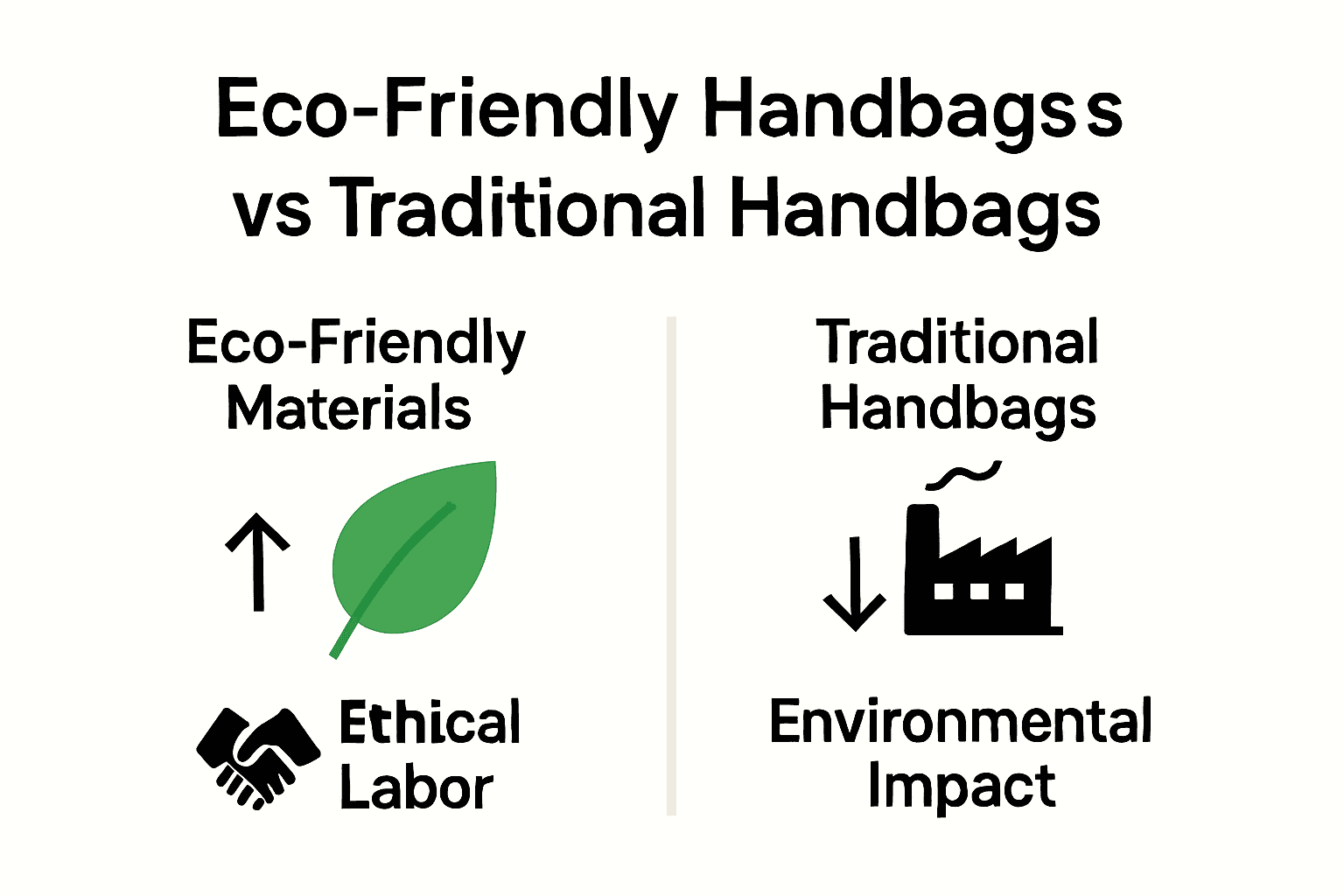
Here’s a comparison of eco-friendly and traditional handbags:
| Feature | Eco-Friendly Handbags | Traditional Handbags |
|---|---|---|
| Materials | Renewable Recycled |
Petroleum-based Non-renewable |
| Environmental Impact | Low carbon footprint | High resource use |
| Labour Practices | Ethical Transparent |
Often opaque |
| Durability | Long-lasting Resistant |
Varies Often less durable |
| End of Life | Recyclable Biodegradable |
Hard to recycle Slow to decompose |
Ethical, Financial, and Lifestyle Advantages
Eco-friendly handbags represent more than just a fashion choice—they embody a comprehensive lifestyle philosophy that intersects ethical consumption, financial wisdom, and personal values. According to the Consumer Energy Center, these sustainable accessories actively support fair-trade practices and artisan communities, creating meaningful economic opportunities while preserving traditional craftsmanship.
Key lifestyle advantages include:
-
Ethical Impact:
- Supports fair-trade production
- Reinvests in local artisan communities
- Promotes transparent manufacturing processes
-
Financial Benefits:
- Higher durability reduces long-term replacement costs
- Versatile designs offer multiple styling options
- Lower environmental maintenance expenses
-
Personal Expression:
- Reflects individual environmental commitment
- Unique, handcrafted design aesthetics
- Demonstrates conscious consumer values
Research from Adams Carry Bags emphasises that choosing eco-friendly handbags creates a visible statement of sustainable consumerism. By making this choice, individuals don’t just purchase an accessory—they actively participate in a global movement promoting environmental responsibility, ethical production, and mindful consumption.
Step Into Sustainable Style With Real Eco-Friendly Handbags
Tired of questioning whether your accessories truly match your values or simply fall into the trap of greenwashing? The article above highlights the frustration many feel when traditional handbags fail on sustainability, durability, and ethics. At The Cork Store, we solve this problem by offering authentic eco-friendly handbags crafted from cork—a renewable, cruelty-free material that is both stylish and hard-wearing. Our handbags uphold the very qualities you value: minimal environmental impact, ethical sourcing, and unique designs that last.
Explore our exclusive range of vegan cork handbags and accessories and see how every detail is tailored to support your eco-conscious lifestyle. Make your next purchase meaningful. Choose one of our standout pieces that blends fashion with responsibility. Visit The Cork Store online to discover the difference today and join a growing movement for real change in sustainable fashion.
Frequently Asked Questions
What materials are commonly used in eco-friendly handbags?
Eco-friendly handbags are often made from sustainable materials such as recycled polyester, organic cotton, natural plant leathers (like apple and cactus leather), and canvas. These materials help reduce the environmental impact of fashion accessories.
How do eco-friendly handbags compare to traditional handbags in terms of durability?
Eco-friendly handbags generally offer enhanced durability compared to traditional handbags. They are crafted from high-quality materials that resist wear and tear, leading to a longer lifespan and reduced need for replacements.
What are the environmental benefits of using eco-friendly handbags?
Using eco-friendly handbags helps minimize plastic pollution, requires less energy for production, and decreases overall resource consumption. These handbags can prevent hundreds of single-use plastic bags from entering landfills and ecosystems, promoting a more sustainable fashion industry.
How do eco-friendly handbags support ethical labor practices?
Eco-friendly handbags are often produced using transparent and fair labor practices, supporting artisan communities and promoting sustainable production processes. This ensures that workers are treated ethically and fairly throughout the manufacturing process.