
Cork Leather Handbags: Why Construction Matters as Much as Cork
Cork leather handbags are a genuinely strong choice for anyone who wants a vegan, lightweight accessory with real sustainability credentials. The material holds up well when it is built on a durable backing, and small care habits keep it looking sharp for years. Below, we cover styles, durability, cleaning, pricing and origin, plus the sustainability case for cork, so you can shop with confidence.
TL;DR:
- Check backing, lining, hardware, and strap anchors before buying; reinforced edges and visible stitching reveal more about lifespan than cork surface descriptions.
- For routine cleaning, use mild soap and lukewarm water on a damp cloth, blot immediately, and air dry away from sunlight and heat.
- Avoid soaking, machine washing, bleach, and strong solvents because they can weaken the adhesive bond, causing the cork surface to lift or crack.
- Cork oak bark can be harvested every nine to fourteen years without felling trees, but synthetic backings or coatings can limit a finished bag’s biodegradability.
Table of Contents
- What cork leather handbags are and the styles you can buy
- Durability and construction: what determines a cork bag’s lifespan
- How to clean and care for a cork handbag
- Price ranges and origin: what affects cost
- The sustainability case for cork
- Warranty, returns and customer service for cork handbags
- Why cork earns a place in a considered wardrobe
- Shop The Cork Store: collections to start with
- FAQ
- Sources
What cork leather handbags are and the styles you can buy
Cork leather is a thin layer of natural cork bonded to a textile backing, usually cotton or polyester, then finished to feel supple and hold its shape. It is vegan by default: there is no animal hide involved, and the surface material comes from tree bark rather than livestock.
You will find cork handbags in most of the shapes you already know from traditional leather goods, each suited to a different routine:
- Crossbody bags for errands and travel days when you want your hands free.
- Totes for work or daily carry, with enough structure for a laptop or folders.
- Backpacks for commuting or weekend trips, especially where comfort over distance matters.
- Clutches for evenings out, where the cork’s texture adds visual interest without extra weight.
Material variants change the look and feel. Natural cork has a soft, flecked texture and a warm tan colour; printed cork takes on patterns and brighter shades without losing the surface grain; cotton or cork blends can shift the hand-feel towards something closer to canvas while keeping the cork’s water-repellent qualities.
Before buying, check the product page for four details: the backing material, the interior lining, the hardware finish, and how the strap attaches to the body. These four points tell you more about how the bag will wear than any description of “genuine cork” alone.
Durability and construction: what determines a cork bag’s lifespan
Cork’s appeal starts with suberin, the waxy substance in its cell walls that makes the material lightweight, compressible and naturally water-repellent, as detailed in Harvard’s Arnold Arboretum overview of cork structure. That combination is rare: most materials trade weight for strength, but cork’s cellular structure gives it both resilience and a soft hand-feel.
Textile research backs this up at the fabric level. A 2024 study on cotton-cork blended fabric found that a 90:10 cotton-cork blend showed superior breaking force compared with 100% cotton, along with acceptable laundering behaviour. For handbags, that suggests a well-made cork composite can match or exceed the tensile performance of comparable fabric-based alternatives, provided the construction around it is sound.
That construction is where quality actually gets decided. The backing material, the adhesive bonding cork to that backing, seam reinforcement at stress points, and the hardware anchoring the strap all matter more than the cork surface itself. A composite material fails first at its weakest joint, not across its face.

When you are reading a listing rather than holding the bag, zoom into the photos. Look for double-folded edges, visible stitching at strap anchors, and a backing fabric mentioned by name rather than left vague. Those details are a reliable proxy for how the bag will behave after months of actual use.
How to clean and care for a cork handbag
Cork handles daily life well, but a few habits keep it in good shape. Avoid prolonged exposure to moisture, keep the bag away from direct heat such as radiators or car dashboards, and store it in a dust bag or pillowcase when not in use.
For routine cleaning, follow these steps:
- Mix a small amount of mild soap with lukewarm water.
- Dampen a soft cloth, never the bag itself, and wipe the surface in gentle circular motions.
- Use a second, dry cloth to blot away excess moisture immediately.
- Leave the bag to air-dry away from direct sunlight or heat.
Avoid bleach, strong solvents and machine washing altogether. These can break down the adhesive bond between the cork layer and its backing, causing the surface to lift or crack. Our guide to cleaning cork handbags naturally and our step-by-step cork bag cleaning walkthrough both expand on this with troubleshooting for specific marks.
Pro Tip: For a stubborn stain, dab a drop of neutral cooking oil onto a cotton pad and test it on a hidden seam first before treating the mark itself.
Price ranges and origin: what affects cost
Quality cork handbags tend to sit in an accessible price bracket, positioned between budget synthetic bags and premium leather goods. What pushes the price up within that bracket is size, the amount of hardware, and whether details like stitching and trims are handcrafted rather than machine finished.
Portugal is referenced constantly in cork sourcing because it holds the largest cork oak forest area in the world, alongside Spain, and supports an established processing industry, as noted in the Arnold Arboretum’s cork research. A “Portuguese cork” claim on a listing is usually a genuine origin marker rather than marketing gloss, though it is worth checking whether the claim covers the raw cork, the finishing, or both.
To compare value across listings, read past the price tag to the construction notes: backing fabric, lining, and hardware description tell you more about what you are actually paying for than the number alone.
The sustainability case for cork
Cork’s environmental appeal rests on how it is harvested. Bark is stripped from the cork oak (Quercus suber) without felling the tree, and the same tree can be harvested repeatedly across its life, with intervals commonly falling between 9 and 14 years according to research on cork oak debarking schedules. The tree survives, regrows its bark, and keeps contributing to the forest it stands in.
Those forests do real ecological and economic work. Cork oak landscapes across the Mediterranean support rural livelihoods tied to harvesting and processing, and industry reporting from Amorim’s sustainability materials describes cork as fully natural, recyclable and reusable at end-of-life. Our own guide to cork’s sustainability benefits goes further into the material’s lifecycle.
That said, the backing and coatings added to make cork wearable as a bag can shift the overall picture. A cork surface bonded to a synthetic laminate behaves differently at end-of-life than one bonded to cotton, so it is worth checking what sits behind the cork before assuming the whole bag is as biodegradable as the surface suggests. If sourcing verification matters to you generally, it is worth knowing what to ask before buying any animal-free material, cork included.

Warranty, returns and customer service for cork handbags
Cork handbags are a textile composite, not a single sheet of leather, so the terms attached to a purchase matter as much as the material itself. Reputable retailers publish clear return windows, state whether a bag can be exchanged if the colour or size does not suit once it arrives, and explain who covers postage on a return.
Customer service quality shows up most when something goes wrong early, such as a strap anchor loosening within the first few uses. Look for a retailer that lists a direct contact method, states its return address plainly, and backs its bags with photos and descriptions detailed enough that what arrives matches what you saw online. Our own product care guides sit alongside our listings so you can check maintenance expectations before you buy, not after a problem appears.
Before ordering, read the returns policy in full, note any time limit on claims, and keep your confirmation email until the bag has had a fair trial run. A retailer confident in its construction will rarely make that process difficult.
Why cork earns a place in a considered wardrobe
Cork gets dismissed sometimes as a novelty material, something closer to a cork noticeboard than a handbag. That reputation is outdated. The real gap in the market is not durability, which the textile research on cork composites supports reasonably well, but construction transparency: too many listings describe “cork leather” without saying a word about the backing, the lining, or how the strap is attached.
My own view, having followed cork accessories for a while, is that buyers underestimate how much the backing fabric determines a bag’s actual lifespan, while overestimating how fragile the cork surface itself is. Cork is sturdier than its soft texture suggests. The weak point is almost always a glued seam or a thin strap anchor, not the cork layer wearing through.
If you want one piece of advice that cuts through the marketing language, it is this: read the construction details before the colour description. Cork rewards buyers who check the build, and the comparisons to traditional leather hold up far better than the material’s reputation suggests, especially once you factor in that cork sheds no animal welfare questions and carries a renewable harvest cycle that leather simply cannot match.
— Aaron
Shop The Cork Store: collections to start with
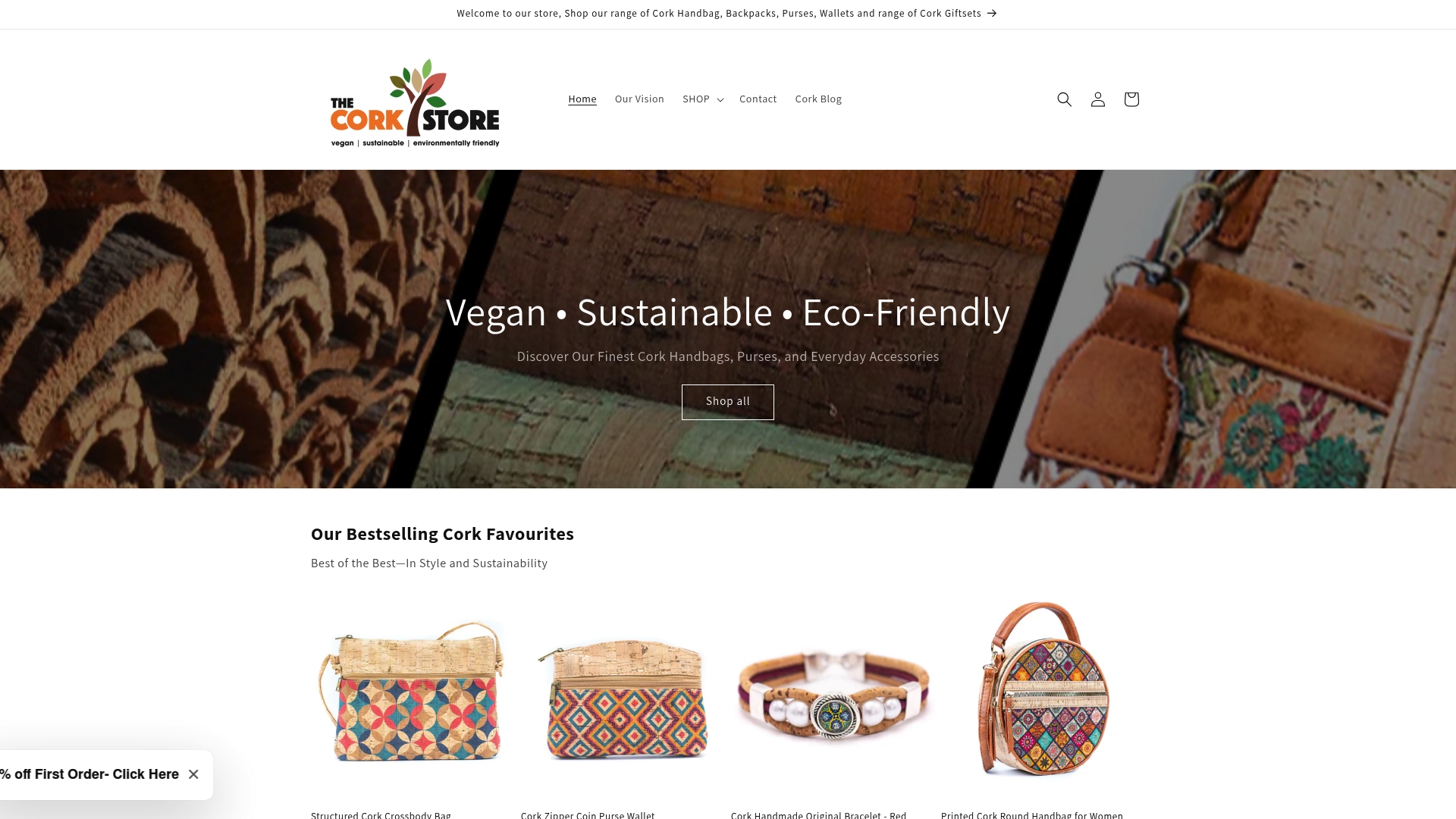
The range is curated around details such as backing quality, lining, hardware and cork sourcing to help buyers avoid guessing from product photos alone. Our collections cover crossbody bags, totes and everyday handbags alongside structured options like our women’s cork backpacks for travel and commuting.
If you are starting small, our Marine Cork Wallet is a practical way to try the material before committing to a full-size bag. Whatever you choose, check the listed measurements against what you actually carry day to day, and keep our care guide close by once your bag arrives.
FAQ
What are the top UK handbag brands for cork and vegan leather?
The UK vegan handbag market includes a mix of dedicated cork specialists and broader sustainable fashion labels, with retailers like The Cork Store focusing specifically on curated, verified cork accessories. Look for retailers that state their cork’s origin and backing material clearly rather than using “vegan leather” as a vague catch-all term.
How durable are cork handbags compared with traditional leather?
Cork’s cellular structure makes it naturally lightweight, compressible and water-repellent, and textile testing on cotton-cork blends has shown superior breaking force compared with cotton alone. Real-world durability depends heavily on the backing fabric, adhesive quality and seam construction rather than the cork surface itself.
Is cork 100% natural?
Cork bark itself is a fully natural, biodegradable material harvested from the cork oak without felling the tree, as described in research on cork’s structure and properties. A finished handbag, however, is usually a composite of cork bonded to a backing fabric, so the bag as a whole is only as natural as its weakest layer.
How do you wash a cork bag without damaging it?
Clean a cork bag with a soft cloth dampened in mild soap and lukewarm water, then blot dry immediately and air-dry away from heat or direct sun. Never machine wash, soak or use bleach, since prolonged moisture and harsh solvents can weaken the adhesive bond between the cork and its backing.
Sources
- Cork structure, properties and applications (Arnold Arboretum / Harvard)
- Cotton–cork blended fabric: an innovative and sustainable apparel textile (MDPI, 2024)
- Optimizing the debarking and cutting schedule of cork oak stands (Annals of Forest Science, 2018)
- Sustainable by nature (Amorim - sustainability report, 2026)