

Eco-Friendly Wardrobe Guide for a Stylish Vegan Look
Finding accessories that blend true style with compassion often means questioning the contents of your own wardrobe. For women who care as much about the planet as they do about fashion, building a collection of cruelty-free and vegan pieces is more than a trend—it is a conscious lifestyle shift. Starting with a thoughtful wardrobe audit can reveal hidden eco-potential and help you shape choices that are both ethical and undeniably stylish.
Table of Contents
- Step 1: Assess Your Existing Wardrobe For Eco Potential
- Step 2: Research Sustainable Materials And Labels
- Step 3: Select Vegan Accessories To Elevate Your Style
- Step 4: Prioritise Quality Over Quantity In New Choices
- Step 5: Verify Eco Credentials Before Purchasing
Quick Summary
| Main Insight | Detailed Explanation |
|---|---|
| 1. Conduct a wardrobe audit | Sort items into keep, donate, and repurpose to evaluate sustainability and consumption patterns effectively. |
| 2. Research eco-labels thoroughly | Familiarise yourself with recognised sustainability certifications to ensure your purchases are genuinely eco-friendly. |
| 3. Choose high-quality, versatile pieces | Invest in timeless garments and accessories that are durable, repairable, and reduce waste while enhancing personal style. |
| 4. Verify eco credentials before buying | Scrutinise product certifications and look beyond marketing claims to ensure brands operate sustainably and ethically. |
| 5. Maintain a digital inventory | Track clothing wear frequency digitally to make more informed and mindful future fashion purchases. |
Step 1: Assess your existing wardrobe for eco potential
Assessing your wardrobe’s sustainability potential represents the critical first stage in creating an environmentally conscious fashion collection. By carefully evaluating what you already own, you can make informed decisions about reducing waste and developing a more sustainable personal style.
Begin by removing every item from your wardrobe and creating three distinct sorting piles - keep, donate, and repurpose. This methodical approach allows you to critically examine clothing sustainability and understand your current consumption patterns. Consider the following key assessment criteria:
- Frequency of wear in past 12 months
- Current clothing condition
- Versatility of individual pieces
- Material composition
- Potential for repair or styling modification
Focus on identifying high-quality, timeless items that transcend seasonal trends. Versatile pieces that can be mixed and matched represent the foundation of an eco-friendly wardrobe. Analyse each garment’s potential for continued use, repair, or creative reimagining.
A thoughtful wardrobe audit can reduce clothing waste by up to 40% and significantly minimise your environmental footprint.
Pro tip: Keep a detailed digital inventory of your clothing items to track wear frequency and make more mindful future purchasing decisions.

Step 2: Research sustainable materials and labels
Researching sustainable materials and labels is crucial for building an environmentally responsible wardrobe. Understanding the complex landscape of eco-friendly fashion requires a systematic approach to identifying genuine, credible sustainability credentials.
Start by familiarising yourself with internationally recognised eco-label verification standards that provide transparent insights into material origins and production practices. Key certifications to investigate include:
- Global Organic Textile Standard (GOTS)
- Global Recycled Standard (GRS)
- Fair Trade Certified
- Bluesign certification
- Cradle to Cradle certification
Each certification represents a different aspect of sustainability, ranging from organic farming practices to worker welfare and environmental impact. Look for third-party verification that demonstrates rigorous assessment of manufacturing processes, material sourcing, and ecological considerations.
To help differentiate sustainability certifications, here is a comparison of their focus and main benefits:
| Certification | Primary Focus | Main Benefits |
|---|---|---|
| GOTS | Organic textiles | Reduces harmful chemicals |
| GRS | Recycled materials | Supports circular economy |
| Fair Trade | Worker welfare | Ensures ethical labour |
| Bluesign | Chemical safety | Minimises toxic residues |
| Cradle to Cradle | Lifecycle sustainability | Promotes full recyclability |
Not all eco-labels are created equal - understanding their specific criteria is essential for making informed fashion choices.
Pro tip: Create a digital reference folder with screenshots of legitimate sustainability certifications to quickly verify claims while shopping.
Step 3: Select vegan accessories to elevate your style
Selecting vegan accessories allows you to create a compassionate and stylish wardrobe that reflects your ethical values. By choosing cruelty-free fashion items, you can make a powerful statement about sustainability and personal style.
When curating your vegan accessories collection, prioritise materials and brands that demonstrate genuine commitment to animal welfare and environmental responsibility. Look for alternatives crafted from innovative, plant-based materials such as:
- Cork leather
- Piñatex (pineapple leaf leather)
- Recycled polyester
- Apple leather
- Hemp fabrics
- Organic cotton
Focus on versatile, high-quality pieces that can be mixed and matched across multiple outfits. Pay attention to craftsmanship, durability, and the overall aesthetic that complements your personal style. Vegan handbag options range from minimalist designs to bold statement pieces, ensuring you can find accessories that truly represent your unique fashion sensibility.
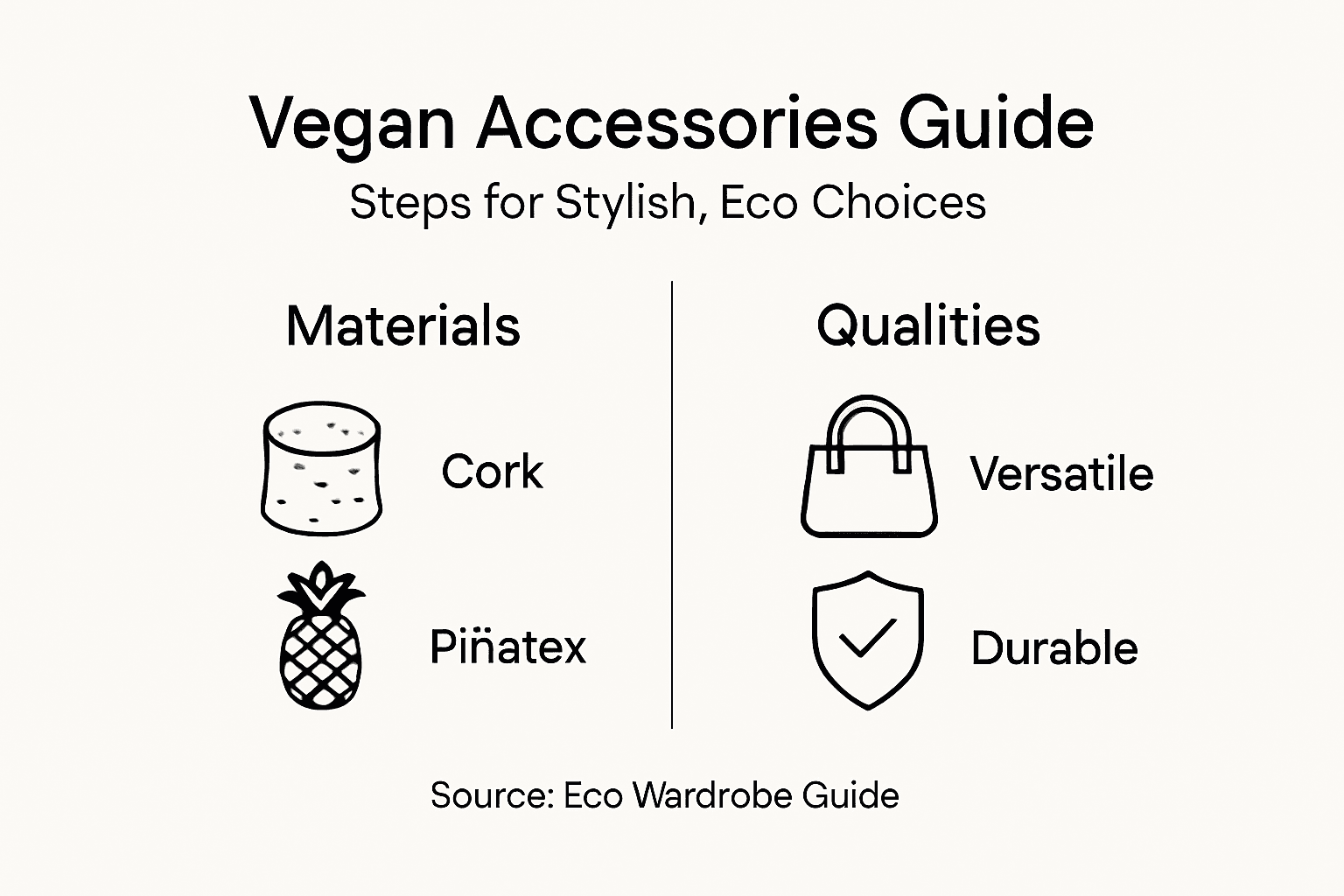
Here is a side-by-side overview of innovative vegan accessory materials and their eco advantages:
| Material | Source | Sustainability Benefit |
|---|---|---|
| Cork leather | Cork oak trees | Renewable and biodegradable |
| Piñatex | Pineapple leaves | Utilises agricultural waste |
| Apple leather | Apple industry leftovers | Reduces food waste |
| Hemp fabric | Hemp plant | Low water, fast growth |
| Recycled polyester | PET plastic bottles | Diverts plastic from landfill |
Ethical fashion is not about compromise - it’s about making informed choices that align with your values while looking absolutely stunning.
Pro tip: Invest in neutral-toned vegan accessories that can seamlessly transition between different outfits and occasions.
Step 4: Prioritise quality over quantity in new choices
Transitioning to a sustainable wardrobe requires a fundamental shift from impulsive purchasing to mindful consumption. By prioritising quality over quantity, you can create a more intentional and environmentally responsible fashion approach that celebrates craftsmanship and longevity.
Sustainable consumer behaviour research demonstrates the significant environmental impact of choosing well-made garments. When selecting new items, consider these critical evaluation criteria:
- Fabric durability and composition
- Manufacturing transparency
- Versatility across multiple outfits
- Repair and maintenance potential
- Long-term wear potential
- Timeless design aesthetic
Focus on investment pieces that transcend seasonal trends. High-quality vegan accessories and clothing might have a higher initial cost, but they ultimately reduce waste, minimise your carbon footprint, and provide superior long-term value. Examine stitching, material integrity, and construction details carefully before making purchasing decisions.
Quality is not about expense - it’s about making conscious choices that respect both the planet and your personal style.
Pro tip: Develop a cost-per-wear mindset by calculating an item’s value based on anticipated usage rather than its upfront price.
Step 5: Verify eco credentials before purchasing
Verifying eco credentials is crucial in ensuring your fashion choices genuinely contribute to environmental sustainability. Consumer awareness plays a pivotal role in supporting genuine ethical fashion practices and preventing greenwashing.
Sustainability certification organizations provide essential frameworks for identifying truly responsible fashion products. When evaluating potential purchases, look for these key certification indicators:
- Global Organic Textile Standard (GOTS)
- Global Recycled Standard (GRS)
- Fair Trade certification
- B Corp verification
- Bluesign certification
- Responsible Wool Standard
Develop a systematic approach to scrutinising product credentials. This means looking beyond surface-level marketing claims and examining detailed documentation about material sourcing, manufacturing processes, and environmental impact. Authentic sustainable brands will transparently share information about their production methods, supply chain ethics, and ecological commitments.
Not all eco-labels are created equal - critical evaluation is your most powerful tool in sustainable fashion.
Pro tip: Create a digital reference folder with screenshots of legitimate sustainability certifications to quickly verify claims while shopping online.
Elevate Your Eco-Friendly Wardrobe with Stylish Vegan Cork Accessories
Building an eco-conscious wardrobe can feel challenging when you want to prioritise quality, sustainability and cruelty-free choices. This guide highlights the importance of selecting vegan accessories with verified eco credentials that reflect your ethical values while enhancing your unique style. At The Cork Store you will discover a curated range of durable, eco-friendly cork handbags, wallets and backpacks designed to complement your commitment to mindful fashion choices.
Make a positive impact today by investing in timeless cruelty-free accessories that align with your personal style and help reduce environmental waste. Explore the full collection at https://thecorkstore.co.uk and embrace sustainable fashion with innovative materials like cork leather. Discover how consciously chosen accessories can elevate your wardrobe’s versatility and longevity, reinforcing your commitment to ethical fashion with every purchase.
Frequently Asked Questions
How can I assess the sustainability potential of my wardrobe?
To assess the sustainability potential of your wardrobe, evaluate each item based on its wear frequency, condition, versatility, and material composition. Start by sorting your clothes into three piles: keep, donate, and repurpose to make informed decisions about what to retain and what to eliminate.
What should I consider when choosing sustainable materials for new clothing?
When choosing sustainable materials for new clothing, look for certifications like Global Organic Textile Standard (GOTS) and Fair Trade Certified to ensure ethical sourcing and production. Familiarise yourself with these standards to make informed purchasing decisions and support genuine sustainable practices.
What types of vegan accessories should I include in my wardrobe?
Include vegan accessories made from innovative materials such as cork leather, Piñatex, and recycled polyester for a stylish and ethical look. Focus on versatile pieces that can be worn with multiple outfits, helping you minimise waste and maximise your fashion options.
How do I prioritise quality over quantity when building my wardrobe?
Prioritising quality over quantity means selecting clothing and accessories based on durability, versatility, and timeless design rather than impulse buys. Aim for investment pieces that can be worn over several years, reducing waste and your overall environmental impact by promoting sustainable consumption.
How can I verify the eco credentials of clothing before purchasing?
To verify the eco credentials of clothing, examine product labels for certifications like Bluesign and Responsible Wool Standard. Develop a habit of scrutinising these credentials to ensure the products you choose genuinely adhere to ethical and sustainable practices, enhancing your confidence in your fashion choices.