

Essential Cork Product Care Tips for Lasting Style
Finding stylish, vegan cork accessories that meet British and European sustainability standards is easier than ever, yet caring for these natural treasures often gets overlooked. Cork’s unique cellular structure makes it durable, but only if treated thoughtfully. With eco-friendly cleaning routines and smart storage solutions, you can extend the lifespan of your favourite pieces while reducing waste. Discover practical ways to keep your cork accessories looking their best for years to come.
Table of Contents
- Step 1: Prepare Your Cork Accessories For Care
- Step 2: Clean Surfaces Using Gentle Techniques
- Step 3: Remove Stains With Safe, Natural Solutions
- Step 4: Condition Cork To Preserve Flexibility
- Step 5: Check Quality And Store Accessories Correctly
Quick Summary
| Essential Insight | Insight Explanation |
|---|---|
| 1. Use gentle cleaning methods | Clean cork accessories with soft materials and mild soap, avoiding any harsh chemicals to maintain their integrity. |
| 2. Test cleaning solutions first | Always test any cleaning product on a small, hidden area before applying it to the entire accessory. |
| 3. Condition cork regularly | Apply organic jojoba oil or beeswax once or twice a year to preserve the cork’s flexibility and durability. |
| 4. Store in a cool, dry place | Store cork accessories in a breathable fabric bag, away from sunlight and moisture to avoid damage. |
| 5. Inspect for damage routinely | Regularly check for signs of wear or discolouration to ensure the longevity of your cork accessories. |
Step 1: Prepare your cork accessories for care
Preparing your cork accessories for ongoing care begins with understanding the delicate nature of this sustainable material. Cork requires thoughtful handling to preserve its unique cellular structure and maintain its natural beauty. Cork’s complex cellular composition, which includes suberin, lignin, and polysaccharides, provides remarkable durability when treated correctly.
Initial preparation involves creating a gentle cleaning and maintenance routine that respects the material’s inherent properties. Start by examining your cork accessory carefully, noting any areas of potential wear or dirt accumulation. Gather soft microfibre cloths, lukewarm water, and a mild soap specifically suitable for natural materials. Avoid harsh chemicals or abrasive cleaning tools that might damage the cork’s delicate surface.
Practitioner Advice: Always test any cleaning method on a small, inconspicuous area of your cork accessory first to ensure it responds well to the treatment.
Here is a quick reference for recommended tools and products for cork accessory care:
| Item Type | Recommended Option | Why It Matters |
|---|---|---|
| Cleaning Cloth | Soft microfibre | Prevents surface abrasion |
| Cleaning Solution | Mild, natural soap | Maintains cork’s composition |
| Stain Remover | Baking soda paste | Lifts stains gently |
| Conditioning Oil | Organic jojoba oil | Preserves flexibility |
| Storage Cover | Breathable fabric bag | Avoids trapped moisture |
Step 2: Clean surfaces using gentle techniques
Cleaning your cork accessories requires a delicate approach that preserves the material’s natural integrity and aesthetic appeal. Sustainable practices in cork maintenance emphasise using minimal moisture and non-aggressive cleaning methods to protect the accessory’s unique characteristics.
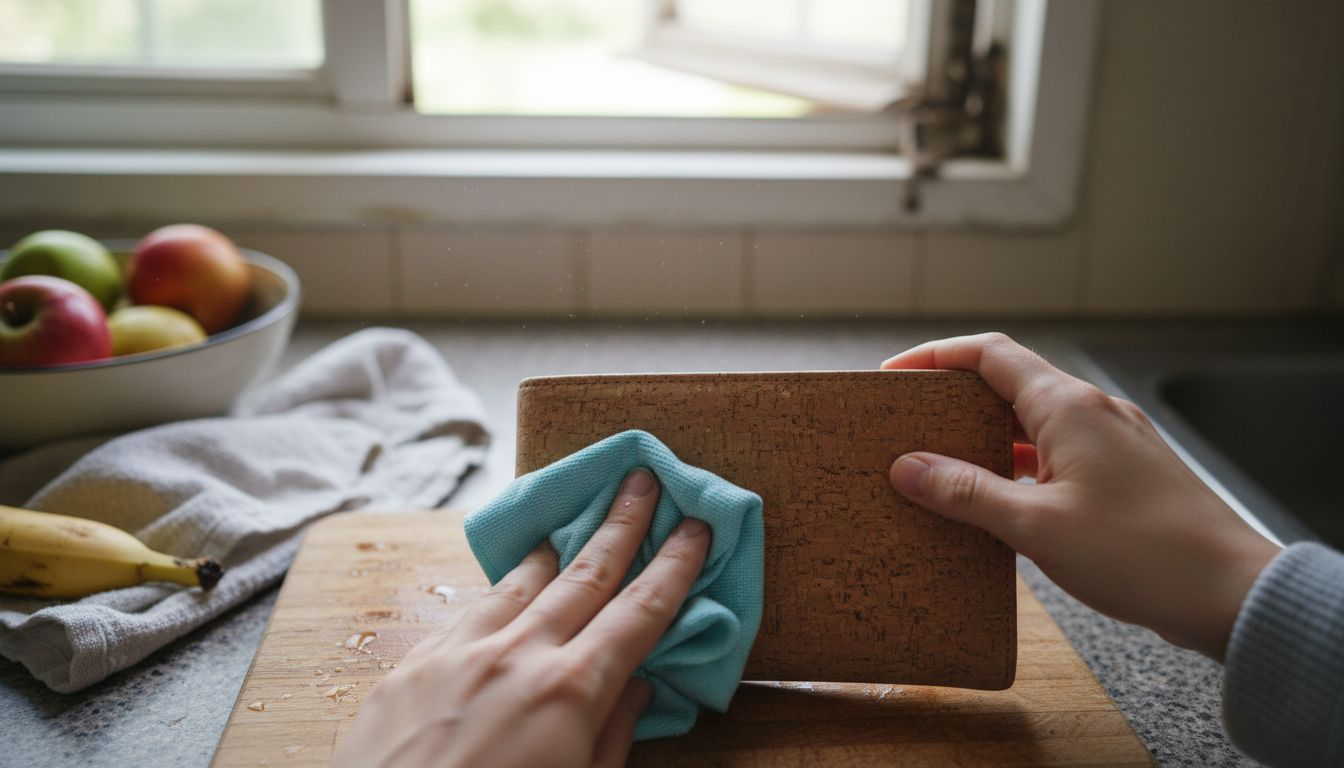
Begin by selecting a soft microfibre cloth or a gentle brush with soft bristles. Lightly dampen the cloth with lukewarm water mixed with a tiny amount of mild soap specifically designed for natural materials. Gently wipe the surface in smooth motions, avoiding excessive pressure that might damage the cork’s delicate cellular structure. For stubborn dirt, use light circular motions and rinse the cloth frequently to prevent dirt redistribution.
Practitioner Advice: When cleaning cork accessories, always work in a well-ventilated area and allow the item to air dry naturally at room temperature to maintain its structural integrity.
Step 3: Remove stains with safe, natural solutions
Tackling stains on your cork accessories requires a gentle yet effective approach that preserves the material’s natural beauty and integrity. The chemical composition of cork suggests using natural, non-aggressive cleaning solutions to maintain its unique characteristics.
For light stains, create a gentle cleaning paste by mixing baking soda with a small amount of water until it forms a smooth consistency. Apply the paste carefully to the stained area using a soft cloth, using light circular motions. For more stubborn marks, diluted white vinegar can be an excellent natural solution. Always work with minimal moisture and avoid saturating the cork surface. Gently dab the stain rather than rubbing aggressively, which could damage the delicate cork fibres.
Practitioner Advice: Test any cleaning solution on a small hidden area first to ensure it does not alter the cork’s colour or texture.
Step 4: Condition cork to preserve flexibility
Cork accessories require thoughtful conditioning to maintain their unique texture and resilience over time. Cork’s mechanical flexibility depends on carefully managed conditioning protocols that protect its natural cellular structure and prevent premature ageing.
Begin by selecting a high-quality natural conditioning oil specifically designed for cork products. Organic jojoba oil or pure beeswax work exceptionally well for maintaining cork’s inherent elasticity. Apply a small amount using a soft microfibre cloth, working the oil gently into the material using light circular motions. Ensure even coverage without saturating the surface, allowing the cork to absorb the conditioning treatment naturally. Focus on areas that experience the most friction or potential stress, such as handles, corners, and folding points.
Practitioner Advice: Apply conditioner sparingly and infrequently one to two times per year to prevent oversaturation and maintain your cork accessory’s natural protective qualities.
Compare the effects of common cork conditioning materials on durability and appearance:
| Conditioner Type | Durability Impact | Visual Result |
|---|---|---|
| Organic jojoba oil | Sustains elasticity | Matte, natural finish |
| Pure beeswax | Enhances protection | Slight sheen, golden hue |
| Synthetic products | May degrade cork | Unnatural shine |
Step 5: Check quality and store accessories correctly
Maintaining the longevity of your cork accessories requires consistent quality checks and strategic storage practices. Proper storage and quality assurance involves controlling environmental factors that protect the material’s natural integrity and aesthetic appeal.
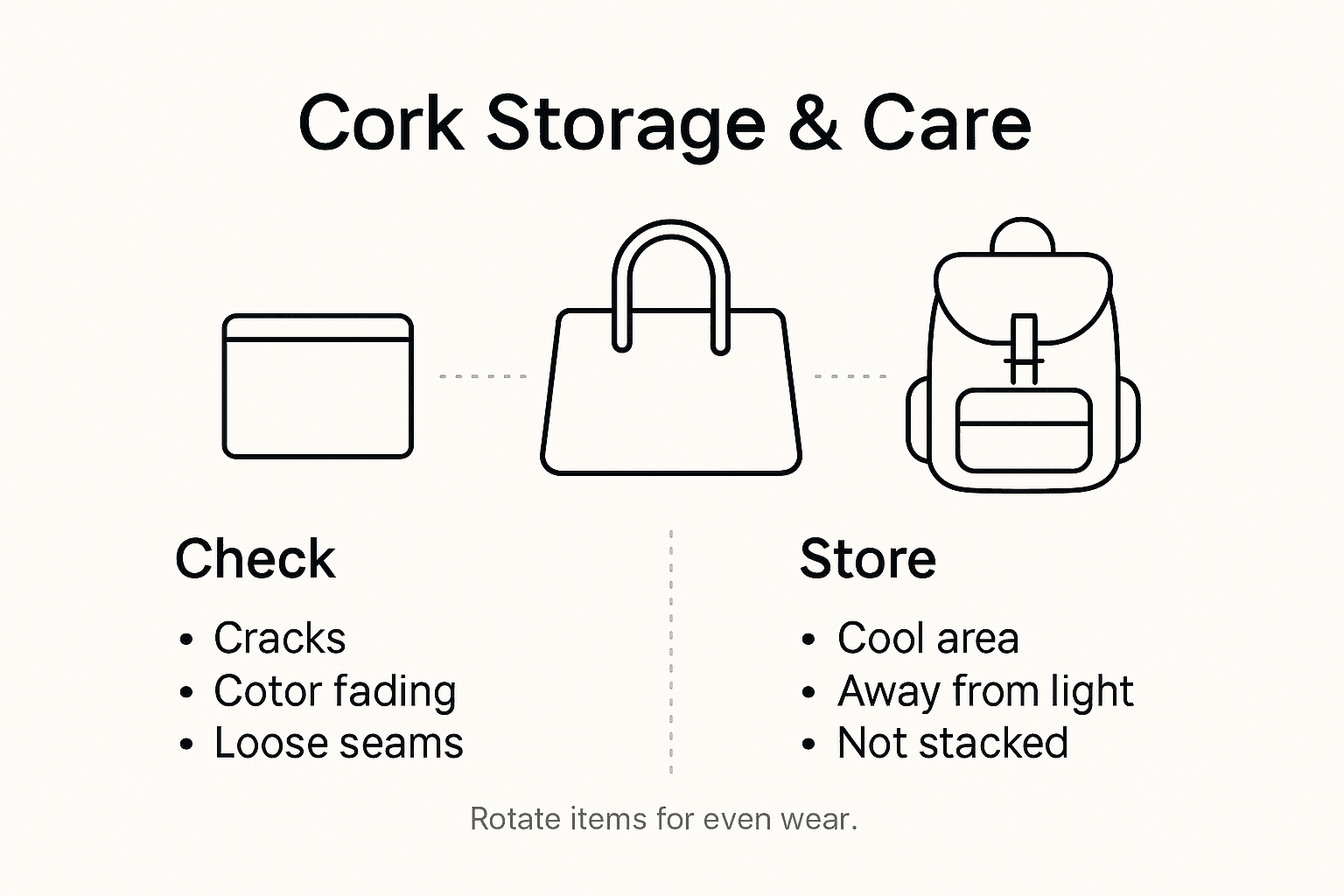
Begin by carefully examining your cork accessory for any signs of wear, including subtle cracking, discolouration, or loss of flexibility. Look closely at stress points such as handles, corners, and folding areas. When storing, choose a cool, dry location away from direct sunlight and extreme temperature fluctuations. Use a breathable fabric dust bag or a soft cotton pillowcase to protect the accessory, ensuring it is stored flat or loosely structured to prevent permanent deformation. Avoid plastic containers, which can trap moisture and potentially damage the cork’s natural cellular structure.
Practitioner Advice: Rotate your cork accessories periodically during storage to prevent uneven wear and maintain their shape, keeping them looking fresh and pristine.
Keep Your Cork Accessories Beautiful with Expert Care and Sustainable Style
Caring for your cork accessories means preserving the delicate cellular structure that gives these eco-friendly products their lasting charm and flexibility. If you want to avoid common problems like cracking, discolouration, or loss of flexibility highlighted in the article, choosing properly crafted items and knowing how to maintain them is essential. From gentle cleaning methods to natural conditioning, your cork pieces deserve thoughtful treatment that extends their life and style.
Explore our curated collection of premium vegan cork handbags, wallets, and backpacks at The Cork Store. Each product is designed with sustainability and durability in mind, ensuring you receive accessories that marry ethical fashion with lasting quality. Start your journey to sustainable style today by visiting The Cork Store and discover how easy it is to protect your investment with expert tips and eco-conscious accessory choices.
Frequently Asked Questions
How should I prepare my cork accessories for ongoing care?
To prepare your cork accessories for ongoing care, start by examining them for any signs of wear or dirt. Gather a soft microfibre cloth, lukewarm water, and mild soap formulated for natural materials, and always test cleaning methods on a small area first.
What is the best way to clean cork surfaces without damaging them?
The best way to clean cork surfaces is to use a soft microfibre cloth lightly dampened with lukewarm water and a small amount of mild soap. Wipe gently in smooth motions and avoid excessive pressure to maintain the cork’s integrity; allow the accessory to air dry naturally afterwards.
How can I safely remove stains from my cork accessories?
To safely remove stains, create a paste from baking soda and water for light stains, and apply it using a soft cloth. For stubborn stains, dab with diluted white vinegar, ensuring you use minimal moisture to protect the delicate cork fibres.
How often should I condition my cork accessories, and what should I use?
You should condition your cork accessories one to two times per year using a high-quality natural conditioning oil, such as organic jojoba oil. Apply it sparingly, focusing on areas that experience the most friction to preserve flexibility without oversaturation.
What steps should I take to store my cork accessories properly?
To store your cork accessories properly, examine them for signs of wear and choose a cool, dry place away from direct sunlight. Use a breathable fabric dust bag for protection and store them flat or loosely to prevent deformation.
Recommended
- How to Care for Cork Products Naturally: Step-by-Step Guide – The Cork Store
- How to Care for Cork Accessories for Long-lasting Beauty – The Cork Store
- Cork Accessory Maintenance Guide for Durable Vegan Style – The Cork Store
- How to Maintain Cork Backpacks Naturally for Longevity – The Cork Store
- Remy Hair Care Tutorial for Luscious Extensions UK