

7 Core Dimensions That Define Sustainable Fashion for Shoppers
Sustainable fashion means designing, making and using clothing in ways that cut environmental harm and protect the people who make it, across the whole life of a garment from raw material to disposal. It draws on circular economy principles set out by the Ellen MacArthur Foundation, the consumption research published by UNEP and decent work standards from the ILO. Brands such as The Cork Store, which builds accessories from cork rather than leather or virgin synthetics, offer one working example of the idea in practice.
TL;DR:
- Manufacturing processes should prioritize cleaner dyeing, finishing, and energy use, alongside choosing materials that support longevity and recyclability.
- Reducing overall consumption, extending garment lifespan through repair or resale, and discouraging fast sales cycles are essential to minimizing environmental harm.
- Verifiable traceability, transparency, and cautious assessment of certifications are key to distinguishing credible sustainable fashion from greenwashing claims.
- Selection of materials like cork, which is biodegradable, sustainably harvested, and durable, exemplifies eco-friendly innovation aligned with lifecycle principles.
- Daily wardrobe choices should focus on repairing existing clothing, opting for second-hand options, and prioritizing durable items to achieve realistic progress.
Table of Contents
- What sustainable fashion means: the seven core dimensions
- Why sustainable fashion matters: environmental and social impacts
- Fast fashion vs sustainable fashion: practical contrasts
- Lifecycle principles and practical practices from design to end-of-life
- How to spot credible sustainable fashion and avoid greenwashing
- The Cork Store: cork as a low-impact, vegan material
- Realistic priorities for everyday wardrobes
- A gentle, honest option: browse The Cork Store’s cork accessories
- Sources
- FAQ
What sustainable fashion means: the seven core dimensions
Academic research on the topic breaks the concept into measurable parts rather than leaving it as a vague aspiration. A review published in MDPI identifies seven dimensions that together define what “sustainable” should mean when applied to clothing.
- Reduced environmental impact: lower carbon, water and chemical footprints across production.
- Environmentally friendly manufacturing: cleaner dyeing, finishing and energy use in factories.
- Fair trade and decent work: wages, safety and rights for the people making the garments.
- Organic materials: fibres grown without synthetic pesticides or excessive irrigation.
- Second-hand consumption: extending a garment’s life through resale rather than replacement.
- Design for longevity: construction and styling meant to survive years, not one season.
- Recycled materials: fibres or components recovered from existing textiles or waste streams.
These dimensions overlap with related terms that often get used loosely. Ethical fashion usually refers narrowly to labour conditions and animal welfare, slow fashion describes a pace and volume of production deliberately kept below the fast-fashion norm, and circular fashion focuses specifically on keeping materials in use through reuse, repair and recycling rather than landfill. Sustainable fashion is the broader umbrella that draws all three together.
What ties the dimensions together is lifecycle thinking: the idea that a garment’s impact cannot be judged at any single point. A shirt made from organic cotton but discarded after three wears may do more harm than a synthetic one worn for five years. Production matters, but so does how long an item stays in use and what happens when it is finally discarded. That is why the Ellen MacArthur Foundation’s work on fashion and textiles frames circularity around eliminating waste from the outset, keeping products and materials circulating at their highest value, and regenerating natural systems rather than depleting them.
Why sustainable fashion matters: environmental and social impacts
The case for change rests on two connected problems: what the industry takes from the environment and what it demands from the people inside its supply chains. On the environmental side, synthetic fibres shed microplastics during washing and wear, garments that are discarded quickly add to landfill volumes, and production processes draw heavily on water and energy. The Ellen MacArthur Foundation’s deep dive into fashion and the circular economy notes that even recycled synthetic fibres can still shed microfibres, meaning material substitution on its own does not solve the pollution problem.
UNEP has flagged that slowing the pace of production and keeping garments in use for longer, through repair, reuse and rental, sits at the centre of any credible response to fashion’s environmental toll. Its analysis of overconsumption around Black Friday argues that recycling and eco-fabrics help, but they cannot replace an actual reduction in how much gets bought and thrown away in the first place. Promotional cycles built around constant discounting push volumes up rather than down, which works against every other environmental gain a brand might claim.
The social dimension is just as central, even though it gets less attention in marketing. The ILO’s research on decent work in textile and clothing supply chains argues that fair wages and safe working conditions are not an optional add-on to sustainability but one of its non-negotiable pillars. A garment cannot reasonably be called sustainable if the people who cut, sewed and dyed it were paid unfairly or worked in unsafe conditions, however low its carbon footprint. Overproduction and low prices at the shop till are usually connected to pressure lower down the chain, which is why environmental and social claims need to be read together rather than separately.

Fast fashion vs sustainable fashion: practical contrasts
The clearest way to understand sustainable fashion is to see what it is reacting against. Fast fashion is built on speed, volume and disposability, while sustainable approaches slow each of those down deliberately.
- Speed and design intent: fast fashion cycles new styles weekly to chase trends, while sustainable brands design fewer styles meant to last across seasons.
- Material lifecycle: synthetic microfibres from polyester and nylon shed into waterways with every wash, whereas natural or recycled fibres tend to break down or can be recovered more cleanly at end of life.
- Business model: fast fashion relies on constant promotions and single-use purchasing habits, while circular models built around resale, rental and repair aim to keep the same garment in use for multiple owners.
- Waste handling: fast fashion garments are often discarded within a year, while durable pieces are designed to be repaired rather than replaced.
None of these contrasts are absolute categories. A brand can sit anywhere on the spectrum, which is why the specific practices behind a label matter more than the label itself.
Lifecycle principles and practical practices from design to end-of-life
Turning sustainability from a concept into a product requires decisions at every stage, not just a single “eco” material swap.
- Design for longevity and repairability, choosing construction methods and stitching that can be repaired rather than discarded when they fail.
- Select materials with lifecycle caveats in mind, since even recycled polyester can shed microfibres, as the Ellen MacArthur Foundation notes, so material choice needs to sit alongside durability, not replace it.
- Manage manufacturing chemicals and energy use, favouring cleaner dyeing and finishing processes over the cheapest available option.
- Build for recyclability at end of life, using fewer mixed-fibre blends so garments can eventually be broken down and remade.
- Support resale, rental and repair channels, extending each garment’s working life well beyond its first owner.
Pro Tip: Before buying anything new, check whether the item can realistically be repaired: a loose stitch you can fix yourself is a small sign of a garment built to last.
The Ellen MacArthur Foundation’s circular economy growth research is explicit that these levers work together rather than in isolation: eliminating waste at the design stage, keeping materials circulating at high value, and regenerating natural systems all depend on the same underlying habit of designing things to be used for longer and recovered properly afterwards. Fibre-to-fibre recycling, where an old garment becomes the raw material for a new one, remains limited by blended fabrics and collection infrastructure, which is part of why reducing consumption in the first place still does more good than recycling alone.
How to spot credible sustainable fashion and avoid greenwashing
Claims are cheap to print on a label and expensive to verify, so a working checklist matters more than any single word on a swing tag.
- Look for traceability, meaning the brand can name where materials were grown or sourced and which suppliers made the garment, rather than vague references to “responsible sourcing”.
- Treat certifications as a starting point, not a guarantee, since third-party standards vary in scope and none of them cover every environmental or social issue at once.
- Ask direct questions, such as what percentage of a collection uses the claimed material and how that figure was calculated.
- Watch for vague or unverifiable language, including terms like “eco-friendly” or “green” used without any supporting detail.
- Prioritise the purchase itself, choosing repair or second-hand first, and reserving new purchases for genuinely durable items.
Granular supplier disclosure, tracked across multiple tiers of the supply chain rather than a single brand statement, is emerging as one of the more reliable ways to verify sustainability claims, according to the Ellen MacArthur Foundation’s work on circular economy trends. A brand willing to publish that level of detail is telling you something a certification logo alone cannot.
The Cork Store: cork as a low-impact, vegan material
Cork illustrates several of the lifecycle principles above in a single material. It is harvested from the bark of the cork oak without felling the tree, the bark regenerates over time, and processing into sheet material requires comparatively little chemical treatment. The result is a naturally biodegradable material that also holds up well to daily wear, which matters more for real-world impact than the fibre choice alone.
Practitioners increasingly note that the single most effective consumer choice is to increase the number of wears per garment: durability and emotional longevity can outperform low-impact fibre choices in real-world impact terms.
For shoppers, the lesson from cork applies beyond cork itself: check how a material is sourced, how it is processed, and whether the finished item is built to be used for years rather than one season.
Realistic priorities for everyday wardrobes
Perfection is not the point, and chasing it usually leads nowhere. Repair what you already own, buy second-hand where you can, and pick durable pieces when you do buy new. Budget and availability will always limit choices, and that is fine: consistent, imperfect progress beats an all-or-nothing standard nobody can sustain.
— Aaron
A gentle, honest option: browse The Cork Store’s cork accessories
If durability and vegan materials matter to you, The Cork Store sells handbags, backpacks, wallets and gift sets made from cork, built as a cruelty-free alternative to leather that fits the design-for-longevity thinking covered above.
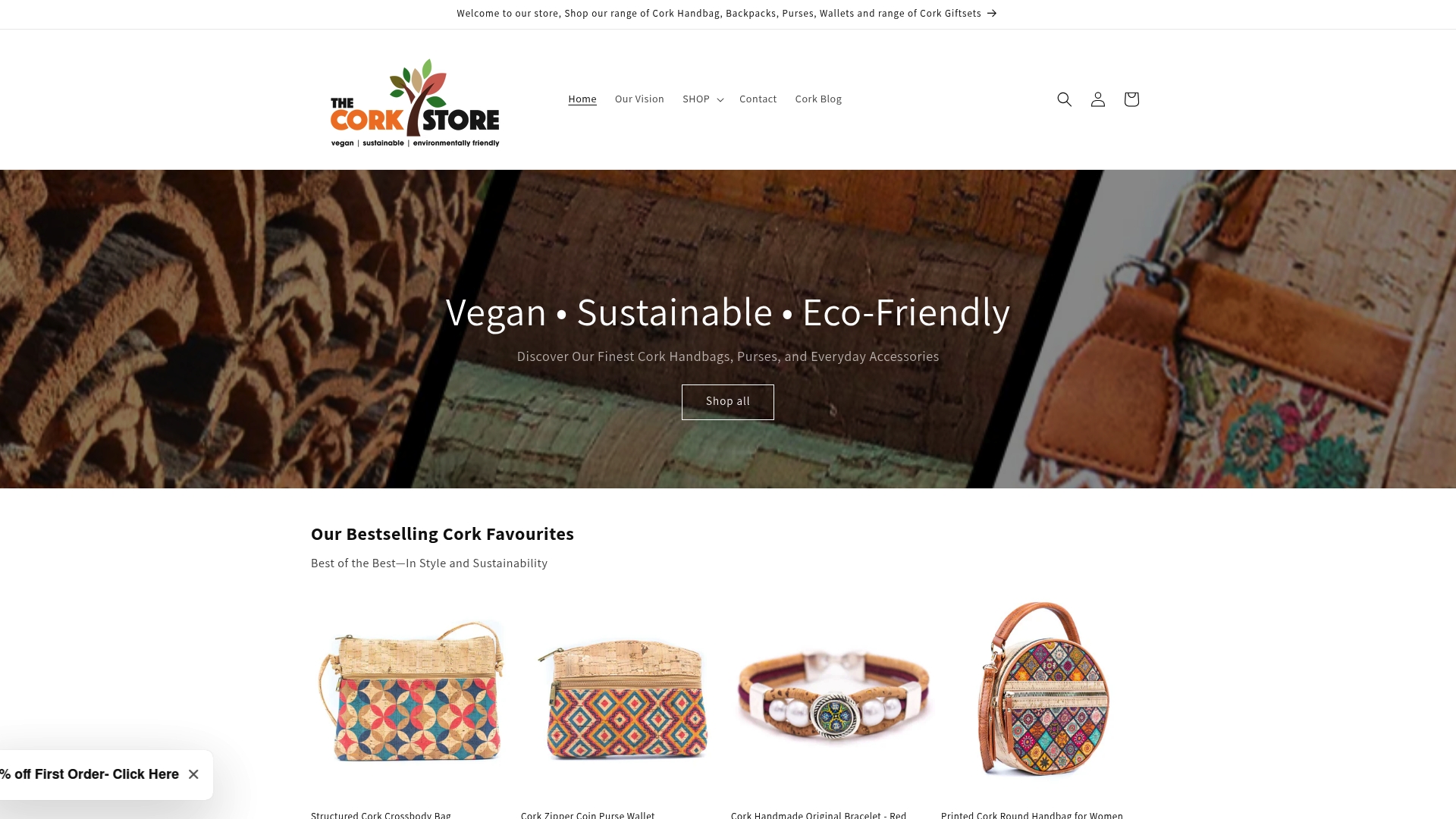
Browse the full cork accessories range to see which piece suits your wardrobe.
Sources
- Sustainable Fashion: Conceptualization, Purchase Determinants, and Willingness to Pay More (MDPI)
- Circular economy growth potential by sector: Fashion and textiles (Ellen MacArthur Foundation)
- As Black Friday looms, some in the fashion industry take aim at overconsumption (UNEP)
- Advancing decent work in supply chains: Challenges and opportunities (ILO)
- Fashion and the circular economy: deep dive (Ellen MacArthur Foundation)
FAQ
Can you give me an example of sustainable fashion?
A garment made from a responsibly sourced, durable material such as cork, organic cotton or recycled fibre, designed to be repaired and worn for years, is a practical example. Buying second-hand or renting for a one-off occasion instead of buying new also counts as a sustainable fashion choice.
Is Zara sustainable fashion?
Large fast-fashion retailers typically operate on rapid design cycles and high production volumes, which sits in tension with the slower, lower-volume approach that sustainability research associates with reduced environmental impact. Judging any specific retailer requires checking its published material sourcing, supply-chain transparency and production pace against the dimensions covered above rather than relying on marketing claims alone.
What is the best definition of sustainable?
In fashion, the most widely used definition combines reduced environmental impact, fair labour conditions and design that extends a garment’s useful life, drawing on the seven dimensions identified in academic research. It is best understood through lifecycle thinking: judging a product across its production, use and end-of-life rather than by a single material or claim.
What are the 7 forms of sustainable fashion?
The seven dimensions identified in MDPI’s review of sustainable fashion are reduced environmental impact, environmentally friendly manufacturing, fair trade and decent work, organic materials, second-hand consumption, design for longevity, and use of recycled materials. Together they give a fuller picture of sustainability than any single material or label can.