

Why Cork Is Durable: Complete Guide to Its Longevity
Did you know that cork forests absorb up to 14 million tons of CO2 each year? This remarkable material goes far beyond wine stoppers, challenging old myths about durability and luxury. More people are choosing cork fabric for its eco-friendly origins, unique appearance, and surprising strength. If you care about sustainability without sacrificing style, cork offers an impressive balance of function and responsibility that might just change the way you think about textiles.
Key Takeaways
| Point | Details |
|---|---|
| Sustainable Alternative | Cork leather presents an eco-friendly alternative to conventional leather, made from the bark of cork oak trees without harming the trees. |
| Unique Properties | Its cellular structure provides exceptional durability, water resistance, elasticity, and fire-retardant characteristics. |
| Versatile Applications | Cork fabric is being used in various sustainable fashion items, from accessories to upholstery, combining functionality with environmental responsibility. |
| Comparative Advantages | Compared to animal and synthetic leathers, cork leather is biodegradable, lightweight, hypoallergenic, and requires no animal harm in production. |
Table of Contents
- Defining Cork And Common Misconceptions
- Unique Structure: The Secret To Cork’s Durability
- Why Cork Resists Wear And Tear
- Real-World Applications In Sustainable Fashion
- Comparing Cork To Leather And Other Materials
Defining Cork and Common Misconceptions
Cork represents a fascinating natural material that challenges many traditional perceptions about sustainable textiles. Cork leather is a remarkable plant-based alternative derived from the bark of cork oak trees, offering an eco-friendly solution that breaks away from conventional leather production methods. According to research from Wikipedia, this innovative material is composed primarily of suberin (around 40%), along with lignin, polysaccharides, and other extractable compounds, creating a unique cellular structure that provides exceptional properties.
Unlike synthetic leather alternatives, cork leather stands out for its environmentally conscious production process. As research indicates, its manufacturing involves no toxic chemicals or pollution, making it an attractive option for eco-conscious consumers. The material’s distinctive cellular structure features gas-filled, pentagonal or hexagonal cells that contribute remarkable characteristics:
- Impermeability: Resists water and moisture
- Elasticity: Maintains shape and flexibility
- Buoyancy: Lightweight and adaptable
- Fire-retardant properties: Enhanced safety profile
Many people mistakenly believe cork leather is less durable compared to animal leather. While there might be some truth to reduced longevity, the material compensates through its sustainable production, minimal environmental impact, and unique aesthetic appeal. Cork leather represents not just a material, but a statement of ethical consumption and environmental responsibility.
Unique Structure: The Secret to Cork’s Durability
Cork’s cellular structure is nature’s ingenious design for resilience and durability. According to research from Wikipedia, this remarkable material features thin walls composed of lignin, suberin, waxes, and polysaccharides that enclose gas-filled cells, creating a unique architectural framework that defies traditional material expectations. These microscopic cells function like miniature shock absorbers, enabling cork to recover instantly after compression and maintain an extraordinary near-zero Poisson’s ratio.
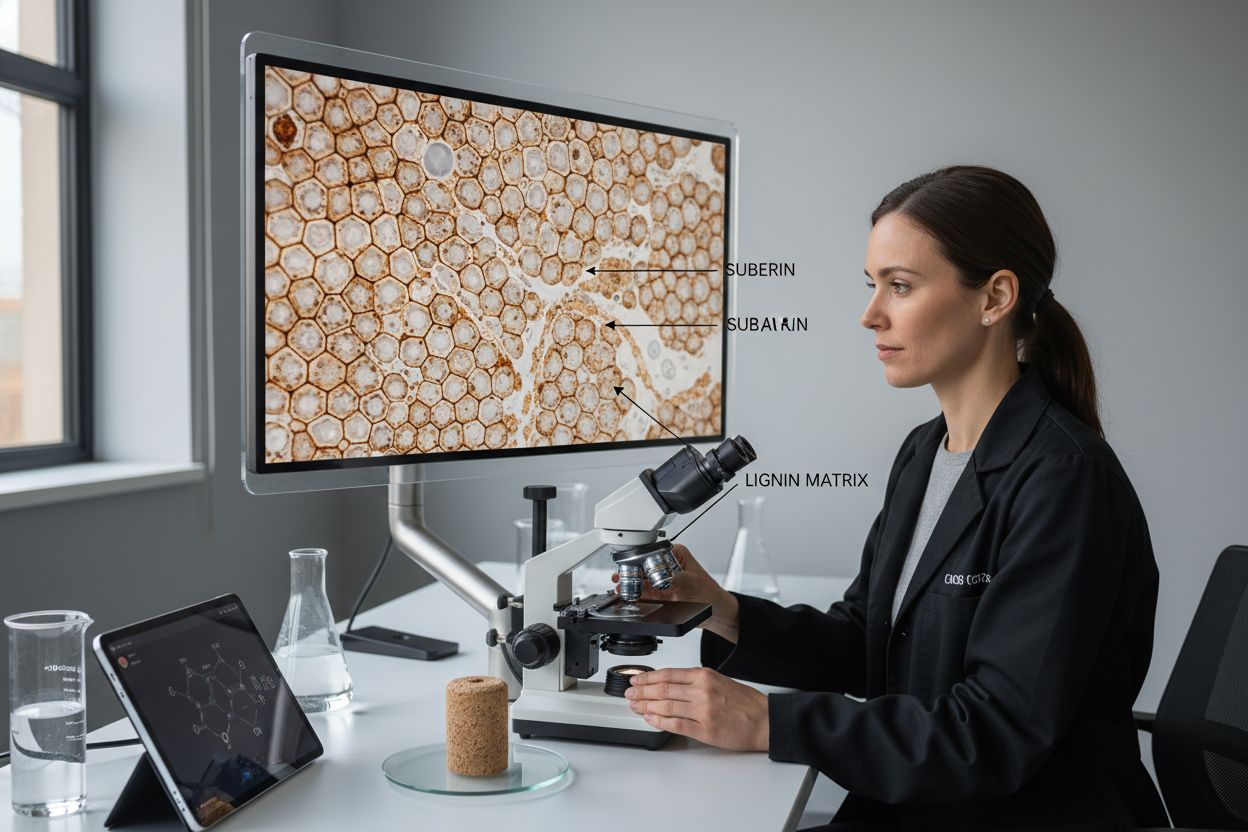
The extraordinary durability stems from cork’s distinctive chemical composition. As studies from the Natural Cork Council indicate, the material is predominantly made of suberin and lignin, two highly hydrophobic compounds that contribute significantly to its structural integrity. These components provide remarkable protective qualities:
- High tensile strength: Resists stretching and breaking
- Superior abrasion resistance: Withstands frequent use
- Low permeability: Blocks water and air infiltration
- Incredible resilience: Returns to original shape after pressure
What makes cork truly exceptional is its ability to function like a living system. The gas-filled cellular structure acts as natural padding, absorbing impacts and recovering instantaneously. This means your cork accessories won’t just look good - they’ll maintain their shape, texture, and performance over years of use. From handbags to wallets, cork’s unique molecular architecture ensures that each item is not just a fashion statement, but a testament to intelligent, sustainable design.
Why Cork Resists Wear and Tear
Cork fabric represents a revolutionary material that defies traditional expectations about durability. According to research from the Natural Cork Council, laminated cork demonstrates exceptional resistance to damage, outperforming many conventional materials in critical areas of wear and tear. Its unique structure allows it to withstand significant stress while maintaining remarkable structural integrity.
The material’s resistance stems from multiple extraordinary properties. Research from TRVST World highlights cork’s impressive defensive characteristics:
- Water-resistant: Repels moisture effectively
- Scratch-resistant: Maintains surface quality
- Stain-resistant: Prevents permanent marks
- Fire-retardant: Enhances safety profile
- Hypoallergenic: Reduces potential skin irritation
What truly sets cork apart is its elasticity and resilience. The air-filled cellular structure acts like microscopic shock absorbers, enabling the fabric to compress and instantly recover its original shape. According to studies, cork fabric exhibits high tensile strength, particularly in the warp direction, which means it can endure significant stretching and pressure without permanent deformation. This makes cork accessories not just stylish, but incredibly long-lasting companions that maintain their aesthetic appeal through years of regular use.
Real-World Applications in Sustainable Fashion
Cork fabric is revolutionizing sustainable fashion with its incredible versatility and eco-friendly credentials. According to research from Tracy Kiss, cork bark is transformed into thin, durable sheets laminated onto fabric backings, creating a material that’s perfectly suited for modern accessories. This innovative approach allows designers to craft items that are not just environmentally responsible, but also incredibly functional.
The range of cork’s applications in fashion is impressively broad. As highlighted by Saccent’s research, cork leather has found its way into multiple product categories:
- Wallets: Slim, durable, and water-resistant
- Bags: Lightweight and stylish
- Luggage: Tough and resilient
- Shoes: Comfortable and sustainable
- Jackets: Unique and eco-conscious
- Upholstery: Versatile and long-lasting
What makes cork truly remarkable in fashion is its combination of performance and sustainability. The material is lightweight, water-resistant, flame-resistant, and hypoallergenic. With natural backing options, cork products can even be fully biodegradable, offering a complete alternative to traditional leather. This means fashion enthusiasts can make style choices that look good, feel good, and do good for the planet - proving that sustainable fashion doesn’t mean compromising on quality or aesthetic appeal.
Comparing Cork to Leather and Other Materials
Cork leather emerges as a revolutionary alternative that dramatically outperforms traditional materials in both sustainability and functionality. According to research from the Natural Cork Council, this innovative material offers a compelling alternative to animal leather that goes far beyond simple environmental considerations. Unlike conventional leather production, cork harvesting represents a harmonious process that does not harm trees and actually contributes positively to environmental health.
The comparative advantages of cork become immediately apparent when examining its key characteristics:
- Sustainability: Cork forests absorb significantly more CO2
- Production: No animals harmed in manufacturing
- Texture: Soft, flexible, and lightweight
- Durability: Naturally resists rot and abrasion
- Environmental Impact: Plastic-free and biodegradable
When placed side by side with traditional leather and synthetic alternatives, cork leather stands out as a sophisticated, eco-conscious choice.
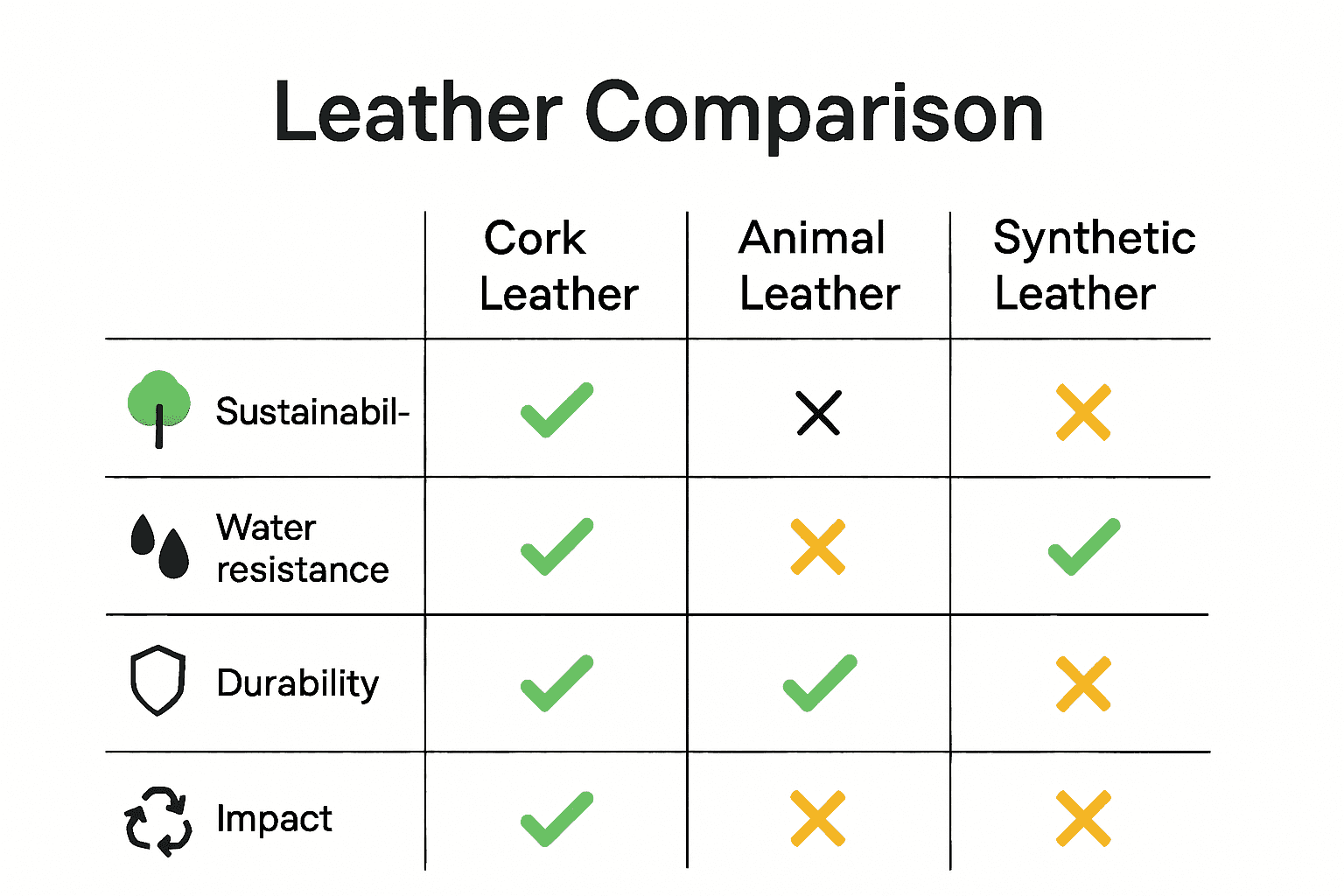 Its unique cellular structure provides remarkable properties that synthetic materials struggle to replicate.
Here’s a comparison of cork leather with animal leather and synthetic alternatives:
| Property | Cork Leather | Animal Leather | Synthetic Leather |
|---|---|---|---|
| Sustainability | Renewable Biodegradable |
High environmental impact | Petroleum-based Non-biodegradable |
| Animal Impact | None | Animals harmed | None |
| Water Resistance | Excellent | Varies Requires treatment |
Good But less breathable |
| Durability | High Elastic & resilient |
Very high Long-lasting |
Moderate Prone to cracking |
| Weight | Lightweight | Often heavy | Lightweight |
| Hypoallergenic | Yes | Not always | Not always |
| Fire Retardant | Yes | No | Sometimes |
| End-of-life Impact | Fully compostable (with natural backing) | Not biodegradable | Polluting Non-biodegradable |
| The material offers the aesthetic elegance of leather while maintaining a commitment to environmental responsibility. Fashion-forward consumers can now choose accessories that not only look stunning but also reflect a deeper understanding of sustainable manufacturing - proving that style and ecological consciousness can coexist beautifully. |
Experience True Durability with Cork Accessories That Last
Have you ever been disappointed by accessories that wear out quickly, stain easily or lose their shape after only a few months? In the article above, you discovered how cork’s unique cellular structure—filled with suberin and gas-filled cells—delivers exceptional performance such as water resistance, resilience and natural abrasion protection. Many people still believe vegan materials lack true longevity, but cork breaks that stereotype. If you are searching for sustainable fashion that is both stylish and genuinely hardwearing, you will appreciate our curated range of cork handbags, wallets and backpacks. Each item is crafted to harness the natural strengths described in the guide, so you can enjoy sophisticated design and planet-friendly peace of mind.
Now is the perfect time to invest in accessories that reflect your values and stand the test of time. Discover our full collection of eco-friendly and cruelty-free cork products at The Cork Store. Ready to elevate your everyday essentials? Browse our handbags and backpacks, or find the perfect gift set for someone who values sustainable quality. Explore, shop and experience the natural durability of cork—visit https://thecorkstore.co.uk today.
Frequently Asked Questions
What makes cork durable compared to other materials?
Cork’s durability comes from its unique cellular structure composed of lignin and suberin, which provides high tensile strength, superior abrasion resistance, and low permeability. This allows it to withstand significant stress while maintaining its integrity.
How does cork fabric resist wear and tear?
Cork fabric resists wear and tear due to its impressive properties, including water resistance, scratch resistance, and the ability to instantly recover its shape after compression. This resilience ensures that cork products maintain their appearance and functionality over time.
Is cork leather a sustainable alternative to traditional leather?
Yes, cork leather is a sustainable alternative as it is derived from the bark of cork oak trees without harming the tree. The harvesting process helps maintain the health of cork forests while providing a biodegradable, eco-friendly material.
Can cork leather items perform like traditional leather products?
Absolutely! Cork leather offers similar performance characteristics to traditional leather, such as water resistance and durability, but it is lighter, hypoallergenic, and does not require the use of any toxic chemicals in its production.