

Why Cork Lasts Longer in Sustainable Fashion
Finding elegant accessories that truly stand the test of time remains a challenge for many eco-conscious shoppers. The promise of cork lies in its extraordinary cellular structure and chemical composition, granting it resilience that surpasses conventional materials. For those committed to genuine sustainability, cork accessories offer a blend of durability, minimal maintenance, and distinctive style while actively reducing environmental impact. Discover why cork’s unique durability redefines sustainable fashion for vegans and enthusiasts across the globe.
Table of Contents
- What Makes Cork Durable and Distinctive
- Cork Variations Used in Accessories
- Natural Resistance to Water and Wear
- How Cork Ages Versus Leather Over Time
- Maintenance Differences: Effort and Cost
- Eco-Friendly Impact of Cork Longevity
Key Takeaways
| Point | Details |
|---|---|
| Durability of Cork | Cork’s unique cellular structure and chemical composition contribute to its exceptional durability, making it a superior alternative to traditional textiles in sustainable fashion. |
| Water and Wear Resistance | Cork’s high suberin content creates a natural barrier against moisture, allowing accessories to withstand everyday use without damage. |
| Aging and Longevity | Unlike leather, cork maintains its structural integrity over time with minimal maintenance, making it a cost-effective choice for sustainable accessories. |
| Eco-Friendly Impact | Cork’s longevity significantly reduces waste in the fashion industry, supporting environmental sustainability through decreased resource consumption. |
What Makes Cork Durable and Distinctive
Cork’s exceptional durability stems from its remarkable cellular structure and unique chemical composition. Unique cellular properties transform this natural material into a sustainable fashion marvel that outperforms traditional textiles in longevity and resilience.
The material’s extraordinary durability originates from its complex molecular makeup. Cork contains approximately:
- 40% suberin
- 22% lignin
- 18% polysaccharides
These chemical components work synergistically to create an incredibly robust material. The honeycomb-like cellular arrangement provides exceptional characteristics such as lightweight insulation, remarkable elasticity, and near-complete impermeability.
Mechanical Performance sets cork apart from other natural materials. Remarkable mechanical properties enable cork to withstand significant stress without compromising its structural integrity. Its cellular structure allows it to compress and then return to its original shape, making it ideal for accessories that endure frequent use.
Moreover, cork’s natural resistance to moisture, abrasion, and environmental fluctuations makes it an ideal sustainable fashion material. Unlike leather or synthetic alternatives, cork maintains its structural integrity and aesthetic appeal over extended periods.
Pro tip: When selecting cork accessories, examine the material’s texture and flexibility - high-quality cork will have a consistent, uniform cellular structure that indicates superior durability.
Cork Variations Used in Accessories
Sustainable fashion enthusiasts have multiple cork material types available for creating stylish, eco-friendly accessories. These variations offer diverse textures, densities, and aesthetic qualities that cater to different design preferences and functional requirements.
The primary cork variations utilized in accessories include:
- White agglomerates: Lightweight and versatile material
- Black agglomerates: Denser and more robust option
- Rubber-cork composites: Enhanced durability and flexibility
- Natural cork sheets: Authentic, unprocessed material
- Compressed cork composites: Engineered for specific performance characteristics
Sustainable fashion research demonstrates that each cork variation brings unique properties to accessories. Designers can select materials based on specific requirements such as weight, texture, water resistance, and aesthetic appeal.
The manufacturing process determines the final characteristics of cork accessories. White agglomerates, for instance, offer a lighter, more uniform appearance, making them ideal for minimalist designs. Black agglomerates provide a richer, more textured look suitable for statement pieces. Rubber-cork composites introduce additional flexibility, enabling more intricate and dynamic accessory designs.
Pro tip: When selecting cork accessories, examine the material’s texture, weight, and visual consistency to ensure you’re getting a high-quality, sustainable product.
Natural Resistance to Water and Wear
Cork’s extraordinary ability to resist water and wear makes it an exceptional material for sustainable fashion accessories. Unique moisture-blocking properties stem from its intricate cellular structure, specifically the high suberin content that creates an impenetrable barrier against liquid absorption.
The key characteristics of cork’s water and wear resistance include:
- Impermeability: Prevents moisture penetration
- Elasticity: Recovers shape after compression
- Surface resilience: Maintains integrity under friction
- Chemical stability: Resists degradation
- Cellular structure: Natural protective mechanism
Cork’s physical stability ensures that accessories remain pristine even under challenging environmental conditions. The material’s remarkable elasticity allows it to withstand repeated use without showing significant signs of wear, making it ideal for everyday accessories that require durability and performance.
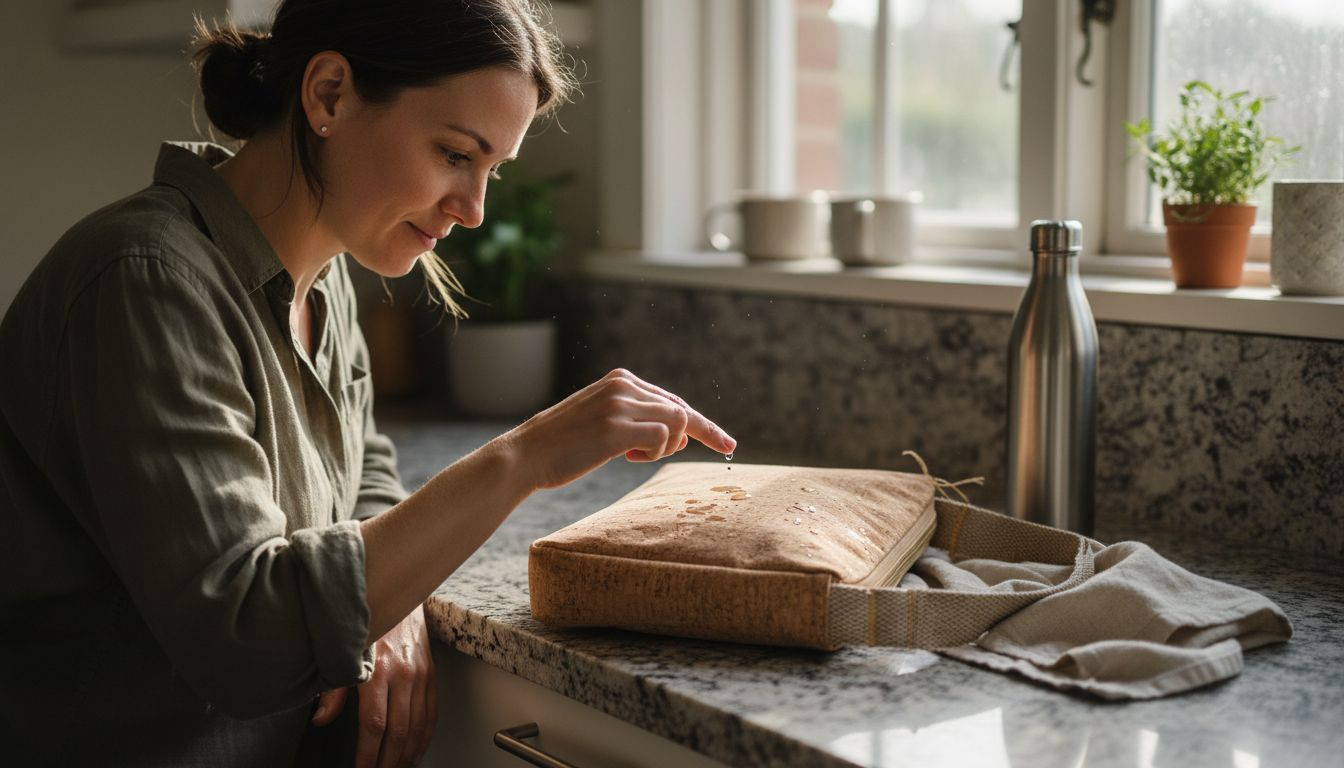
Unlike synthetic materials, cork’s natural composition provides inherent protection against moisture and mechanical stress. Its unique cellular walls act as a natural shield, preventing water molecules from penetrating the material while maintaining its structural integrity. This means cork accessories can withstand light rain, accidental spills, and daily wear without compromising their aesthetic or functional qualities.
Pro tip: Test the water resistance of cork accessories by gently dabbing a small water droplet on the surface and observing how it beads up and rolls off.
How Cork Ages Versus Leather Over Time
Longitudinal studies on material aging reveal cork’s remarkable ability to maintain its structural integrity far longer than traditional leather accessories. While leather tends to crack, dry, and deteriorate, cork demonstrates an extraordinary resistance to aging that sets it apart in sustainable fashion.
The key differences in aging between cork and leather include:
- Moisture Resistance: Cork repels water, leather absorbs
- Structural Integrity: Cork maintains shape, leather deforms
- Surface Quality: Cork remains smooth, leather develops cracks
- Maintenance Requirements: Cork needs minimal care, leather demands regular conditioning
- Environmental Durability: Cork withstands temperature variations better
Comparative durability research highlights cork’s superior aging characteristics. Unlike leather, which requires frequent maintenance and shows visible signs of wear, cork accessories maintain their original appearance and functionality with minimal intervention. The material’s unique cellular structure allows it to resist environmental stresses that typically degrade other natural materials.
The aging process of cork is particularly remarkable in sustainable fashion contexts. Where leather might become brittle or lose its aesthetic appeal, cork develops a subtle, understated patina that enhances its character without compromising structural integrity. This means cork accessories can look elegant and perform excellently for significantly longer periods compared to traditional leather alternatives.
For deeper understanding, here’s a comparison of ageing behaviours between cork and leather accessories:
| Ageing Factor | Cork Accessories | Leather Accessories |
|---|---|---|
| Water impact | Repels moisture | Absorbs and stains easily |
| Surface evolution | Smooths, mild patina | Cracks and flakes |
| Response to sunlight | Subtle colour change | Fades and dries out |
| Maintenance needs | Little to no attention | Frequent treatments |
The table demonstrates why cork is considered a long-lasting, low-maintenance material choice in sustainable fashion.
Pro tip: Store your cork accessories away from direct sunlight and extreme temperatures to maximise their longevity and preserve their natural resilience.
Maintenance Differences: Effort and Cost
Cork maintenance research demonstrates remarkable cost and effort savings compared to traditional leather accessories. Sustainable fashion enthusiasts can significantly reduce their long-term maintenance expenses by choosing cork, which requires minimal upkeep and cleaning compared to more demanding materials.
The key maintenance differences between cork and leather include:
- Cleaning Frequency: Cork needs occasional wiping, leather demands regular conditioning
- Cleaning Products: Cork requires simple water and mild soap, leather needs specialised cleaners
- Maintenance Cost: Cork has minimal ongoing expenses, leather requires periodic professional treatment
- Time Investment: Cork needs minimal care, leather requires consistent maintenance
- Durability of Care: Cork maintains quality with basic care, leather deteriorates without constant attention
Sustainable accessory maintenance studies reveal cork’s extraordinary low-maintenance characteristics. Unlike leather, which requires specialised conditioning treatments, cork accessories can be cleaned with a simple damp cloth, eliminating the need for expensive leather creams, waterproofing sprays, and professional restoration services.
The economic advantage of cork becomes particularly evident when considering long-term maintenance costs. Leather accessories often require annual professional conditioning, specialised cleaning products, and potentially expensive repairs. Cork accessories, by contrast, maintain their aesthetic and functional qualities with minimal intervention, translating into significant financial savings for environmentally conscious consumers.
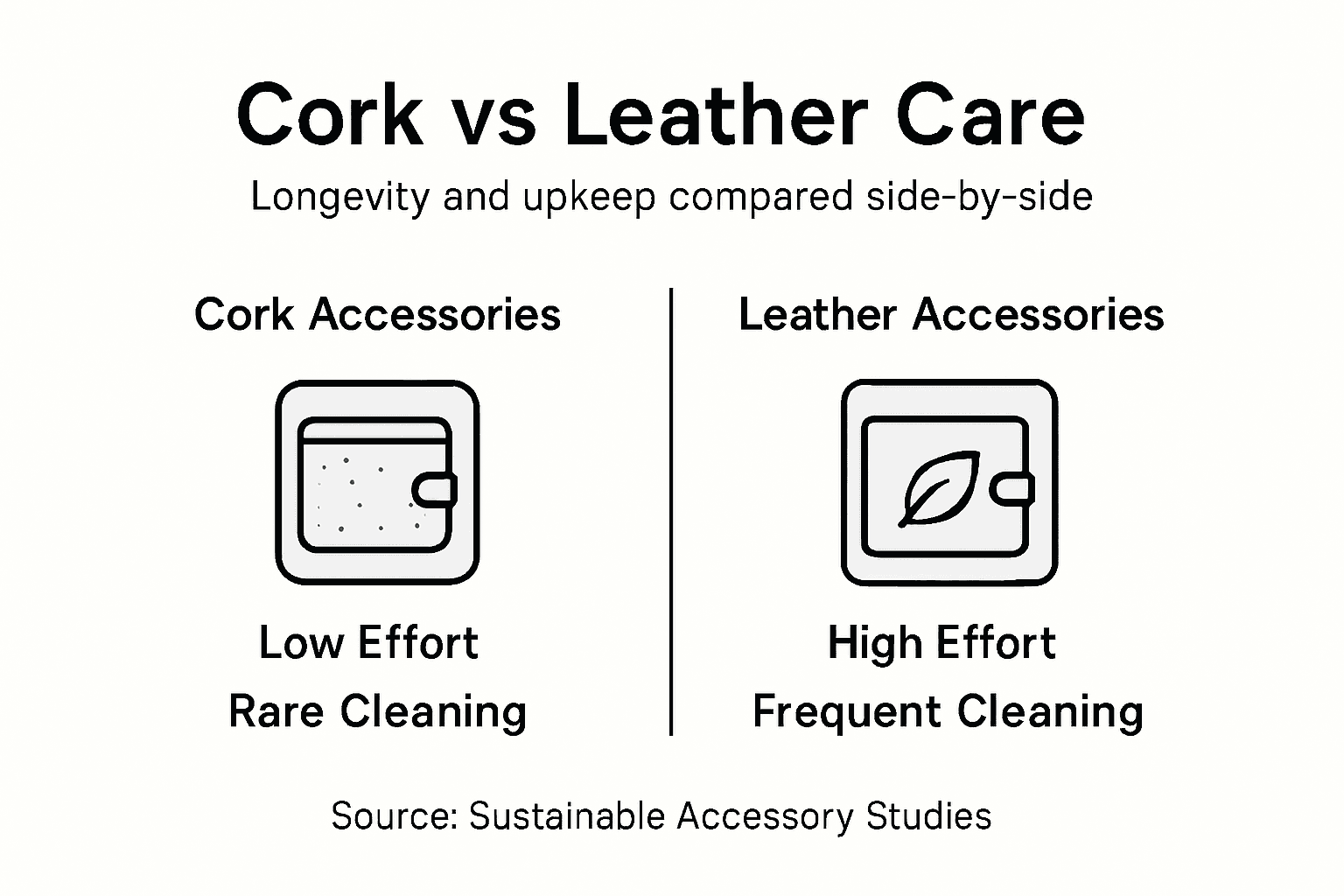
To clarify the maintenance implications for sustainable accessories, here’s a direct comparison of care requirements for cork and leather:
| Maintenance Aspect | Cork Accessories | Leather Accessories |
|---|---|---|
| Cleaning method | Damp cloth, mild soap | Specialised cleaners, creams |
| Frequency of upkeep | Occasional wiping | Regular conditioning |
| Professional services | Rarely required | Often necessary |
| Long-term expense | Minimal over years | Significant annual cost |
This summary helps illustrate the practical benefits of choosing cork for effortless upkeep, especially in sustainable fashion.
Pro tip: Invest in a soft, slightly damp microfibre cloth for cleaning your cork accessories, and avoid using harsh chemicals or excessive moisture.
Eco-Friendly Impact of Cork Longevity
Sustainable material lifecycle research reveals cork’s remarkable environmental benefits through its extraordinary product longevity. By reducing the frequency of replacements, cork accessories significantly minimise resource consumption and waste generation in the fashion industry.
The key environmental advantages of cork’s extended lifecycle include:
- Reduced Material Waste: Less frequent product disposal
- Lower Carbon Footprint: Minimised manufacturing and transportation emissions
- Circular Economy Support: Extended product usability
- Resource Conservation: Less frequent raw material extraction
- Ecosystem Preservation: Sustainable harvesting practices
Durability and environmental impact studies demonstrate how cork’s resilience directly contributes to sustainability goals. The material’s natural longevity means fewer accessories end up in landfills, reducing environmental strain and supporting a more responsible approach to fashion consumption.
Moreover, cork’s production inherently supports ecological balance. Cork oak forests provide critical habitats for biodiversity, sequester carbon, and can be harvested without harming the trees, creating a regenerative system that actively supports environmental health. This stands in stark contrast to many synthetic or heavily processed materials that deplete natural resources and generate significant waste.
Pro tip: Choose cork accessories from brands that provide transparent information about their harvesting and manufacturing processes to ensure genuine sustainability.
Discover Durable Style with Cork Accessories from The Cork Store
If you are seeking a sustainable fashion solution that lasts longer and demands less maintenance than traditional leather, cork accessories offer an unbeatable advantage. With its natural resistance to water and wear, minimal upkeep requirements, and an ability to age gracefully without cracking or losing shape, cork is the perfect choice for those who value longevity and eco-conscious style. At The Cork Store, you can explore a carefully curated selection of vegan cork handbags, wallets, and backpacks that combine elegance with sustainable durability.
Make the smart switch today and experience the benefits of cork firsthand. Visit https://thecorkstore.co.uk to browse our range of stylish and environmentally friendly accessories designed to keep up with your lifestyle while supporting the planet. Don’t wait to own a product that not only looks great but also contributes to a more sustainable future. Choose cork, choose lasting quality, and shop now at The Cork Store.
Frequently Asked Questions
What makes cork a durable material for fashion accessories?
Cork’s durability arises from its unique cellular structure and chemical composition, including suberin, lignin, and polysaccharides, which work together to create an incredibly robust material that is lightweight, elastic, and nearly impermeable.
How do cork accessories age compared to leather?
Cork accessories maintain their structural integrity better than leather over time. Cork resists moisture absorption and does not crack or dry out, whereas leather often shows visible signs of wear and requires regular maintenance.
What types of cork materials are used in accessories, and how do they differ?
Cork accessories are made from various materials including white agglomerates, black agglomerates, rubber-cork composites, natural cork sheets, and compressed cork composites, each offering unique textures, densities, and aesthetic qualities for different designs.
How do I maintain cork accessories to ensure their longevity?
Cork accessories require minimal maintenance. Simply wipe them down occasionally with a damp cloth and mild soap. Avoid harsh chemicals and excessive moisture to preserve their quality and appearance.