

Dry Cork Within 48 Hours: Cleaning Cork for Floors, Bags, Fabric
Warm water, a drop of mild unscented soap and a soft cloth handle most cork cleaning jobs safely. Blot rather than scrub, then dry the item completely before it goes back into use. Never soak cork or use a steam mop, always test a cleaner on a hidden patch first, and if you spot mould or the cork feels structurally soft, stop and get professional help rather than pushing on.
TL;DR:
- Sealed cork floors can handle light damp mopping, but unfinished or laminated cork absorbs moisture quickly and can swell or warp if not properly dried.
- Cleaning should focus on removing grit first with a soft broom or vacuum before using a barely damp cloth with mild soap, avoiding excessive water and heat.
- Cork accessories require a gentler approach, including dusting, minimal damp wiping, and immediate blotting of spills, with drying away from heat sources to prevent cracking.
- Removing stains involves a graduated method starting with blotting, followed by gentle solvent testing for stubborn grease or light sanding as a last resort.
- Proper drying within 48 hours after spills is crucial to prevent mould growth, with air circulation and dehumidification preferred over direct heat or chemicals.
Table of Contents
- Why cork type and finish change how you clean it
- The routine cleaning method that works on most cork
- Cleaning cork floors the right way
- How do you clean cork bags and other accessories?
- Removing stains from cork: what actually works
- Mould prevention and safe drying practices
- Refreshing and protecting cork after cleaning
- What specialized cork care recommendations exist from hands-on experience
- Where to find cork accessories and care advice
- A closing note on cork maintenance
- Sources
- FAQ
Why cork type and finish change how you clean it
Not all cork behaves the same way once water touches it. Sealed flooring, oiled cork, unfinished cork, cork fabric, laminated cork panels and plain cork stopper lids all have different tolerances for moisture and chemicals, and treating them identically is how damage happens.
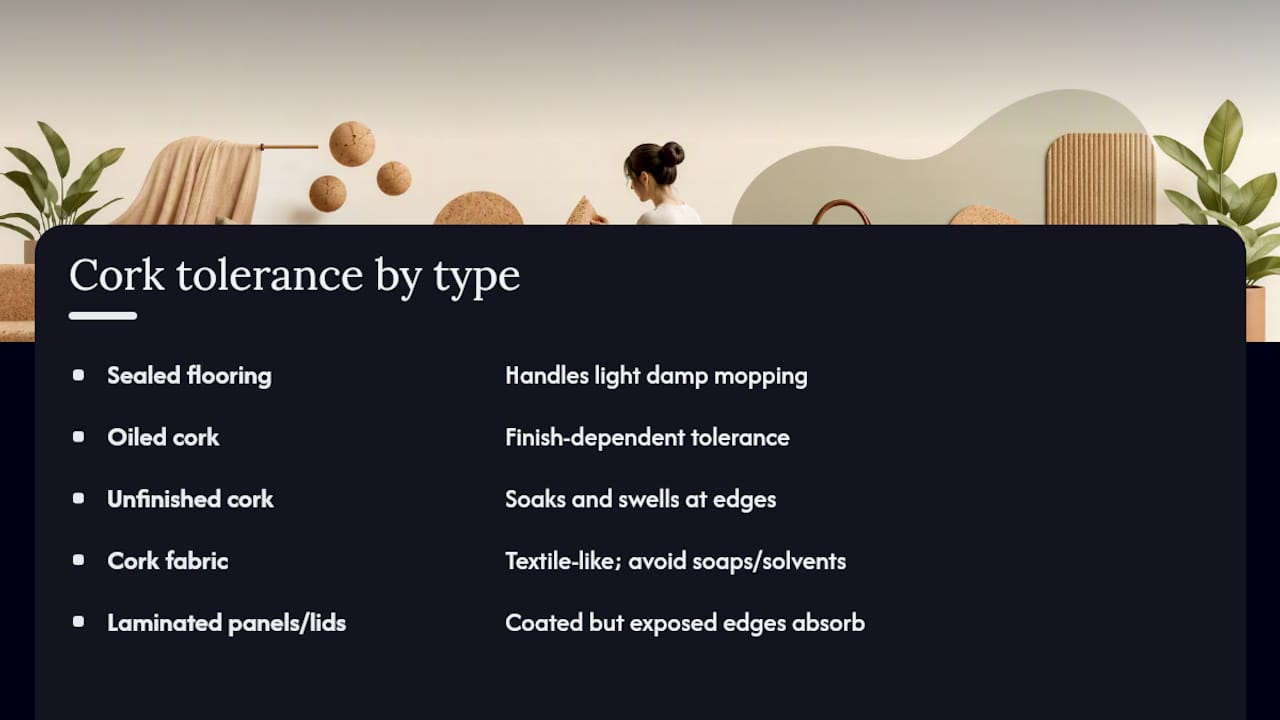
A sealed floor with a polyurethane top coat can handle a lightly damp mop; unfinished cork soaks up moisture far faster and swells at the edges. Cork fabric, the woven material used on bags and accessories, behaves more like a textile, and manufacturer guidance for it explicitly warns against products such as saddle soap or unspecified solvents. Laminated cork lids sit somewhere in between, often coated but with exposed edges that absorb water if left wet.
Before you clean anything, check the maker’s care label if one exists, and always spot-test in an inconspicuous area. Finish, not just the material, dictates what your cork can survive.
The routine cleaning method that works on most cork
A consistent, gentle routine beats occasional deep cleans, and it takes only a few minutes.
- Remove loose grit first. Vacuum with a soft brush attachment, or sweep with a soft broom. Skipping this step is the most common mistake people make, because grit acts like sandpaper the moment you wipe over it with a damp cloth.
- Mix a mild solution. Warm water with a small amount of unscented soap works for most cork, or use a manufacturer-recommended neutral cleaner where one exists.
- Wring your cloth or mop until it’s barely damp. There should be no dripping and no free water sitting on the surface.
- Work in small sections, wiping gently and blotting rather than scrubbing at marks.
- Rinse off soap residue with a separate clean, damp cloth, then dry the surface fully with a dry towel.
- Skip artificial heat. Air drying is safer than a hairdryer or radiator, which can crack or warp cork as it dries unevenly.
Warm water and mild soap remain the standard first move for everyday cork cleaning, and it’s worth resisting the urge to reach for anything stronger before trying this.
Pro Tip: Keep a small notebook or phone note of exactly what cleaner and dilution you used on each item. If a stain returns or the finish changes colour later, you’ll know precisely what touched it.
For anything genuinely high-touch, like a cork noticeboard used by several people, a light wipe with your mild soap solution is enough disinfecting for most households. There’s rarely a need for anything harsher.
Cleaning cork floors the right way
Cork flooring needs a slightly different rhythm to a bag or a lid, mostly because there’s so much more surface area and so many seams where water can creep in.
Start dry every time. A parquet-safe or no-scratch vacuum nozzle, or a soft broom, lifts grit before it gets ground into the finish. Then use a pH-neutral cleaner, or the floor manufacturer’s own product, diluted exactly as instructed. One flooring maker suggests roughly half a dosing cap of cleaner per 5 litres of water as a working example, though dilution ratios are product-specific and worth checking against your own label.
- Mop with a thoroughly wrung microfibre head, never a soaking one.
- Never flood the floor or run a steam mop over it, since trapped steam works its way into seams and swells the cork from underneath.
- Dry seams, edges and skirting carefully, because that’s where moisture lingers longest.
- Dry-clean whenever grit appears; damp-clean only when the floor actually looks or feels soiled.
Sealed cork floors sometimes benefit from a manufacturer refresher product or a professional maintenance visit every few years, particularly in busy hallways or kitchens where foot traffic wears the top coat thin.
Statistic Callout: Manufacturer guidance treats damp cleaning and steam cleaning as fundamentally different risk levels for cork flooring: one is routine maintenance, the other is a common cause of long-term damage.
How do you clean cork bags and other accessories?
Cork accessories, bags, wallets, bracelets and bottle stoppers, need a gentler touch than a floor because the material is often thinner and paired with fabric linings, zips or metal hardware.
- Dust or brush off loose dirt with a soft, dry cloth before introducing any moisture.
- For light soil, wipe with a barely damp cloth and nothing more.
- Blot fresh spills immediately rather than rubbing, which tends to push liquid deeper into the cork’s texture.
- For visible spots, use a diluted mild soap solution on a cloth, then go over the area again with a clean damp cloth to lift any soap residue.
- Protect zips, buckles and metal trims from moisture where you can, and remove detachable straps before cleaning.
- Air-dry away from radiators, direct sun or car heaters, which all dry cork unevenly and encourage cracking.
Between cleans, store cork accessories somewhere with stable humidity, not a damp cupboard or a bone-dry loft, since both extremes shorten the material’s life. A natural care routine for cork products applied consistently does more for longevity than any single deep clean ever will.
Removing stains from cork: what actually works
Stain removal on cork should always follow a graduated approach: start gentle, escalate only if needed, and know when to stop.
- Blot fresh oil or grease immediately and let an absorbent cloth or even cornstarch draw it out before you introduce any liquid. Some cork fabric guidance actually recommends letting small oil marks settle rather than scrubbing at them, since starting dry and testing a mild solvent only if necessary causes far less damage than an immediate scrub.
- For sealed cork surfaces, a tested degreaser can help with stubborn grease, but never saturate the area.
- For dye transfer or watermarks, mild soap and water is usually enough, though you should always test for colour transfer on a hidden spot first.
- Light-grit sanding is a genuine last resort on compatible sealed or unfinished cork. Sand gently in one direction only, then refinish the area to match the surrounding surface.
Pro Tip: If the item has any age, sentimental value or an unusual finish you don’t recognise, stop after the blotting stage and get advice from a conservator or the manufacturer before trying anything abrasive.
Mould prevention and safe drying practices
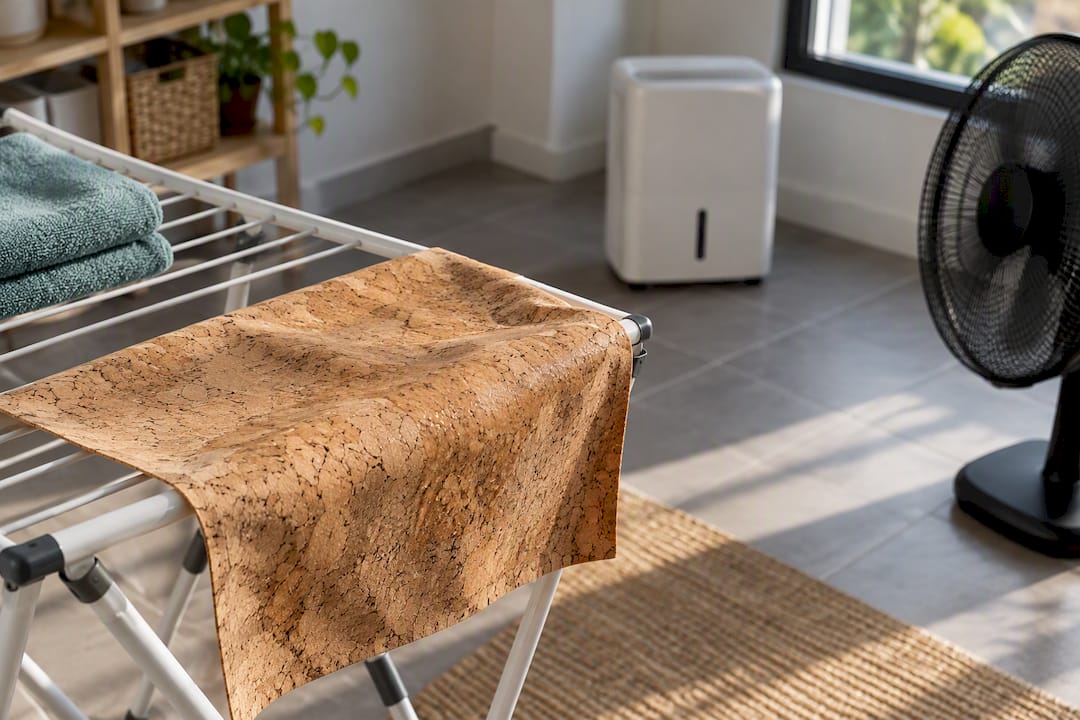
Mould thrives on cork that stays damp, and the window for stopping it is smaller than most people assume. After any spill or leak, aim to get the affected item properly dry within roughly 48 hours to head off mould growth.
Isolate wet items away from other cork pieces while they dry, and point fans or a dehumidifier at the room rather than directly at the object, since a direct blast can scatter mould spores if any are already present. Avoid isopropyl alcohol and other strong chemicals unless the manufacturer specifically approves them and a spot-test shows no colour transfer, because alcohol sits on most avoid lists for cork care. Visible mould on a valuable or antique piece calls for conservation advice rather than a DIY fix.
Refreshing and protecting cork after cleaning
Once cork is clean and dry, a refresher product or sealant can restore some shine and make future cleaning easier, though it also changes how the surface handles moisture and grip afterwards. Floor refreshers work best on sealed cork that’s starting to look dull rather than damaged.
For accessories or floors that see heavy wear, a light top-up seal reduces how often deep cleaning is needed. Light sanding followed by a matching finish is a more advanced repair, and it’s always worth testing on a small, hidden section before committing to the whole surface.
What specialized cork care recommendations exist from hands-on experience
Thecorkstore’s own care pages, including author Aaron’s step-by-step bag cleaning guide, consistently point back to the same basics: test on a hidden area first, and keep a note of the exact dilution you used. If you’re unsure how a specific bag, wallet or gift set construction responds to cleaning, the accessory maintenance guide covers construction-specific checks worth running before you start.
Where to find cork accessories and care advice
If cleaning reveals that an old favourite has worn past saving, or you’re simply after something new, some online stores stock cork handbags, backpacks, wallets, crossbody bags, and gift sets built as vegan, biodegradable alternatives to leather.

Every piece is designed to be easy to live with day to day, which starts with knowing how to clean it properly. The full accessory range covers everything from compact wallets to travel bags, and if you’d rather start small, the Marine Cork Wallet is a good example of the kind of sealed-finish piece that responds well to the routine cleaning steps above. For care that’s specific to bags rather than floors or fabric panels, Thecorkstore’s own guide to cleaning cork handbags naturally is worth bookmarking alongside your purchase. Browse the shop, find a piece that suits you, and treat its care routine as part of the purchase, not an afterthought.
A closing note on cork maintenance
Gentle, regular care does more for cork than any dramatic rescue attempt ever will. A quick wipe now saves you a sanding session later, and it keeps a good product out of landfill for years longer.
— Aaron
Sources
For floor-specific steps, see HARO’s cork floor care guidance. For finish-by-finish tolerances, check the Opus Floors maintenance guidelines, and for mould timelines, Weill Cornell’s water damage guidance.
- How to clean cork: 5 cleaning tips to keep surfaces spotless | Homes & Gardens
- How to clean and care for your cork floor properly. - HARO
- How to Clean and Maintain a Cork Floor – Green Building Supply
- Water damage and mould guidance (Weill Cornell/EHS)
FAQ
Is there a way to clean cork safely at home?
Yes. Warm water with a little mild unscented soap on a soft, well-wrung cloth cleans most cork surfaces safely, provided you blot rather than scrub and dry the item completely afterwards, following the same approach Homes & Gardens recommends for everyday cork.
How do I make cork look new again?
A thorough clean followed by a manufacturer-approved refresher or sealant restores shine to dulled cork, while light sanding in one direction only tackles stubborn surface marks before refinishing. Always test any refresher on a hidden patch first, since it changes how glossy and grippy the surface feels afterwards.
Will isopropyl alcohol damage cork?
Alcohol sits on several manufacturer avoid lists for cork flooring and accessories, so it isn’t a safe default choice. Only use it if the maker’s own care instructions specifically permit it and a spot-test on a hidden area shows no colour transfer or finish damage.
Does cork mould easily if it gets wet?
Cork that stays damp for an extended period is genuinely at risk of mould, which is why drying it within roughly 48 hours after a spill or leak matters so much. Isolating the wet item and using a fan or dehumidifier nearby, rather than pointed directly at it, helps it dry evenly without spreading any spores.