

Differences Between Cork and Leather: Sustainable Fashion Impact
Finding stylish accessories that are genuinely sustainable can feel overwhelming. Many brands still rely on traditional leather, which often requires animal killing and chemical-heavy processing, while eco-conscious alternatives like cork leather are gaining momentum for their cruelty-free credentials. This guide explores how cork leather stands out as a versatile, environmentally responsible option, helping you navigate the real differences and benefits of switching to plant-based materials in modern fashion.
Table of Contents
- Cork And Leather Defined And Misunderstood
- Material Sources And Manufacturing Differences
- Core Properties: Durability, Flexibility, Care
- Eco And Ethical Impact Across Both Materials
- Cost, Longevity And Style Comparisons
- Choosing Sustainable Alternatives For Modern Fashion
Key Takeaways
| Point | Details |
|---|---|
| Sustainable Materials | Cork leather offers a renewable and cruelty-free alternative to traditional leather, highlighting the importance of environmental responsibility in material choices. |
| Production Methods | Unlike traditional leather which involves extensive chemical processes and animal slaughter, cork leather is harvested sustainably from living trees with minimal environmental impact. |
| Performance Attributes | Cork leather is lightweight, water-resistant, and requires less maintenance compared to traditional leather, making it a practical choice for consumers seeking durability. |
| Holistic Approach | Adopting sustainable materials like cork leather and others can significantly reduce carbon footprints while promoting ethical production practices in fashion. |
Cork and leather defined and misunderstood
Cork and leather represent two profoundly different material approaches in fashion and accessory design, each with distinct origins, production processes, and environmental implications. Cork leather emerges as a revolutionary alternative to traditional animal-derived leather, offering a sustainable and cruelty-free option for conscious consumers.
Traditional leather has long been associated with luxury and durability, derived from animal hides through complex processing techniques that involve significant environmental and ethical challenges. In stark contrast, cork leather represents an innovative material sourced directly from cork oak tree bark - a renewable resource harvested without harming the tree’s fundamental ecosystem.
Key differences between cork and traditional leather include:
- Origin: Cork is plant-based, leather is animal-derived
- Production Process: Cork harvesting is sustainable, leather production often involves significant environmental damage
- Ecological Impact: Cork supports carbon sequestration, leather production contributes to greenhouse gas emissions
- Ethical Considerations: Cork is cruelty-free, leather requires animal slaughter
The manufacturing of cork leather involves carefully stripping bark from cork oak trees, which naturally regenerates, creating a circular and regenerative production cycle. Sustainable forestry practices ensure that each harvest contributes to oxygen production and maintains forest ecosystems, making cork an extraordinary material choice for environmentally conscious designers and consumers.
Pro tip: When evaluating sustainable materials, consider not just the end product, but the entire production ecosystem and long-term environmental impact.
Material sources and manufacturing differences
The manufacturing processes for leather and cork leather represent dramatically different approaches to material sourcing, environmental impact, and ethical production. Traditional leather production involves complex and often environmentally damaging techniques that fundamentally differ from the sustainable cork leather manufacturing method.
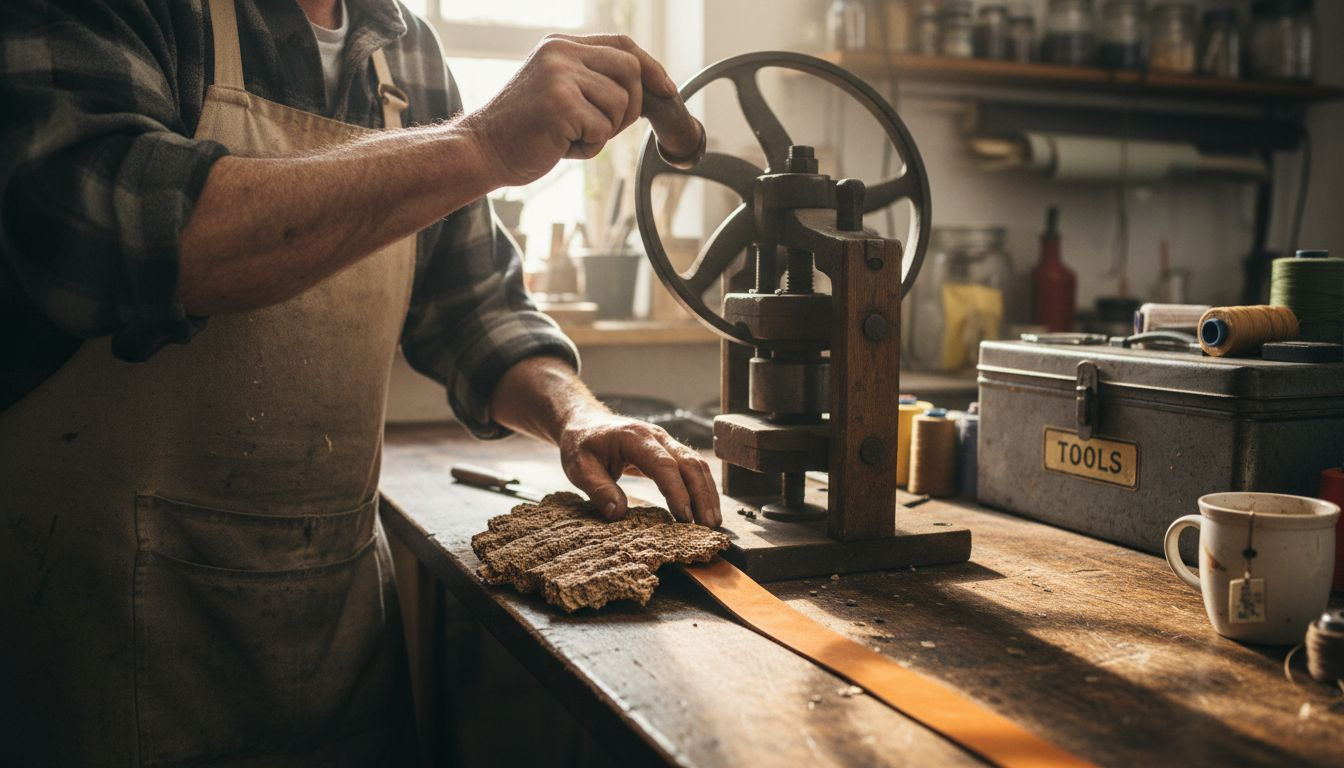
Industrial leather manufacturing typically requires extensive chemical treatments, involving multiple stages of processing animal hides that generate significant environmental pollution. The process usually begins with slaughtering animals, followed by intense chemical treatments including chromium-based tanning, which releases toxic substances into ecosystems.
In contrast, cork leather manufacturing offers a radically different approach:
- Harvesting: Cork is extracted by carefully removing bark from living cork oak trees
- Tree Protection: No trees are killed during cork extraction
- Regeneration: Cork bark naturally regrows every 9-12 years
- Chemical Usage: Minimal chemical interventions required
- Processing: Involves boiling, flattening, and bonding to fabric substrates
The manufacturing of cork leather involves intricate yet environmentally sensitive processes. After harvesting, the cork bark undergoes careful treatment: boiling to increase flexibility, slicing into thin layers, and then bonding to fabric backings using natural adhesives. This method ensures minimal environmental disruption while creating a versatile, durable material.
Cork leather’s manufacturing process represents a regenerative approach to material production, unlike the extractive nature of traditional leather manufacturing.
Pro tip: Always investigate the complete production cycle of materials, not just their final appearance, to make truly sustainable fashion choices.
Core properties: durability, flexibility, care
The performance characteristics of cork and leather diverge significantly, presenting unique challenges and advantages for fashion-conscious consumers seeking sustainable materials. Cork leather emerges as a surprisingly robust material with exceptional properties that challenge traditional perceptions of alternative textiles.
Lightweight and flexible materials characterise cork leather, offering remarkable durability through its inherent structural composition. Unlike traditional leather, cork leather demonstrates extraordinary resilience with additional unique characteristics that set it apart in the sustainable fashion landscape.
Key performance attributes of cork leather include:
- Lightweight: Significantly lighter than traditional leather
- Water-Resistant: Naturally repels moisture
- Flame-Resistant: Provides additional safety features
- Hypoallergenic: Ideal for sensitive skin
- Elasticity: Maintains shape and form over time
Maintenance requirements further distinguish cork from traditional leather. Cork leather requires minimal care, avoiding the intensive conditioning and protection regimens typically associated with animal leather. Its natural grain patterns and smooth texture remain consistent with minimal intervention, making it an exceptionally low-maintenance material for conscientious consumers.
Here is a side-by-side summary of how cork leather compares with traditional leather regarding care and durability:
| Attribute | Cork Leather | Traditional Leather |
|---|---|---|
| Care Requirements | Wipe clean, minimal upkeep | Conditioning, specialised cleaners |
| Weight | Light, easy to carry | Heavier, adds bulk |
| Durability | Resistant to cracking or fading | Susceptible to wear over time |
| Moisture Impact | Water-repellent, dries quickly | Absorbs moisture, risk of mildew |
Cork leather represents a revolutionary approach to material design, combining durability with environmental responsibility.
Pro tip: Always test material samples and understand their specific care requirements before making long-term fashion investments.
Eco and ethical impact across both materials
The environmental and ethical footprints of leather and cork leather represent dramatically different approaches to material production, with profound implications for sustainable fashion. Sustainable material choices have become increasingly critical in addressing global ecological challenges and animal welfare concerns.
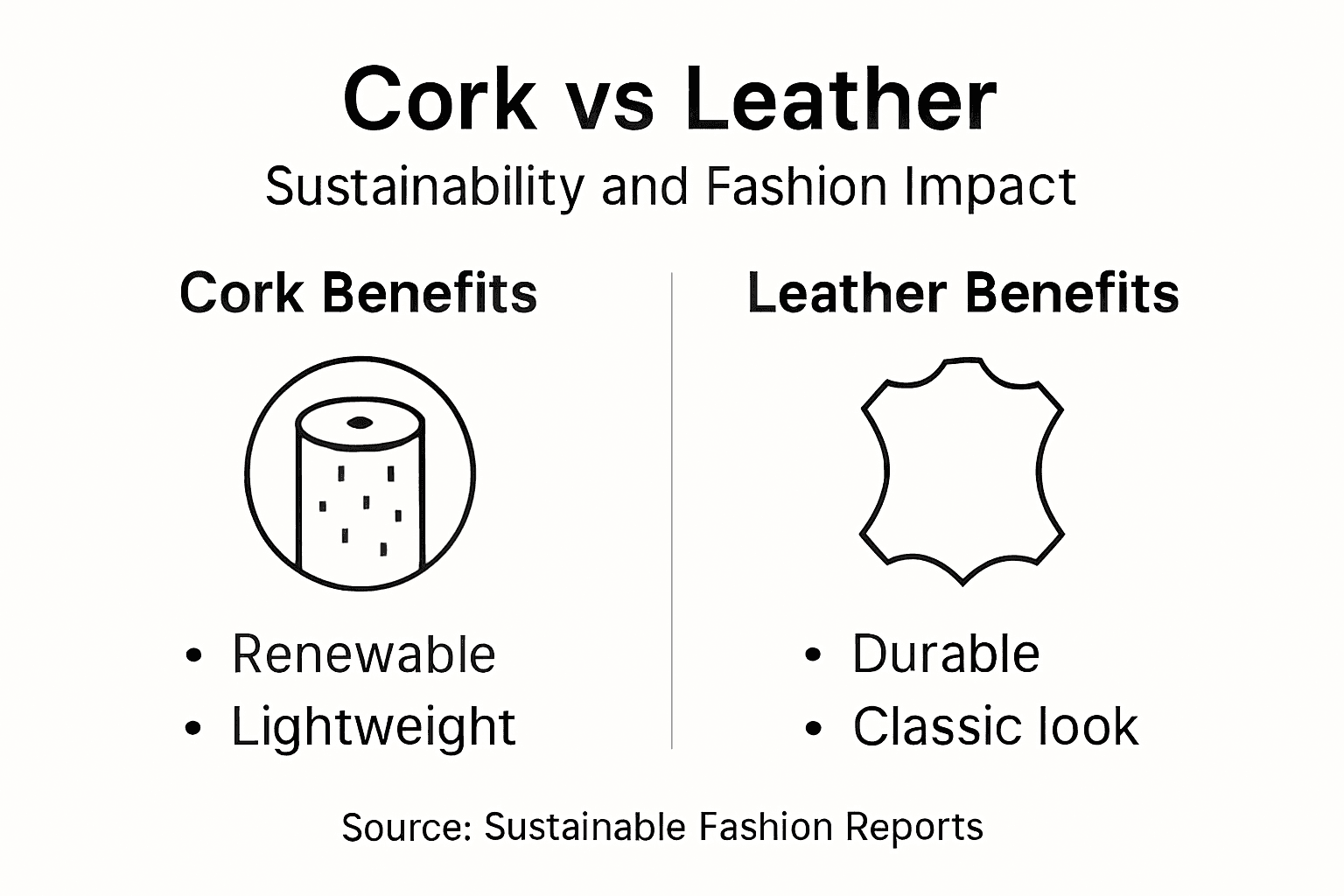
Sustainable production methods highlight the fundamental differences between traditional leather and cork leather, revealing stark contrasts in their environmental and ethical impacts. While leather production remains intrinsically linked to animal agriculture and its associated environmental degradation, cork leather emerges as a regenerative, cruelty-free alternative.
Key ecological and ethical considerations include:
- Carbon Footprint: Cork supports carbon sequestration, leather contributes to greenhouse gas emissions
- Animal Welfare: Cork is completely cruelty-free, leather requires animal slaughter
- Land Use: Cork oak forests support biodiversity, cattle farming leads to deforestation
- Chemical Processing: Cork requires minimal chemical intervention, leather tanning involves toxic chemicals
- Biodegradability: Cork is naturally biodegradable, leather processing reduces biodegradability
Traditional leather production creates substantial environmental challenges, including significant methane emissions from animal agriculture, extensive water consumption, and chemical pollution from tanning processes. Cork leather, by contrast, represents a holistic approach to material production that supports ecological regeneration and minimises environmental harm.
Sustainable material choices are not just fashion statements, but critical interventions in global environmental conservation.
Pro tip: Investigate the complete lifecycle of materials, understanding that true sustainability extends far beyond the finished product.
Cost, longevity and style comparisons
The landscape of sustainable fashion demands nuanced understanding of material performance, particularly when comparing cork and traditional leather across cost, aesthetic appeal, and durability. Style-conscious consumers increasingly seek materials that balance ethical considerations with practical performance expectations.
Material longevity considerations reveal fascinating distinctions between cork and leather, challenging traditional perceptions of material value and aesthetic potential. While leather has historically dominated fashion with its classic patina and perceived durability, cork leather emerges as a compelling alternative with unique characteristics.
Key comparative factors include:
- Initial Cost: Cork pricing comparable to mid-range leather
- Maintenance: Cork requires significantly less upkeep
- Aging Process: Leather develops rich patina, cork maintains consistent appearance
- Weight: Cork substantially lighter than traditional leather
- Versatility: Cork adapts more readily to diverse design applications
The aesthetic journey of materials differs dramatically between cork and leather. Traditional leather develops a nuanced, weathered appearance over time, reflecting individual usage patterns and environmental interactions. Cork leather, by contrast, maintains a more consistent visual and tactile character, preserving its original integrity with minimal degradation.
Sustainable fashion is not just about replacing materials, but reimagining aesthetic and functional possibilities.
Pro tip: When evaluating material investments, consider long-term performance and environmental impact beyond initial aesthetic appeal.
Choosing sustainable alternatives for modern fashion
The contemporary fashion landscape demands a critical reevaluation of material choices, with consumers increasingly prioritising environmental responsibility and ethical production. Sustainable fashion alternatives represent more than a trend - they signify a profound shift in how we conceptualise style and consumption.
Sustainable leather alternatives are emerging as powerful solutions to traditional material challenges, offering innovative approaches that address environmental and ethical concerns. These materials not only challenge existing production paradigms but also demonstrate remarkable potential for performance and aesthetic appeal.
Key sustainable material alternatives include:
- Cork Leather: Renewable, cruelty-free, minimal environmental impact
- Mushroom Leather: Biodegradable, low-energy production
- Cactus Leather: Plant-based, requires minimal water resources
- Pineapple Leather (Piñatex): Utilises agricultural waste
- Recycled Plastic Leather: Repurposes existing waste materials
The transition towards sustainable materials requires a holistic understanding that extends beyond superficial aesthetic considerations. These alternatives offer comparable durability and style while significantly reducing carbon footprint and supporting more ethical production ecosystems.
To better understand material innovation in sustainable fashion, here is a comparison of emerging eco-friendly leather alternatives:
| Alternative Material | Primary Source | Key Environmental Benefit | Typical Application |
|---|---|---|---|
| Cork Leather | Cork oak tree bark | Supports forest regeneration | Bags, shoes, accessories |
| Mushroom Leather | Fungal mycelium | Fully biodegradable | Footwear, small goods |
| Cactus Leather | Prickly pear cactus | Minimal water usage | Bags, belts, upholstery |
| Pineapple Leather (Piñatex) | Pineapple leaf fibres | Utilises agricultural waste | Fashion, interiors |
| Recycled Plastic Leather | Post-consumer plastics | Diverts plastic from landfill | Apparel, accessories |
Sustainable fashion is not a compromise, but a sophisticated evolution of design and responsibility.
Pro tip: Research the complete lifecycle of materials before making fashion purchases, considering environmental impact beyond initial appearance.
Embrace Sustainable Style with Premium Cork Accessories
If you are seeking a truly sustainable, cruelty-free alternative to traditional leather, the challenges highlighted in the article underscore the importance of choosing materials that respect both the environment and animal welfare. Cork leather, sourced responsibly from regenerating cork oak tree bark, offers a unique solution with benefits like lightweight durability, water resistance, and low maintenance. This aligns perfectly with the ethos of The Cork Store, where eco-conscious consumers can find stylish, ethical accessories crafted entirely from cork.
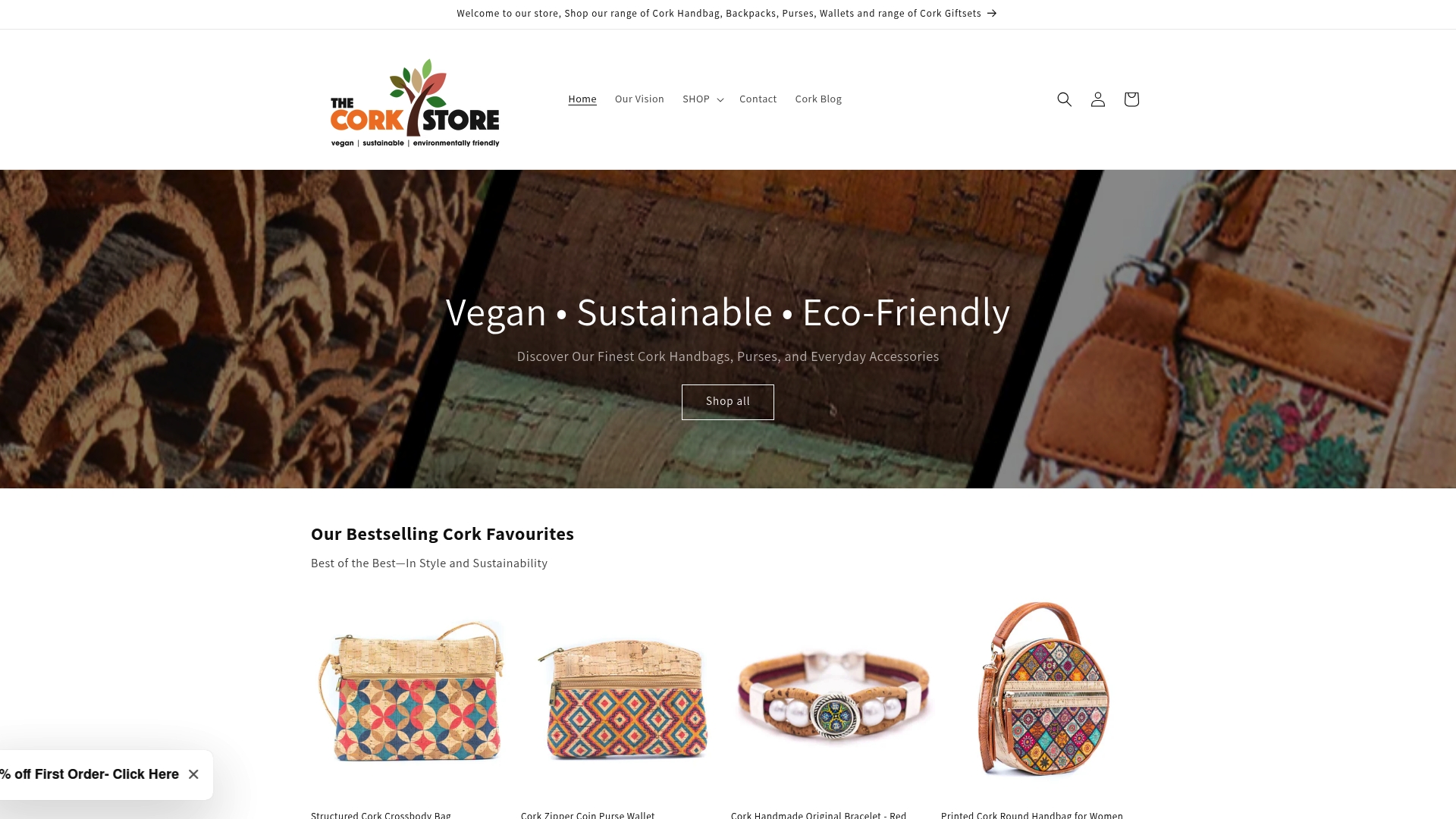
Discover the range of handbags, wallets, and backpacks that combine fashion with environmental responsibility. By choosing cork products from The Cork Store, you make a powerful statement to support sustainable forestry and reduce harmful chemical use. Don’t wait to join the movement towards mindful fashion. Explore our curated collection today and experience the durability and elegance of cork leather firsthand.
Frequently Asked Questions
What are the main differences between cork and traditional leather?
Cork is a plant-based material sourced from the bark of cork oak trees, while traditional leather is animal-derived. Cork is harvested sustainably without harming trees and supports carbon sequestration, whereas leather production often contributes to greenhouse gas emissions and involves animal slaughter.
How is cork leather manufactured?
Cork leather is produced by carefully stripping the bark from living cork oak trees, which regenerates every 9-12 years. The harvested bark is treated through boiling, flattening, and bonding to fabric substrates, requiring minimal chemical intervention compared to traditional leather tanning processes.
What are the benefits of using cork leather over traditional leather for fashion products?
Cork leather is lightweight, water-resistant, flame-resistant, and hypoallergenic, making it a durable and versatile alternative. It requires significantly less maintenance than traditional leather, which often needs conditioning and special care.
Is cork leather more environmentally friendly than traditional leather?
Yes, cork leather is considered more environmentally friendly as it supports ecological regeneration, requires minimal chemical processing, and is biodegradable. In contrast, traditional leather has a larger carbon footprint and is linked to environmental degradation caused by livestock farming.
Recommended
- Cork Vs Traditional Leather – Sustainable Fashion Choices – The Cork Store
- Understanding What is Cork Leather and Its Benefits – The Cork Store
- Cork vs Leather: The Sustainable Style Choice – The Cork Store
- What is Vegan Leather? Understanding Its Impact – The Cork Store
- Understanding Eco Friendly Video Production for Filmmakers