

Cork vs Traditional Leather: Impact on Eco Fashion
Choosing accessories that reflect your values no longer means sacrificing style or durability. For eco-conscious shoppers, the difference between cork and leather is not just about appearance but about impact. While leather comes from animal hides—mainly from cattle raised in countries like Brazil, China, and the United States—cork is part of the cork oak tree’s bark, sustainably harvested without harming the tree. This simple swap supports forest preservation and offers unique textures, affordability, and guilt-free fashion—a combination that stands out for anyone building a more sustainable wardrobe.
Table of Contents
- What Sets Cork Apart From Leather
- Types and Sources of Cork and Leather
- How Cork and Leather Are Produced
- Durability, Style, and Everyday Use Compared
- Environmental and Ethical Impacts Explained
- Cost, Maintenance, and Common Concerns
Key Takeaways
| Point | Details |
|---|---|
| Environmental Impact | Cork is a renewable resource with minimal environmental harm, while leather production significantly contributes to deforestation and pollution. |
| Sustainability | Cork accessories support biodiversity and forest preservation, making them a more ethically responsible choice than leather. |
| Maintenance Costs | Cork requires minimal maintenance, leading to lower long-term ownership costs compared to leather, which demands regular care. |
| Durability | Cork is naturally resilient, resisting water and wear, ensuring longevity without extensive upkeep or damage over time. |
What Sets Cork Apart From Leather
Cork and leather look similar on the surface, but their origins tell completely different environmental stories. Cork comes from the bark of cork oak trees—a renewable resource harvested without damaging the tree itself. Cork is part of the epidermis of the cork oak tree and can be sustainably harvested repeatedly throughout the tree’s 200-plus year lifespan. Leather, on the other hand, requires raising and slaughtering animals, which consumes vast amounts of water, feed, and land. That’s a fundamental difference in how these materials enter the fashion industry.
The harvesting process showcases why cork wins environmentally. Stripping cork bark causes no harm to the tree. It regrows naturally within nine years, ready for another harvest. Workers peel the bark in vertical strips, leaving the tree standing and thriving. Meanwhile, leather production involves tanning processes that introduce toxic chemicals into waterways and require approximately 20,000 litres of water per kilogramme of finished leather. Your cork accessories come from a process that actually supports forest preservation rather than depletes it.
Physically, cork offers properties that make it genuinely superior for accessories. Natural cork possesses elasticity and impermeability, creating material that’s naturally water-resistant and flexible. It won’t crack or peel like some synthetic alternatives. Cork also feels luxurious—soft yet durable—without requiring any animal suffering. It’s lightweight compared to traditional leather, which matters when you’re carrying your everyday bag. The texture has character too. Every piece looks unique because of cork’s natural variation, meaning your wallet or backpack becomes genuinely one-of-a-kind.
Cost differences reflect true value, not compromise. Cork accessories typically cost less than quality leather items because production requires fewer resources and no livestock farming. You’re not sacrificing quality for price. You’re getting exceptional durability at a fairer cost because the environmental impact is dramatically lower. Leather prices remain inflated partly due to the complex supply chain of animal agriculture. Cork’s efficiency translates directly into affordability without hidden environmental debts.
To help distinguish cork and leather, here’s a concise comparison across ethical, environmental, and practical factors:
| Factor | Cork | Leather |
|---|---|---|
| Origin | Bark of cork oak trees | Animal hides (mainly cattle) |
| Harvesting Impact | Tree preserved, bark regrows | Animal slaughter and land use |
| Water Usage | Minimal during processing | Very high for farming and tanning |
| Chemical Processing | Little to none, natural methods | Intensive, toxic chemicals common |
| Ethical Considerations | No animal harm or hazardous labour | Animal welfare and worker risks |
| Maintenance Needed | Occasional wipe with damp cloth | Regular conditioning and cleaning |
| End-of-Life Disposal | Biodegradable and eco-friendly | Potentially polluting in landfill |
The fashion impact matters too. Traditional leather production contributes significantly to deforestation, methane emissions from cattle, and water pollution. Choosing cork versus traditional leather alternatives means your style choices actively support forest ecosystems and animal welfare. Your accessories become statements about the future you want to build.
Pro tip: When shopping for cork accessories, check that products come from sustainably sourced cork oak forests rather than plantation-grown cork, ensuring your purchase supports biodiversity hotspots across Portugal, Spain, and North Africa.
Types and Sources of Cork and Leather
Traditional leather comes from a variety of animal sources, each with distinct characteristics and environmental costs. Cowhide dominates the global leather industry, valued for its durability and versatility in creating everything from bags to shoes. Sheep and goat leather offer lighter, softer alternatives, though they still require animal agriculture. Major leather production occurs in Brazil, China, and the United States, with global supply chains that span continents. Each animal-derived leather type carries the same environmental burden of livestock farming, feed production, and methane emissions.
Cork operates from an entirely different source system. Cork leather comes exclusively from the bark of cork oak trees found predominantly across the Mediterranean region, particularly in Portugal, Spain, and Morocco. Unlike animal hides, cork is harvested from a living, regenerating plant rather than slaughtered animals. The same tree produces cork repeatedly throughout its centuries-long lifespan, making it a genuinely renewable resource. This fundamental difference in sourcing creates vastly different environmental footprints right from the beginning.
The processing methods further distinguish these materials. Leather tanning traditionally involves chromium and other toxic chemicals that contaminate waterways in production regions, creating health hazards for workers and local communities. Cork requires minimal chemical processing compared to leather. Understanding what cork leather actually is helps clarify why it’s considered biodegradable and genuinely eco-friendly. Cork breaks down naturally in the environment without leaving persistent toxic residues.
Geographically, cork’s concentrated sourcing in Mediterranean regions creates interesting sustainability implications. Production there supports rural communities and forest preservation efforts across specific regions with strong environmental incentives. Leather sourcing sprawls globally, creating complex supply chains with inconsistent environmental standards. Some regions enforce stricter regulations on tanning waste, whilst others do not. Cork’s regional concentration actually simplifies environmental accountability and supports specific ecosystems that depend on cork oak forests.
Quantity and efficiency matter too. A single cow produces enough hide for several leather items, but requires years of resource-intensive farming. Cork bark regrows in nine years and produces consistently throughout the tree’s two-century lifespan. This efficiency means cork production yields more material per environmental impact unit compared to traditional leather.
Pro tip: When choosing between leather and cork accessories, research the specific tannery location if buying leather, as environmental regulations and worker protections vary dramatically by country, making some leather products significantly more harmful than others.
How Cork and Leather Are Produced
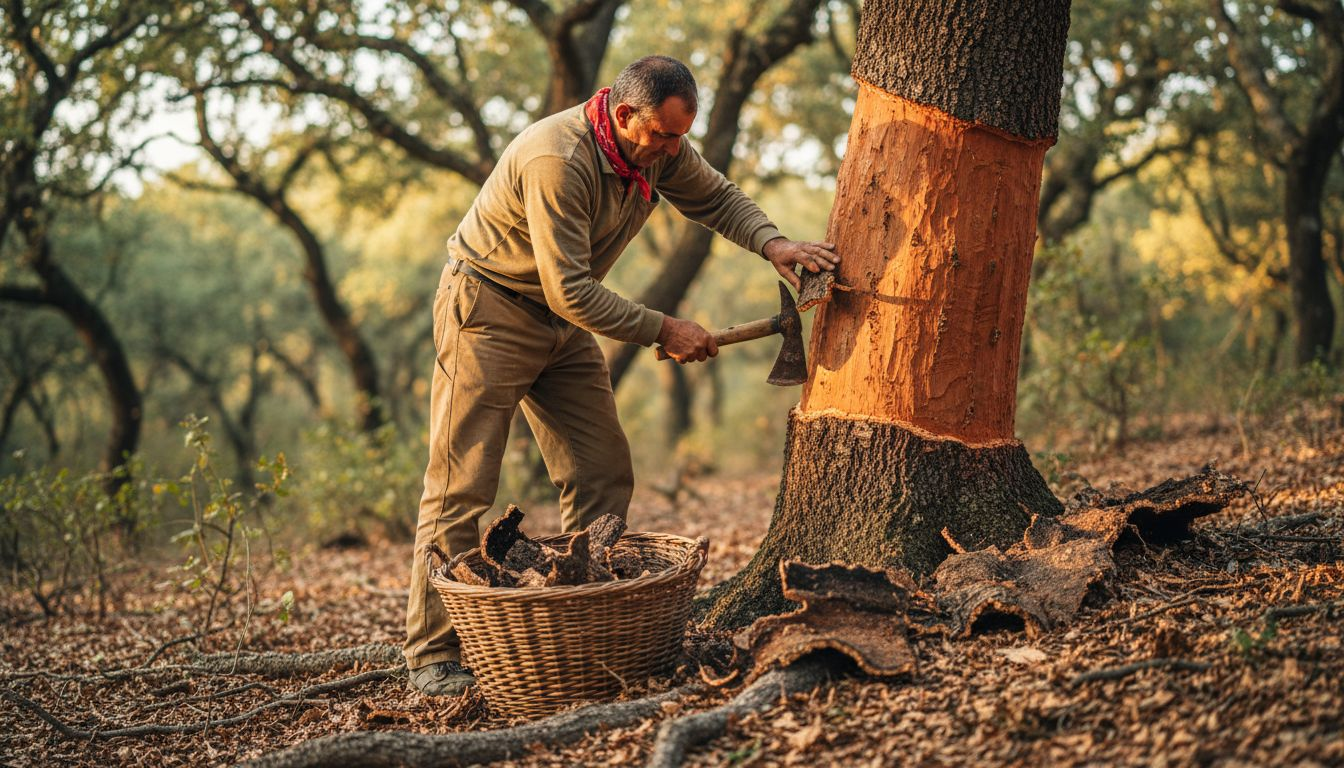
Cork production starts with a simple act of harvesting. Workers carefully strip the bark from mature cork oak trees without harming them. The cork harvesting process repeats every 9-12 years as the bark naturally regrows. This cyclical approach means the same tree produces cork throughout its 200-year lifespan. The harvested bark is boiled to remove impurities, then flattened and laminated onto fabrics to create cork leather. No toxic chemicals involved. The entire process respects both the tree and the environment.
Traditional leather production follows a completely different path. Animal hides must be preserved and made durable through tanning, a chemical-intensive process that often uses chromium and other hazardous substances. These toxic chemicals from leather tanning pollute waterways in production regions, affecting local ecosystems and worker health. The chemicals don’t disappear after production either, persisting in finished leather products and eventually in landfills.
Resource consumption shows the stark difference between these methods. Leather production demands enormous quantities of water for livestock farming, hide processing, and tanning operations. Land use extends across continents to raise and feed cattle. Cork harvesting requires no animal agriculture and no intensive water consumption during processing. The environmental cost per item produced favours cork dramatically.
Ethical concerns add another layer to leather production. Animal welfare issues are inherent to the industry. Workers in leather tanneries face occupational hazards from chemical exposure without adequate protection in many regions. Cork production sidesteps these problems entirely. No animals suffer, and the process poses minimal worker health risks when proper standards are followed. Your cork accessories carry no ethical baggage.
The finished product quality differs too. Cork leather becomes more beautiful with age, developing character and patina. Traditional leather requires ongoing conditioning and care to prevent cracking. Cork naturally resists water and wear, maintaining its appearance with minimal maintenance. Understanding the cork production process reveals why the final product outperforms leather in durability and sustainability combined.
Pro tip: Inspect cork products for the bark’s natural texture variations rather than uniform appearance, as visible grain patterns indicate genuine cork leather processed traditionally, not synthetic imitations or heavily processed cork dust composites.
Durability, Style, and Everyday Use Compared
Cork leather proves itself in real-world use. Cork leather resists water, scratches, and wear, making it perfect for daily bag life, commutes, and weekend adventures. It stays lighter and more flexible than traditional leather, so your shoulders thank you at the end of the day. Cork maintains its shape brilliantly because of its natural elasticity. Drop it, scuff it, live in it. It bounces back.
Traditional leather demands respect and maintenance. Cracks develop from exposure to dry air and temperature changes. Regular conditioning becomes a chore you cannot skip if you want your leather jacket or bag to last. Salt stains from winter weather require special cleaning products. Cork sidesteps these problems entirely. No conditioning needed. No special treatments required. It simply works without fuss.
Aesthetically, both materials age differently. Leather develops a patina that some people love, but this comes with visible wear, cracks, and colour fading. Cork develops character through surface changes whilst maintaining structural integrity. Longitudinal research on cork durability shows users report satisfaction with how cork accessories perform over extended use. The material looks intentionally vintage rather than damaged.
Everyday practicality favours cork strongly. Cork is hypoallergenic, so it suits sensitive skin without triggering reactions. Leather can harbour bacteria and requires regular cleaning for hygiene. Cork’s natural antimicrobial properties mean your wallet or bag stays fresher longer. The lightweight nature of cork accessories makes them ideal for people constantly on the move. Carry more without neck and shoulder strain.
Durability timelines prove comparable between materials when you account for maintenance costs. Traditional leather lasts years if you invest time and money in conditioning and repairs. Cork delivers equivalent longevity without the upkeep burden. Over time, your cork pieces become more affordable to maintain than leather counterparts because they simply do not need the intervention. Your time stays free.
Pro tip: Store cork accessories in a cool, dry place away from direct sunlight to prevent any natural colour deepening, and wipe spills immediately with a soft cloth to maintain the original appearance for years of use.
Environmental and Ethical Impacts Explained
Traditional leather production carries a heavy environmental cost that most people never see. Leather production contributes greenhouse gas emissions through animal farming, toxic tanning chemicals, and significant pollution. Cattle ranching drives deforestation across South America and Asia. The supply chains stretch globally, burning fossil fuels at every transport step. One leather jacket requires resources equivalent to feeding and raising an animal for years.
The chemical side of leather production deserves attention. Tanneries release chromium, lead, and other hazardous substances into waterways, contaminating drinking supplies for communities downstream. Workers in these facilities face occupational health hazards without adequate protection in many regions. These environmental injustices fall hardest on countries with weaker regulatory frameworks. The pollution persists long after the leather leaves the factory.
Cork offers a fundamentally different approach. Cork leather production uses no toxic chemicals and generates minimal waste. Harvesting cork actually supports biodiversity rather than destroying it. Cork oak forests provide habitat for endangered species, store carbon, and prevent desertification across Mediterranean regions. Every cork product you buy strengthens the economic incentive to preserve these ecosystems.
Ethically, cork wins decisively. No animals suffer in cork production. No workers face chemical exposure. No communities inherit polluted water sources. Your choice becomes a vote for a supply chain that respects both people and nature. This matters when you are building a wardrobe that aligns with your values.
The carbon footprint difference proves striking. Cork production has minimal carbon impact because trees sequester carbon naturally and harvesting requires no heavy machinery or intensive processing. Leather’s footprint spans livestock emissions, hide transport, chemical manufacturing, and tanning operations. Over a product’s lifetime, cork accessories generate a fraction of the environmental cost.
Choosing cork means choosing a material that supports what makes ethical fashion genuinely sustainable. Your accessories become tools for positive change rather than hidden environmental compromises.
Pro tip: When evaluating any fashion brand’s sustainability claims, ask specifically about their tannery locations and chemical protocols if they sell leather, as European tanneries generally enforce stricter environmental standards than facilities in developing nations.
Cost, Maintenance, and Common Concerns
Upfront pricing can seem confusing when comparing cork and leather accessories. Cork products sometimes cost less than quality leather, sometimes more, depending on the brand and craftsmanship involved. Do not assume cheaper means inferior. Cork typically requires less maintenance than traditional leather, which means your long-term costs decrease dramatically. That designer leather bag requiring monthly conditioning treatments adds expense beyond the initial purchase.
Maintenance differences matter more than you might think. Leather demands regular care to prevent cracking and deterioration. You need conditioning oils, specialist cleaners for stains, and sometimes professional repairs. Cork requires almost nothing. Wipe it clean with a damp cloth. That is it. Your time and money stay in your pocket whilst your accessories stay in perfect condition.
Longevity calculations shift the value equation entirely. A leather bag lasting five years with £50 annual maintenance costs you £250 plus the original purchase price. A cork bag lasting seven years with minimal care costs nearly nothing to maintain. Over a decade, cork becomes substantially cheaper. Most people never do this maths, which is why leather seems like the obvious choice initially.
Here’s a summary of the typical lifespans and real costs associated with cork and leather accessories:
| Material | Expected Lifespan | Annual Maintenance Cost | Total 7-Year Ownership Cost |
|---|---|---|---|
| Cork | 7+ years | Negligible | Near purchase price only |
| Leather | 5–10 years | £40–£60 | Purchase price + £200–£400 |
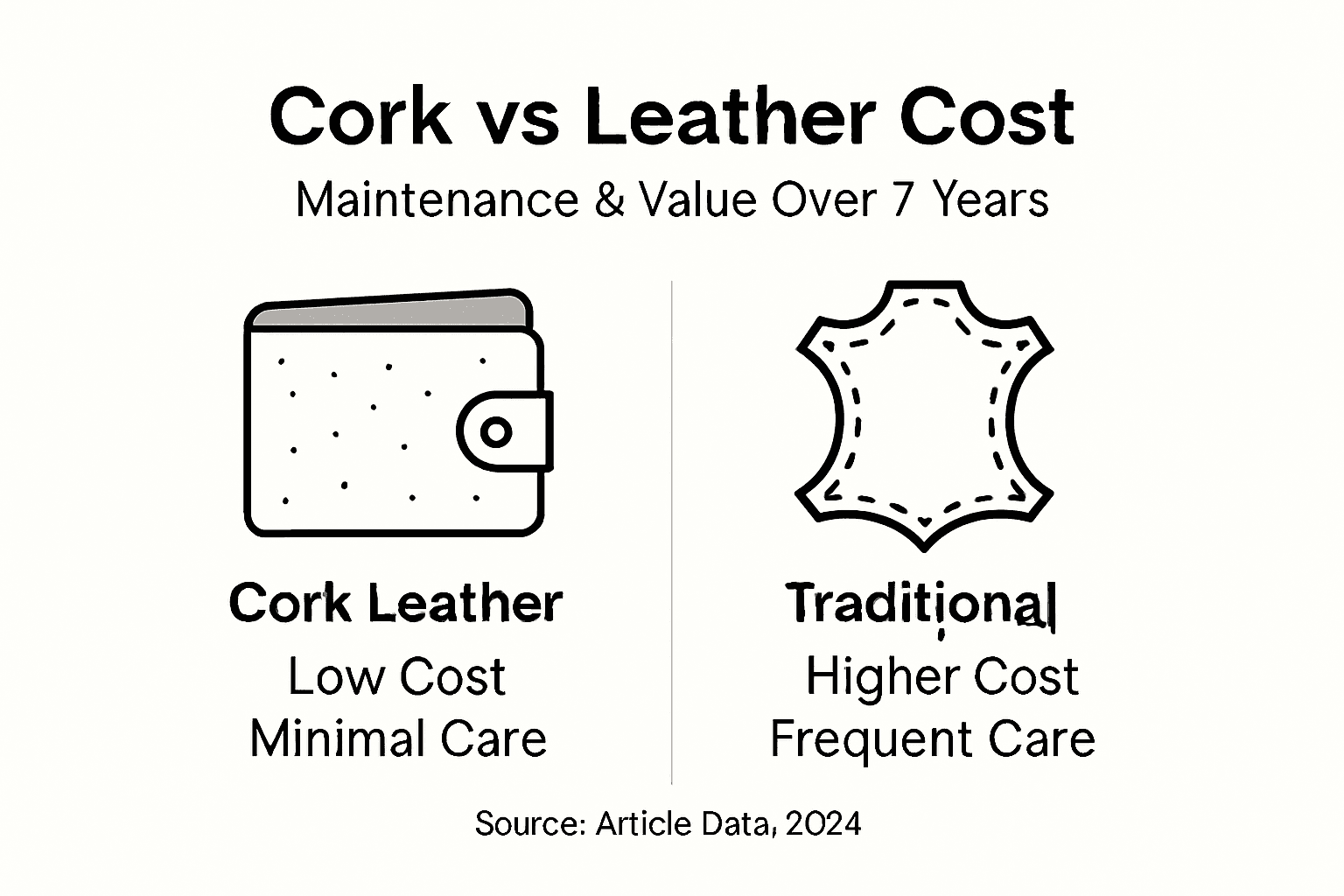
These figures highlight cork’s lower maintenance and ownership costs over time.
Common concerns about cork deserve honest answers. Will it wear out quickly? No. Will it stain permanently? Cork resists most stains because of its natural composition. Will it smell? Quality cork has no odour. Will it feel cheap? Genuine cork feels luxurious, with natural texture and weight that communicate quality immediately. These fears typically come from encountering poor quality cork products, not cork itself.
Colour fading happens naturally with cork, just as it does with leather. Some people see this as character development. Others prefer uniform appearance. Both materials change over time. The difference is cork changes beautifully without cracking, whilst leather develops visible damage. Your choice depends on whether you appreciate the patina effect.
Resale value surprises people. Vintage leather holds value better initially, but cork’s increasing popularity means second-hand cork accessories gain interest. Plus, fewer people damage cork through poor maintenance, so used cork items often look newer than equivalent aged leather pieces.
Pro tip: Calculate your true cost per year by dividing the purchase price plus maintenance expenses by the expected lifespan, then compare cork and leather accessories using this metric rather than upfront price alone.
Discover Sustainable Style That Respects Nature and Ethics
The article highlights the real challenge of choosing accessories that are not only stylish but also kind to our planet and animals. If you are seeking to replace traditional leather with a material that offers lower environmental impact with no compromise on quality or durability then cork is the clear solution. Cork is renewable, cruelty-free, and requires minimal maintenance while supporting the preservation of Mediterranean forests. Your passion for ethical fashion and reducing harmful chemical use can be fulfilled with cork accessories that age beautifully and maintain their unique character over time.
Explore the curated collection of vegan cork handbags, wallets, and backpacks at The Cork Store and embrace eco-conscious fashion today. Don’t wait to make a positive impact—visit The Cork Store now and select your next favourite accessory from sustainable, animal-friendly materials. Each purchase directly supports forest ecosystems and ethical craftsmanship. Learn more about why cork is the future of fashion on our sustainable fashion blog and join a community committed to change.
Frequently Asked Questions
What are the environmental benefits of cork compared to traditional leather?
Cork is a renewable resource harvested from the bark of cork oak trees without harming the tree. It has minimal environmental impact, while traditional leather production contributes to deforestation, greenhouse gas emissions, and pollution from toxic tanning chemicals.
Is cork leather durable enough for everyday use?
Yes, cork leather is highly durable. It is water-resistant, flexible, and resistant to scratches and wear. It maintains its shape well over time, making it suitable for daily accessories like bags and wallets.
How does maintenance differ between cork and traditional leather?
Cork requires minimal maintenance; simply wipe it clean with a damp cloth. In contrast, traditional leather demands regular conditioning and special cleaning products to prevent damage and maintain its appearance.
Are there ethical considerations associated with using cork compared to leather?
Cork production does not involve animal suffering or hazardous labour, making it a more ethical choice. Traditional leather raises concerns related to animal welfare and the health risks for workers involved in chemical tanning processes.
Recommended
- Cork Vs Traditional Leather – Sustainable Fashion Choices – The Cork Store
- Understanding What is Cork Leather and Its Benefits – The Cork Store
- Cork vs Leather: The Sustainable Style Choice – The Cork Store
- Role of Cork in Eco Fashion: Sustainable Style Unpacked – The Cork Store
- Cozee Bay - 7 Types of Sustainable Materials for Eco-Friendly Spaces