

Role of Cork in Eco Fashion: Sustainable Style Unpacked
Most British shoppers still think of cork as limited to bottle stoppers, yet this natural material is quietly reshaping the world of sustainable fashion. With over 80 percent of cork production coming from European forests, designers are now turning to cork for its elegance, flexibility, and environmental benefits. If you want to know why British consumers are rethinking their choices, discover how cork fashion challenges common myths and brings innovative style with a conscience.
Table of Contents
- Defining Cork Fashion And Its Misconceptions
- How Cork Is Harvested And Processed Sustainably
- Cork Accessories Versus Traditional Leather Goods
- Environmental Impact Of Cork Usage In Fashion
- Caring For Cork: Durability And Maintenance Tips
Key Takeaways
| Point | Details |
|---|---|
| Cork Fashion Revolution | Cork is an innovative, sustainable textile challenging traditional notions of materials in fashion. Its unique properties offer a versatile and eco-friendly alternative to synthetic textiles. |
| Sustainable Harvesting | Cork harvesting is a non-destructive process that promotes ecological health, allowing cork trees to regenerate while not harming local ecosystems. |
| Environmental Impact | Cork outperforms traditional leather in terms of environmental sustainability, generating minimal waste and supporting biodiversity through its regenerative properties. |
| Durability and Care | Cork accessories are highly durable and require minimal maintenance, making them an attractive, practical choice for environmentally conscious consumers. |
Defining Cork Fashion and Its Misconceptions
Cork fashion represents a revolutionary approach to sustainable textile design, challenging traditional perceptions about material functionality and aesthetic appeal. Far from being merely a wine bottle stopper, cork has emerged as a sophisticated, versatile fabric with remarkable properties that are transforming the eco-fashion landscape. Research exploring cork’s socio-cultural significance reveals that this natural material is not just an alternative, but a premium textile option with unique characteristics.
Contrary to popular misconceptions, cork fabric is not rigid or fragile. It possesses extraordinary qualities that make it ideal for fashion accessories: lightweight, water-resistant, hypoallergenic, and remarkably durable. The material’s inherent flexibility allows designers to create everything from sleek handbags to intricate wearable pieces. Fashion sustainability experts emphasise that cork’s natural texture provides an elegant, organic aesthetic that synthetic materials cannot replicate, making it increasingly attractive to environmentally conscious consumers.
The evolution of cork in fashion goes beyond mere material substitution. It represents a philosophical shift towards circular economy principles, where sustainability meets style. Innovative processing techniques have transformed cork from a traditional industrial material into a high-performance textile that maintains its ecological integrity. Designers are now exploring cork’s potential to create everything from minimalist wallets to avant-garde clothing pieces, demonstrating its versatility and design potential.
Pro Tip for Cork Fashion Enthusiasts: When exploring cork accessories, examine the material’s texture and flexibility. Quality cork products should feel supple, lightweight, and demonstrate remarkable durability, proving that sustainable fashion can be both aesthetically pleasing and functionally superior.
How Cork Is Harvested and Processed Sustainably
The sustainable harvesting of cork represents a remarkable ecological practice that sets this material apart from other textile resources. Unlike traditional fabric production methods that often involve significant environmental disruption, cork harvesting is a carefully managed process that preserves the fundamental health of cork oak trees. Research examining the Portuguese cork industry’s sustainable practices reveals a sophisticated approach that prioritises both environmental preservation and economic sustainability.
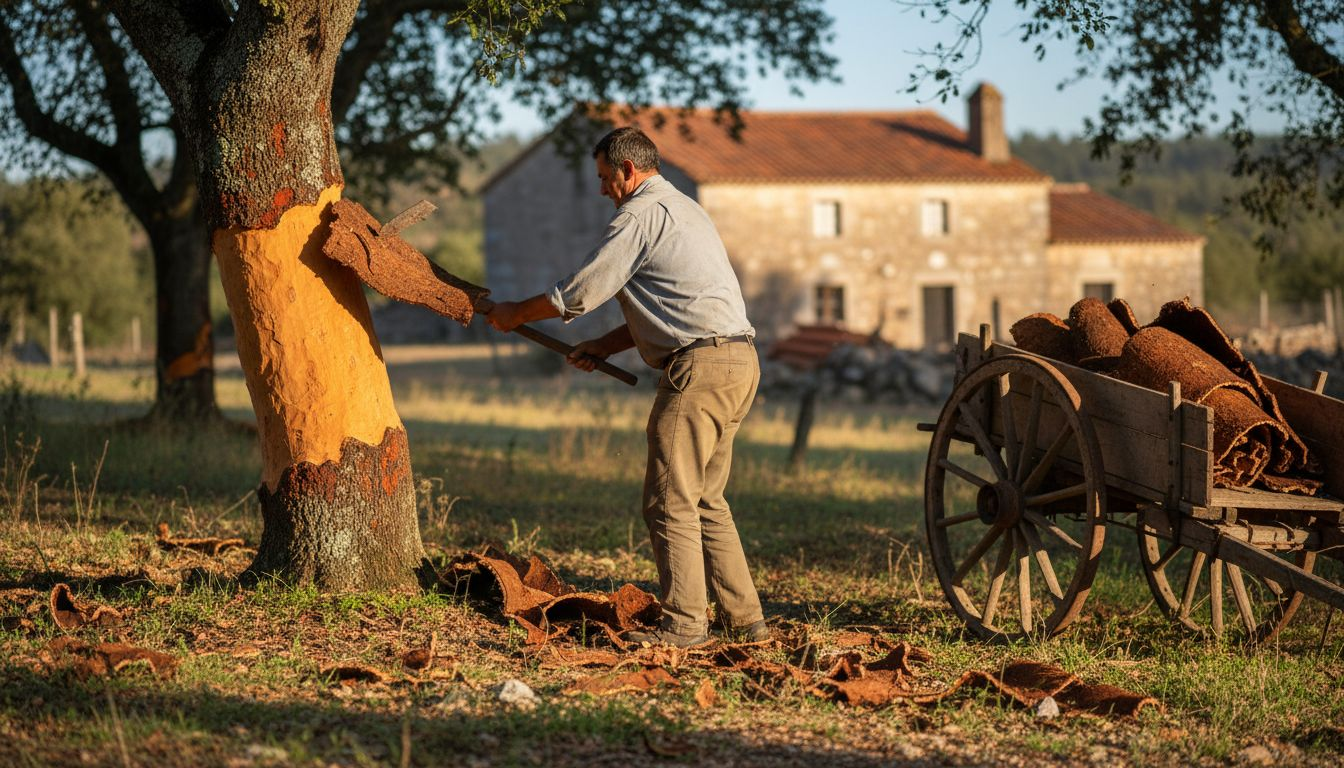
The harvesting process is remarkably gentle and non-destructive. Skilled workers carefully strip bark from cork oak trees using specialised axes, ensuring that only the outer bark is removed without damaging the tree’s core structure. Sustainable harvesting techniques demonstrate that a single cork oak tree can be harvested multiple times throughout its lifetime - typically every nine to twelve years - without causing permanent harm. This regenerative approach means that each tree continues to absorb carbon dioxide and support local ecosystems while providing a renewable material for fashion and other industries.
Processing cork involves several intricate steps that transform the raw bark into a flexible, durable textile suitable for fashion applications. After harvesting, the cork bark is carefully dried, boiled, and then cut into thin sheets or ground into granules depending on the desired end product. Innovative manufacturing techniques have enabled designers to create cork fabrics that are remarkably similar to leather in texture and durability, but with a significantly reduced environmental footprint. These processes eliminate the need for harmful chemical treatments, instead relying on natural binding agents and mechanical processing techniques.
Pro Tip for Sustainable Fashion Enthusiasts: When purchasing cork products, look for certifications that verify sustainable harvesting practices. Authentic cork items will typically provide transparent information about their production process, ensuring you’re supporting environmentally responsible manufacturing methods.
Key stages in sustainable cork harvesting and processing are summarised below:
| Stage | Purpose | Environmental Benefit |
|---|---|---|
| Bark Harvesting | Remove outer bark, leave tree alive | Tree regrows bark, continues absorbing carbon |
| Drying | Prepare bark for processing | No need for harsh chemicals |
| Boiling | Increase flexibility of cork | Uses water, no added toxins |
| Cutting/Grinding | Shape cork into sheets or granules | Minimal waste, efficient resource use |
| Fabric Formation | Create textile from cork sheets | Reduces reliance on animal products |
Cork Accessories Versus Traditional Leather Goods
The comparison between cork accessories and traditional leather goods reveals a profound shift in sustainable fashion design. Life cycle assessment studies demonstrate that cork materials consistently outperform traditional leather in environmental impact, offering conscientious consumers a genuinely eco-friendly alternative. Where leather production involves significant animal farming, chemical processing, and substantial carbon emissions, cork represents a regenerative, low-impact material that supports ecological balance.
Performance characteristics of cork accessories challenge traditional perceptions about alternative materials. Innovative fabric research has shown that cork-blended textiles can match or exceed the durability and aesthetic qualities of conventional leather goods. Cork accessories demonstrate remarkable resistance to wear, water, and staining, while maintaining a lightweight and flexible structure that adapts to the user’s needs. The material’s natural texture provides a sophisticated, organic appearance that distinguishes it from mass-produced leather products.
Environmental credentials set cork accessories apart as a superior choice for ethically minded consumers. Unlike leather, which requires intensive farming and chemical treatments, cork is harvested without harming trees, supporting biodiversity and local ecosystems. The production process generates minimal waste, with cork oak forests acting as significant carbon sinks. Each cork accessory represents not just a fashion statement, but a commitment to sustainable production methods that prioritise environmental preservation over short-term manufacturing convenience.
Pro Tip for Conscious Shoppers: When comparing cork and leather accessories, examine the material’s texture, flexibility, and manufacturing transparency. Authentic sustainable accessories will provide clear information about their production process and environmental impact.
Here’s how cork compares to traditional leather as a material for fashion accessories:
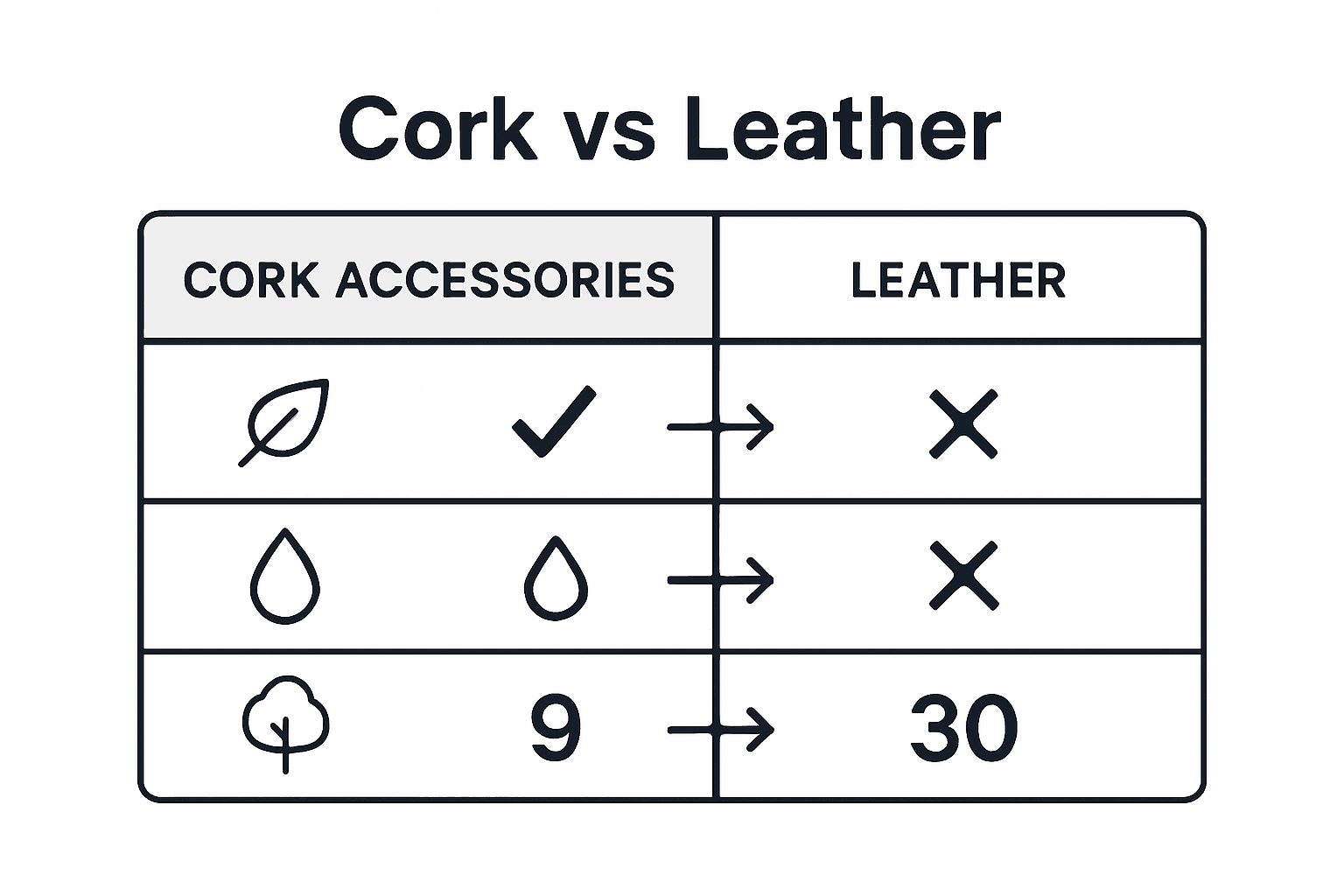
| Aspect | Cork Accessories | Traditional Leather |
|---|---|---|
| Source | Bark of cork oak trees | Animal hides, mainly cattle |
| Environmental Impact | Renewable, minimal emissions | Significant resource consumption |
| Animal Welfare | No animals involved | Depends on livestock farming |
| Durability | Very resistant to wear, lightweight | Sturdy but heavier |
| Water Resistance | Naturally water-repellent | Prone to water damage |
| Maintenance | Simple cleaning, little upkeep | Regular conditioning required |
| Aesthetic Appeal | Unique, organic texture | Classic, polished finish |
Environmental Impact of Cork Usage in Fashion
Fashion’s environmental footprint has long been a critical concern, with sustainable materials emerging as a transformative solution to industrial waste and ecological degradation. Life cycle assessment studies reveal that cork represents a breakthrough in sustainable textile production, demonstrating significantly lower environmental impact compared to traditional manufacturing materials. Unlike synthetic fabrics and leather that require extensive chemical processing and generate substantial carbon emissions, cork offers a regenerative alternative that actively supports ecological preservation.
The potential of cork in reducing fashion’s environmental burden extends far beyond its harvesting process. Innovative fabric research demonstrates that blended cork textiles can dramatically reduce the ecological footprint of clothing and accessories. Cork’s unique properties enable manufacturers to create durable, lightweight materials that consume less energy during production and generate minimal waste. The material’s natural ability to sequester carbon, combined with its renewable harvesting method, positions cork as a critical component in developing truly sustainable fashion ecosystems.
Beyond its immediate environmental benefits, cork usage in fashion represents a holistic approach to ecological responsibility. Cork oak forests serve as significant carbon sinks, absorbing substantial amounts of atmospheric carbon dioxide while supporting complex biodiversity. Each cork accessory effectively becomes a small but meaningful intervention in global climate mitigation efforts. The material’s lifecycle reflects a circular economy model, where production processes prioritise environmental regeneration over resource depletion, challenging conventional fashion industry practices and offering consumers a tangible method of reducing their personal environmental impact.
Pro Tip for Eco-Conscious Consumers: When evaluating sustainable fashion choices, consider the entire lifecycle of materials. Cork accessories represent more than just a stylish alternative; they are a direct investment in environmental restoration and responsible manufacturing practices.
Caring for Cork: Durability and Maintenance Tips
Cork accessories represent a sophisticated fusion of style and practicality, offering remarkable durability that challenges traditional perceptions of sustainable materials. Comprehensive durability studies demonstrate that cork’s inherent structural properties make it exceptionally resistant to wear, moisture, and daily environmental stressors. Unlike leather or synthetic materials that degrade quickly, cork maintains its aesthetic integrity and functional performance through years of consistent use.
Maintenance techniques for cork accessories are surprisingly straightforward, reflecting the material’s natural resilience. Performance research on cork fabrics indicates that these materials require minimal upkeep to preserve their quality. Basic care involves gentle cleaning with a soft, damp cloth and allowing the item to air dry naturally. Avoiding prolonged exposure to direct sunlight and extreme temperatures will help maintain the material’s colour and structural integrity, preventing potential cracking or discolouration.
The versatility of cork extends beyond its aesthetic appeal, offering practical benefits that set it apart from conventional fashion materials. Its natural water-resistant properties make it ideal for accessories that encounter diverse environmental conditions. Cork’s cellular structure allows it to repel moisture while remaining breathable, preventing the accumulation of bacteria and maintaining a fresh appearance. This unique characteristic means cork accessories can withstand light rain, accidental spills, and daily wear without compromising their structural integrity or visual appeal.
Pro Tip for Cork Accessory Owners: Invest in a specialised cork conditioning treatment every six months to maintain the material’s suppleness and protect it from environmental wear. Regular, gentle maintenance will ensure your cork accessories remain beautiful and functional for years to come.
Discover Sustainable Style with Authentic Cork Accessories
The article highlights the challenge of finding fashion accessories that combine sustainability, durability, and ethical sourcing without compromising on style. Cork’s unique qualities such as being lightweight, water-resistant and eco-friendly address common pain points faced by environmentally conscious consumers seeking alternatives to traditional leather. If you want to support the circular economy and enjoy cruelty-free products crafted from a truly renewable resource, cork accessories offer a sophisticated solution.
Experience this innovation firsthand with The Cork Store, your destination for vegan cork handbags, wallets, backpacks, and more. Each item reflects the careful sustainable harvesting and processing methods discussed in the article, ensuring minimal environmental impact and premium quality.
Browse a curated collection that emphasises the very benefits of cork fashion from the article and discover why switching to cork accessories means investing in long-lasting style and environmental responsibility.
Elevate your wardrobe with eco-conscious accessories that align perfectly with sustainable fashion goals. Visit The Cork Store today and explore our offerings designed for those who value ethical production and innovative design. Take the next step towards reducing your environmental footprint with stylish cork goods that outshine traditional materials. Don’t wait to make a responsible fashion choice that truly lasts.
Frequently Asked Questions
What makes cork a sustainable material for fashion?
Cork is a sustainable material because it is harvested from cork oak trees without harming the tree. The harvesting process allows the tree to continue growing and absorbing carbon dioxide, supporting local ecosystems.
How does cork compare to traditional leather in terms of environmental impact?
Cork has a significantly lower environmental impact than traditional leather, as it is renewable and requires minimal emissions during its production, whereas leather involves intensive farming and harmful chemical treatments.
How should I care for cork accessories to ensure their longevity?
To care for cork accessories, gently clean them with a soft, damp cloth and allow them to air dry. Avoid prolonged exposure to direct sunlight and extreme temperatures to prevent cracking or discolouration.
What are the unique properties of cork fabric that enhance its use in fashion accessories?
Cork fabric is lightweight, water-resistant, hypoallergenic, and remarkably durable. It also has a natural texture that provides an elegant aesthetic, making it suitable for a wide range of fashion accessories.
Recommended
- Understanding the Role of Cork in Sustainable Fashion – The Cork Store
- Understanding the Role of Eco-Friendly Materials in Fashion – The Cork Store
- What Is Eco-Friendly Fashion? Complete Overview – The Cork Store
- Complete Guide to Sustainable Fashion Tips – The Cork Store
- Eco-Friendly and Sustainable Phone Cases with Unique Designs – Tallpine Cases