
Why Eco Shoppers Prefer Cork Accessories
More than 13 million hectares of cork oak forests span regions like Portugal and Spain, creating one of Europe’s greatest renewable resources. British shoppers and millennials everywhere are demanding accessories that blend cruelty-free ethics with genuine sustainability, seeking options that minimize environmental harm without sacrificing style. This guide reveals how cork’s innovative qualities go far beyond expected environmental benefits, empowering you to make choices that truly reflect your values.
Table of Contents
- Cork Material Explained For Eco Shoppers
- Types Of Cork Accessories And Applications
- Sustainability And Environmental Impact Of Cork
- Ethical Benefits: Vegan And Cruelty-Free Qualities
- Durability, Style, And Functional Advantages
- Comparing Cork With Leather And Synthetic Alternatives
Key Takeaways
| Point | Details |
|---|---|
| Sustainable Production | Cork is harvested from cork oak trees without harming them, supporting both ecological preservation and local economies. |
| Versatile Applications | Cork’s unique properties allow for a wide range of stylish accessories, including handbags, wallets, and yoga mats, appealing to eco-conscious consumers. |
| Ethical Choice | Cork accessories provide a cruelty-free alternative to leather, minimising environmental impact and supporting traditional agricultural communities. |
| Durability and Performance | Cork’s natural resilience, water resistance, and lightweight nature offer long-lasting functional benefits while maintaining aesthetic appeal. |
Cork Material Explained for Eco Shoppers
Cork represents an extraordinary sustainable material with profound environmental credentials that sets it apart from traditional accessory fabrics. Renewable harvesting practices make cork a remarkable solution for conscientious consumers seeking stylish yet planet-friendly alternatives.
The unique production process of cork involves carefully stripping bark from cork oak trees in Mediterranean regions like Portugal and Spain, without harming the tree itself. Each cork oak can be harvested every 9-12 years throughout its impressive 200-year lifespan, ensuring minimal environmental disruption. This regenerative approach means a single cork oak can produce bark multiple times, creating a truly sustainable material cycle that supports both ecological preservation and local economies.
Cork’s extraordinary material properties extend far beyond its environmental credentials. Its distinctive cellular structure provides remarkable characteristics including lightweight durability, natural water resistance, and exceptional insulation capabilities. Biodegradable and recyclable, cork requires minimal processing compared to synthetic materials, making it an ideal choice for eco-conscious fashion enthusiasts who refuse to compromise between style and sustainability.
Pro tip: When selecting cork accessories, look for products that highlight the specific origin of their cork material to ensure authentic, sustainably sourced production.
Types of Cork Accessories and Applications
Cork has emerged as a revolutionary material in sustainable fashion, offering an impressive range of versatile accessory options. From elegant handbags to practical wallets, the material transforms traditional fashion expectations by providing eco-conscious consumers with stylish alternatives that don’t compromise environmental integrity.
The diversity of cork accessories spans multiple lifestyle categories. Fashion enthusiasts can find cork-based products including wallets, purses, belts, shoes, and even dress materials. Sustainable cork fabric is created by carefully laminating thin cork sheets onto textile bases, resulting in a durable and flexible material that maintains exceptional performance characteristics. Beyond fashion, cork’s applications extend to functional items like yoga mats, watches, and jewellery, demonstrating its remarkable adaptability.
Unique material properties make cork an ideal alternative to traditional leather and synthetic materials. Its natural characteristics include lightweight composition, water resistance, shock absorption, and aesthetic appeal. Vegan consumers particularly appreciate cork as a cruelty-free option that delivers both style and substance. The material’s inherent durability ensures accessories maintain their quality, offering long-lasting performance while minimising environmental impact.
The following table summarises common cork accessory types and their typical benefits:
| Accessory Type | Typical Benefit | Popular Use |
|---|---|---|
| Handbags & Purses | Lightweight and water-resistant | Daily, travel, evenings |
| Wallets & Cardholders | Flexible yet durable | Everyday carry |
| Belts | Vegan, stylish, robust | Casual and formal wear |
| Shoes | Breathable, shock-absorbing | Urban and outdoor activities |
| Yoga Mats | Grippy, eco-friendly | Fitness, yoga studios |
| Watches & Jewellery | Unique texture and hypoallergenic | Fashion statement |
| Dress Materials | Soft, sustainable alternative | Ethical fashion options |
Pro tip: When purchasing cork accessories, examine the craftsmanship and verify the specific production process to ensure you’re supporting genuinely sustainable manufacturing practices.
Sustainability and Environmental Impact of Cork
Cork represents a remarkable environmental success story, with a production process that actively supports ecosystem preservation. Unlike many industrial materials, cork harvesting occurs without harming the trees, allowing continuous growth and remarkable carbon absorption capabilities. Cork oak forests play a critical role in maintaining Mediterranean ecosystems, providing habitats for diverse wildlife while preventing soil erosion and supporting local rural economies.
The environmental credentials of cork extend far beyond its harvesting process. Sustainable industrial applications demonstrate how this material contributes to reducing ecological footprints across multiple sectors. Cork’s natural properties enable enhanced thermal and acoustic insulation in construction, while its zero-waste production ensures that every part of the harvested material finds a purposeful use. The material’s biodegradability means it seamlessly returns to the natural environment without creating long-term pollution.
Moreover, cork’s sustainability is deeply intertwined with social and ecological benefits. The harvesting process involves no chemical interventions, preserving the natural integrity of both the material and its surrounding ecosystem. By supporting cork production, consumers directly contribute to maintaining healthy forest landscapes, protecting biodiversity, and sustaining traditional agricultural practices in regions like Portugal and Spain. Each cork product represents a small but significant step towards more responsible consumption and environmental stewardship.
Pro tip: When purchasing cork products, seek out certifications that verify sustainable harvesting practices and support manufacturers committed to transparent, environmentally responsible production.
Ethical Benefits: Vegan and Cruelty-Free Qualities
Cork accessories represent a profound ethical breakthrough in sustainable fashion, offering consumers a compassionate alternative to animal leather. Unlike traditional leather production, which often involves significant animal suffering, cork harvesting occurs without harming any living creatures. The material’s unique production process ensures that every accessory reflects a commitment to animal welfare, making it an ideal choice for conscientious shoppers who refuse to compromise their ethical standards.
The vegan credentials of cork extend far beyond simple animal protection. By choosing cork, consumers actively support manufacturing processes that minimise environmental impact and prioritise ethical production. The material’s manufacturing requires minimal chemical intervention, uses substantially less energy compared to traditional leather processing, and creates products that are both stylish and principled. This approach resonates deeply with a growing demographic of shoppers who view their purchasing decisions as moral statements about global sustainability and animal rights.
Moreover, cork’s ethical qualities are intrinsically linked to broader social and ecological benefits. The harvesting process supports traditional agricultural communities in regions like Portugal and Spain, providing economic opportunities that do not rely on animal exploitation. Each cork accessory represents more than just a fashion statement – it embodies a holistic approach to consumption that respects animal life, supports local economies, and maintains ecological balance. For vegans and environmentally conscious consumers, cork becomes a powerful tool for expressing personal values through everyday choices.
Pro tip: When selecting vegan accessories, look beyond the label and investigate the entire production chain to ensure genuine ethical manufacturing practices.
Durability, Style, and Functional Advantages
Cork accessories represent an extraordinary fusion of performance and aesthetic appeal, with remarkable material properties that set them apart from traditional fashion materials. Its unique cellular structure, filled with air pockets, provides exceptional resilience and shock absorption, ensuring accessories maintain their integrity through years of regular use. This inherent durability means cork products can withstand daily wear without compromising their structural integrity or visual appeal.

The functional advantages of cork extend far beyond simple durability. Its natural water-resistant properties make it ideal for accessories that encounter diverse environmental conditions, from urban commutes to outdoor adventures. The material’s lightweight composition ensures comfort without sacrificing strength, while its distinctive texture offers a tactile experience that synthetic materials cannot replicate. Cork’s ability to recover after compression means accessories like wallets and bags retain their shape and appearance, providing long-lasting utility that aligns perfectly with sustainable consumption principles.
Beyond functionality, cork accessories deliver a sophisticated aesthetic that appeals to style-conscious consumers. Flexible and robust fabric characteristics enable designers to create pieces that are simultaneously modern and timeless. The material’s natural variations in colour and texture mean each accessory becomes a unique statement piece, reflecting the wearer’s commitment to both individual style and environmental consciousness. From minimalist wallets to intricate handbags, cork proves that sustainable fashion can be elegant, practical, and thoroughly contemporary.
Pro tip: Rotate your cork accessories periodically and store them in cool, dry environments to maintain their natural texture and extend their functional lifespan.
Comparing Cork with Leather and Synthetic Alternatives
In the evolving landscape of sustainable fashion, cork emerges as a transformative material that challenges traditional material choices. Unlike animal leather, which involves significant ethical concerns and environmental degradation, cork offers a compassionate and ecologically responsible alternative. While synthetic materials often rely on petroleum-based plastics that contribute to long-term pollution, cork represents a renewable resource that seamlessly balances performance, aesthetics, and environmental integrity.
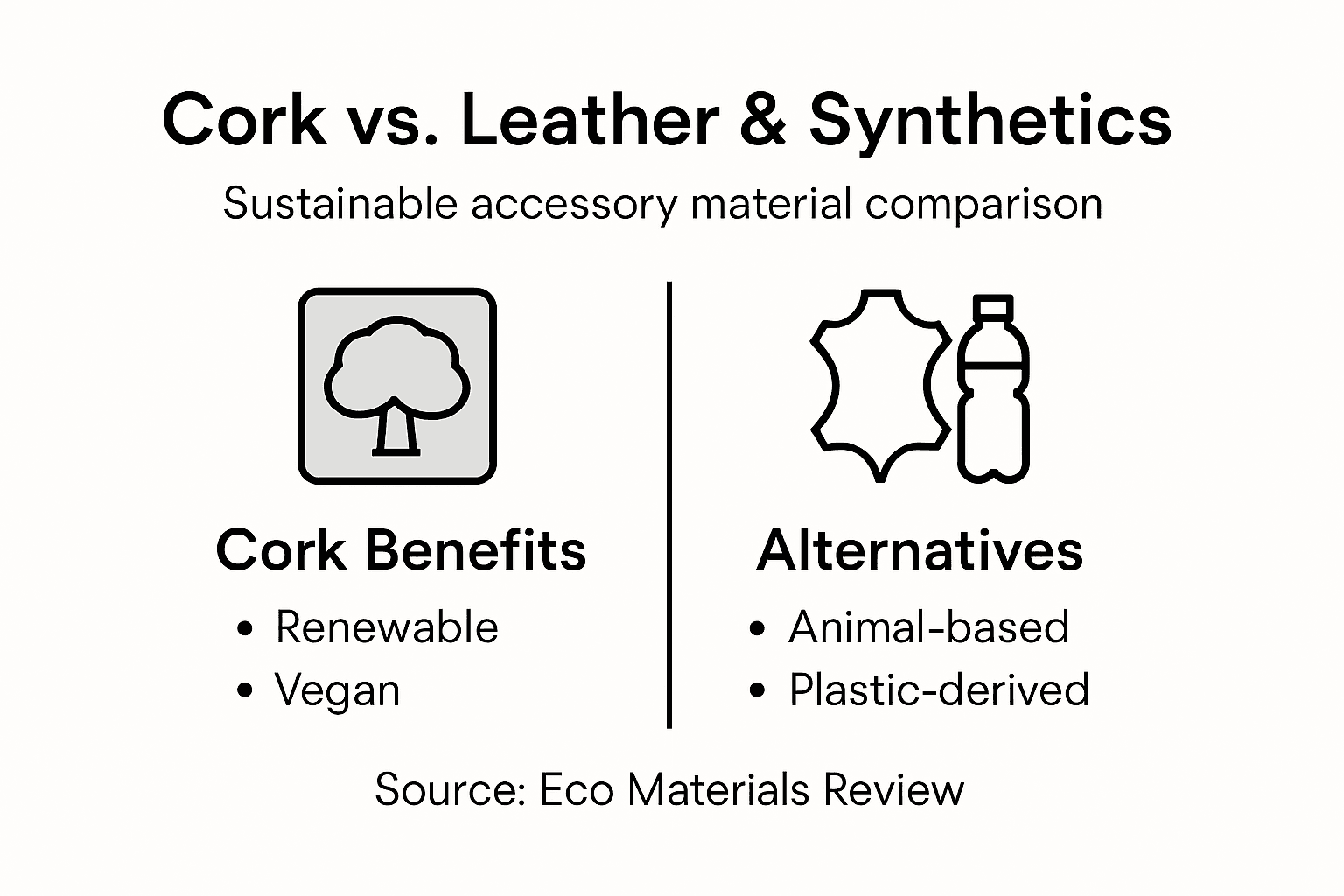
The comparative advantages of cork become increasingly apparent when examining its material properties. Traditional leather production requires extensive chemical processing, water consumption, and contributes to deforestation and animal welfare issues. Synthetic leather, conversely, introduces microplastic pollution and relies on non-renewable petrochemical resources. Cork stands distinctly apart, offering a material that is lightweight, water-resistant, and biodegradable, without compromising on durability or aesthetic appeal. Its unique cellular structure provides natural resilience that synthetic alternatives struggle to match, making it an ideal choice for conscientious consumers.
Moreover, cork’s production cycle demonstrates a holistic approach to sustainability that leather and synthetic materials cannot replicate. Where leather tanning involves toxic chemicals and significant environmental impact, and synthetic production generates substantial carbon emissions, cork harvesting supports local ecosystems and rural economies. The material’s ability to be extracted without harming trees, combined with its capacity for carbon sequestration, positions cork as a regenerative material that actively contributes to environmental restoration. For eco-conscious consumers, choosing cork is not merely a fashion statement, but a meaningful commitment to supporting sustainable industrial practices.
Here’s a concise comparison of cork, leather, and synthetic materials for accessories:
| Attribute | Cork | Leather | Synthetics |
|---|---|---|---|
| Source | Renewable bark | Animal hides | Petrochemicals |
| Animal Welfare | Cruelty-free | Requires animal farming | Animal-free, but not eco-friendly |
| Biodegradability | Fully biodegradable | Partially biodegradable | Not biodegradable |
| Water Resistance | Naturally water-resistant | Can absorb moisture | Varies, often water-resistant |
| Energy Use | Low for harvesting and processing | High for tanning and finishing | High in production |
| End-of-Life Impact | Compostable, minimal pollution | Pollution risk from tanning chemicals | Microplastic pollution, landfill burden |
| Unique Style Feature | Natural grain, lightweight | Characteristic patina | Mimics various appearances |
Pro tip: When comparing accessories, examine the entire lifecycle of materials, considering not just immediate performance but long-term environmental and ethical implications.
Discover Stylish, Sustainable Cork Accessories for the Conscious Shopper
If you are inspired by the incredible sustainability and ethical benefits of cork explored in the article, now is the perfect time to embrace this eco-friendly material in your own fashion choices. The challenges of finding accessories that are truly vegan, durable, and environmentally responsible end here. With cork’s natural water resistance, unique texture, and renewable harvest cycle, you can confidently choose products that marry style with uncompromising ethical values.
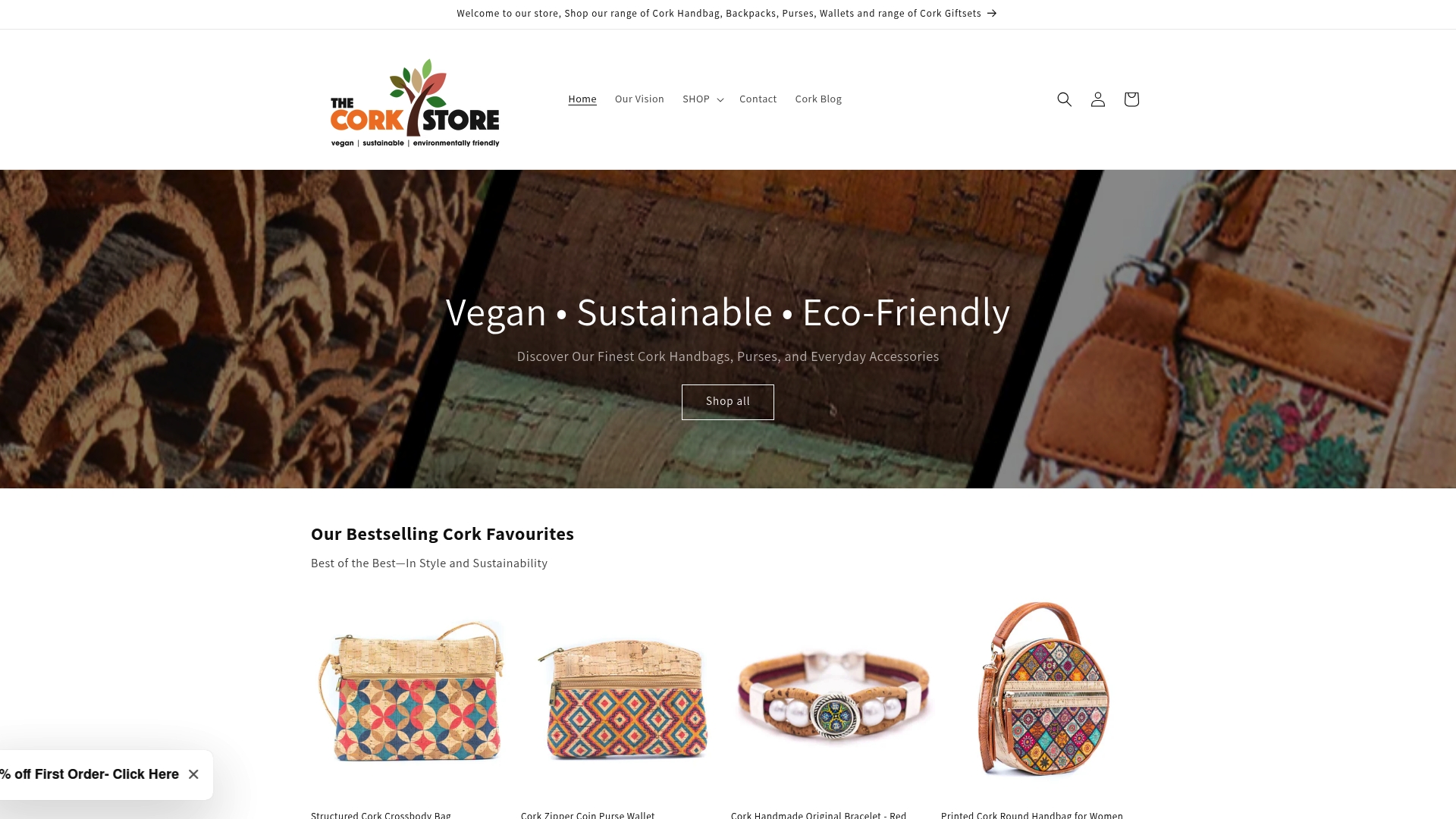
Explore the curated collection at The Cork Store, where you will find handbags, wallets, purses, and backpacks thoughtfully crafted from genuine cork material. Each piece supports sustainable harvesting and local ecosystems, reflecting your dedication to responsible consumption. Don’t wait to make a statement that protects animal welfare, reduces your environmental footprint, and brings timeless elegance to your wardrobe. Visit The Cork Store now and step into a greener, cruelty-free future with cork accessories as your go-to choice.
Frequently Asked Questions
What makes cork accessories sustainable?
Cork accessories are sustainable because they are made from the bark of cork oak trees, which can be harvested every 9-12 years without harming the tree. This regenerative harvesting process supports ecological preservation and local economies, making cork an eco-friendly alternative to traditional materials.
How do cork accessories compare to leather and synthetic materials?
Cork accessories offer significant advantages over leather and synthetic materials. Unlike leather, cork is cruelty-free and biodegradable with low-energy processing. Compared to synthetics, cork does not contribute to microplastic pollution and is derived from renewable resources, making it a more environmentally responsible choice.
Are cork accessories durable and functional?
Yes, cork accessories are both durable and functional. Their unique cellular structure provides lightweight durability, natural water resistance, and exceptional insulation capabilities. These properties ensure that cork products maintain their quality and appearance over time, making them suitable for everyday use.
Can cork accessories be considered a vegan option?
Absolutely! Cork accessories are a vegan alternative to animal leather. The harvesting process does not involve disrupting the tree’s life and requires no animal exploitation, making cork a compassionate choice for consumers seeking stylish, cruelty-free products.