

£35 Cork Wallet Lasts 5 Years: Vegan Wallets for Men
For most men, a cork wallet or a bio-based vegan leather billfold beats a traditional leather one on durability, weather resistance and conscience, without sacrificing style. Cork suits anyone who wants a low-maintenance, water-resistant everyday carry; bio-based vegan leather suits anyone who wants the classic leather look and feel. Buy from a specialist retailer like Thecorkstore that lists material breakdowns clearly.
TL;DR:
- Cork wallets are highly durable, water-resistant, and age gracefully with a natural patina, making them a top eco-friendly choice for daily use.
- Bio-based vegan leather closely mimics traditional leather in feel and appearance, but its longevity depends on material quality, with cheaper versions cracking faster.
- Recycled textiles offer a budget-friendly, lightweight option but generally lack the structure and refined look of cork or bio-leather.
- Metal wallets provide maximum card protection and slimness but lack the soft, comfortable feel of cork or leather and may be colder to handle.
- Prioritize material composition, construction details, and warranty information when choosing a vegan wallet to ensure longevity and ethical sourcing.
Table of Contents
- How to choose a vegan wallet for men
- Cork, bio-leather, recycled textiles or metal: which vegan material wins?
- Which wallet style suits your pockets?
- Caring for a vegan wallet so it lasts
- Vegan wallets versus leather: feel, weight and longevity
- What do vegan wallets cost, and are they good value?
- Which brands make the best vegan wallets for men?
- What do buyers say about vegan wallets in practice?
- Vegan wallets vs leather: the honest trade-offs
- Why cork earns its place in a men’s wallet lineup
- Where to buy an ethical cork or vegan wallet
- Sources
How to choose a vegan wallet for men
Start with material, not colour. What a wallet is made from decides how it ages, how it feels in your pocket after a year, and whether it survives being sat on in a car seat five days a week.
Four things matter more than anything else on a product page:
- Material composition — the percentage of plant-based or recycled content, not just the word “vegan”
- Capacity — how many card slots and note pockets you’ll actually use daily
- RFID shielding — worth having if you carry contactless bank or transport cards
- Country of origin and warranty — a maker who states where a wallet is finished and what happens if stitching fails is usually a maker who trusts their own product
Before buying, check three things on the listing itself: the materials breakdown (is it cork, a bio-based vegan leather blend, or recycled polyester?), any warranty or returns policy, and whether construction details like stitching type are mentioned at all. Will’s Vegan Shoes documents plant-origin content directly on its product pages, which is the standard every vegan wallet listing should meet.
Matching style to daily carry matters just as much as material. If you’re pulling your wallet out of a front trouser pocket a dozen times a day, a slim cardholder wins. If it lives in a jacket or bag, a bifold with a note section makes more sense.
Pro Tip: Measure your current wallet’s thickness before buying. Anything under 10mm empty will still feel slim once you’ve loaded four cards and a note.
Cork, bio-leather, recycled textiles or metal: which vegan material wins?
Material choice decides comfort, longevity and how the wallet ages, and each option performs differently depending on how hard you use it.
Cork is harvested from the bark of cork oak trees without felling them, which is why it shows up so often in sustainability roundups. It’s naturally water-resistant, scratch-resistant and develops a gentle patina with use rather than cracking or peeling like cheap PU leather. PETA’s guide to vegan wallets names cork among its recommended eco-friendly materials, and reviewers at Groove Life single it out as low-maintenance and moisture-resistant, calling out cork wallets often handmade in Portugal from certified cork oak sources.
Bio-based vegan leather is the closest thing to the traditional leather look and handle. The better versions use plant-derived polyols rather than pure petroleum plastic, with some brands publishing exact plant-content percentages on their product pages.
Recycled textiles and rPET turn plastic bottles and fabric waste into wallet linings and shells. They’re light and often cheap, but they rarely match cork or bio-leather for structure and can look utilitarian rather than smart.
Metal and alloy wallets trade warmth and texture for rigidity and slimness. They suit men who want maximum card protection and don’t mind a colder, more industrial look.
- Cork: best all-rounder for daily durability and low upkeep
- Bio-based vegan leather: best for a classic dressy look
- Recycled textiles: best budget, casual option
- Metal/alloy: best for security-focused minimalists
Which wallet style suits your pockets?
Card count and pocket habits should decide format before looks do. Here’s how the main styles break down:
- Slim cardholders suit commuters and minimalists, typically holding four to six cards with little to no note storage. They sit flat in a front pocket and are the easiest style to carry without a bulge.
- Bifolds suit men who carry cash, receipts or loyalty cards alongside bank cards. Expect more bulk once loaded, especially if the design includes a coin pocket or zip section.
- Trifolds and coin wallets suit travellers and anyone who deals in physical currency regularly, since the extra folds create dedicated space for coins and foreign notes.
- Standard billfolds sit between a cardholder and a bifold, offering a note section without the third fold, and remain the most common everyday choice.
Before buying, count your actual cards rather than guessing. Most men overestimate how many they carry and end up with a wallet twice the size they need.
Caring for a vegan wallet so it lasts
Simple habits stretch the life of any wallet, vegan or not. Wipe it down regularly, avoid overloading it past its designed capacity, and let it dry naturally if it gets wet rather than using direct heat.
Cork needs almost nothing beyond a soft, damp cloth wipe. Avoid soaking it or scrubbing with anything abrasive, since that’s the fastest way to wear down the surface texture prematurely.
Bio-based leather and fabric wallets follow similar rules: a damp cloth for cleaning, no direct heat sources like radiators or car dashboards, and no polish, since most bio-leathers aren’t designed to take conventional shoe or leather polish. Will’s Vegan Shoes lists exactly this care routine on its product pages, alongside advice on storing wallets flat to keep their shape.
Pro Tip: Keep the receipt and check the returns window on any wallet purchase. A maker confident in their stitching usually offers a returns window and warranty period that shows commitment to quality, but specific durations vary by brand.
Vegan wallets versus leather: feel, weight and longevity
The honest comparison depends on which vegan material you’re weighing against leather, because “vegan” covers a wide performance range.
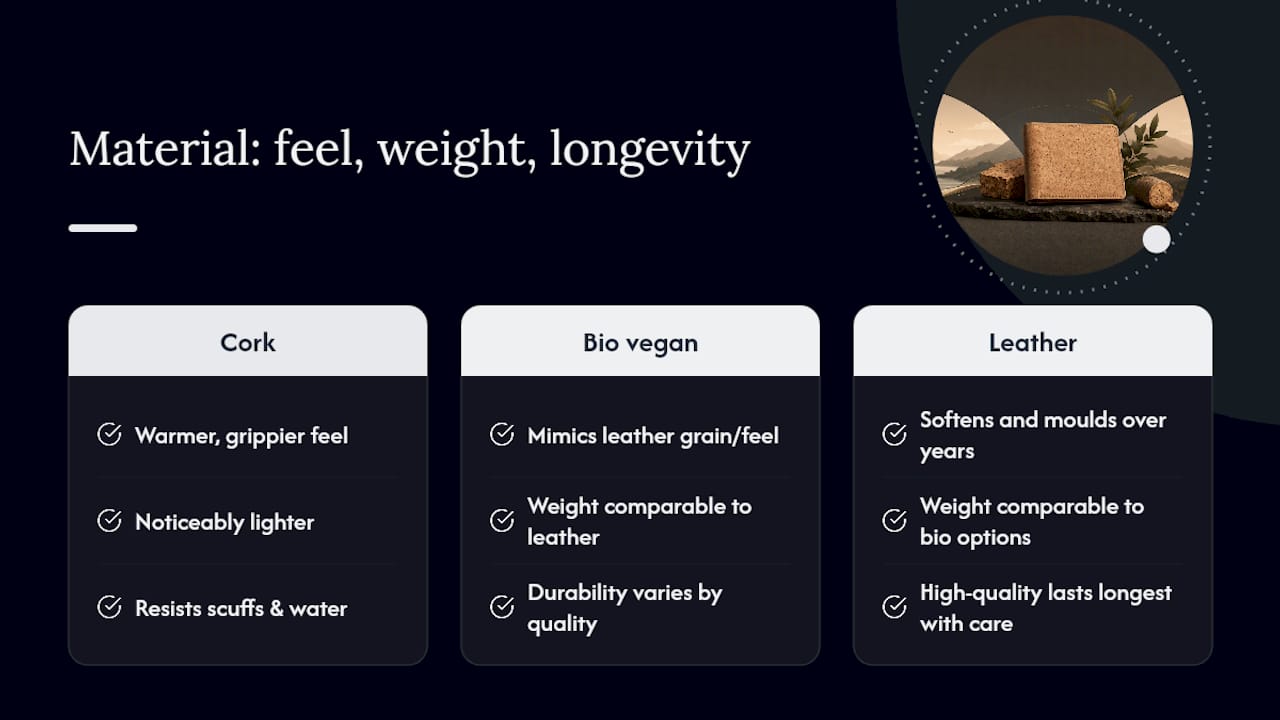
Cork feels warmer and grippier than smooth leather straight out of the box, and it’s noticeably lighter. Traditional leather softens and moulds to your pocket over years; cork doesn’t stretch in the same way, but it resists scuffs and water far better, which matters more for daily durability than break-in comfort.
Bio-based vegan leather is designed to mimic traditional leather’s feel almost exactly, down to the grain texture on higher-end versions. Weight is comparable, and the main difference shows up over the long term: quality full-grain leather can outlast almost anything with proper conditioning, while cheaper PU-based vegan leathers can crack after a couple of years. That’s why checking material composition, not just the word “vegan,” matters so much before you buy.
Metal wallets win outright on rigidity and resistance to crushing, but they lose on the softness and pocket comfort that leather and cork both offer. For most men, the trade-off between feel and longevity comes down to buying one genuinely durable vegan material rather than the cheapest one available.
What do vegan wallets cost, and are they good value?
Prices for men’s vegan wallets typically run from budget rPET cardholders at the low end to premium cork or bio-leather billfolds at the top, mirroring the spread you’d see across traditional leather goods.
Cheap synthetic PU wallets are the false economy of the category. They cost little upfront but often crack or peel within a year or two of regular use, meaning you replace them two or three times over the lifespan of one well-made cork or bio-leather wallet.
Mid-range cork wallets tend to sit close to what you’d pay for a decent leather wallet on the high street, reflecting the labour involved in cutting and finishing cork sheets by hand. Premium bio-based leather wallets, especially those hand-finished in Portugal or Italy, price closer to designer leather goods, justified by material sourcing and construction quality rather than brand markup alone.
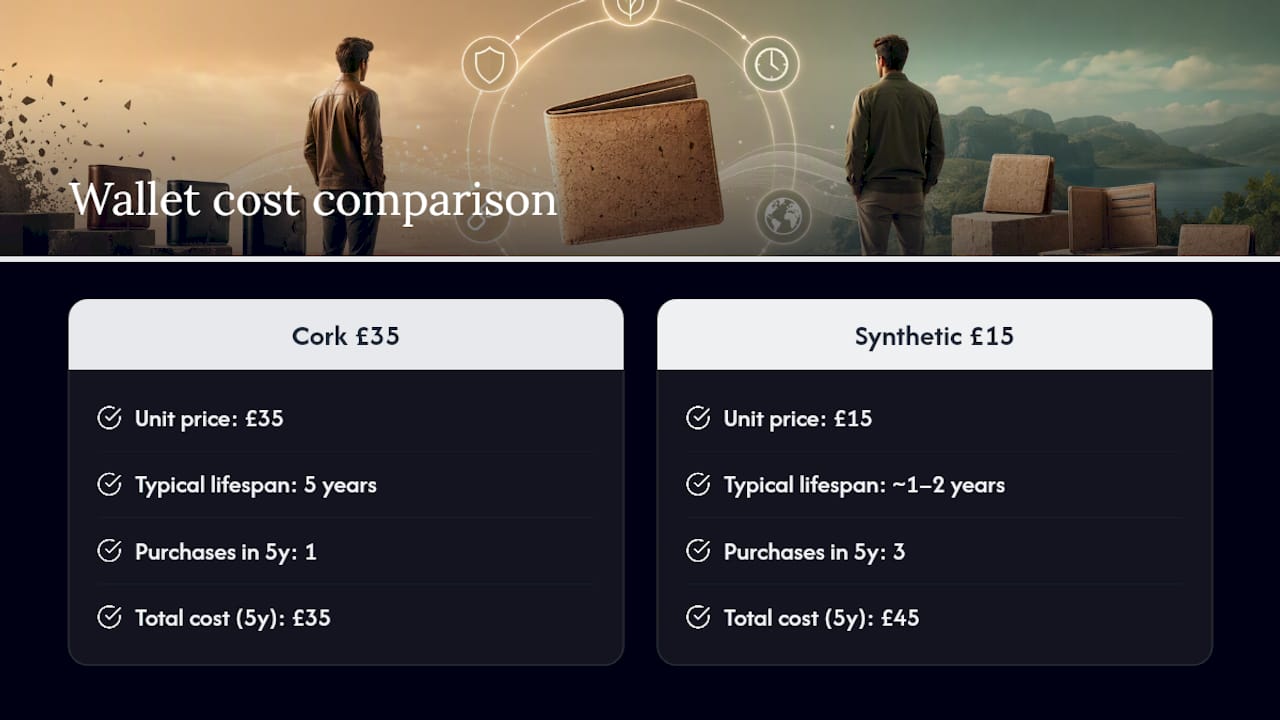
Value for money comes down to cost per year of use, not sticker price. A £35 cork wallet that lasts five years beats a £15 synthetic one you replace three times over the same period, both on cost and on waste generated. Check whether a listing mentions stitching type, warranty length or repair options: those details usually separate wallets built to last from ones built to sell cheaply once.
Which brands make the best vegan wallets for men?
Specialist vegan and eco-focused brands lead this category, rather than the mainstream leather-goods houses that have only recently added vegan lines.
Cork-focused makers concentrate on Portuguese-sourced cork, since Portugal produces most of the world’s cork oak bark and has the established tanning-adjacent industry to process it into wallet-grade sheets. Thecorkstore is one such specialist, built entirely around cork accessories rather than treating cork as a side line.
On the bio-leather side, Will’s Vegan Shoes has built a reputation on hand-finished construction in Portugal and clear labelling of plant-origin material percentages, which is rarer than it should be in this category. Beyond dedicated vegan brands, some mainstream wallet makers now offer individual vegan lines alongside their traditional leather ranges, though material transparency on those pages varies considerably.
The clearest signal of a serious brand is specificity: does the listing name the exact material blend, the country where it’s finished, and the construction method? Vague terms like “vegan leather” with no further detail are a weaker sign than a page that states cork oak sourcing or a specific plant-polyol percentage.
What do buyers say about vegan wallets in practice?
Recurring themes turn up across customer feedback on vegan wallets, and they’re consistent regardless of which specific material a buyer chose.
Cork owners tend to comment on the texture surprising them positively. Most expect something closer to cardboard and instead find a grippy, slightly springy material that resists the scuffs a leather wallet would show after the same period of use.
Bio-leather buyers focus most of their comments on how convincingly it passes for real leather, particularly with friends or colleagues who don’t know it’s vegan until told. Complaints, where they show up, tend to concern cheaper synthetic vegan leathers rather than bio-based ones, usually around premature cracking at fold lines.
Across styles, RFID shielding gets mentioned disproportionately by commuters and frequent travellers, while strict minimalists carrying two or three cards rarely bring it up at all, which tracks with how the feature is actually used day to day. Slim cardholder buyers consistently praise reduced pocket bulk as the single biggest quality-of-life change after switching from a bulkier bifold.
Vegan wallets vs leather: the honest trade-offs
Neither option is universally better, and the right choice depends on what you’re optimising for.
Vegan wallet advantages:
- No animal products involved in sourcing or production
- Cork specifically offers strong water and scratch resistance
- Often lighter than equivalent leather designs
- Wide material variety lets you match texture to preference
Vegan wallet disadvantages:
- Cheaper synthetic versions can crack or peel faster than quality leather
- Fewer wallets on the high street compared with leather, though this is changing quickly
- Patina and ageing character differ from traditional leather, which some buyers miss
Leather advantages:
- Ages and softens over years in a way many people find appealing
- Widely available across almost every price point
- Long track record for extreme durability when well maintained
Leather disadvantages:
- Involves animal hide, a dealbreaker for ethical and religious reasons for many buyers
- Higher environmental footprint from tanning processes
- Can be genuinely bulky and stiff until broken in
The decision usually comes down to values versus habit. If cruelty-free sourcing matters to you, a well-made cork or bio-leather wallet closes almost every practical gap that used to favour traditional leather.
Why cork earns its place in a men’s wallet lineup
Cork’s appeal isn’t marketing spin. It comes from cork oak bark, harvested without felling the tree, and it happens to behave well as a wallet material: water-resistant, scratch-resistant, and it ages into a patina rather than falling apart. That combination of ethical sourcing and genuine physical performance is rare, and it’s why Thecorkstore has built its whole catalogue around it rather than treating cork as a token vegan add-on.
Evaluating sustainability claims properly means checking three things: what the material actually is (not just “vegan,” which says nothing about durability), where it’s sourced, and how much packaging waste comes with the purchase. A brand that lists cork oak origin and skips excess plastic packaging is telling you more than one that simply prints “eco-friendly” on a label.
My advice is straightforward: read the materials section before the price, and check the care guide before you check out. A wallet that lists its exact composition is one you can trust to age the way the brand says it will.
— Aaron
Where to buy an ethical cork or vegan wallet
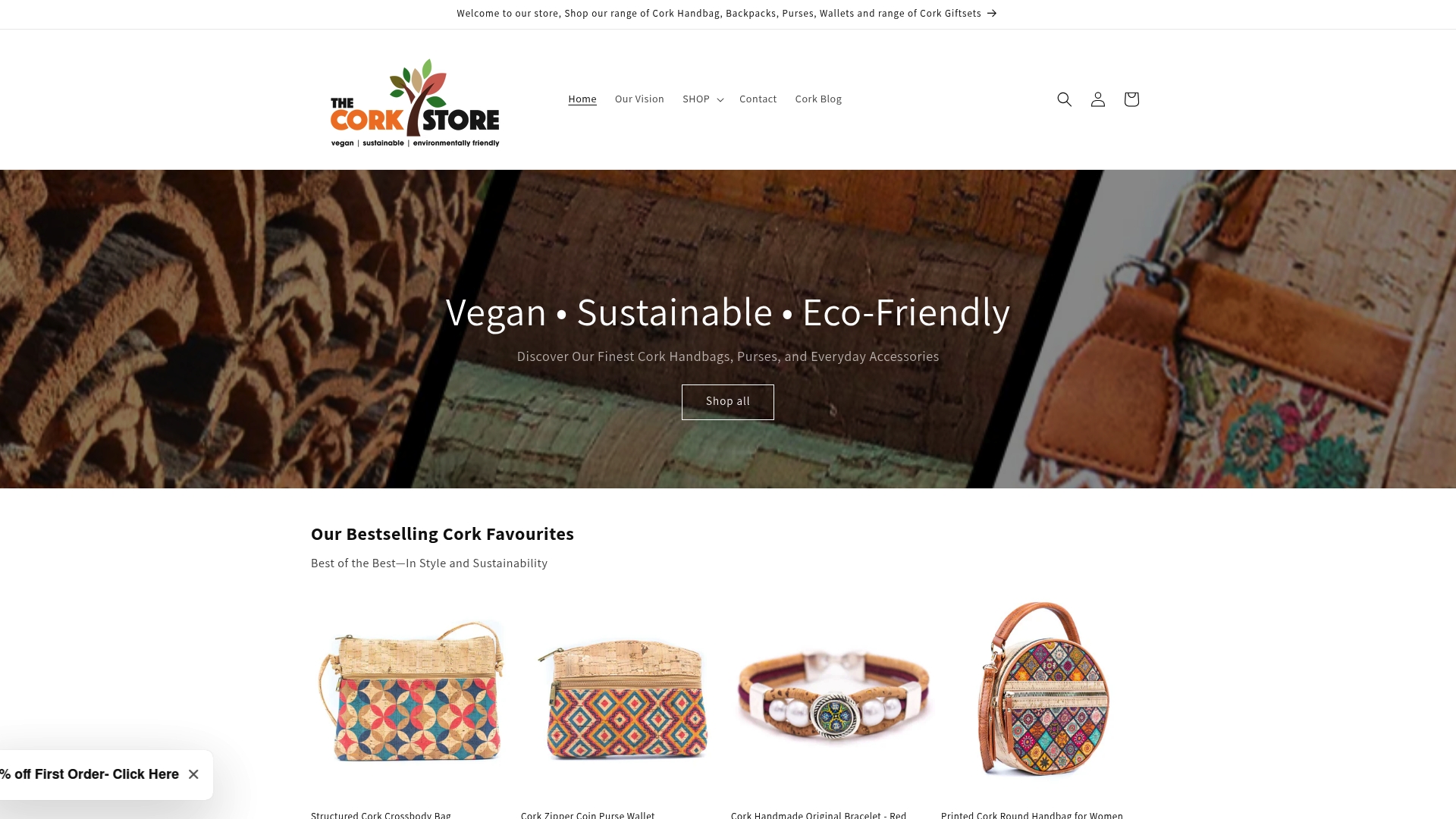
Some retailers provide a catalogue built entirely around cork, so wallet listings answer material-transparency questions that scattered vegan sections on other sites often skip. Curated collections mean you’re choosing between genuinely different styles rather than wading through pages where “vegan” is a filter tag on a mostly leather catalogue.
That focus matters most if you’ve already decided cork suits your lifestyle after reading through the material comparisons above. Rather than cross-checking five different brands’ sourcing claims, you get consistent detail on cork oak origin and finish across the whole range. If you’re buying a gift rather than a wallet for yourself, the same logic applies. Anyone shopping for sustainable gift options elsewhere will recognise the same value: a considered, ethically sourced item beats a generic one every time.
Browse the current range of vegan wallet options and check the buying guide for choosing vegan wallets before you check out, so you know exactly which style fits your daily carry.
Sources
- Stylish vegan wallets that won’t empty your pockets | PETA
- Best vegan wallets for 2026: Top durable and minimalist picks | Groove Life