

What Makes a Bag Vegan: Everything You Need to Know
Nearly one in three shoppers now look for fashion accessories that support animal welfare and protect the environment. As interest in sustainable living grows, vegan bags are quickly replacing traditional leather as the smart choice for people who care about their impact. This guide clears up common myths about vegan bags and shows what makes these animal-free alternatives stylish, practical, and genuinely kind to the planet.
Table of Contents
- Defining Vegan Bags And Common Misconceptions
- Materials Used In Vegan Bags Explained
- Certifications And Standards For Vegan Products
- Production Processes And Animal-Free Guarantees
- Ethical, Environmental, And Practical Impacts
- Comparing Vegan Bags To Conventional Alternatives
Key Takeaways
| Point | Details |
|---|---|
| Vegan Bags Represent Ethical Choices | Choosing vegan bags emphasizes animal welfare and environmental sustainability, promoting a more compassionate lifestyle. |
| Innovative Materials Enhance Quality | Modern vegan bags utilize advanced materials like cork and apple leather, offering durability and style without animal exploitation. |
| Certification Matters | Look for recognized certifications to ensure vegan products meet ethical and environmental standards for conscious consumerism. |
| Impactful Fashion Statement | Selecting vegan bags not only reflects personal values but also contributes to broader changes in sustainable fashion and ethical manufacturing. |
Defining Vegan Bags and Common Misconceptions
A vegan bag represents more than just a fashion accessory - it’s a conscious choice that reflects ethical considerations about animal welfare and environmental sustainability. Unlike traditional bags made from leather, fur, or other animal-derived materials, vegan bags are crafted exclusively from materials that do not involve animal exploitation or harm. These alternatives prioritise plant-based, synthetic, or recycled materials that deliver style, durability, and minimal environmental impact.
Common misconceptions about vegan bags often stem from outdated assumptions about quality and aesthetics. Many people wrongly believe that vegan bags are less durable, less stylish, or more expensive than traditional leather products. However, modern sustainable materials like cork, recycled polyester, and innovative plant-based textiles have revolutionised the market. Understanding Why Buy Vegan Bags for Sustainable Fashion provides deeper insights into how these materials perform.
The core principles of creating a vegan bag extend beyond simply avoiding animal products. Manufacturers must also consider the entire production process, ensuring that no animal-derived adhesives, dyes, or components are used. This comprehensive approach means examining every stage of manufacturing through an ethical lens. Key characteristics of authentic vegan bags include:
- Zero animal-derived materials
- Cruelty-free production methods
- Environmentally conscious manufacturing
- Use of sustainable alternative materials
- Transparent supply chain practices
By choosing vegan bags, consumers make a powerful statement about their values. These accessories represent more than just a fashion choice - they’re a commitment to reducing animal suffering, minimising environmental impact, and supporting innovative, sustainable design practices. As The Ultimate Guide to Buying Vegan Bags for Eco-Friendly Style demonstrates, ethical fashion can be both stylish and principled.
Materials Used in Vegan Bags Explained
Vegan bag materials represent a fascinating intersection of innovation, sustainability, and ethical design. Alternative materials are transforming the fashion landscape, offering consumers stylish options that completely eliminate animal products. What is Vegan Leather? highlights the incredible diversity of these groundbreaking textiles.
According to thecorkstore, modern vegan handbag production has become remarkably sophisticated. Manufacturers now leverage extraordinary materials like waste maple leaves, apple fruit pulp, mushroom mycelia, and recycled plastics. These innovative substances are carefully transformed into flexible, robust materials that closely replicate leather’s texture and performance, proving that ethical fashion can be both beautiful and functional.
The most prevalent materials in vegan bag production include:
Here’s a comparison of key vegan bag materials and their main characteristics:
| Material | Source | Sustainability Benefit | Key Properties |
|---|---|---|---|
| Cork | Cork oak trees | Renewable, biodegradable | Lightweight Water-resistant |
| Recycled Polyester | Recycled plastic bottles | Reduces landfill and plastic waste | Durable Versatile |
| Pineapple Leather | Pineapple leaf fibres | Utilises agricultural byproducts | Flexible Textured finish |
| Apple Leather | Apple industry byproducts | Repurposes fruit waste | Soft Resilient |
| Mushroom Leather | Mushroom mycelium | Biodegradable and fast-growing source | Vegan alternative Soft feel |
- Cork: Lightweight, water-resistant, and sustainable
- Recycled polyester: Reduces plastic waste
- Pineapple leather (Piñatex): Made from agricultural waste
- Apple leather: Created from fruit industry byproducts
- Mushroom leather: Biodegradable and innovative
By embracing these cutting-edge materials, Understanding Vegan Leather Alternatives for Eco-Friendly Fashion demonstrates how sustainable fashion can dramatically reduce environmental impact while maintaining exceptional quality and aesthetic appeal. These materials not only prevent animal suffering but also address critical ecological challenges by repurposing waste and reducing resource consumption.
Certifications and Standards for Vegan Products
Navigating the world of vegan product certifications can be complex, but understanding these standards is crucial for conscientious consumers. These certifications serve as critical indicators of a product’s ethical and environmental commitment, ensuring that vegan bags truly align with animal welfare and sustainability principles. What Are Cruelty-Free Handbags? provides valuable insights into the nuanced world of ethical fashion certification.
According to cfsd, some innovative materials are setting remarkable standards in sustainable production. For instance, Bananatex, a biodegradable fabric made from Abac3 banana plant fibers, has achieved Cradle to Cradle Certified Gold status. This certification indicates rigorous adherence to high environmental and ethical standards, demonstrating that vegan materials can meet and exceed traditional manufacturing benchmarks.
Key certifications that consumers should look for include:
- PETA-Approved Vegan: Confirms no animal products or testing
- Global Organic Textile Standard (GOTS): Ensures organic material integrity
- Oeko-Tex Standard 100: Guarantees materials are free from harmful substances
- Cradle to Cradle Certification: Validates sustainable and circular production
- Fair Trade Certification: Confirms ethical labor practices
Interestingly, How to Choose Vegan Handbags: The Ultimate Eco Guide highlights that certifications go beyond material composition. They encompass broader ethical considerations like worker treatment, environmental impact, and transparent supply chains. By understanding these certifications, consumers can make informed choices that align with their values of compassion, sustainability, and social responsibility.
Production Processes and Animal-Free Guarantees
The journey of creating a vegan bag involves intricate production processes that go far beyond simply avoiding animal materials. These processes demand meticulous attention to every stage of manufacturing, ensuring complete elimination of animal-derived components. Understanding What Makes Vegan Handbags Eco-Friendly provides deeper insights into these comprehensive ethical manufacturing approaches.
Manufacturers committed to animal-free production must scrutinize multiple aspects of bag creation, including:
- Raw material sourcing: Verifying zero animal involvement
- Adhesive selection: Using plant-based or synthetic binding agents
- Dye and coloration processes: Ensuring animal-free pigmentation methods
- Hardware and accessory components: Confirming non-animal origins
- Packaging materials: Implementing completely cruelty-free packaging
The most stringent animal-free guarantees require manufacturers to implement robust verification processes. This means conducting thorough audits of every supply chain component, tracking materials from initial sourcing through final production. Transparent documentation, third-party certifications, and comprehensive material declarations become critical in substantiating these guarantees.
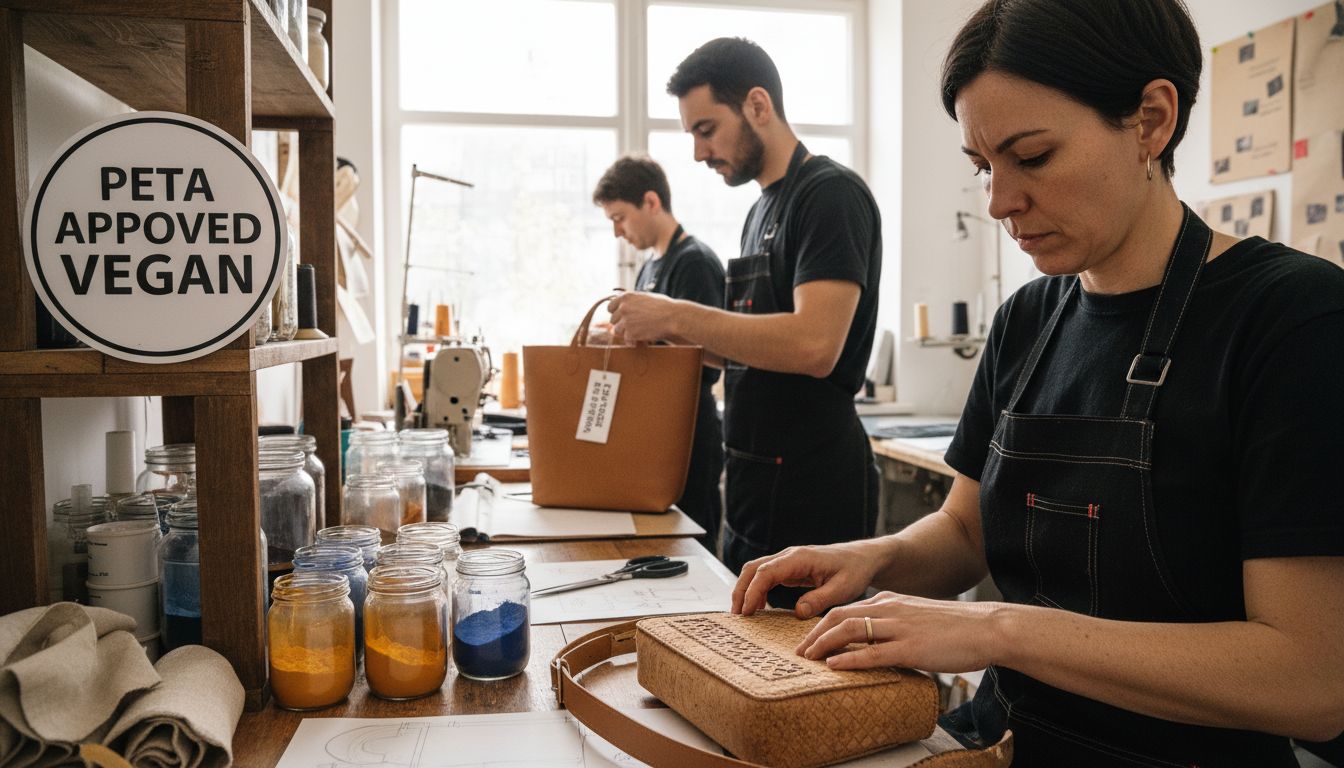
Ultimately, animal-free production is about more than avoiding leather. It represents a holistic commitment to ethical manufacturing that respects animal welfare, environmental sustainability, and consumer trust. How to Choose Vegan Handbags: The Ultimate Eco Guide emphasizes that true vegan production is a comprehensive approach encompassing material selection, manufacturing ethics, and transparent communication with consumers.
Ethical, Environmental, and Practical Impacts
Choosing a vegan bag represents far more than a simple fashion decision. It’s a powerful statement of personal values that intersects ethical considerations, environmental sustainability, and practical functionality. Understanding Sustainable Fashion Essentials for Eco-Conscious Living illuminates the profound implications of these conscious consumer choices.
The ethical dimensions of vegan bags extend well beyond animal welfare. By rejecting products that exploit animals, consumers actively challenge industries that prioritize profit over compassion. These choices contribute to broader systemic changes, encouraging manufacturers to develop more humane and sustainable production methods. The environmental benefits are equally compelling, with vegan materials often requiring significantly less water, generating fewer carbon emissions, and creating less waste compared to traditional leather production.
Practical impacts of vegan bags include:
- Durability: Many alternative materials offer comparable or superior longevity
- Versatility: Innovative fabrics provide diverse texture and aesthetic options
- Lightweight design: Alternative materials often weigh less than traditional leather
- Easy maintenance: Many vegan materials resist staining and require minimal care
- Cost-effectiveness: Reduced production complexity can translate to more affordable pricing
Ultimately, selecting a vegan bag is an investment in a more compassionate, sustainable future. These accessories represent a holistic approach to consumption that considers animal welfare, environmental preservation, and individual style. By making informed choices, consumers can demonstrate that ethical fashion can be both impactful and incredibly stylish.
Comparing Vegan Bags to Conventional Alternatives
Comparing vegan bags to conventional alternatives reveals a transformative approach to fashion that challenges traditional manufacturing paradigms. 7 Types of Vegan Bags for Eco-Friendly Fashion demonstrates the remarkable diversity and innovation within the vegan accessory market, offering consumers compelling alternatives to animal-derived products.
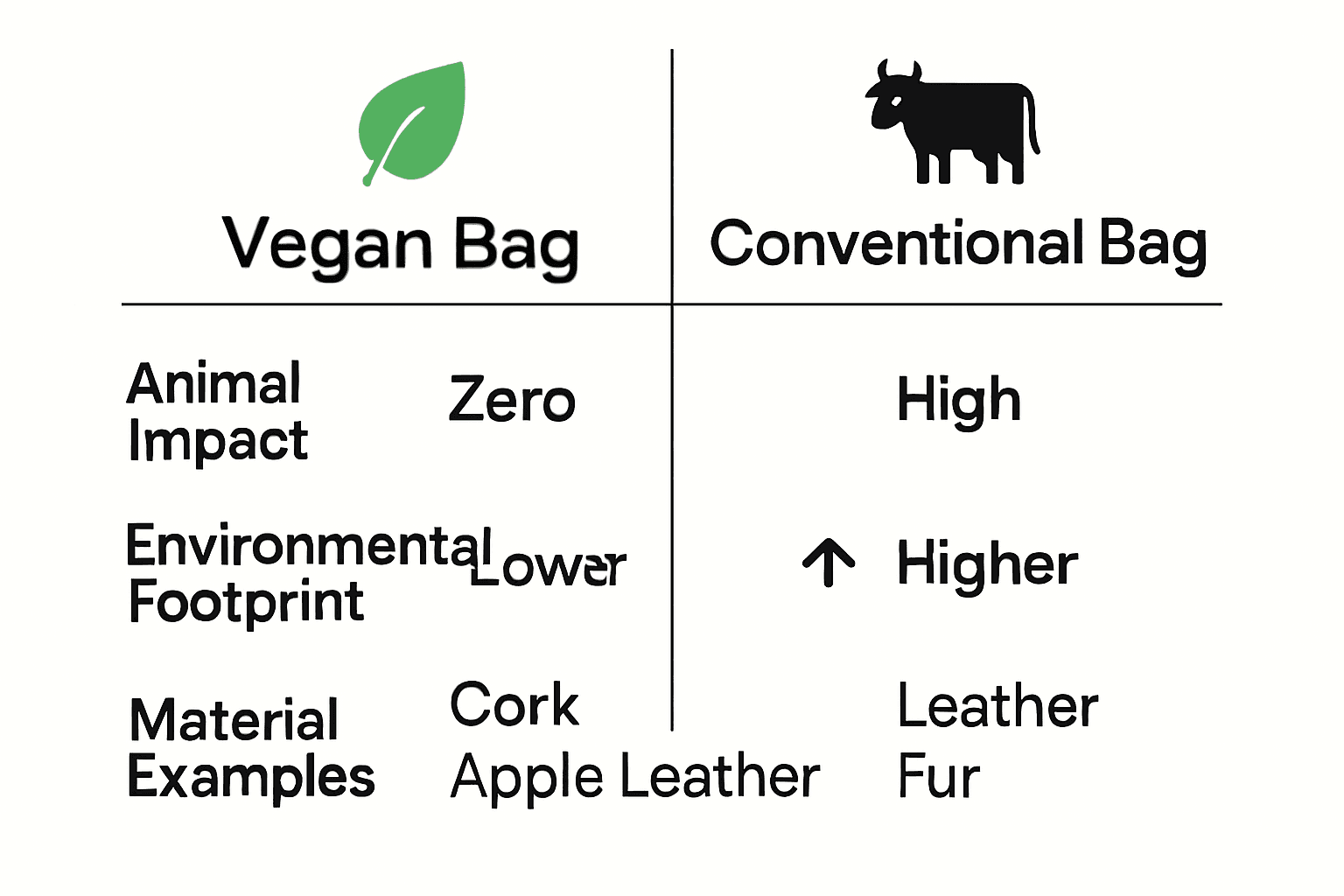
The fundamental differences between vegan and conventional bags extend far beyond material composition. Traditional leather bags rely on animal hide processing, which involves significant environmental and ethical challenges, including high water consumption, chemical treatments, and direct animal exploitation. Vegan bags, by contrast, leverage innovative materials that prioritize sustainability, animal welfare, and reduced environmental impact. These alternative materials often require less water, generate fewer carbon emissions, and avoid the complex tanning processes associated with leather production.
Key comparative points between vegan and conventional bags include:
- Environmental Impact: Vegan materials typically have lower carbon footprints
- Production Ethics: Zero animal harm in vegan bag manufacturing
- Durability: Modern vegan materials offer comparable or superior longevity
- Maintenance: Many vegan bags require easier cleaning and care
- Design Flexibility: Greater range of textures and aesthetic possibilities
Ultimately, Understanding Why Choose Vegan Handbags for Fashion highlights that the choice between vegan and conventional bags represents more than a mere purchasing decision. It’s a statement of personal values, environmental consciousness, and commitment to ethical consumption. By selecting vegan alternatives, consumers actively participate in driving industry transformation towards more sustainable, compassionate fashion practices.
Discover True Vegan Style with Sustainable Cork Accessories
Choosing a vegan bag means committing to ethical fashion that respects animal welfare and the environment. If you have ever felt frustrated by the lack of truly cruelty-free, eco-conscious, and stylish options, there is a simple solution. Embrace high-quality, durable materials like cork that not only avoid animal products but also offer natural water resistance and timeless elegance.
Explore a carefully curated selection of vegan cork handbags, wallets, and more at The Cork Store. Each product embodies the principles described in the latest insights on vegan bags, ensuring zero animal harm, transparent production practices, and a reduced environmental footprint. Act now to transform your accessory collection with pieces that truly align with your values. Visit our online store to find your perfect sustainable companion and join countless others committed to compassionate fashion today.
Frequently Asked Questions
What materials are used to make vegan bags?
Vegan bags are made from alternative materials such as cork, recycled polyester, pineapple leather, apple leather, and mushroom leather. These materials are sourced responsibly and do not involve animal products.
Are vegan bags durable compared to traditional bags?
Yes, many modern vegan materials offer comparable or superior durability compared to traditional leather, thanks to innovative engineering and robust design practices.
How can I ensure a bag is truly vegan?
Look for certifications such as PETA-Approved Vegan, Oeko-Tex Standard 100, and Fair Trade Certification. These indicate that the product is free from animal-derived materials and manufactured ethically.
What are the environmental benefits of choosing vegan bags?
Vegan bags typically have a lower environmental impact, requiring less water and generating fewer carbon emissions compared to traditional leather production, while also utilizing sustainable materials.