

Why Invest in Eco Handbags: Sustainable Style and Impact
Over 60 percent of British shoppers now consider sustainability when choosing fashion items. As concerns mount over the environmental toll of traditional handbags, more people are turning to eco handbags that combine style with responsibility. These innovative accessories offer a fresh take on both fashion and ethics, showing that it is possible to look good while making environmentally conscious choices that matter.
Table of Contents
- Eco Handbags Defined: Sustainable Fashion Explained
- Materials and Craftsmanship in Eco Handbags
- Environmental and Ethical Benefits of Eco Choices
- Cost, Durability, and Value Considerations
- Comparing Eco Handbags to Traditional Alternatives
Key Takeaways
| Point | Details |
|---|---|
| Eco Handbags Prioritise Sustainability | Eco handbags are made from renewable and recycled materials, significantly reducing environmental impact compared to traditional fashion accessories. |
| Ethical Production Practices | The creation of eco handbags supports fair labour practices and aims to minimise waste during production. |
| Long-Term Value Proposition | Investing in eco handbags offers substantial long-term benefits due to their durability and reduced need for replacement. |
| Transformational Role in Fashion | Choosing eco handbags aligns consumers with a sustainable movement, promoting responsible consumption and environmental stewardship. |
Eco Handbags Defined: Sustainable Fashion Explained
Eco handbags represent a revolutionary approach to fashion accessories that prioritises environmental responsibility and ethical production. These innovative accessories are crafted from sustainable materials like recycled wood, jute, hemp, and other eco-friendly alternatives that minimise ecological impact. Sustainable fashion aims to reduce environmental impacts by promoting practices that challenge traditional manufacturing processes and support planetary wellbeing.
The core philosophy behind eco handbags centres on material innovation and ethical production. Unlike conventional leather or synthetic bags, these accessories are crafted from recycled materials like wood, jute, paper, and hemp, reflecting a commitment to reducing waste and supporting circular economy principles. Manufacturers focus on selecting materials that have minimal environmental footprint, ensuring each bag represents a conscious choice towards more responsible consumption.
Key characteristics of eco handbags include:
- Utilisation of renewable and recycled materials
- Reduced carbon emissions during production
- Support for fair labour practices
- Durability and long-lasting design
- Minimal waste generation
By choosing eco handbags, consumers actively participate in a global movement towards more sustainable fashion choices. These accessories are not merely products but statements of environmental commitment, demonstrating how individual purchasing decisions can contribute to broader ecological transformation.
Materials and Craftsmanship in Eco Handbags
Crafting eco handbags requires extraordinary attention to material selection and manufacturing processes that prioritise environmental sustainability. Sustainable bags are carefully constructed using innovative materials like recycled plastics, organic cotton, and cork, each chosen for its minimal ecological footprint and remarkable durability. These materials represent a radical departure from traditional leather and synthetic production methods, transforming the fashion accessory landscape.
The design philosophy embraces innovative material sourcing and ethical manufacturing. Eco handbag craftsmanship involves utilising unique materials such as water hyacinth, cotton fabric, and recycled textiles, demonstrating how creative design can intersect with environmental responsibility. Manufacturers carefully select materials that not only reduce waste but also provide exceptional functional qualities, ensuring each bag represents both style and sustainability.
Key material characteristics in eco handbag production include:
- High recyclability
- Low environmental impact during production
- Reduced carbon emissions
- Biodegradable or compostable components
- Superior durability compared to traditional materials
By embracing these innovative materials and crafting techniques, eco handbag designers are revolutionising the fashion industry. They prove that style need not come at the expense of environmental integrity, creating accessories that are both beautiful and responsible.
Environmental and Ethical Benefits of Eco Choices
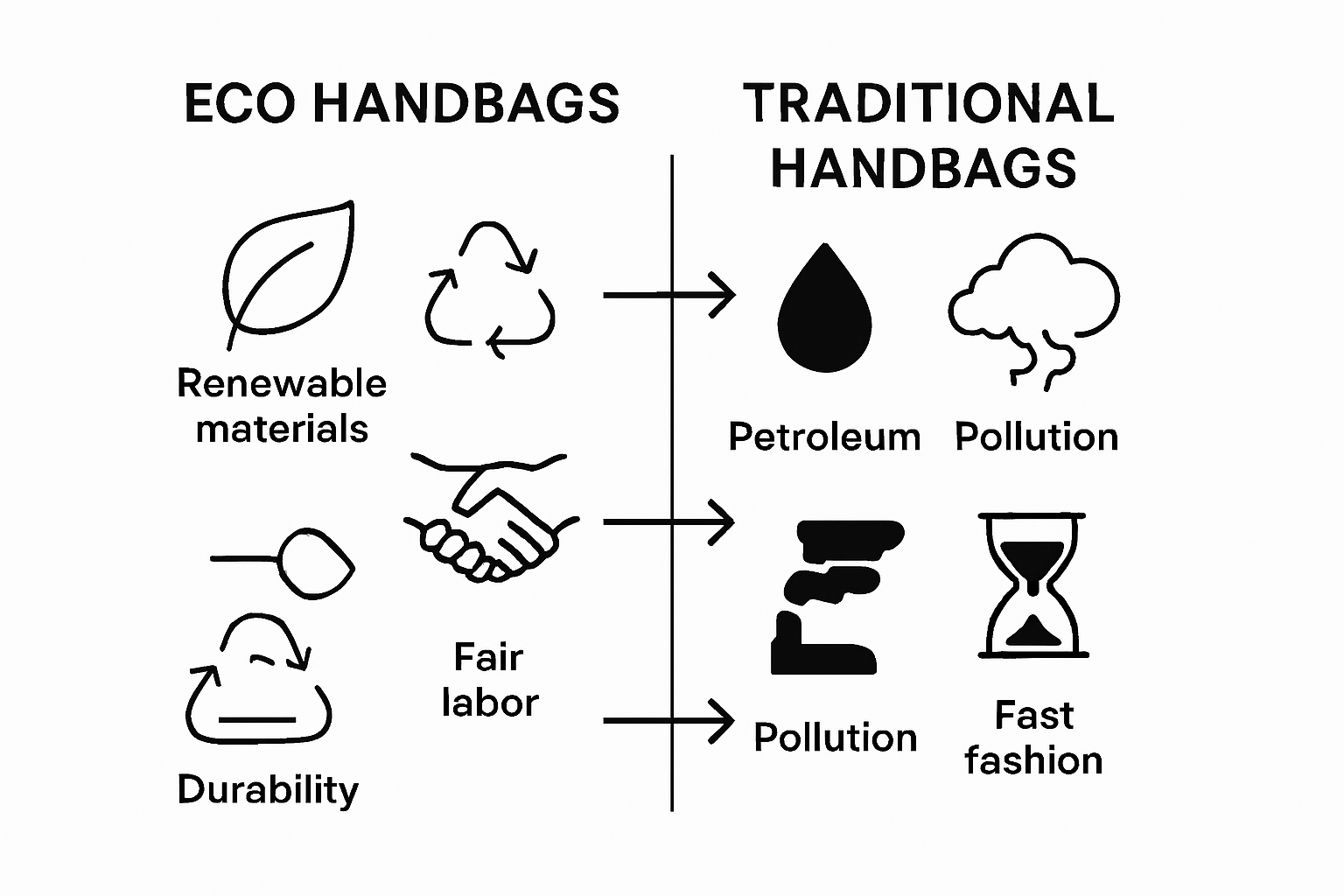
Choosing eco handbags represents a profound commitment to environmental stewardship and ethical consumption. Zero-waste fashion strategies aim to eliminate textile waste during production, transforming the fashion industry from a linear, wasteful model to a more responsible and sustainable approach. By selecting eco-friendly accessories, consumers directly contribute to reducing environmental degradation and supporting innovative production methods that prioritise planetary health.

The circular fashion ecosystem provides a revolutionary framework for sustainable accessory production. Circular fashion promotes a closed-loop system where clothing items are designed, produced, used, and then recycled or repurposed, minimising waste and dramatically reducing the environmental footprint of fashion consumption. This approach ensures that every eco handbag represents more than just a fashion statement—it becomes a tangible solution to the fashion industry’s significant ecological challenges.
Key environmental and ethical benefits include:
- Reduction of textile waste in landfills
- Lower carbon emissions during production
- Support for fair labour practices
- Conservation of natural resources
- Promotion of sustainable manufacturing techniques
By making conscious purchasing decisions, consumers become active participants in a global movement towards more responsible and ethical fashion. Eco handbags demonstrate that style, functionality, and environmental integrity can coexist, offering a powerful alternative to traditional, environmentally destructive fashion practices.
Cost, Durability, and Value Considerations
Investing in eco handbags represents a strategic approach to fashion consumption that balances economic sensibility with long-term value. Sustainable fashion accessories can achieve profit margins as high as 30%, demonstrating that environmentally conscious choices need not compromise financial practicality. While the initial purchase price might appear higher, these accessories offer substantial long-term economic benefits through exceptional durability and reduced replacement frequency.
The value proposition of eco handbags extends far beyond mere monetary considerations. Sustainable fashion fundamentally emphasises designing long-lasting garments and accessories using high-quality materials and construction processes, ensuring remarkable durability and significantly reducing environmental waste. These accessories represent an investment in quality, craftsmanship, and planetary responsibility, challenging the disposable fashion model that dominates contemporary consumer culture.
Key value considerations include:
- Extended product lifecycle
- Superior material quality
- Reduced long-term environmental costs
- Ethical manufacturing practices
- Potential for product repair and refurbishment
By selecting eco handbags, consumers make a sophisticated financial decision that transcends traditional purchasing patterns. These accessories represent more than just a fashion statement—they are a calculated investment in personal style, environmental sustainability, and long-term economic wisdom.
Comparing Eco Handbags to Traditional Alternatives
The landscape of fashion accessories is undergoing a profound transformation, with eco handbags emerging as a compelling alternative to traditional designs. Green textiles are specifically produced to replace environmentally harmful textiles, offering a sustainable solution that dramatically reduces the ecological footprint associated with conventional handbag manufacturing. Where traditional handbags often rely on resource-intensive processes and non-biodegradable materials, eco handbags represent a thoughtful approach to style that prioritises environmental responsibility.
Traditional leather and synthetic handbags typically generate significant waste and environmental damage throughout their production cycle. In contrast, sustainable accessory design focuses on creating products that minimise ecological impact and maximise lifecycle efficiency. Reusable shopping bags demonstrate how alternative materials can serve practical needs while reducing environmental strain, a principle that eco handbags extend into the broader fashion accessory market.
Key comparative differences include:
- Environmental impact during production
- Material sourcing practices
- Durability and longevity
- Waste generation
- Carbon footprint
By choosing eco handbags, consumers make a deliberate statement about their values, rejecting the disposable fashion model in favour of accessories that represent genuine environmental stewardship. These alternatives are not simply products, but powerful statements of personal commitment to sustainable living.
Discover Sustainable Style with Eco-Friendly Cork Handbags
The article emphasises the importance of investing in eco handbags made from renewable materials that reduce environmental impact and promote ethical production. If you are seeking stylish, durable accessories that embody the principles of sustainable fashion and ethical manufacturing, the challenge is finding high-quality products that reflect these values without compromising on design or function. Eco handbags made from cork offer the perfect solution, combining innovation with responsibility to meet your goal of supporting a circular fashion ecosystem.
Cork is an exceptionally sustainable material known for being renewable, biodegradable, and cruelty-free. At The Cork Store, you will find a curated collection of vegan cork handbags, backpacks, wallets and other accessories that align perfectly with the eco-conscious values discussed in the article. These products reduce carbon emissions during production, support fair labour, and offer long-lasting durability making them a smart investment in both style and the planet.
Make your impact today by choosing eco-friendly cork accessories that speak volumes about your commitment.
Explore exclusive sustainable fashion options at The Cork Store and embrace accessories that exemplify environmental integrity. Start your journey towards responsible style and shop now before these conscious collections sell out.
Frequently Asked Questions
What are eco handbags made of?
Eco handbags are typically made from sustainable materials such as recycled plastics, wood, jute, hemp, organic cotton, and other eco-friendly alternatives that minimise ecological impact.
Why are eco handbags considered more durable than traditional handbags?
Eco handbags are designed with high-quality materials that ensure exceptional durability. Unlike traditional leather or synthetic bags that may wear out quickly, eco handbags are crafted to last, reducing the need for frequent replacements.
How do eco handbags support ethical production practices?
Eco handbags are produced using ethical manufacturing processes that adhere to fair labour practices. This ensures that workers receive fair wages and work in safe conditions, promoting social responsibility within the fashion industry.
What are the environmental benefits of choosing eco handbags over traditional options?
Choosing eco handbags helps reduce textile waste, lower carbon emissions during production, and conserve natural resources. They also promote sustainable manufacturing techniques, making them a more environmentally friendly choice compared to traditional handbags.
Recommended
- Benefits of Eco-Friendly Handbags: Complete Guide – The Cork Store
- 7 Top Eco Handbags for Sustainable Fashion Lovers – The Cork Store
- Understanding Why Choose Sustainable Bags for a Greener Future – The Cork Store
- Understanding the Qualities of Sustainable Handbags – The Cork Store
- Understanding Eco Friendly Routines for Modern Families – The Zoofamily
- Sustainable Fragrance Production: The Future of UK Scents