
Benefits of Handmade Cork Products for Eco Fashion
Choosing a stylish accessory should never mean compromising your values. For eco-conscious individuals in Canada, the United States, and across Europe, handmade cork products offer a truly unique blend of responsible sourcing and beautiful design. Cork’s renewable nature and biodegradable qualities place it at the forefront of sustainable fashion, allowing you to enjoy cruelty-free accessories that express both individuality and environmental mindfulness.
Table of Contents
- What Makes Handmade Cork Products Unique
- Sustainability and Environmental Impact Explained
- Vegan and Cruelty-Free Fashion Alternatives
- Durability, Functionality, and Everyday Use
- Style, Versatility, and Design Options
- Comparing Cork with Leather and Synthetics
Key Takeaways
| Point | Details |
|---|---|
| Sustainable Material | Handmade cork products offer a renewable alternative to synthetic materials, supporting ecological balance. |
| Unique Properties | Cork is lightweight, durable, and water-resistant, making it a high-performance choice for fashion accessories. |
| Ethical Production | Choosing cork supports artisanal techniques and sustainable harvesting, benefiting local communities and the environment. |
| Versatile Design | Cork’s aesthetic flexibility allows for innovative and stylish accessory designs that meet diverse consumer preferences. |
What Makes Handmade Cork Products Unique
Handmade cork products represent an extraordinary intersection of sustainability, craftsmanship, and innovative design. Unlike mass-produced synthetic accessories, these remarkable items leverage cork’s inherent natural properties to create fashion pieces that are both environmentally responsible and aesthetically compelling. Cork’s unique cellular structure enables designers to transform a renewable tree bark into sophisticated accessories with unparalleled characteristics.
The extraordinary nature of handmade cork products stems from their exceptional material properties. Cork’s remarkable composition provides extraordinary advantages: extreme lightweight construction, impressive durability, water resistance, and remarkable elasticity. These characteristics make cork accessories not just environmentally friendly alternatives, but high-performance fashion statements. Craftspeople carefully select and process cork to highlight its natural texture, ensuring each piece maintains the material’s intrinsic beauty while creating a product that can withstand daily wear and environmental challenges.
What truly distinguishes handmade cork products is their commitment to sustainable production. User feedback from longitudinal studies consistently demonstrates that consumers appreciate not just the aesthetic qualities, but the ethical considerations behind cork accessories. Each handcrafted item represents a conscious choice to support renewable resources, reduce environmental impact, and celebrate artisanal manufacturing techniques that honour both design excellence and ecological responsibility.
Pro tip: When purchasing handmade cork accessories, examine the craftsmanship closely and ask about the sourcing to ensure you’re supporting genuinely sustainable production methods.
Sustainability and Environmental Impact Explained
Handmade cork products represent a profound breakthrough in sustainable fashion, offering an environmentally responsible alternative to traditional synthetic materials. Cork oak forests play a crucial role in maintaining global ecological balance, providing significant environmental benefits beyond mere product manufacturing. These remarkable forests not only support biodiversity but also function as critical carbon sinks, actively combating climate change through natural CO2 sequestration.
The harvesting process of cork is remarkably unique, distinguishing it from other raw materials. Sustainable cork production involves carefully removing bark from cork oak trees without causing permanent damage, allowing the tree to regenerate and continue absorbing carbon dioxide. This regenerative process ensures that each cork harvest contributes to environmental preservation rather than resource depletion. The material’s biodegradable nature further enhances its ecological credentials, ensuring minimal environmental impact throughout its lifecycle.
Beyond its environmental advantages, cork production supports entire ecosystems and local economies. Cork oak forests in regions like Portugal and Spain create complex ecological networks that prevent soil erosion, maintain groundwater reserves, and provide habitats for numerous plant and animal species. By choosing handmade cork products, consumers directly support sustainable forestry practices that protect these critical landscapes and promote responsible land management. The economic model supporting cork production demonstrates how responsible resource extraction can simultaneously benefit human communities and natural environments.
The table below summarises the key benefits cork production brings to both the environment and local communities:
| Benefit | Impact on Environment | Impact on Community |
|---|---|---|
| CO2 Sequestration | Reduces atmospheric carbon | Improves air quality locally |
| Biodiversity Support | Maintains habitats | Enables eco-tourism |
| Soil & Water Conservation | Prevents erosion, retains water | Sustains agriculture |
| Renewable Harvesting | No harm to trees | Secures long-term jobs |
| Biodegradable Material | Produces no lasting waste | Supports green enterprises |
Pro tip: When purchasing cork accessories, research the origin of the cork and prioritise products from manufacturers demonstrating transparent, sustainable harvesting practices.
Vegan and Cruelty-Free Fashion Alternatives
The fashion landscape is experiencing a profound transformation, with consumers increasingly demanding ethical and sustainable alternatives to traditional animal-derived materials. Vegan cork leather represents a groundbreaking solution that seamlessly combines style, durability, and compassionate manufacturing practices. By choosing cork-based accessories, environmentally conscious individuals can make a powerful statement about their commitment to animal welfare and sustainable fashion.
Cork’s unique properties make it an exceptional vegan leather alternative that goes far beyond merely replacing animal products. Sustainably harvested cork material offers remarkable characteristics including water resistance, hypoallergenic qualities, and extraordinary durability. These attributes ensure that vegan cork accessories are not just ethical choices, but high-performance fashion statements that compete directly with traditional leather products. The material’s natural flexibility and breathability further enhance its appeal, providing consumers with a genuinely sophisticated alternative to animal-derived textiles.
Beyond its technical advantages, cork leather represents a holistic approach to ethical fashion that supports ecological preservation and animal welfare. By selecting vegan cork products, consumers actively participate in a broader movement that challenges conventional fashion production methods. The material’s production process supports local economies, protects cork oak forests, and provides a renewable resource that can be harvested without causing harm to trees or animals. Each cork accessory becomes a tangible representation of conscious consumption, demonstrating that style and ethical principles can coexist harmoniously.
Pro tip: When exploring vegan fashion alternatives, examine the manufacturing process and certifications to ensure the product genuinely aligns with your ethical standards.
Durability, Functionality, and Everyday Use
Handmade cork products represent a revolutionary approach to functional fashion, combining exceptional durability with practical everyday performance. Longitudinal studies on cork product performance reveal remarkable insights into the material’s extraordinary resilience and long-term usability. These accessories are engineered to withstand daily wear and tear, maintaining their structural integrity and aesthetic appeal far beyond traditional synthetic or leather alternatives.

The material’s unique physical properties make cork an extraordinary choice for functional fashion accessories. Research demonstrates that cork’s inherent characteristics, including remarkable water resistance, lightweight composition, and natural elasticity, create products that adapt seamlessly to users’ dynamic lifestyles. Cotton-cork blended fabric research further validates the material’s enhanced mechanical properties, showing exceptional abrasion resistance and structural stability. These qualities ensure that cork accessories can endure challenging environments while maintaining their original form and aesthetic appeal.
Beyond its technical advantages, cork’s functionality extends to its versatility across different fashion applications. The material’s natural ability to resist moisture, repel dirt, and maintain its shape makes it an ideal choice for accessories subjected to intense daily use. From handbags and wallets to backpacks and footwear, cork products offer a perfect balance between robust performance and sophisticated design. The material’s lightweight nature means users can carry their accessories comfortably without compromising on durability or style, making cork an intelligent choice for discerning consumers seeking both practicality and elegance.
Pro tip: Rotate and alternate your cork accessories regularly to ensure even wear and maximise their longevity.
Style, Versatility, and Design Options
Cork’s emergence in contemporary fashion represents a remarkable fusion of artistic expression and sustainable design philosophy. Fashion design studies highlight cork’s unique aesthetic potential, revealing a material that transcends traditional boundaries of textile and accessory creation. Its natural variations in texture and colour enable designers to craft pieces that are simultaneously elegant, distinctive, and profoundly eco-conscious.
The versatility of cork as a design medium allows for extraordinary creative exploration. Unlike synthetic materials constrained by rigid manufacturing processes, cork offers designers unprecedented freedom to experiment with form, texture, and functionality. Its inherent properties permit intricate detailing, ranging from minimalist geometric patterns to complex, organic sculptural elements. This flexibility means cork accessories can seamlessly transition between casual and sophisticated settings, appealing to consumers seeking adaptable, stylish pieces that reflect their environmental values.
Contemporary fashion designers are increasingly recognising cork’s potential to challenge conventional aesthetic norms. The material’s natural grain, subtle colour variations, and lightweight composition provide a canvas for innovative design approaches that break away from traditional leather and synthetic alternatives. From sleek, structured handbags to flowing, asymmetrical garments, cork demonstrates remarkable adaptability across different fashion genres. Its ability to be treated, dyed, and manipulated ensures that each piece tells a unique story of craftsmanship, sustainability, and individual expression.
Pro tip: Mix cork accessories with different textures and materials to create visually interesting, multilayered fashion statements.
Comparing Cork with Leather and Synthetics
In the evolving landscape of fashion materials, cork emerges as a compelling alternative that challenges traditional leather and synthetic options. Comparative studies reveal cork’s nuanced performance characteristics, demonstrating that sustainable materials can effectively compete with established textile standards. While animal leather remains renowned for its multilayered structural complexity, cork offers a revolutionary approach that prioritises environmental responsibility without compromising aesthetic or functional quality.
Unlike synthetic materials that predominantly derive from petroleum-based sources, cork presents a genuinely renewable alternative with remarkable mechanical properties. Microfibre and bio-based leather alternatives highlight the growing demand for sustainable textiles, with cork positioning itself as a superior ecological choice. Its natural composition ensures biodegradability, low environmental impact, and a production process that actively supports ecosystem preservation, distinguishing it from synthetic counterparts that contribute to long-term environmental degradation.
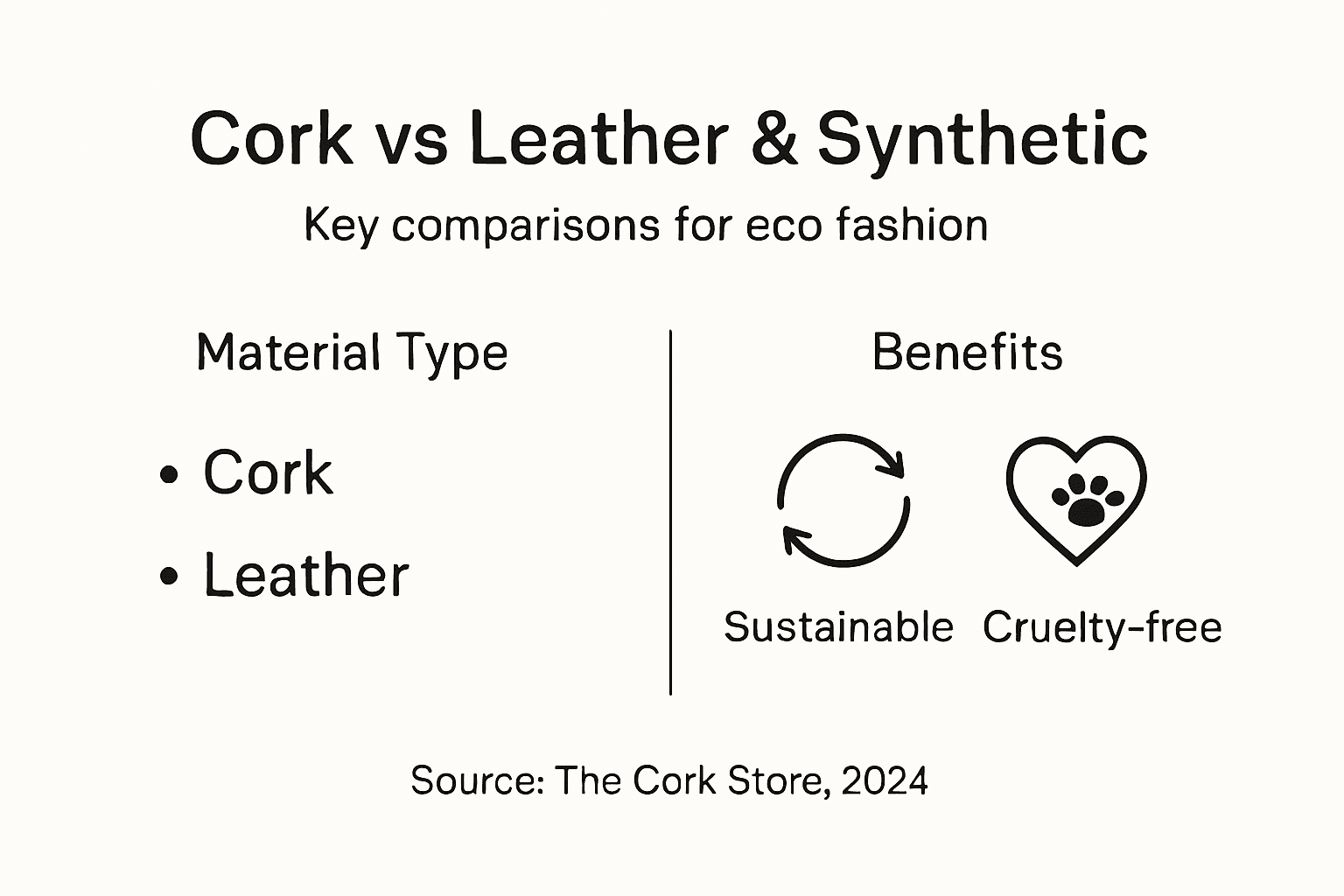
The performance metrics of cork demonstrate its viability across multiple dimensions. Where traditional leather excels in durability and comfort, cork provides a balanced alternative that meets ethical and functional requirements. Its inherent properties of water resistance, lightweight composition, and natural elasticity make it competitive with both leather and synthetic materials. Moreover, cork’s unique manufacturing process ensures that each product carries an individual character, reflecting the material’s organic origins and sustainable ethos, unlike mass-produced synthetic alternatives that often lack individuality and environmental consciousness.
Here’s how cork, leather, and synthetic materials compare across key attributes:
| Attribute | Handmade Cork | Animal Leather | Synthetic Materials |
|---|---|---|---|
| Environmental Impact | Low, renewable source | High, resource-intensive | High, petroleum-based |
| Durability | Highly resilient | Excellent with care | Moderate to high |
| Weight | Exceptionally light | Heavier | Varies, often lightweight |
| Water Resistance | Naturally water-resistant | May require treatment | Often water-repellent |
| Biodegradability | Fully biodegradable | Biodegradable | Not biodegradable |
| Ethical Concerns | Vegan, cruelty-free | Animal welfare issues | Chemical production impacts |
| Aesthetic Variety | Unique, natural grain | Classic, traditional | Wide range, less unique |
Pro tip: When comparing material options, consider not just immediate performance but the long-term environmental and ethical implications of your textile choices.
Discover Stylish, Sustainable Cork Accessories That Make a Difference
The article highlights how handmade cork products offer an exceptional solution to the challenges of eco-conscious fashion. If you are seeking lightweight, durable, and cruelty-free accessories that support renewable harvesting and champion biodiversity, then exploring the range of vegan cork products is essential. The unique qualities of cork such as water resistance and natural texture provide a sophisticated alternative to traditional leather, addressing the pain points of environmental impact and ethical concerns.
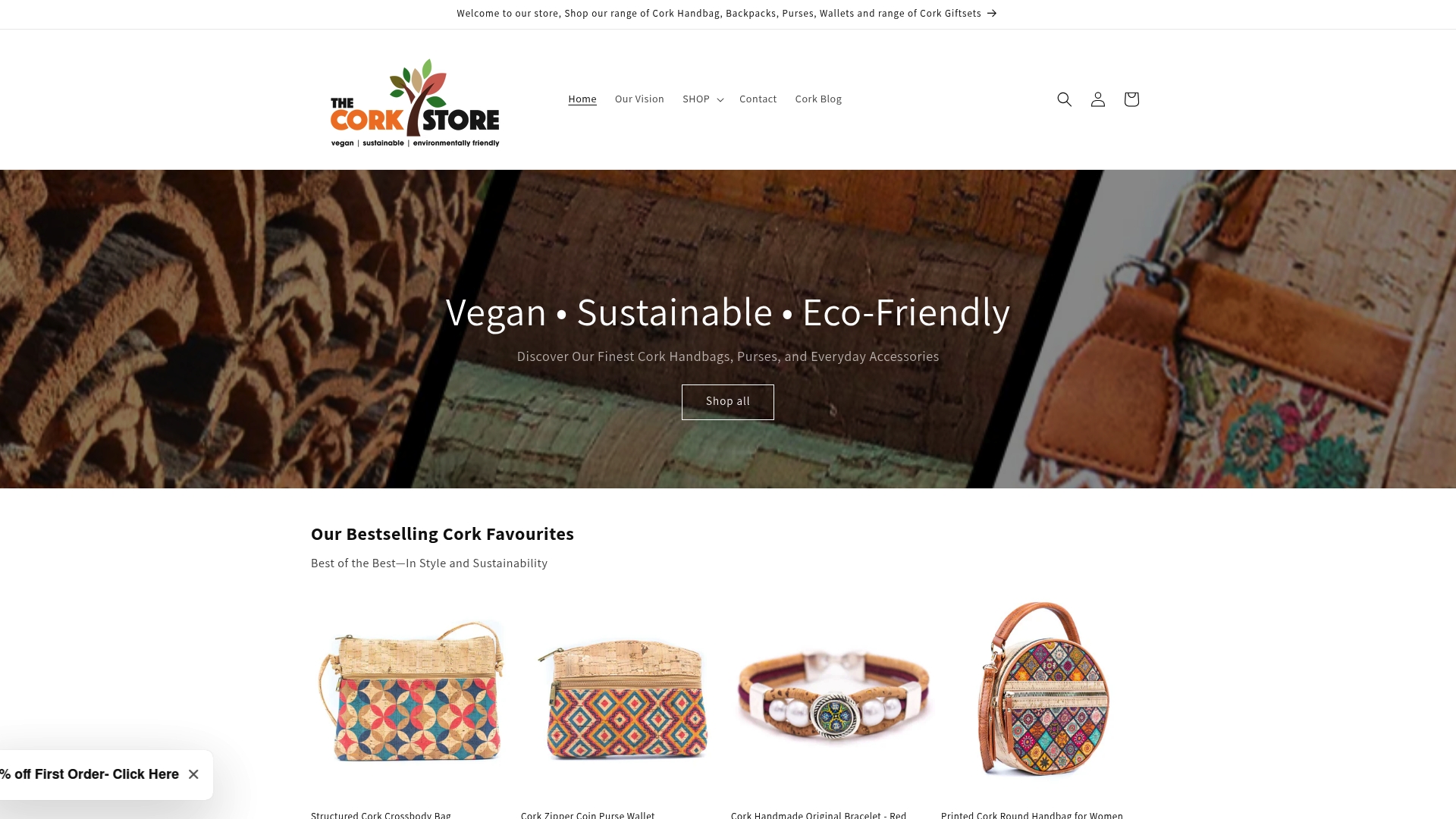
Embrace fashion that reflects your values today by browsing the carefully curated collection at The Cork Store. Whether you want a sleek handbag, practical backpack, or elegant wallet, each product showcases artisanal craftsmanship and sustainable sourcing. Don’t wait to make a style choice that contributes to preserving cork oak forests and reducing pollution. Start your journey with handmade cork products now and wear your commitment to the planet with confidence.
Frequently Asked Questions
What are the main benefits of using handmade cork products in eco fashion?
Handmade cork products are sustainable, lightweight, and durable. They provide an eco-friendly alternative to traditional materials, combining unique aesthetics with ethical production methods.
How does cork contribute to sustainability in fashion?
Cork is a renewable resource that supports biodiversity and acts as a carbon sink. Sustainable harvesting practices allow cork oak trees to regenerate, minimising environmental impact and promoting responsible land management.
How do handmade cork products compare to animal leather?
While animal leather is known for its durability, handmade cork products are highly resilient, biodegradable, lightweight, and cruelty-free, making them a more sustainable choice for eco fashion.
Can cork products withstand everyday use?
Yes, cork products are designed to be durable and functional for daily wear. They offer water resistance, natural elasticity, and lightweight construction, making them suitable for a variety of accessories like bags and wallets.
Recommended
- Understanding the Role of Cork in Sustainable Fashion – The Cork Store
- Role of Cork in Eco Fashion: Sustainable Style Unpacked – The Cork Store
- What is a Cork Bag? Understanding Eco-Friendly Fashion – The Cork Store
- Cork Material Properties Explained: Eco Fashion Insights – The Cork Store
- Soap Dish Benefits | Why Choose a Bamboo Soap Dish – The Soap Lab Scotland