

Cork Material Properties Explained: Eco Fashion Insights
Choosing the right accessories is tougher when you care about style, sustainability, and animal welfare. More than 60 percent of British millennials now prefer eco-friendly fashion options over traditional materials. The buzz around cork is growing for good reason—it offers unique durability, water resistance, and ethical sourcing not easily matched by leather or synthetics. Discover how cork’s origins and natural properties make it an ideal choice for conscientious shoppers wanting both performance and positive impact.
Table of Contents
- Defining Cork Material And Its Origins
- Types Of Cork And How They Differ
- Key Properties: Durability, Water Resistance, Texture
- Environmental Benefits And Sustainability Of Cork
- How Cork Compares To Leather Alternatives
Key Takeaways
| Point | Details |
|---|---|
| Cork’s Sustainability | Cork harvesting is a regenerative process that allows trees to live and continue producing cork without permanent damage, making it an eco-friendly material. |
| Types of Cork | Cork is categorised into Virgin, Secundeira, and Amadia types, each offering different qualities suitable for various fashion applications. |
| Durability and Water Resistance | Cork exhibits exceptional durability and natural water resistance, making it ideal for long-lasting fashion accessories. |
| Comparative Advantages Over Leather | Unlike traditional leather, cork is biodegradable, supports biodiversity, and has a lower environmental impact while offering similar aesthetic qualities. |
Defining Cork Material And Its Origins
Cork is a remarkable natural material with extraordinary properties that sets it apart from synthetic alternatives in eco-friendly fashion. Cork originates from the bark) of the cork oak tree, scientifically known as Quercus suber, which predominantly grows across southwest Europe and northwest Africa.
The fascinating journey of cork begins with its unique harvesting process, which is both sustainable and environmentally conscious. Unlike other materials that require complete tree destruction, cork can be carefully extracted from the bark without causing permanent damage to the tree. Skilled workers carefully remove the outer bark layer, allowing the tree to regenerate and continue producing cork for decades. This regenerative characteristic makes cork an incredibly renewable resource, perfectly aligned with sustainable fashion principles.
The material’s extraordinary cellular structure contributes significantly to its remarkable properties. Cork contains thousands of pentagonal and hexagonal gas-filled cells, which provide exceptional characteristics like buoyancy, compression recovery, and thermal insulation. These microscopic chambers give cork its distinctive lightweight yet resilient nature, making it an ideal material for fashion accessories that require durability and flexibility.
Pro tip: When selecting cork accessories, examine the material’s texture and flexibility to ensure high-quality craftsmanship and sustainable manufacturing standards.
Types Of Cork And How They Differ
Cork is far more complex than most people realise, with multiple types distinguished by harvest cycle and processing method. Cork types vary significantly depending on the age of the cork oak tree and the specific harvesting stage, creating distinct material characteristics that impact their ultimate usage.
The primary cork types are categorised into three main classifications based on the tree’s harvest cycle. Virgin cork represents the first harvest after the tree reaches maturity, typically producing a more porous and less refined material. The secundeira cork comes from the second harvest, offering slightly improved quality, while amadia cork from subsequent harvests represents the highest grade, ideal for premium applications like fashion accessories and wine stoppers.
To better understand how different types of cork serve various uses, see this categorisation:
| Cork Type | Harvest Stage | Texture and Quality | Common Use in Fashion |
|---|---|---|---|
| Virgin Cork | First harvest | Porous, less refined | Casual accessories |
| Secundeira Cork | Second harvest | Improved density and softness | Mid-range bags, hats |
| Amadia Cork | Subsequent harvests | Finest grade, very resilient | Premium handbags, wallets |
In the context of fashion and accessory production, cork manufacturers typically focus on processed variants such as natural cork stoppers, agglomerated cork, and cork fabric. Natural cork stoppers retain the material’s original cellular structure, providing exceptional elasticity and impermeability. Agglomerated cork, created by combining cork granules with binding agents, offers versatility and can be moulded into various shapes suitable for different design requirements.
Pro tip: When selecting cork products, look for certifications that indicate sustainable harvesting practices and verify the specific cork type to ensure optimal quality and performance.
Key Properties: Durability, Water Resistance, Texture
Cork’s exceptional material characteristics make it a standout choice for eco-conscious fashion enthusiasts seeking sustainable alternatives. Its unique cellular structure) provides an extraordinary combination of properties that set it apart from traditional materials, making it increasingly popular in contemporary accessory design.
The material’s durability is particularly remarkable, stemming from its remarkable ability to recover after compression. Unlike many synthetic materials that degrade quickly, cork maintains its structural integrity through repeated use. Its cellular composition allows it to bounce back to its original shape, resisting wear and tear that typically compromises other natural fabrics. The honeycomb-like internal structure creates an inherent resilience that translates into long-lasting fashion pieces.
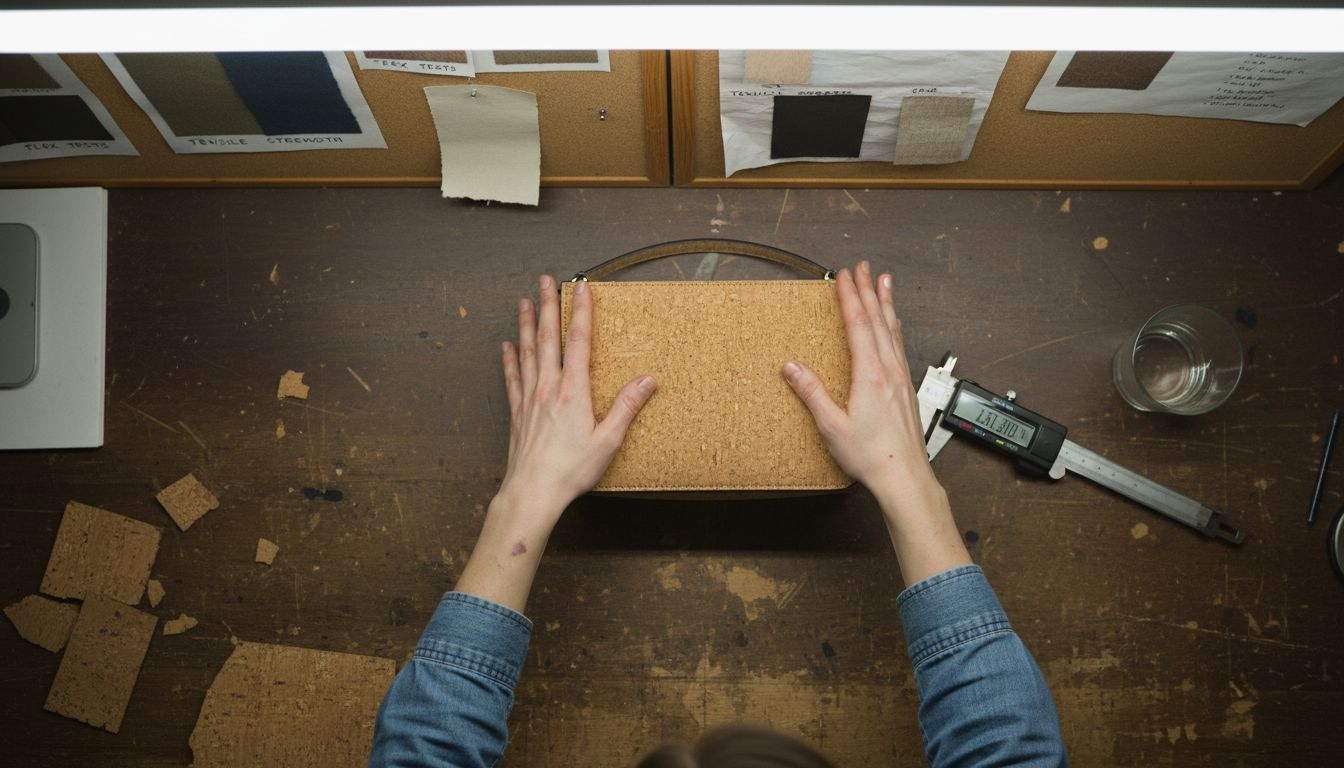
Water resistance is another phenomenal property that distinguishes cork from conventional materials. The presence of suberin, a hydrophobic substance, creates a natural barrier against liquid penetration. This means cork accessories can withstand light rain, accidental spills, and moisture without compromising their structural integrity or aesthetic appeal. The material’s breathable yet protective nature makes it ideal for handbags, wallets, and other accessories that require protection from environmental elements.
Texturally, cork offers a sophisticated sensory experience that synthetic materials cannot replicate. The surface feels soft yet structured, with a natural warmth and subtle irregularity that reflects its organic origins. Its lightweight nature combined with a smooth, slightly granular texture provides a tactile experience that appeals to those seeking both comfort and aesthetic refinement in their fashion choices.
Pro tip: Always store cork accessories away from direct sunlight and extreme temperatures to maintain their unique texture and prevent potential colour fading or material degradation.
Environmental Benefits And Sustainability Of Cork
The cork industry represents a remarkable example of environmental stewardship, with sustainable practices that go far beyond typical manufacturing approaches. Cork oak forests play a crucial ecological role in preserving biodiversity and preventing environmental degradation across Mediterranean landscapes.
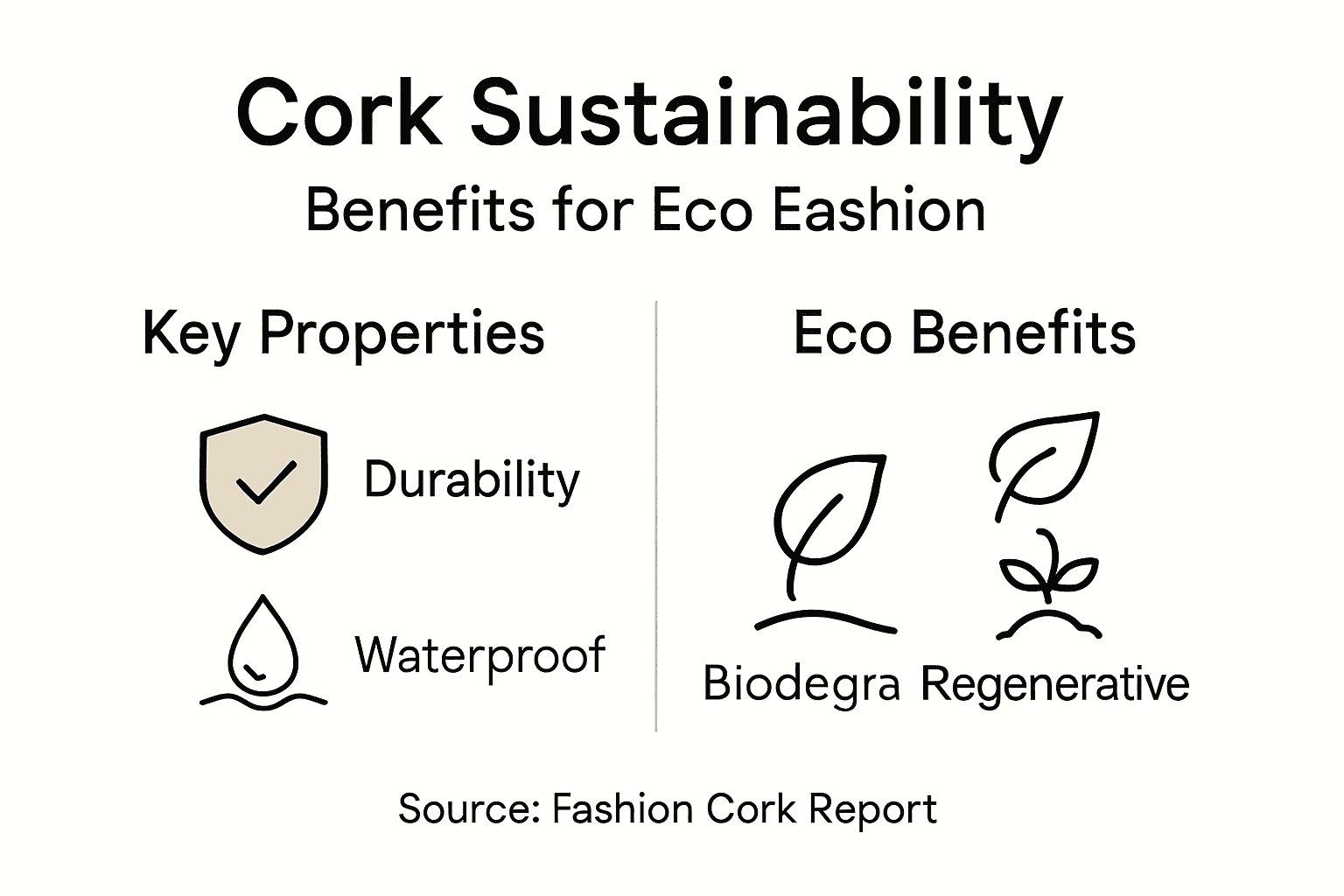
Unlike conventional material production, cork harvesting is inherently regenerative. The process involves carefully removing bark from cork oak trees without causing permanent damage, allowing trees to continue growing and producing cork every 9-12 years. This unique harvesting method ensures that each tree remains alive and continues capturing carbon dioxide, effectively transforming cork production into a carbon-negative industry. The trees actually become more productive with repeated harvests, creating a symbiotic relationship between human economic needs and environmental conservation.
The environmental credentials of cork extend well beyond its harvesting. Cork products are completely biodegradable, recyclable, and manufactured using natural processes that minimise chemical interventions. The manufacturing techniques typically employ superheated steam and natural binding agents, avoiding the harmful synthetic chemicals prevalent in many alternative material productions. These sustainable manufacturing practices mean that cork accessories represent a genuine eco-friendly choice for conscientious consumers seeking to reduce their environmental footprint.
Pro tip: Choose cork products from manufacturers who can transparently demonstrate their sustainable harvesting and production certifications to ensure genuine environmental credentials.
How Cork Compares To Leather Alternatives
As sustainability becomes increasingly crucial in fashion, cork emerges as a revolutionary alternative to traditional leather. Cork offers a remarkable eco-friendly solution that addresses multiple environmental and ethical concerns associated with conventional leather production.
The performance characteristics of cork dramatically outshine traditional leather in several key aspects. Unlike animal leather, which requires extensive processing involving harmful chemicals and significant water consumption, cork is naturally waterproof, lightweight, and incredibly durable. Its unique cellular structure provides exceptional flexibility and resilience, making it ideal for fashion accessories that demand both style and functionality. Cork leather maintains its structural integrity over time, resisting wear and tear more effectively than many synthetic and animal-based alternatives.
Ethically and environmentally, the comparison between cork and leather is stark. Traditional leather production involves significant animal cruelty and environmental degradation, including deforestation, high carbon emissions, and toxic tanning processes. Cork, conversely, is harvested without harming trees, supports biodiversity, and actively contributes to carbon sequestration. The material’s renewable nature means each cork oak tree can be harvested multiple times throughout its lifecycle, creating a truly sustainable production model that traditional leather cannot match.
Here is a comparison of key factors distinguishing cork from leather in accessory production:
| Factor | Cork Material | Traditional Leather |
|---|---|---|
| Sustainability | Harvested, trees remain unharmed | Involves animal slaughter |
| Water Resistance | Naturally waterproof | Damaged by water exposure |
| Weight | Lightweight and flexible | Heavier, less flexible |
| Environmental Impact | Carbon-negative harvesting process | High emissions, chemical use |
Pro tip: When comparing cork and leather accessories, look beyond aesthetic appeal and examine the production certifications to understand the true environmental and ethical impact of your fashion choices.
Discover The Power Of Cork For Stylish And Sustainable Accessories
Are you looking for durable, water-resistant, and eco-friendly alternatives to traditional leather that align with your commitment to sustainable fashion? This article highlights how cork’s unique cellular structure, natural water resistance, and regenerative harvesting process make it an outstanding choice for conscious consumers who want stylish accessories without compromise. Your goal of finding cruelty-free, biodegradable materials that withstand daily use and support environmental wellbeing is now within reach.
Explore our exclusive range of vegan cork handbags, wallets, and backpacks at The Cork Store and experience firsthand the superb texture and resilience described here. Don’t miss the opportunity to own premium cork accessories crafted with sustainable methods and certified quality. Visit our landing page today to browse bestselling styles and new arrivals designed to enhance your fashion statement while honouring the planet. Make the switch to cork now and join the movement towards truly ethical, elegant, and long-lasting fashion.
Frequently Asked Questions
What are the unique properties of cork that make it suitable for eco-friendly fashion?
Cork features exceptional durability, water resistance, and a unique texture. Its cellular structure allows it to recover after compression, ensuring long-lasting use. It is naturally waterproof, making it ideal for accessories that encounter moisture, and its soft yet structured texture provides a refined aesthetic.
How does cork compare to traditional leather in terms of sustainability?
Cork is harvested without harming trees and is a renewable resource, making it highly sustainable. In contrast, traditional leather production involves animal slaughter and significant environmental degradation, including toxic chemical usage and carbon emissions. Cork also contributes positively to carbon sequestration through its harvesting practices.
What types of cork are used in fashion accessories, and how do they differ?
The main types of cork used are Virgin, Secundeira, and Amadia. Virgin cork is porous and less refined, suitable for casual accessories. Secundeira cork offers improved quality, while Amadia cork is the highest grade, ideal for premium products like handbags and wallets. Each type has distinct characteristics that affect its use in fashion.
How should I care for my cork accessories to maintain their quality?
To maintain the quality of cork accessories, store them away from direct sunlight and extreme temperatures. This helps prevent colour fading and material degradation. Additionally, gently clean with a damp cloth to remove dirt while avoiding harsh chemicals to preserve the material’s integrity.
Recommended
- Understanding the Role of Cork in Sustainable Fashion – The Cork Store
- Role of Cork in Eco Fashion: Sustainable Style Unpacked – The Cork Store
- Understanding the Role of Eco-Friendly Materials in Fashion – The Cork Store
- What Is Cork Fabric? Complete Eco-Friendly Guide – The Cork Store
- Sustainable Event Planning: Elevating Luxury Experiences - Winelands Function – For Every Occasion, Your Celebration