
Cork fabric for vegan bags: UK shopper's buying guide
Cork fabric is a durable, plant-based material well suited to vegan handbags, wallets and everyday accessories. It resists abrasion, repels light moisture and develops a pleasing patina over time. The one caveat worth stating upfront: cork is water-resistant, not waterproof. A caught shower is fine; submerging your bag is not. For UK shoppers, Thecorkstore is the standout domestic source, stocking Grade A cork accessories made from Portuguese cork in a typical thin thickness range that defines quality construction.
Key takeaways
Cork fabric is a durable, plant-based material with natural water resistance, good abrasion resistance and genuine sustainability credentials — making it a sound choice for vegan handbags and wallets when you buy Grade A, textile-backed construction from a transparent UK seller.
| Point | Details |
|---|---|
| Material quality | Look for Grade A cork, thin but durable, backed with organic textile rather than PVC. |
| Water resistance | Cork resists light moisture naturally but is not waterproof; air-dry if saturated, never machine wash. |
| Care essentials | Wipe clean with damp cloth and mild soap; store away from heat and prolonged direct sunlight. |
| UK buying checks | Confirm UK fulfilment or EU shipping, a 14-day returns window, and clear vegan/origin labelling before purchase. |
| Recommended UK seller | Thecorkstore stocks Grade A vegan cork accessories with transparent materials, UK shipping and clear returns. |
Table of Contents
- Why cork fabric works so well for bags and wallets
- How to spot high-quality cork accessories before you buy
- How long do cork accessories last, and how do you care for them?
- What UK shoppers should check before buying
- Where to buy cork accessories in the UK
- Repair, recycling and upcycling options for cork accessories
- Why sustainable shoppers keep coming back to cork
- Thecorkstore: browse sustainable cork accessories
- Sources
Why cork fabric works so well for bags and wallets
Cork’s performance comes directly from its cellular structure. Each cell is filled with a gas-like substance and coated in suberin, a waxy natural polymer that makes the surface naturally water-resistant, stain-resistant and less prone to collecting dust than woven textiles. The material is also remarkably light and elastic, which means a cork bag springs back to shape after being squashed in a commuter bag rather than creasing permanently.
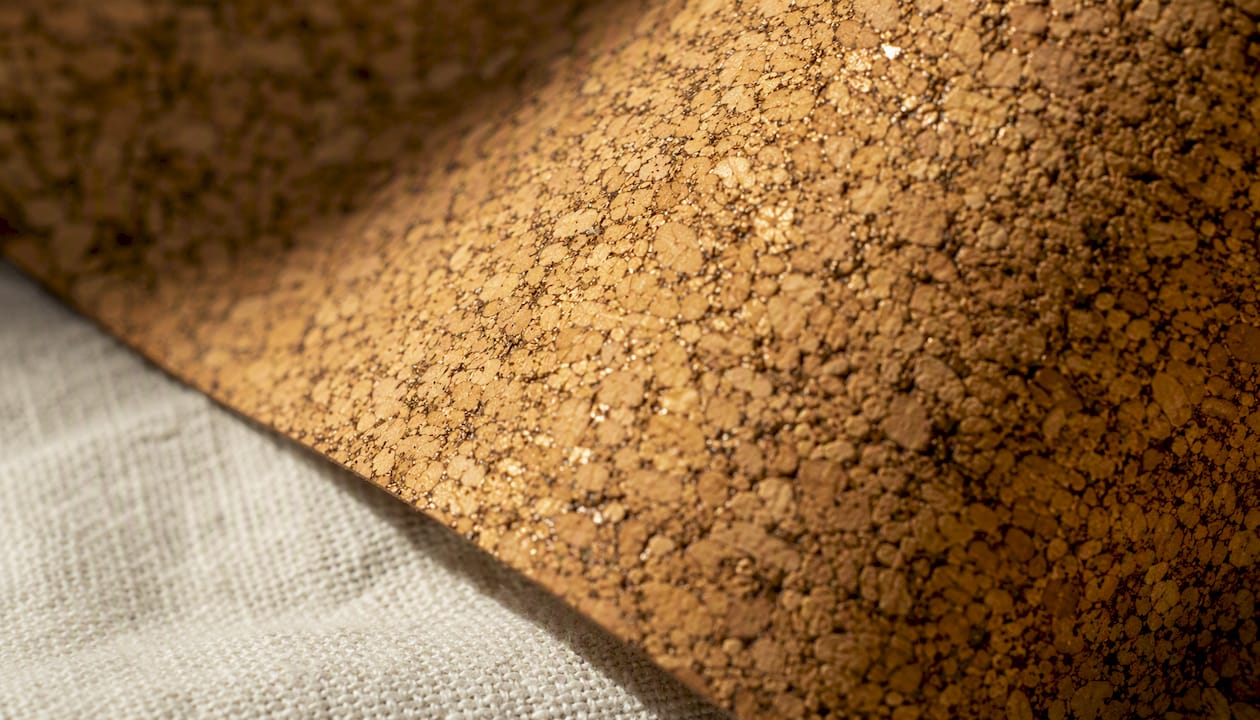
Grade A cork fabric for accessories typically runs a thin thickness suitable for its uses. That sounds thin, but the cellular density gives it genuine tensile strength and good abrasion resistance when manufactured correctly, making it appropriate for daily wear. In practice it feels closer to a soft, slightly textured leather than to paper or cardboard.
The sustainability case is equally strong. Cork oak bark is harvested without felling the tree, and the bark regenerates over roughly nine years. Portugal supplies a large share of global cork production, and the cork oak forests of the Iberian Peninsula support some of the highest biodiversity in Europe. Buying cork accessories is one of the few cases where the eco claim holds up under scrutiny.
One thing worth adjusting your expectations on: cork is not a leather imitation. Experts recommend valuing it for its own grain, flexibility and patina rather than comparing it unfavourably to cowhide. The surface lightens slightly with use, the grain becomes more pronounced, and the overall effect is a bag that looks more interesting after two years than it did on day one. For a comparison with conventional leather, the environmental gap is substantial.
Key material properties at a glance:
- Light and elastic, with good shape recovery
- Naturally water-resistant due to suberin content
- Stain-resistant and easy to wipe clean
- Hypoallergenic and dust-resistant
- Biodegradable when backed with organic textile (not plastic)
| Property | Cork fabric | Typical synthetic vegan leather |
|---|---|---|
| Water resistance | Natural (suberin) | Coating-dependent |
| Weight | Very light | Moderate |
| Breathability | Good | Low |
| Patina over time | Develops naturally | Peels or cracks |
| Recyclability | Yes (textile-backed) | Generally no |
How to spot high-quality cork accessories before you buy
The quickest quality check is threefold: confirm Grade A material, identify the backing, and inspect the hardware. Everything else flows from those three.
What to look for on the product page:
- Surface grain consistency: even, fine grain without bald patches or colour inconsistency
- Backing material: organic cotton or textile backing is preferable; avoid PVC or plastic-backed cork, which limits recyclability and tends to delaminate faster
- Stitch quality: tight, even stitching with no loose threads at stress points (handles, zip ends, corners)
- Edge finishing: sealed or burnished edges rather than raw cuts
- Hardware: metal zips and clasps, not plastic; check that rivets are set flush
- Origin labelling: clear statement of Portuguese or Mediterranean cork
- Vegan and certification claims: PETA-Approved Vegan labelling or equivalent; FSC sourcing mentions where available
Backing choice is the single most important factor for recyclability and end-of-life circularity. A bag backed with organic cotton can be composted or recycled; one backed with PVC cannot.
Pro Tip: Ask the seller directly about the sealing agent used on the cork surface. Some finishes contain solvents that affect long-term flexibility. A reputable seller will answer this without hesitation.
Watch out for “cork look” or “cork veneer” labelling. These terms often describe products that are predominantly plastic with a thin cork-print film on top. They carry none of the sustainability credentials of genuine cork fabric and typically perform poorly over time. If the product page does not state a cork fabric thickness or backing material, treat that as a red flag.
How long do cork accessories last, and how do you care for them?
With light, consistent care, a quality cork handbag or wallet can last several years and develop a richer appearance as it ages. Durability depends most on backing quality, stitch construction and hardware — a Grade A piece with organic textile backing and metal hardware will outlast a thin, plastic-backed equivalent by a considerable margin.
Trade sources recommend air-drying cork if it gets saturated rather than applying heat or putting it in a machine wash. The elasticity that makes cork so pleasant to carry also makes it vulnerable to heat distortion.
Do:
- Clean with a damp cloth and mild soap; wipe dry immediately
- Air-dry flat, away from direct heat sources
- Store in a dust bag or pillowcase in a cool, dry place
- Treat light scuffs with a tiny amount of natural beeswax or cork conditioner
Don’t:
- Submerge in water or leave wet for extended periods
- Use alcohol-based cleaners, acetone or harsh solvents
- Machine wash or tumble dry
- Leave in prolonged direct sunlight, which can fade the surface
For edge damage or delamination at seams, a cobbler or leatherworker can often re-bond and re-seal the affected area. Cork responds well to the same adhesives used on leather, so repair is genuinely viable rather than theoretical.
What UK shoppers should check before buying
Confirm seller transparency on materials, returns and UK shipping before you commit. Post-Brexit, orders from non-UK sellers can attract customs duties and VAT on top of the listed price, which can add meaningfully to the cost of a mid-priced bag.
Price expectations for the UK market:
- Small cork wallet: roughly £15–£35
- Mid-sized cork purse or crossbody: roughly £40–£80
- Premium cork handbag or backpack: roughly £85–£150+
Pre-purchase checklist:
- Shipping time and carrier (tracked delivery is worth paying for)
- Returns window and whether return postage is covered
- VAT and customs position for non-UK sellers
- Warranty or repair policy
- Customer reviews that include photos of the product in use
Certifications worth looking for:
- PETA-Approved Vegan
- FSC-certified cork sourcing
- Clear disclosure of backing materials and any surface treatments
- Recycling or takeback information
UK-based fulfilment removes the customs uncertainty entirely. Sellers who stock in the UK and offer free or low-cost returns are worth prioritising, particularly for a first purchase where you want to assess the material in person before committing to a larger piece.
Where to buy cork accessories in the UK
Thecorkstore is the recommended starting point for UK shoppers. The range covers cork wallets, handbags, backpacks, purses and gift sets, all positioned as sustainable, vegan alternatives to leather. Product pages include close-up photography, material descriptions and vegan credentials, and the blog covers care, sustainability and material guides in useful detail.
For cork wallets specifically, Thecorkstore stocks several styles with clear backing and origin information, which is exactly what the quality checklist above calls for.
When evaluating any UK or international seller, check for:
- Explicit statement of Portuguese or Mediterranean cork origin
- Backing material described (organic textile preferred)
- Customer photo reviews, not just professional shots
- A clear returns policy with a minimum 14-day window
- UK shipping or EU fulfilment with no hidden customs costs
Sellers who provide swatches or high-resolution close-ups of the grain are generally more confident in their product quality. That transparency is a reliable proxy for the backing and construction standards that actually determine longevity.
Repair, recycling and upcycling options for cork accessories
Cork is recyclable in many cases and well suited to simple repair and upcycling. The material’s durability means most damage is localised rather than catastrophic, which makes repair a realistic first option rather than a last resort.
Practical end-of-life options:
- Local textile recycling schemes accept cork-backed accessories (check with your council or a specialist textile recycler)
- A cobbler or leatherworker can re-bond delaminating seams and re-seal edges
- Resale through platforms like Vinted or Depop extends product life and recovers some value
- Check with the original seller about any takeback or repair programme
Simple upcycling ideas:
- Cut down an old wallet into a card sleeve or key tag
- Use flat cork panels from a worn bag as craft material for pin boards or small cases
- Repurpose a damaged backpack panel as a desk mat or notebook cover
Pro Tip: Before discarding a cork accessory, photograph the damage and send it to a leatherworker. Cork repairs are often cheaper than equivalent leather repairs because the material is lighter and easier to work with.
Where landfill is unavoidable, textile-backed cork decomposes far more readily than PVC-backed alternatives. That difference in end-of-life behaviour is one more reason backing choice matters at the point of purchase.
Why sustainable shoppers keep coming back to cork
Choosing cork for the first time usually starts with the sustainability argument: no animals, no petrochemicals, a harvesting process that actively supports forest ecosystems. What keeps shoppers returning is something less expected. The material has its own character. The grain is distinctive, the weight is noticeably lighter than leather, and the patina that develops with use gives a cork bag a lived-in quality that synthetic alternatives simply cannot replicate.
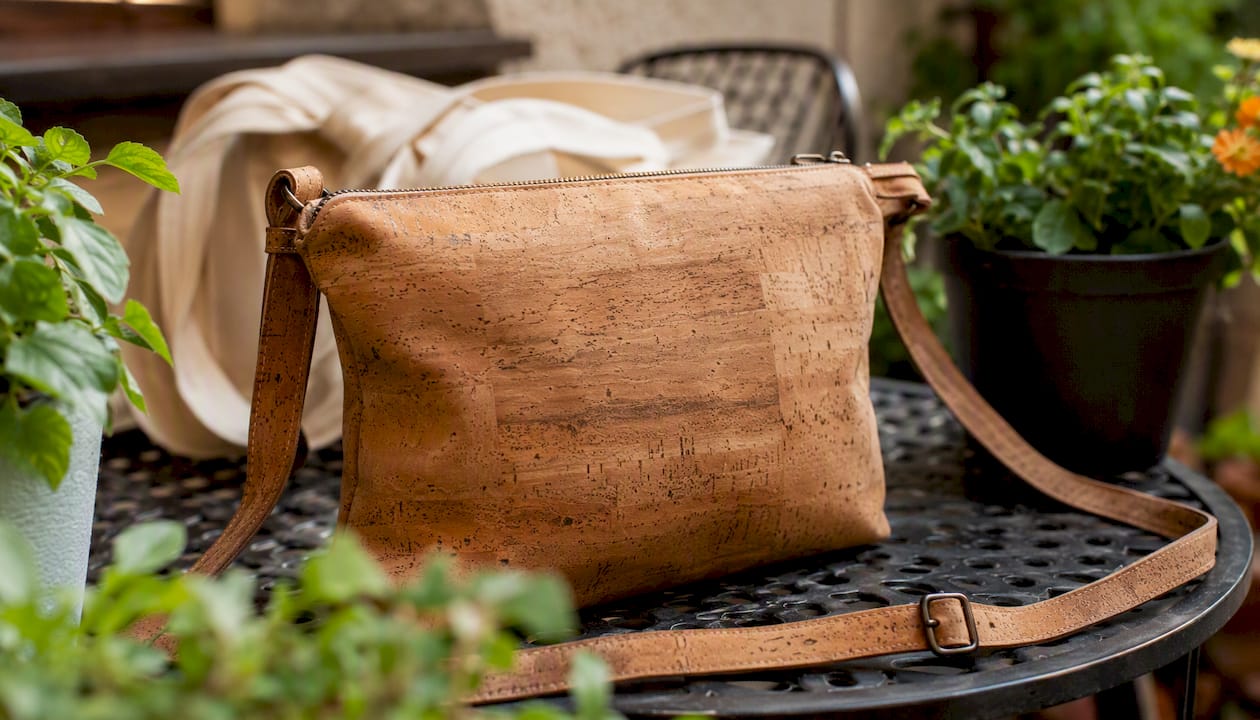
Realistic expectations matter. Cork is not trying to pass as leather, and the best pieces do not attempt to. The surface texture is its own thing: slightly warm to the touch, visually interesting, and honest about what it is. For shoppers building a low-impact wardrobe, that authenticity is part of the appeal.
The practical checklist is short: prioritise Grade A cork, confirm the backing is organic textile rather than plastic, check the hardware, and buy from a seller who is transparent about origin and materials. Do those four things and you are very unlikely to be disappointed.
Thecorkstore: browse sustainable cork accessories
Thecorkstore stocks a focused range of vegan cork wallets, handbags, backpacks and gift sets, all made from Grade A Portuguese cork with clear material descriptions and vegan credentials on every product page.
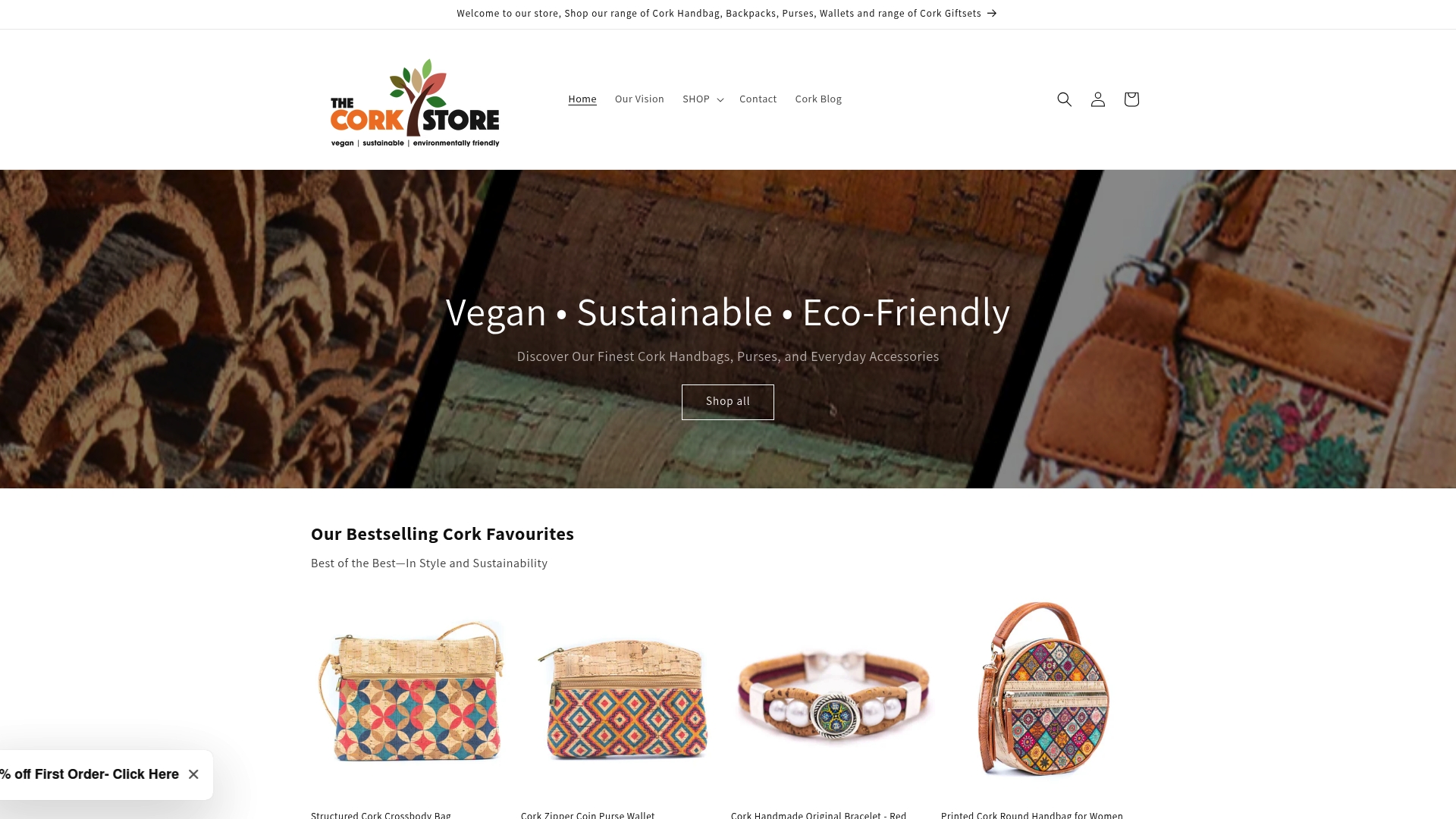
The All-Natural Cork Wallet Gift Set is a strong starting point if you want to assess the material before committing to a larger piece. Before purchasing anything, check the product page for backing description, close-up photography and returns information. For broader gifting options, the vegan cork gift collection covers a range of price points with the same material transparency. UK fulfilment means no customs surprises, and the returns policy is clearly stated. Browse the full range at Thecorkstore and use the product photos and material notes to make a confident, informed choice.
Sources
- Cork fabric is a sustainable material worth embracing — Natural Cork Council
- What Is Cork Fabric? Is Cork Leather Sustainable? — Sustainable Jungle
- Cork Fabric or Cork Leather: Sewing with Cork - More Versatile Than Ever! — Make Designer Bags
- How durable is cork fabric? - Blog - Shihong Leather