
Cork design for vegan accessories: UK buyer's guide
Cork design, in the context of fashion accessories, means handbags, wallets, backpacks and small goods made from cork fabric — a plant-derived, leather-free material that is fully vegan and renewable. If you are looking to buy one in the UK right now, Thecorkstore stocks the full range: handbags, wallets, backpacks, purses and gift sets, all made without animal products.
Table of Contents
- What is cork fabric and how is it made into accessories?
- How do you choose a quality, sustainable cork accessory?
- Which cork accessory suits your daily needs?
- How do you care for and extend the life of a cork accessory?
- What are the real sustainability benefits of cork, and what should you watch for?
- Is cork a credible vegan leather alternative for UK buyers?
- Key takeaways
- A note on what actually matters when buying cork
- Shop vegan cork accessories at Thecorkstore
- Useful sources
What is cork fabric and how is it made into accessories?
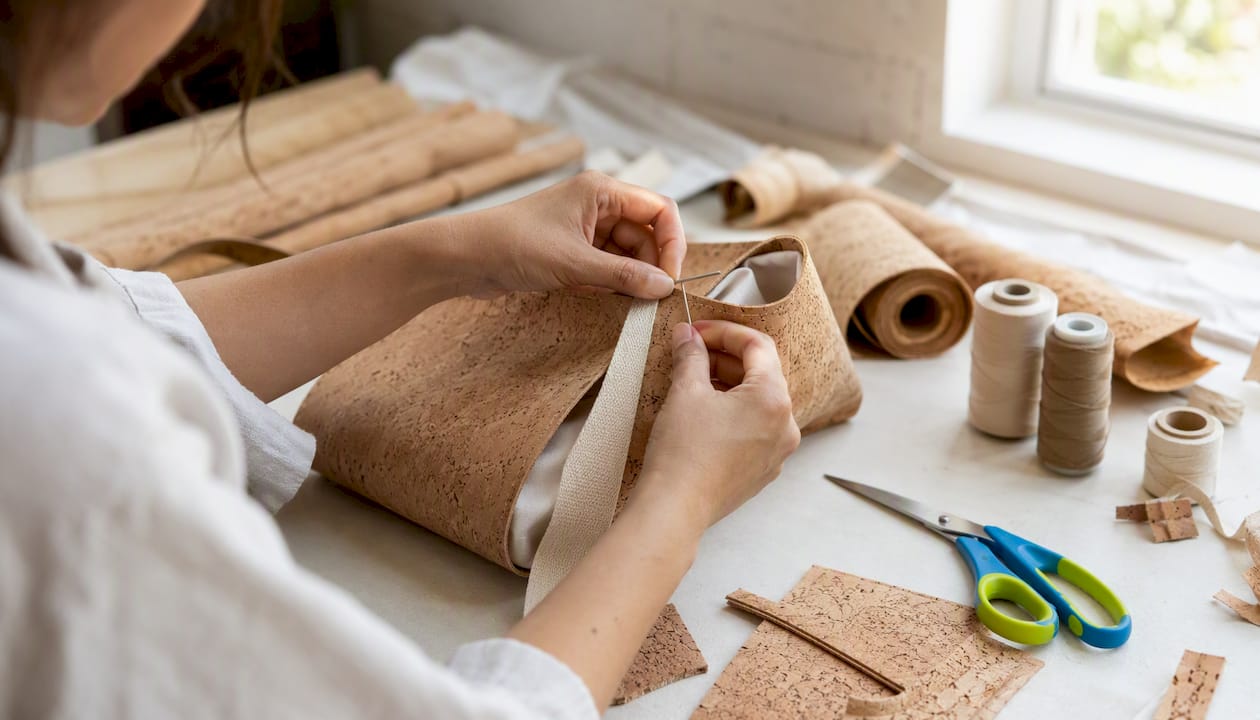
Cork comes from the bark of the cork oak (Quercus suber), stripped by hand at regular intervals without felling the tree. That single fact makes it one of the few genuinely renewable materials in fashion. Once harvested, the bark is cleaned, boiled, sliced into thin sheets and bonded to a backing fabric to create a pliable laminate suitable for bags and wallets.
The material’s durability comes down to suberin, a waxy compound naturally present in cork cells. Suberin makes the surface water-repellent and stain-resistant without any chemical treatment, which is why a cork handbag wipes clean with a damp cloth. Cork is also lightweight, slightly elastic, naturally antimicrobial and hypoallergenic — properties that translate directly into comfort and longevity for daily-use accessories.
A finished cork accessory typically contains:
- Outer cork lamina — the visible, textured surface layer
- Backing fabric — cotton, linen or (less desirably) a synthetic such as polyester
- Hardware — zips, clasps and rings, ideally nickel-free or brass
- Interior lining — usually a woven fabric for structure and finish
Pro Tip: Check the backing fibre before you buy. Cotton or linen backings preserve the eco-credentials of the whole piece; polyurethane or polyamide backings do not.
How do you choose a quality, sustainable cork accessory?
Quality varies considerably between products, so a quick checklist saves regret later.
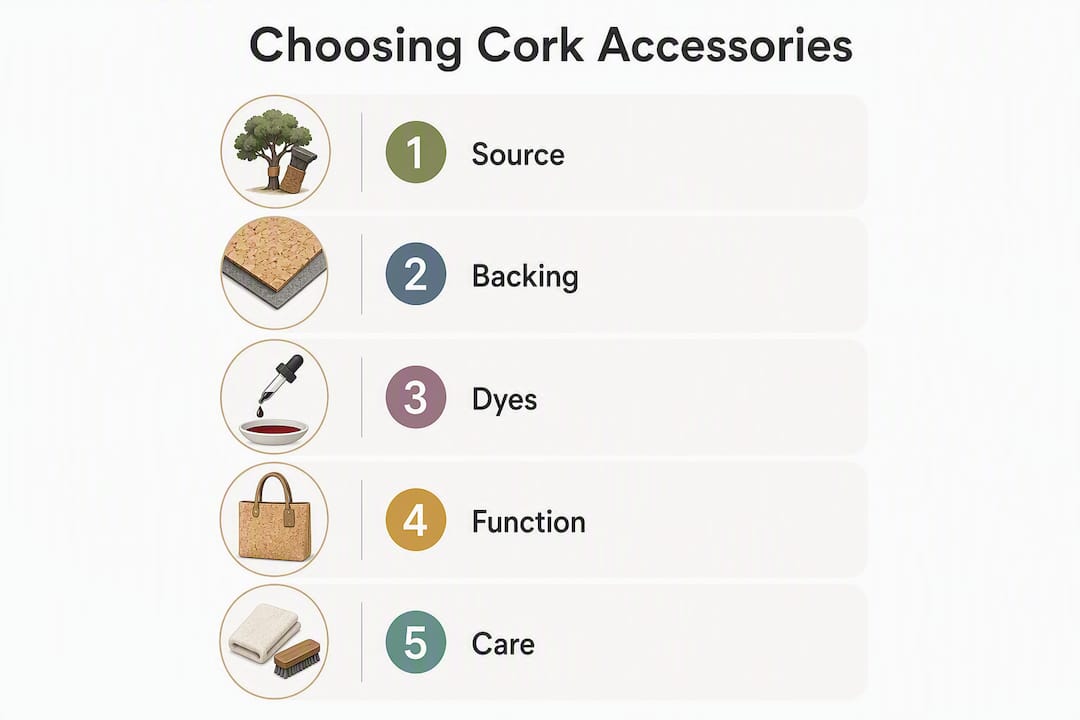
- Cork origin — Portugal is the world’s leading producer of cork oak. Products sourced there, ideally with FSC-certified cork, carry the strongest provenance.
- Backing material — ask or look for cotton, linen or another natural fibre. Avoid listings that omit this detail entirely.
- Dye and finish safety — look for OEKO-TEX or GOTS certification on dyes and finishes, or an explicit statement that non-toxic dyes are used.
- Hardware — nickel-free, brass or recycled metal hardware is the standard for a genuinely considered product.
- Stitching and edge finishing — run your eye along seams and edges in product images; fraying or uneven stitching at the point of sale will worsen with use.
- Returns and warranty — a brand confident in its product will offer a clear returns window and some form of repair or replacement guarantee.
Red flags to avoid:
- Vague phrases like “eco-friendly materials” with no specifics
- No mention of backing fabric anywhere in the product description
- “Sustainable” claims with zero certification or country-of-origin detail
- No stated returns policy or warranty
Typical UK price ranges (guidance only):
- Cork wallets and small accessories: entry-level to mid-range
- Cork handbags: mid-range to premium
- Cork backpacks: mid-range to premium, depending on size and hardware
Questions worth asking a seller: Where is the cork sourced? What is the backing fabric? Are the dyes OEKO-TEX certified? What is the returns window?
Some brands manufacture in Portugal with FSC-certified cork, organic cotton linings and plastic-free hardware — that combination is the benchmark to aim for.
Which cork accessory suits your daily needs?
Matching the right product type to your routine makes a real difference to how long a piece lasts and how much you use it.
Handbags work best for everyday and work use. Look for a reinforced base (cork can scuff on rough surfaces), interior organisation such as card slots and a zip pocket, and a fabric-backed cork panel rather than a thin, unbacked sheet. The eco-friendly handbag options at Thecorkstore cover structured totes through to crossbody styles.
Wallets are where cork’s slimness really shows. A good cork wallet sits flat in a pocket, resists moisture from everyday handling, and holds its shape over years of use. Check the card count, the edge finishing on each slot, and whether RFID-blocking lining is included if that matters to you. The benefits of cork wallets go deeper than most buyers expect.
Backpacks face the hardest daily wear of any accessory. Reinforced shoulder straps, secure zip hardware and a water-resistant finish are non-negotiable for commuting or travel. A cork-panelled backpack with a padded laptop sleeve is a practical choice that holds up well.
Small accessories — pouches, key fobs, cardholders — are the ideal first cork purchase. Lower price point, quick to care for, and a good way to test how the material feels and wears before committing to a larger piece.
Key design details that matter across all types:
- Zip quality (YKK or equivalent)
- Lining fabric weight and attachment
- Edge finishing on cork panels
- Stitching density at stress points
How do you care for and extend the life of a cork accessory?
With reasonable care, most cork accessories last several years. The material’s natural suberin coating does much of the work, but a simple routine keeps it looking good.
Routine cleaning:
- Wipe the surface with a soft, damp cloth after use.
- For light marks, use a small amount of mild soap diluted in water.
- Rub gently in circular motions, then wipe clean with a fresh damp cloth.
- Air dry away from direct heat or sunlight — heat can dry out the cork laminate.
- Never submerge a cork accessory in water or put it in a washing machine.
Stain treatment: For stubborn marks, a diluted white vinegar solution works on most surfaces. Avoid bleach, acetone or alcohol-based cleaners — these strip the natural finish and can cause the cork laminate to separate from its backing.
Repair and upcycling ideas:
- Loose stitching can often be resewn at a local cobbler or leather repair shop
- A worn lining can be replaced without touching the cork exterior
- A small pouch past its best as a bag insert works well as a cable organiser or desk tidy
When a piece is genuinely beyond repair, check whether the cork layer can be separated from its backing for composting (possible with natural-fibre backings) rather than sending the whole item to landfill.
What are the real sustainability benefits of cork, and what should you watch for?
Cork’s credentials are strong: it is plant-derived, harvested without felling trees, and the bark regrows. Cork oak forests also absorb significant amounts of CO₂ and support high biodiversity in the Iberian Peninsula. When a product uses natural-fibre backings and non-toxic dyes, the finished accessory is genuinely close to biodegradable at end of life.
The caveat is real, though.
Experts at Moral Fibres and Ethos flag that toxic dyes and plastic-derived backing fabrics — polyamide, polyurethane, polyester — are the most common ways a cork product loses its eco-credentials. A cork handbag bonded to a polyurethane backing is not biodegradable, regardless of how the outer surface is marketed.
Backing material is the decisive factor in a cork product’s overall sustainability. Sustainability organisations are clear: cork’s natural credentials only hold when the whole product — backing, dyes, hardware — is chosen and described transparently. The fashion sector’s growing use of cork as a bio-based leather alternative is a positive trend, but greenwashing through opaque finishing processes remains a genuine risk.
Certifications and claims worth trusting:
- FSC — for cork sourcing
- PETA-Approved Vegan — confirms no animal-derived materials
- OEKO-TEX Standard 100 or GOTS — for dyes and textile components
- Transparent country-of-origin labelling — Portugal is the benchmark
Pro Tip: On any product page, scroll past the headline claims to the materials section. If the backing fabric is not named, treat that as a red flag and contact the seller before buying.
Is cork a credible vegan leather alternative for UK buyers?
Yes — when sourcing is transparent. Cork fabric is fully plant-derived, cruelty-free, and increasingly accepted across the bio-based leather market alongside mushroom and pineapple leathers. The key is choosing products where the whole item — not just the outer cork surface — meets the same standard.
Before you buy: check the backing fabric, confirm the dye certification, and read the returns policy. For UK buyers ready to browse now, Thecorkstore is a dedicated UK source for vegan cork accessories with product descriptions that include materials detail. Prioritise listings with customer photos and verified reviews — they tell you more about real-world durability than any product copy.
Key takeaways
Cork accessories are a credible vegan leather alternative when the backing fabric is natural fibre, dyes are certified non-toxic, and sourcing is transparently stated.
| Point | Details |
|---|---|
| Cork is plant-derived and vegan | Harvested from bark without felling trees; 100% animal-free and renewable. |
| Backing fabric determines sustainability | Cotton or linen backings preserve eco-credentials; polyurethane or polyester do not. |
| Check certifications before buying | Look for FSC cork, PETA-Approved Vegan, and OEKO-TEX or GOTS on dyes and textiles. |
| Care is simple but specific | Wipe with a damp cloth, mild soap for marks, air dry — no bleach or heat. |
| Thecorkstore is a UK buying option | Stocks handbags, wallets, backpacks and small accessories with materials detail on product pages. |
A note on what actually matters when buying cork
The conversation around sustainable fashion tends to get stuck on the outer material — is it leather? Is it vegan? — and miss the harder question underneath: what is the rest of the product made from?
Cork is genuinely one of the better materials available. The harvest model is sound, the properties are practical, and the aesthetic has moved well past novelty. But a cork handbag bonded to a polyurethane backing and dyed with unregulated pigments is not the sustainable purchase it appears to be. The backing fabric question is the one most buyers never think to ask, and it is the one that most separates a product worth buying from one that is merely marketed well.
The brands doing this properly — Portuguese-sourced cork, natural fibre backings, certified dyes, transparent product pages — are not hard to find. They just require a buyer who knows what to look for. That is the whole point of a checklist like the one above.
For further reading on cork accessory innovations and the role of eco materials in sustainable accessories, the Thecorkstore blog covers both in depth. Returns and warranty details are listed on each product page, which is worth checking before you complete a purchase.
Shop vegan cork accessories at Thecorkstore
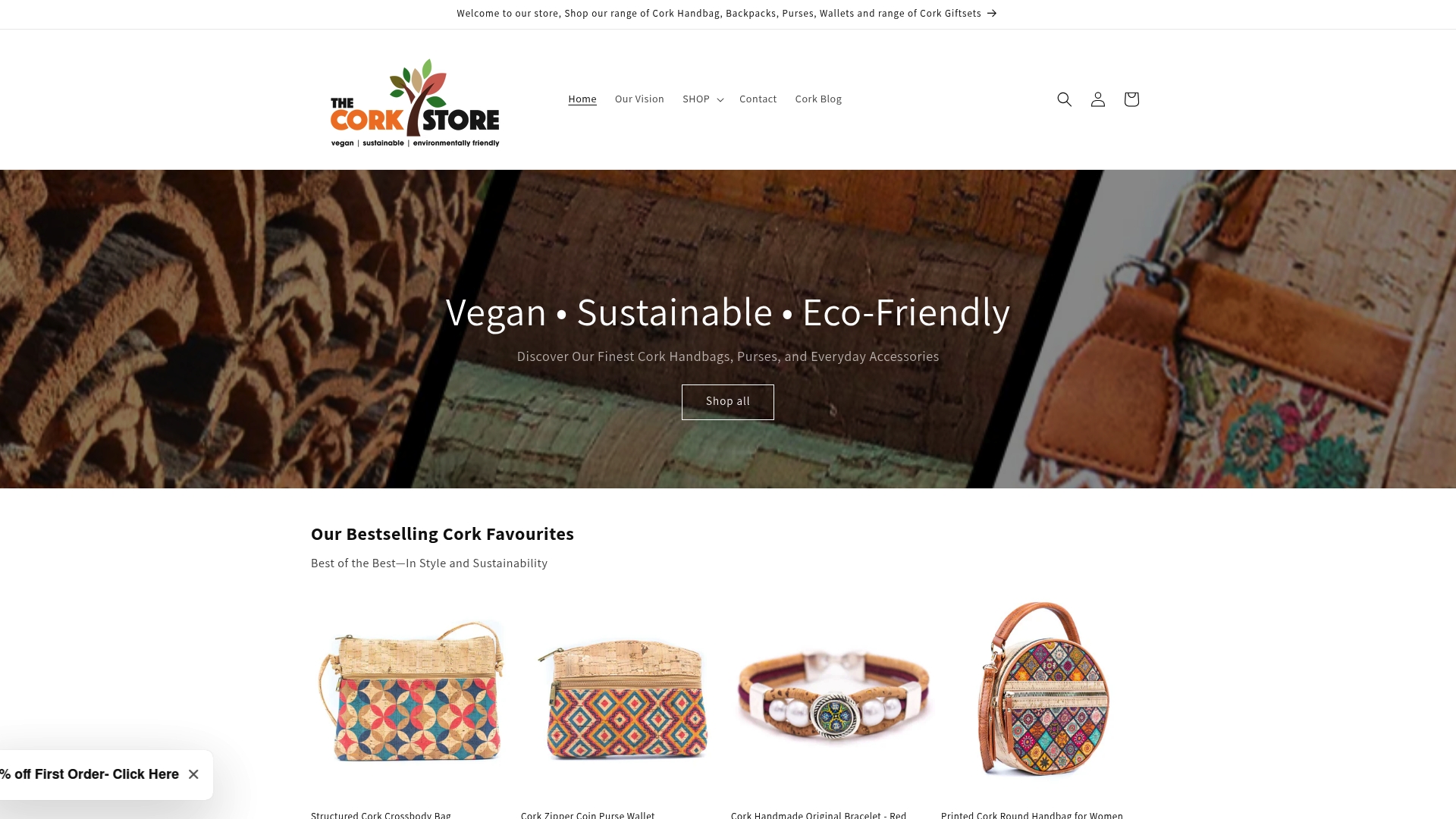
Thecorkstore brings the full range of vegan cork accessories to UK buyers in one place: structured handbags, slim wallets, commuter backpacks, and small accessories including pouches and key fobs. Every product page lists the materials used, so you can apply the backing-fabric and dye checks from this guide before you add anything to your basket.
Shipping goes to UK addresses, and the returns policy is stated clearly at checkout. Customer photos and verified reviews on product pages give you a realistic view of colour, texture and size before you buy. If you want to go deeper on a specific product type, the cork accessories guide on the blog walks through the full range in detail.
Browse the Thecorkstore shop with the buying checklist from this article open — it takes about two minutes to run through, and it will tell you quickly whether a product is worth your money.
Useful sources
- What Is Cork Fabric? Is Cork Leather Sustainable? — Sustainable Jungle: covers cork origins, suberin properties, manufacturing and vegan credentials.
- Is Cork An Eco-Friendly Fabric Choice? — Moral Fibres: examines backing fabrics, dye risks and what makes a cork product genuinely sustainable.
- Cork’s champagne moment in sustainable fashion — Ethos: industry commentary on cork’s growing role in bio-based leather and greenwashing risks.
- Why choose cork accessories — Thecorkstore blog: broad overview of cork’s benefits for fashion buyers.
- Benefits of cork accessories — Thecorkstore blog: practical breakdown of durability, care and style.
- Home decoration tips — WallsNeedLove: lifestyle context for cork in home and gift settings.