
Cruelty-free accessory checklist for UK cork shoppers
TL;DR:
- Cork is a practical, cruelty-free material for accessories because it is plant-based, renewable, and biodegradable. Verifying full material lists and third-party certifications ensures genuine cruelty-free and eco-friendly products, avoiding greenwashing claims. Thecorkstore offers a curated range of UK-shipped cork accessories with transparent materials and care guidance.
Start with cork. If you leave this page with one thing, let it be that: cork is currently the most practical cruelty-free material for everyday accessories. It is plant-based, renewable and biodegradable, water-resistant when treated, and carries none of the fossil-fuel baggage that plagues most cheap “vegan leather.” For a first purchase, three items cover the most ground: a cork bag, a cork wallet, and a cork belt. Thecorkstore stocks all three and ships within the UK.
Your three-point shopping shortcut:
- Material: cork, Piñatex, mushroom leather, or apple leather — not PVC
- Label: look for PETA-Approved Vegan or a full written material list
- Question to ask: “Can you confirm no animal-derived glues, linings, or dyes are used?”
Table of Contents
- What does ‘cruelty-free’ actually mean for accessories?
- How do you verify cruelty-free claims and spot greenwashing?
- Your step-by-step cruelty-free accessory checklist
- How long do cork and vegan materials actually last?
- Thrifting, repair, and what to do at end of life
- Where can you buy cruelty-free cork accessories in the UK?
- Key takeaways
- Why cork is the cruelty-free choice most shoppers overlook
- Thecorkstore: curated cork accessories for UK shoppers
- Useful sources and further reading
What does ‘cruelty-free’ actually mean for accessories?
Cruelty-free means zero animal-derived inputs anywhere in the product: surface material, lining, thread, glue, dye, and finish. Most shoppers check the outer shell and stop there. That is where hidden animal components slip through.
Plant-based materials to prioritise:
- Cork (harvested from bark without felling the tree)
- Piñatex (made from pineapple leaf fibre)
- Mylo-style mushroom leather (mycelium-based)
- Apple and other fruit leathers
- Recycled textiles and TENCEL
Materials to avoid or verify carefully:
- Conventional leather, suede, and nubuck
- Wool, silk, and down (common in linings)
- Animal-derived glues (often listed as “bone glue” or simply absent from the label)
- Gelatin-based fabric finishes
- Untreated natural dyes that use animal mordants
One important caveat: not all vegan leather is environmentally preferable; for making sustainable choices, check out eco-friendly bridal shower invitations which discuss sustainable materials in retail. PVC and other fossil-fuel plastics are technically animal-free but carry a significant environmental cost. Cork, Piñatex, and mushroom leathers sit in a different category entirely. The vegan accessories guide at Thecorkstore explains the material differences clearly if you want a deeper primer.
Pro Tip: On any product page, scroll past the headline description to the full materials section. If a lining material is listed only as “textile” or “fabric” with no further detail, treat it as unverified and ask before buying.
How do you verify cruelty-free claims and spot greenwashing?
Vague terms like “eco” or “natural” without supporting evidence are the most common greenwashing signals in fashion. A brand that is genuinely transparent will publish a full material list, name its certifications, and link to a supply-chain or impact report.
Trusted signals to look for:
- Full written material list covering outer, lining, hardware, thread, and glue
- PETA-Approved Vegan label or equivalent third-party certification
- Fair Trade, GOTS, B Corp, or explicit material traceability pages
- Published care instructions (a sign the brand knows its materials)
Red flags:
- “Leather-look” with no material breakdown
- “Eco-friendly” or “natural” as standalone claims
- No lining or glue information anywhere on the page
- Certifications named but not linked or verifiable
Three questions to ask any seller:
- “What material is the lining made from, and is it animal-free?”
- “Are the adhesives and threads free from animal-derived components?”
- “Do you hold a third-party vegan or sustainability certification?”
A seller who cannot answer all three clearly is not yet meeting the standard. Move on.
Your step-by-step cruelty-free accessory checklist
Use this when you are standing in a shop or scrolling a product page.
- Read the full material description. Check outer, lining, hardware, thread, and glue. If any component is unlisted, note it.
- Check the label physically or on the product page. Look for PETA-Approved Vegan, GOTS, or B Corp. A label alone is not enough — verify it links to a real certification body.
- Inspect or ask about hidden inputs. Glues and dyes are the most commonly overlooked. Ask specifically.
- Request care instructions. Brands that know their materials publish these. Cork needs mild soap and water; anything that says “dry clean only” with no further detail warrants a question.
- Check the repair and returns policy. Brands that prioritise durability and repairability tend to stand behind their products. A repair option signals confidence in the build quality.
Quick scoring rubric — keep or return:
- Material fully listed and animal-free: 2 points
- Third-party certification present: 2 points
- Care instructions published: 1 point
- Repair or returns policy stated: 1 point
Score 5 or above: buy with confidence. Score 3 or below: ask more questions or walk away. This rubric works equally well for choosing vegan accessories online.
How long do cork and vegan materials actually last?
Cork is more resilient than it looks. Cleaned correctly with mild soap, water, and a soft cloth, a quality cork bag or wallet holds its finish for years. The rule is simple: avoid alcohol-based cleaners and harsh solvents, which degrade the natural surface rapidly. Let cork dry naturally away from direct heat.
Practical care tips:
- Wipe down after use with a barely damp cloth
- Store in a dust bag or pillowcase, not compressed against other items
- Rotate between two bags if you carry one daily — this prevents stress on strap anchors
- Inspect stitching at stress points (handles, zip pulls, base corners) every few months
Compared with PVC synthetics, cork ages more gracefully. PVC can crack and peel within two to three years of regular use. Piñatex and apple leathers sit somewhere in between: durable with care, but more susceptible to moisture damage than cork. For everyday UK weather, cork’s natural water resistance gives it a practical edge.
Thrifting, repair, and what to do at end of life
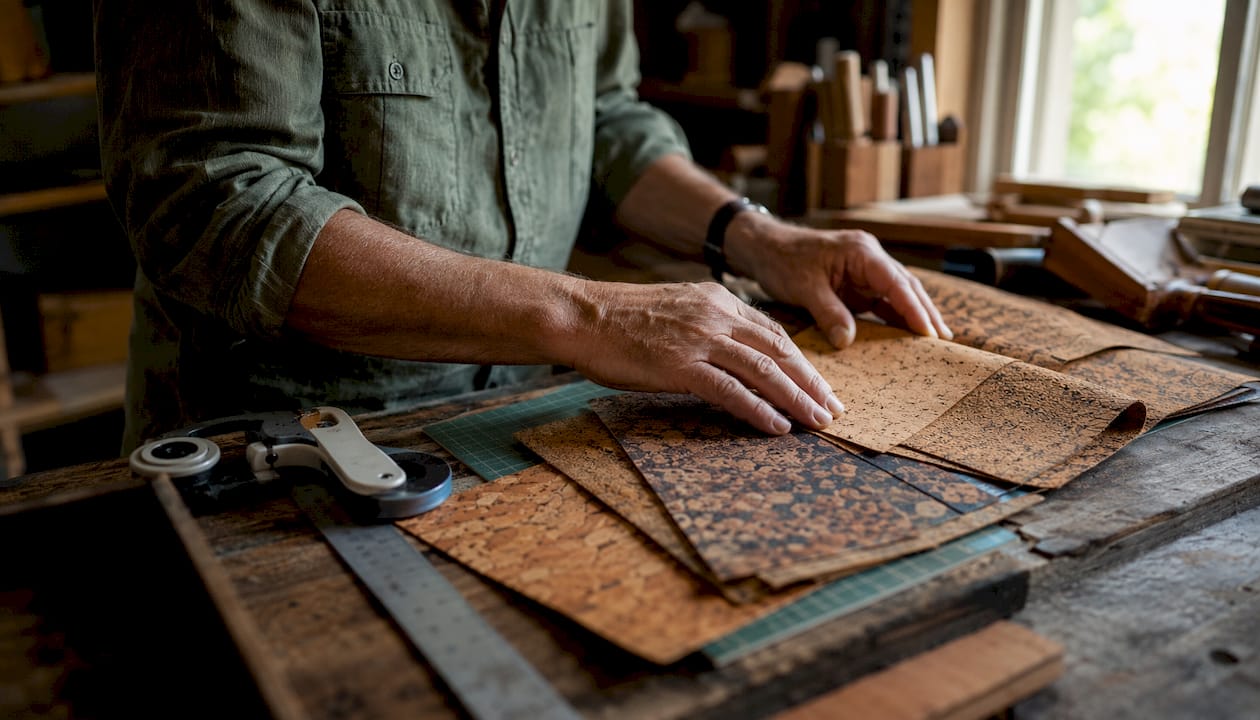
Buying second-hand is one of the most effective ways to keep your accessory choices low-waste, and it applies to cork and vegan items just as well as conventional ones.
When thrifting, inspect in this order:
- Check the lining for tears, staining, or signs of animal-derived material (smell and texture can help here)
- Test zip pulls and hardware for corrosion or stiffness
- Examine stitching at all stress points — loose threads at handle joins are a common failure point
- Look at the base corners for wear-through
Common repairs worth attempting:
- Zip replacement: most cobblers handle this for a modest fee
- Cork patching: small surface scuffs can be sanded lightly and treated with a cork sealant
- Strap re-stitching: a leather-free cobbler or upcycler can re-stitch synthetic straps without animal materials
End-of-life options:
- Donate to a textile charity or vegan clothing swap
- Check whether the brand runs a take-back or recycling scheme
- Upcycle into smaller goods: cork offcuts make excellent coasters, key fobs, or pin boards
Where can you buy cruelty-free cork accessories in the UK?
Thecorkstore is a UK-based retailer focused entirely on cork accessories, which means every product in the range starts from the same cruelty-free material base. The range covers cork handbags, wallets, purses, backpacks, and gift sets. For UK shoppers, that focus matters: you are not filtering a general fashion site for the handful of vegan items buried in it.
What to check on a Thecorkstore product page before buying:
- Material description: look for cork listed as the primary outer material
- Lining details: confirm the lining material is named and animal-free
- Care instructions: these are published on product pages and confirm the brand knows its materials
- Returns policy: check the current policy on the site before purchase
Pro Tip: The cork accessories range at Thecorkstore includes gift sets, which are a practical way to try several product types (wallet, bag, small accessory) before committing to a larger purchase.
Key takeaways
Cork is the most practical cruelty-free accessory material for UK shoppers: plant-based, water-resistant, and durable when cared for correctly.
| Point | Details |
|---|---|
| Prioritise cork and plant leathers | Cork, Piñatex, and mushroom leathers carry a lower footprint than PVC vegan synthetics. |
| Demand a full material list | Check outer, lining, glue, thread, and dye — not just the surface description. |
| Use the scoring rubric | Score 5 or above (material, certification, care, repairability) before buying. |
| Care extends lifespan | Mild soap, water, and natural drying keep cork in good condition for years. |
| Thecorkstore for UK buying | Thecorkstore offers a focused cork accessory range with material transparency and UK delivery. |
Why cork is the cruelty-free choice most shoppers overlook
The conversation around vegan accessories tends to orbit the same few materials: Piñatex gets the press, mushroom leather gets the investment headlines, and apple leather gets the Instagram posts. Cork sits quietly in the background, which is a shame, because for everyday use it outperforms most of them on practical grounds.
The durability argument is real. Cork does not peel, crack, or delaminate the way PVC synthetics do after a couple of years of regular use. It handles UK rain better than most plant leathers. And unlike Piñatex or Mylo, it has been in commercial production long enough that quality standards are well established.
What I would tell anyone building a cruelty-free wardrobe from scratch: start with one cork wallet. It is the lowest-risk entry point. Small enough to assess the material quality up close, used daily so you get a realistic sense of durability within weeks. Check the strap anchorage on bags and the lining seams on wallets before you buy. Those two points are where cheaper cork items tend to fail first.
Thecorkstore: curated cork accessories for UK shoppers
If you have worked through this checklist and want a starting point that already meets it, Thecorkstore is the straightforward answer for UK buyers. Every product is made from cork, which means the cruelty-free material question is answered before you even open the product page. The range covers cork handbags, wallets, and backpacks, with care information and material details published on each listing.
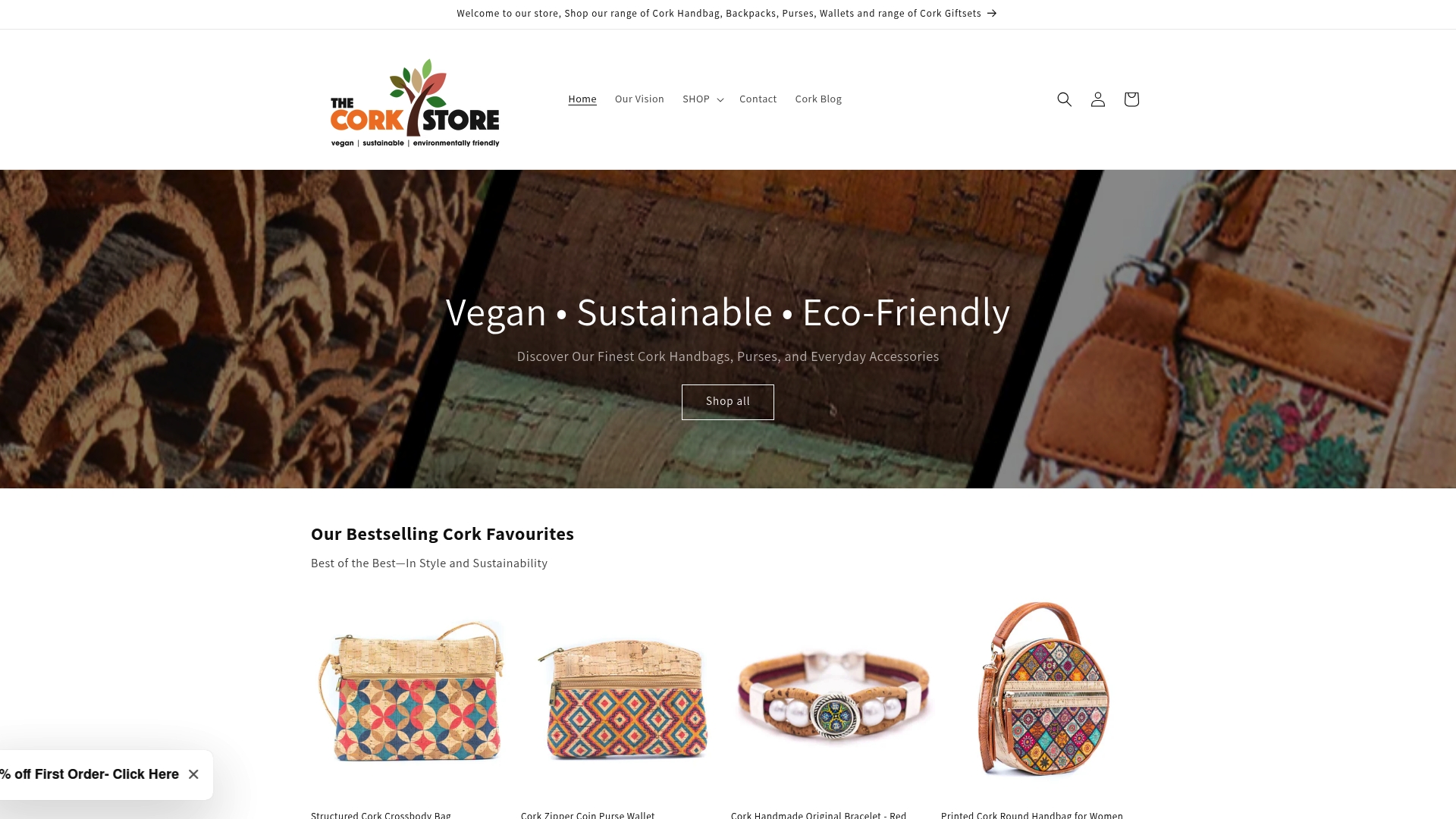
No filtering through a general fashion catalogue, no guessing about hidden animal inputs. Browse the collection, check the lining details on the product page, and use the scoring rubric from this guide to confirm before you buy.
Useful sources and further reading
These sources are worth bookmarking for when you are verifying a seller’s claims or want to go deeper on materials.
- PETA’s vegan shopping guide — lists materials to avoid and explains the PETA-Approved Vegan label. Use it when a seller claims certification but you want to verify what that label actually covers.
- Good On You: vegan fashion guide — rates brands on animal welfare, environment, and labour. Useful for checking whether a brand you are considering has been independently assessed.
- Project Cece: sustainable accessories guide — covers material comparisons including cork, Piñatex, and recycled options. Good reference when a seller uses unfamiliar material names.
- The Vegan Skillet: building a cruelty-free wardrobe — practical guidance on thrifting and wardrobe-building strategy for vegan shoppers.
- StyleGuru: sustainable accessory guide — explains Fair Trade, GOTS, and B Corp certifications in plain language. Refer to it when a product page lists a certification you do not recognise.
Use these when contacting sellers or checking product pages. A seller who cannot answer questions that these sources raise clearly is not yet meeting the standard this checklist sets.