
Vegan cork eco accessories: stylish and sustainable picks
TL;DR:
- Finding genuinely stylish, animal-free, and sustainable eco accessories is challenging due to misleading marketing claims. Cork stands out as a renewable, animal-free material, but its environmental impact varies based on sourcing, processing, and certification standards. To shop confidently, consumers should scrutinize certifications, supply chain transparency, and end-of-life options for each product.
Finding eco accessories that are genuinely stylish, completely animal-free, and truly sustainable is harder than it sounds. The market is full of products labelled “eco” or “vegan” without the evidence to back those claims up. Cork stands out as one of the most promising materials available today, harvested from living trees without cutting them down, naturally renewable, and free from animal products. But even cork accessories vary enormously in quality, transparency, and environmental credentials. This guide cuts through the noise, giving you a clear framework to evaluate your options and shop with real confidence.
Table of Contents
- How to evaluate eco accessories: vegan and sustainability criteria
- Cork bags and wallets: animal-free style
- Small cork accessories: belts, sunglasses and more
- Cork phone cases: sustainable tech essentials
- Alternative vegan materials: cork, pineapple-leaf and impact nuances
- What most eco guides miss: balancing style, ethics and true sustainability
- Where to shop for vegan cork accessories
- Frequently asked questions
Key Takeaways
| Point | Details |
|---|---|
| Cork is a leading eco material | Cork offers vegan, animal-free credentials and proven sustainability, but sourcing transparency is critical. |
| Accessory categories vary | Bags, wallets, belts, phone cases, sunglasses, and small items are all available as stylish cork-based alternatives. |
| Certification matters | Look for FSC, vegan, and environmental certifications to ensure accessories meet true eco standards. |
| Harvesting practices affect impact | Sustainability depends on responsible harvesting cycles, tree management, and ecosystem preservation. |
| Compare vegan alternatives | Cork competes with materials like Piñatex, but buyers should check for genuine plant-based and eco-friendly credentials. |
How to evaluate eco accessories: vegan and sustainability criteria
Before you spend money on any eco accessory, it pays to understand what genuine sustainability actually looks like. Not every product labelled “green” has earned that description, and the criteria you use to evaluate claims will shape every purchasing decision you make.
Material origin is your starting point. Cork sourced from Portugal, where the majority of the world’s cork oak forests grow, carries a strong reputation for quality and responsible management. Look for FSC-certified cork, which confirms the material has been harvested from forests managed to meet rigorous environmental and social standards. Accessories marketed as vegan and animal-free should carry clear labelling confirming no animal-derived materials, glues, or dyes were used anywhere in the product.
Certifications and transparency separate credible claims from marketing spin. Genuine eco accessories will tell you exactly where their materials come from, how they were processed, and what standards they meet. If a brand cannot answer basic sourcing questions, treat that as a warning sign.
However, even well-intentioned sustainability claims have gaps. Research published in the MDPI Sustainability journal found that cork industry sustainability assessments sometimes exclude negative environmental impacts such as energy consumption, water usage, and transport emissions. That means a product can carry an eco label while still having a meaningful carbon footprint during processing and shipping.
Key criteria to check before you buy:
- FSC certification for the cork raw material
- Confirmed vegan status (no animal glues, dyes, or linings)
- Transparent supply chain with named sourcing regions
- Recyclable or biodegradable end-of-life options
- Independent verification of eco claims, not just brand self-reporting
Understanding what makes eco materials genuinely sustainable helps you ask better questions. You can also explore the wider environmental impact of cork to understand how the material stacks up across its entire lifecycle. A helpful external reference on this is the eco-friendly materials guide, which covers a range of plant-based and sustainable options.
Pro Tip: When a brand highlights sustainability, ask specifically whether their eco claims include or exclude transport emissions and processing energy. That single question reveals more than any marketing copy.
Cork bags and wallets: animal-free style
Cork bags and wallets are the most established category in vegan cork accessories, and for good reason. They offer a direct, like-for-like alternative to leather goods without any of the ethical or environmental costs associated with animal agriculture.
Cork bags and wallets are 100% vegan and animal-free, typically made with FSC-certified Portuguese cork as the primary raw material. The texture closely resembles leather, making them visually appealing even to people who have no particular interest in veganism. Functionally, cork is lightweight, naturally water-resistant, and surprisingly durable given how soft it feels to the touch.
“Cork is harvested from the bark of living cork oak trees, which means the tree itself is never felled. Each harvest actually stimulates the tree’s growth and improves its carbon absorption capacity.”
Popular subcategories in this space include:
- Handbags and totes: Available in a range of sizes and styles, from compact crossbody bags to structured totes ideal for everyday use
- Backpacks and rucksacks: Lightweight and practical, these are growing in popularity for both commuter and travel use
- Wallets and card holders: Slim, minimal, and easy to personalise with natural cork grain patterns
- Purses and clutches: Often the entry point for people trying cork accessories for the first time
The best vegan handbags in 2025 show just how far cork design has come. You are no longer choosing between ethics and aesthetics. You can also find inspiration in these eco-friendly cork accessory ideas if you want to build a cohesive sustainable wardrobe.
Pro Tip: Always check whether the bag lining and stitching thread are also vegan. Some cork bags use animal-derived glues or non-vegan fabric linings, which undermines the overall ethical claim.
One thing worth noting is that the backing material used with cork fabric matters enormously. Cork fabric is typically bonded to a backing for structure. Eco-conscious buyers should look for cotton or other plant-based backings rather than synthetic polyester, which is derived from fossil fuels and is not biodegradable.
Small cork accessories: belts, sunglasses and more
Cork’s versatility extends well beyond bags and wallets. A growing range of smaller accessories allows you to introduce sustainability incrementally into your everyday look, without overhauling your entire wardrobe at once.

The benefits of cork accessories become even more apparent in smaller items, where the material’s lightweight nature, natural grain patterns, and biodegradability make it particularly attractive. Small cork accessories also tend to be more affordable entry points, meaning you can test the material before committing to a larger purchase.
Product categories in the eco cork space now include belts, sunglasses frames, jewellery, keychains, and small cases. Some of these use hybrid or partial cork construction, so it is important to check the full composition before assuming total eco credentials.
| Item | Key features | Vegan/eco status | Typical retail price |
|---|---|---|---|
| Cork belt | Adjustable, water-resistant, grain texture | Fully vegan if no metal from animal processing | £20 to £45 |
| Cork sunglasses frame | Lightweight, natural grain | Vegan (lenses vary) | £30 to £70 |
| Cork keychain | Compact, biodegradable | Fully vegan | £8 to £20 |
| Cork card holder | Slim profile, durable | Fully vegan | £12 to £28 |
| Cork jewellery | Earrings, pendants, bracelets | Vegan (check clasps) | £10 to £35 |
All prices approximate and subject to change.
Cork’s natural properties make it one of the most biodegradable clothing materials available, provided synthetic coatings and dyes have not been applied during manufacturing. Sustainable processing matters as much as the raw material itself. Innovations in this area are progressing quickly, as covered in recent writing on innovation in cork accessories.
A note on hybrid products: Some sunglasses and belt brands use cork as a surface veneer over a non-cork core. This still reduces reliance on plastic or leather, but the overall eco impact is lower than a fully cork-based product. Always read the full materials list.
Cork phone cases: sustainable tech essentials
Phone cases are one of the most overlooked categories in sustainable fashion, yet most people replace them every one to two years. The typical plastic phone case contributes to the growing problem of electronic and plastic waste. Cork cases offer a genuinely different approach.
Cork phone cases are designed as eco-friendly alternatives to conventional plastic cases, typically blending natural cork veneer with eco rubber or plant-based materials to provide both grip and protection. They are lighter than most plastic alternatives, comfortable to hold for extended periods, and their natural texture develops a pleasant patina over time.
Here is how to select the right cork phone case for your device:
- Check compatibility: Ensure the case is designed specifically for your phone model, including camera cutouts and port placements
- Examine the inner material: Look for cases using recycled or natural rubber rather than virgin plastic for the structural shell
- Verify the cork sourcing: Check whether the brand specifies FSC-certified cork or Portuguese cork origin
- Assess the coating: Some cork cases use surface treatments that compromise biodegradability at end of life
- Review the warranty: A good-quality cork case should last at least 18 months with normal use
| Case type | Eco status | Durability | Approximate price |
|---|---|---|---|
| Cork and eco rubber | High | Good | £18 to £35 |
| Plastic with cork veneer | Moderate | Very good | £12 to £25 |
| Bamboo fibre case | High | Moderate | £15 to £30 |
“Choosing a cork phone case over a standard plastic one is a small individual action, but when millions of people make that choice, the cumulative impact on plastic waste is significant.”
For further inspiration, this guide on eco-friendly clothing brands provides useful context on how to evaluate brand-level sustainability commitments beyond individual products.
Alternative vegan materials: cork, pineapple-leaf and impact nuances
Cork is not the only plant-based material competing for space in your accessories collection. Piñatex, derived from pineapple leaf fibres, has attracted significant attention as a leather alternative. So have mushroom leather, apple leather, and recycled ocean plastics. Each has genuine strengths, and each has limitations worth understanding.
Piñatex and similar plant-based leathers are vegan alternatives, but their true sustainability depends heavily on the coatings, dyes, and manufacturing processes used to make them commercially viable. Many require a polyurethane coating to achieve the durability consumers expect, which introduces a petroleum-derived element into an otherwise plant-based product. Research evaluating the environmental impact of cork harvesting suggests that peer-reviewed comparisons are essential rather than relying on brand marketing alone.
| Material | Vegan | Eco claims | Durability | Key pitfall |
|---|---|---|---|---|
| Cork | Yes | Strong if FSC certified | Very good | Processing energy sometimes excluded |
| Piñatex | Yes | Moderate | Good | Often requires polyurethane coating |
| Apple leather | Yes | Moderate | Fair to good | Typically blended with PU plastic |
| Mushroom leather | Yes | Strong | Good | High cost, limited availability |
| Recycled ocean plastic | Yes | Moderate | Good | Not biodegradable at end of life |
Understanding cork’s role in fashion versus these alternatives helps you make genuinely informed comparisons. Cork’s main advantages are its long track record, renewable harvesting cycle, and the fact that it can be left uncoated while remaining commercially durable. For a broader comparison of sustainable material choices, it is worth reading across multiple sources rather than relying on any single brand’s claims.
Key material comparison points:
- Cork: Naturally water-resistant, biodegradable when uncoated, renewable every nine years
- Piñatex: Uses agricultural waste (pineapple leaves), but typically requires plastic coatings
- Apple leather: Another agricultural byproduct material, but low durability without synthetic blending
- Mushroom leather: Genuinely exciting material but not yet at commercial scale for accessories
What most eco guides miss: balancing style, ethics and true sustainability
Most eco accessory guides stop at the material. They tell you cork is better than leather, Piñatex is better than PVC, and bamboo is better than plastic. That is all broadly true. But it misses the more difficult question: how sustainable is the supply chain behind that material, and what happens to the ecosystem where it is harvested?
Cork harvesting is not automatically impact-free. Harvest intensity, the frequency and scale at which bark is removed, can affect local microhabitats and the rate at which individual trees recover and grow. Cork oak forests in Portugal and Spain support extraordinary biodiversity, including endangered species that depend on the specific conditions those forests create. Managed well, harvesting supports that ecosystem. Managed poorly, it can degrade it.
This is where we believe most eco guides fail you. They treat materials as either good or bad, when the reality is that how a material is harvested and processed determines its actual impact. A product made from technically renewable cork but sourced from over-harvested forests with poor regeneration management is not as sustainable as the label suggests.
Our view is that the most genuinely sustainable choice is a product where you can trace the entire journey from tree to finished accessory. Ask about harvesting cycles. Ask whether the producer is certified not just for the material but for the forest management practices behind it. Explore the nuances of cork harvesting as a sustainable process so you understand what good looks like.
Pro Tip: Look beyond the product label and ask the brand directly about their harvesting partner, the region their cork comes from, and the last time that forest was certified. Brands that cannot answer this question confidently are worth questioning.
Style and ethics should not require compromise. But genuine sustainability does require curiosity and a willingness to ask inconvenient questions.
Where to shop for vegan cork accessories
If you have worked through the criteria in this guide, you are now equipped to shop with real intention rather than just good intentions. Knowing what questions to ask and what claims to scrutinise puts you in a much stronger position than the average eco-conscious shopper.
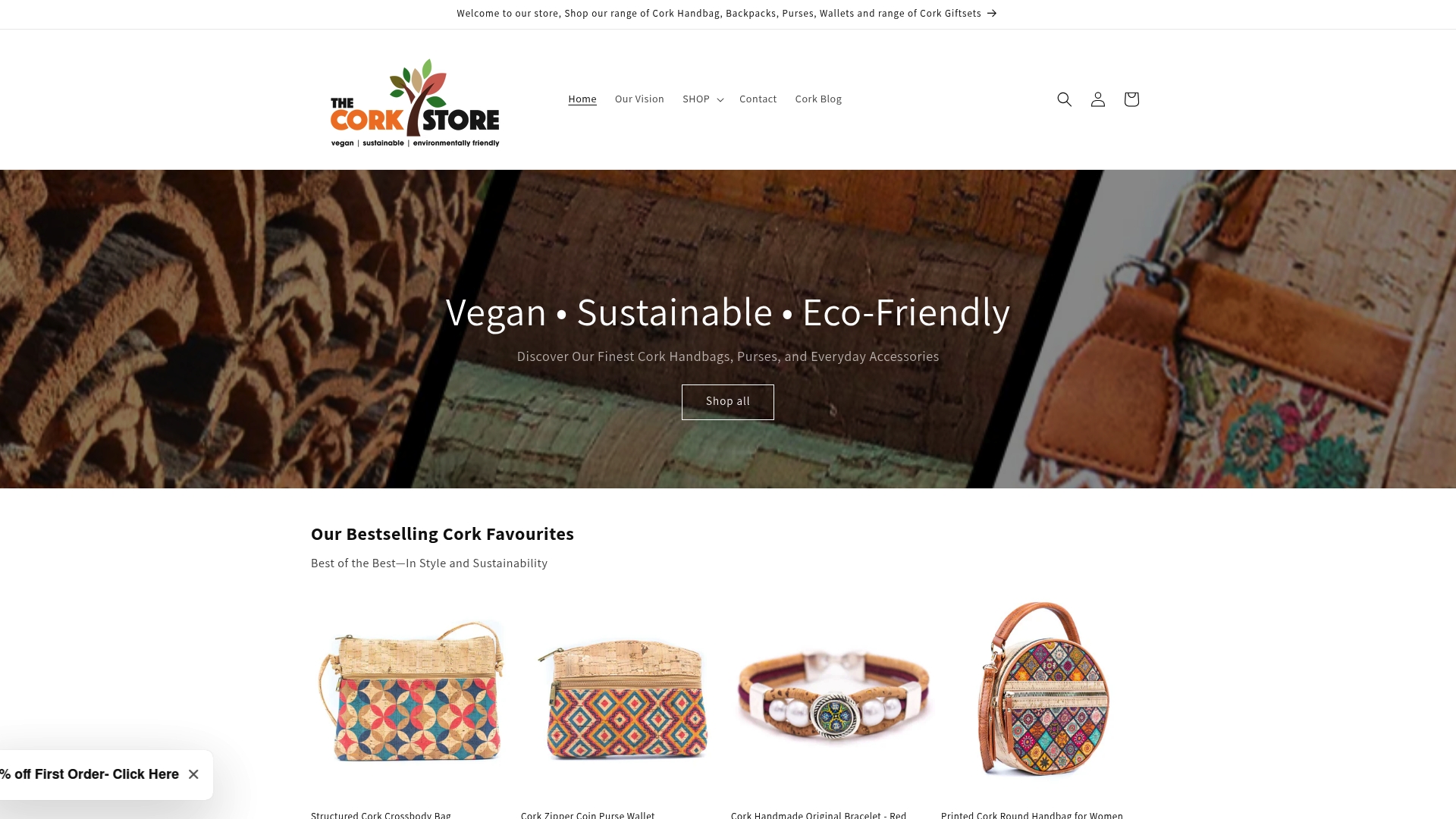
At The Cork Store, every accessory in our collection is crafted from sustainably sourced cork and designed to be completely vegan and animal-free. From everyday bags to thoughtful presents, our range is curated specifically for shoppers who want style without compromise. Browse our vegan cork gift ideas for genuinely considered sustainable gifting, or explore the full cork accessories store to find pieces that align with your values and your wardrobe. Every product comes with transparent sourcing information because we believe you deserve to know exactly what you are buying.
Frequently asked questions
Are cork accessories always vegan and animal-free?
Most cork accessories marketed as eco-friendly are vegan and animal-free, but you should still check for supporting certifications and ask about linings, glues, and thread materials to confirm full vegan credentials.
How often is cork harvested for eco accessories?
Cork is typically harvested every nine years from mature cork oak trees, with individual trees remaining productive for up to 150 years, making it one of the most genuinely renewable natural materials available.
Are other materials used for vegan eco accessories besides cork?
Yes, Piñatex and plant-based leathers derived from pineapple leaves, apples, and mushrooms are used, though their overall sustainability depends significantly on the coatings, binding agents, and sourcing practices behind them.
Do cork accessories have any environmental drawbacks?
Some sustainability analyses of cork products exclude processing impacts such as energy consumption, water usage, and transport emissions, meaning the full environmental footprint may be higher than label claims suggest.
Can I recycle or compost cork accessories?
Pure cork accessories are biodegradable and compostable, but items incorporating synthetic linings, polyurethane coatings, or metal hardware may not be suitable for composting and should be checked individually before disposal.
Recommended
- Vegan gift guide: stylish, sustainable cork accessories – The Cork Store
- Stylish vegan accessories: sustainable examples for 2026 – The Cork Store
- How to choose vegan accessories: sustainable cork guide 2026 – The Cork Store
- Why Go Vegan with Accessories: 64% Prefer Cork Alternatives – The Cork Store