

How to clean wine corks in your vegan cork handbags
The safest everyday method is simple: a slightly damp soft cloth, a drop of mild pH-neutral soap, and a gentle circular rub, then a dry cloth to finish. Always test on a hidden seam or the inside pocket first, before touching anything visible.
Do:
- Wipe spills the moment they happen.
- Test any product on a hidden area first.
- Air dry away from heat.
Don’t:
- Soak the bag or scrub with bleach.
- Use solvents, acetone, or abrasive brushes.
Thecorkstore has spent years testing exactly this routine on real cork accessories, and it’s the one we stand behind.
Key Takeaways
Cork fabric stays looking new when you clean it with mild soap and minimal water, test products on a hidden area first, and avoid heat, bleach, and soaking entirely.
| Point | Details |
|---|---|
| Test before you clean | Always dab any product on a hidden seam or pocket first to check for colour change. |
| Keep water minimal | Use a barely-damp cloth rather than a wet one; excess moisture can affect the backing. |
| Match the treatment to the stain | Oil needs cornflour and blotting; ink needs a whisper of alcohol; mildew needs air, not bleach. |
| Dry flat, away from heat | Never use a hairdryer or leave bags near radiators; air drying preserves shape and texture. |
| Follow Thecorkstore’s tested routine | Thecorkstore’s care guidance and gift sets support the same gentle, test-first approach recommended throughout this article. |
Table of Contents
- What you’ll need: safe supplies and useful extras
- How do you clean wine corks safely at home?
- How do you treat stubborn stains on cork bags?
- What should you never do when cleaning cork fabric?
- How should you dry and store cork accessories?
- Can you repair minor damage yourself?
- How often should you clean a cork handbag?
- Author perspective: first-person tips from The Cork Store
- Keep your cork accessories looking their best
- Sources
What you’ll need: safe supplies and useful extras
Good cork fabric care doesn’t need a cupboard full of products. Keep it simple and gentle, and you’ll avoid most of the damage we see caused by well-meaning over-cleaning.
The essentials:
- Soft, lint-free cloths (microfibre or old cotton T-shirt material works fine).
- A pH-neutral mild soap or a small amount of saddle soap.
- Distilled or lukewarm water, used sparingly.
- A soft-bristled brush for texture and stubborn marks.
- Cotton swabs for fiddly corners and seams.
Useful extras worth having on hand: Biodegradable baby wipes with roughly 99% water content make quick spot-cleaning painless. Rubbing alcohol on a cotton bud can lift tiny ink marks, but only ever in a whisper-small amount, tested first. A colour-matched permanent marker or a dab of neutral shoe polish can disguise minor scuffs once you’ve confirmed it blends properly.
Pro Tip: Dab, don’t drench. A cloth that’s “wrung-out damp” rather than wet is the difference between cleaning cork fabric and saturating it.
How do you clean wine corks safely at home?
This sequence handles the vast majority of everyday dirt and grime without risking the material.
- Inspect first. Check the stain, its size, and whether it sits on a coated or uncoated section of cork fabric.
- Test in a hidden spot. Dab your cleaning solution inside a pocket seam or under a strap fold and wait a few minutes to check for colour change.
- Dampen your cloth. Mix a small amount of mild soap or saddle soap into warm water, then wring the cloth until it’s barely moist.
- Work in gentle circles. Clean small sections at a time rather than scrubbing the whole surface at once.
- Lift stubborn marks with a soft brush. Light, repeated strokes work better than pressure.
- Wipe away residue. Use a second, clean, barely-damp cloth to remove any leftover soap.
- Dry immediately. Pat with a dry cloth and let the bag air dry flat, away from radiators or direct sun.
- Reassess. If a mark persists, repeat the process once more before considering it a job for stain-specific treatment.
For daily-use bags, a quick wipe after each outing keeps grime from building up, while a proper clean roughly twice a month suits most owners. Occasional-use accessories can usually go longer between deep cleans, though a monthly check is still worth doing.
Pro Tip: If a stain hasn’t budged after two gentle attempts, stop. Repeated scrubbing on the same spot is far more likely to wear the surface than to shift the mark. That’s your cue to escalate rather than push harder.
How do you treat stubborn stains on cork bags?
Different marks need different handling, and the wrong approach can set a stain permanently or strip the cork’s finish.
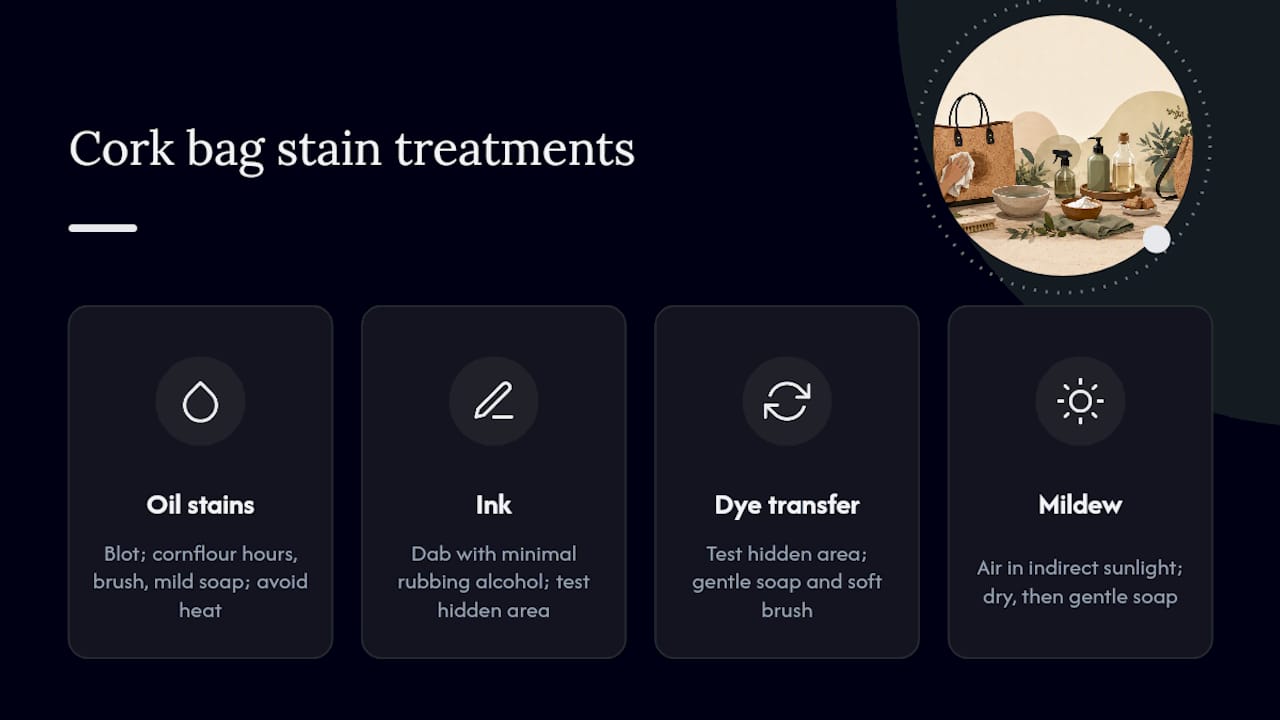
Oil and grease: Blot immediately rather than rubbing. Sprinkle cornflour over the mark, leave it for a few hours to absorb the oil, then brush it away before cleaning with your standard mild soap solution. Heat sets oil into cork fabric, so keep it away from radiators while you work.
Ink: This is the trickiest one. Use the smallest possible amount of rubbing alcohol on a cotton bud, tested on a hidden area first. Dab, don’t rub, and stop the moment you see any colour lifting from the cork itself rather than the stain.
Dye transfer or marking (from denim, newspaper, or dark fabrics): Test a hidden area, then work gently with soap and a soft brush. If the mark is deep-set or covers a large area, this is a job for professional colour restoration rather than home treatment.
Mildew: Move the bag somewhere well-ventilated with indirect sunlight, then clean with gentle soap and a soft brush once the surface has dried out. Skip strong bleaches or vapour steam cleaners entirely; they can push moisture into the material and worsen the problem. If a musty smell lingers after cleaning and airing, that’s a sign to seek professional advice rather than keep treating it at home.
What should you never do when cleaning cork fabric?
A handful of common habits cause more damage to cork accessories than the dirt they’re meant to remove.
- Never soak or submerge the bag. Cork fabric handles moisture well in small amounts, but full submersion can loosen the backing or affect the adhesive layer beneath the surface.
- Never use bleach, acetone, or strong solvents. These strip both colour and the protective finish that gives cork fabric its texture and water resistance.
- Never scrub with abrasive tools or apply heat. Wire brushes, scouring pads, hairdryers, and radiators all distort the surface texture and can cause cracking over time.
Each of these shortcuts might look like it’s working in the moment, but the damage tends to show up weeks later as stiffening, fading, or a surface that no longer feels like cork.
How should you dry and store cork accessories?
Drying and storage decide how long a cork bag keeps its shape, arguably more than cleaning technique does.
Drying: Pat the surface with a clean, dry cloth to remove excess moisture, then let the bag air dry flat or upright in its natural shape. Never use a hairdryer or leave it near a radiator; direct heat causes the material to stiffen and crack.
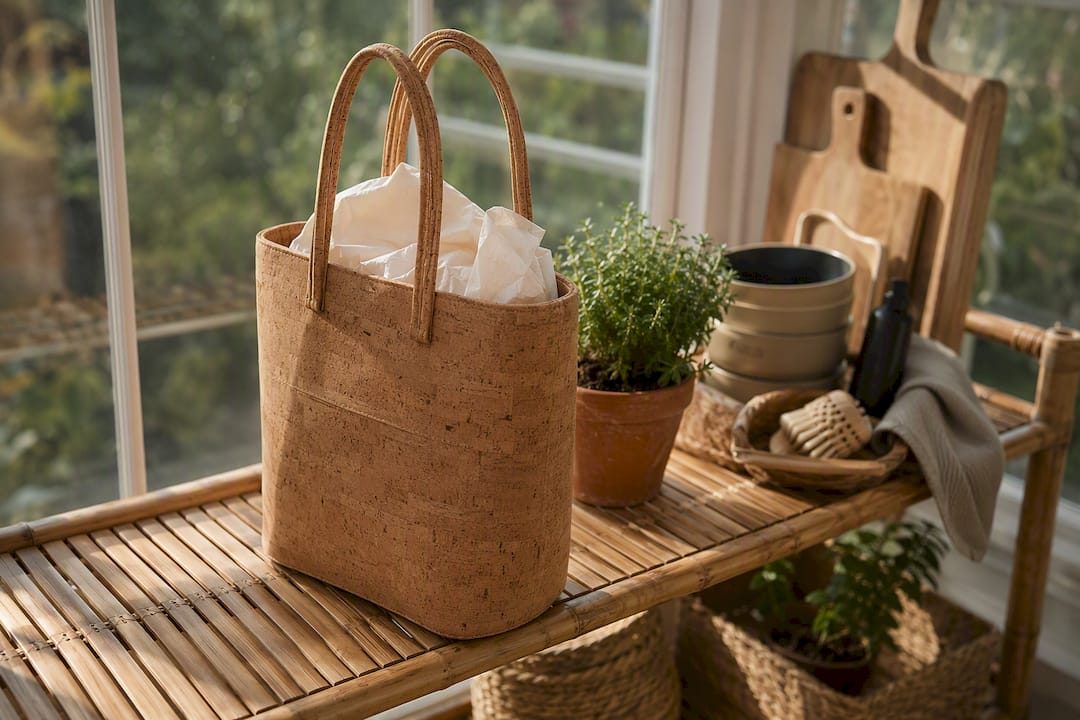
Reshaping: Loosely pack the bag with tissue paper or bubble wrap while it dries to help it hold its structure, but avoid over-stuffing for long periods, which can stretch seams.
Storage: Keep accessories somewhere cool, dry, and ventilated, out of direct sunlight, ideally in a breathable dust bag rather than plastic. Rotating between bags rather than relying on one daily reduces wear along edges and corners.
Can you repair minor damage yourself?
Some damage is fixable at home; other damage genuinely isn’t, and knowing the difference saves you from making things worse.
Try it yourself: Small edge scuffs or faint colour loss often respond to a careful touch-up with a colour-matched permanent marker or neutral shoe polish, applied after testing on a hidden area first.
Call in help: Delamination, large tears, peeling layers, or any structural weakness around straps and hardware are beyond home repair. Stop cleaning attempts and seek professional or manufacturer support instead.
Before you escalate:
- Photograph the damage clearly, including close-ups.
- Note down what cleaning products or methods you’ve already tried.
- Check your warranty or return terms.
- Contact The Cork Store’s care team for product-specific advice before attempting anything further.
Pro Tip: Keep a small note of the date and method whenever you clean a bag. If a problem develops later, that record makes it far easier to work out what caused it.
How often should you clean a cork handbag?
A light, consistent habit beats occasional deep cleans. Try wiping the bag after each use or spill, giving it a proper clean roughly every two weeks if it’s in daily rotation, and running a full inspection monthly.
- Inspect: seams, corners, hardware, and strap attachments for early wear.
- Adjust for climate: humid environments encourage mildew faster, so check more often if you live somewhere damp.
Author perspective: first-person tips from The Cork Store
The biggest mistake owners make isn’t under-cleaning, it’s over-cleaning. I’ve seen far more cork fabric damaged by enthusiastic scrubbing and too much water than by dirt left alone for a week. My two go-to habits: keep a cloth by the door for immediate wipe-downs, and resist the urge to “deep clean” more than twice a month unless the bag genuinely needs it. If you’re ever unsure about a stain or a mark that won’t shift, get in touch with our care resources rather than guessing with a product you’re not sure about.
Keep your cork accessories looking their best
Once your bag is clean, dry, and stored properly, the next question is usually what to add to the collection or buy as a gift. Thecorkstore’s care guidance sits alongside a full range of vegan cork accessories designed to hold up to exactly this kind of routine care, so what you learn here keeps paying off long after the first clean.

If you’re shopping for someone who’d appreciate a thoughtful, low-maintenance gift, our cork wallet gift set makes a practical starting point, or browse the wider collection of vegan cork gift ideas for something more personal. And if you’re ever curious about creative reuse for cleaned cork offcuts or accessories, this wine bottle display guide has some genuinely nice ideas. Browse the range, or get in touch with our team if you want cleaning advice specific to your product.
Sources
- Cork Fabric Care: A Guide to Cleaning, Maintenance, and Restoration – MB Cork
- How To Clean A Cork Purse: Step-by-Step Instructions – Laflore Paris