

Store Cork Accessories: Extend Life by 70% in 2026
You’ve invested in sustainable cork accessories, but improper storage quietly undermines their longevity and eco-value. Cork’s natural oils and breathability demand specific conditions that differ sharply from synthetic materials. Without the right approach, your carefully chosen vegan handbag or wallet can crack, discolour, or develop mould within months rather than years.
Table of Contents
- Introduction To Cork Accessories And Their Unique Care Needs
- Prerequisites: What You Need Before Storing Cork Accessories
- Step-By-Step Process For Storing Cork Accessories Properly
- Common Mistakes That Damage Cork Accessories And How To Fix Them
- Expected Results And Outcomes From Proper Cork Storage
- Explore Durable Eco-Friendly Cork Accessories At The Cork Store
- Frequently Asked Questions About Storing Cork Accessories
Key Takeaways
| Point | Details |
|---|---|
| Temperature and humidity control | Maintain 15°C to 25°C and 40% to 60% humidity for optimal preservation. |
| Breathable storage materials | Use cotton or linen bags exclusively; plastic traps moisture and increases mould risk by 60%. |
| Pre-storage cleaning | Clean with mild pH-neutral soap and dry completely in shade before storing. |
| Avoid physical stress | Never stack heavy items on cork or place near heat sources above 25°C. |
| Lifespan extension | Proper storage extends cork life from 3 to 5 years and reduces damage by over 70%. |
Introduction to Cork Accessories and Their Unique Care Needs
Cork stands apart from leather, canvas, and synthetic fabrics because of its living cellular structure. The material retains natural oils that provide water resistance and durability, but these oils need balanced humidity to stay supple. When humidity drops too low, cork dries out and cracks. When it climbs too high, mould colonises the porous surface.
Many eco-conscious buyers assume cork requires no special attention because it’s “natural.” This misconception leads to storing cork bags in the same plastic garment covers used for synthetics, which blocks the airflow cork needs and traps condensation. Within weeks, white mould patches appear or the material stiffens.
Cork’s breathability is both its strength and its vulnerability. Unlike polyurethane, which repels moisture completely, cork actively exchanges air with its environment. This exchange regulates internal moisture and prevents bacterial growth under normal conditions. Seal that exchange with airtight plastic, and you create a microbial incubator.
Common myths complicate proper care further:
- Myth: Cork needs no conditioning because it’s self-maintaining.
- Reality: Natural oils deplete over time; periodic conditioning restores flexibility.
- Myth: Any bag works for storage as long as it’s clean.
- Reality: Material matters; plastic bags increase mould risk substantially.
- Myth: Cork tolerates any indoor temperature like synthetic leather.
- Reality: Temperatures above 25°C accelerate oil evaporation and surface cracking.
Understanding these properties shifts your storage strategy from passive neglect to active preservation. Cork accessories are investments in sustainable fashion, and their care requirements reflect their living origin.
Prerequisites: What You Need Before Storing Cork Accessories
Before tucking away your cork wallet or backpack, you need to establish the right environment and gather proper supplies. Skipping this preparation stage leads to the most common storage failures.
Your storage space must offer climate stability. Basements with fluctuating dampness or attics that overheat in summer both fail the test. An interior wardrobe or cupboard away from exterior walls typically maintains the 15°C to 25°C range cork requires. UK homes with central heating often exceed 25°C near radiators, so position storage spots carefully.
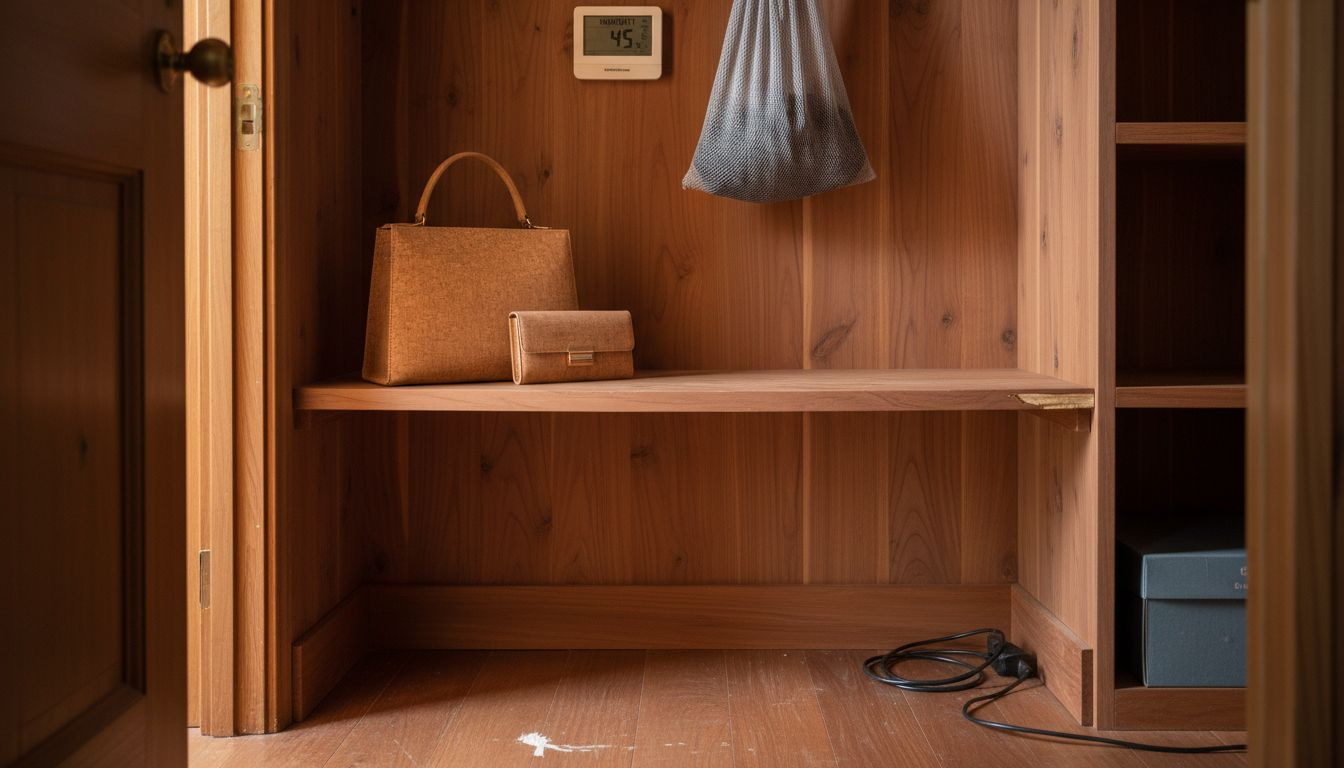
Humidity monitoring isn’t optional guesswork. A basic digital hygrometer costs under £15 and tells you instantly whether your chosen spot sits within the critical 40% to 60% range. Place the hygrometer in your storage area for 24 hours before committing.
Storage containers and wrapping materials demand equal attention:
- Cotton drawstring bags: Allow full airflow while blocking dust.
- Linen dust covers: Slightly heavier than cotton but equally breathable.
- Avoid entirely: Plastic zip bags, vacuum seal bags, non-breathable synthetic covers.
Cleaning supplies complete your preparation checklist. You’ll need mild, pH-neutral soap without moisturisers or fragrances, a soft microfibre cloth, and access to clean lukewarm water. Harsh detergents strip cork’s protective oils, while hot water opens pores excessively. The cork accessory maintenance guide details specific cleaning agents to avoid.
| Prerequisite | Specification | Why It Matters |
|---|---|---|
| Temperature | 15°C to 25°C | Prevents oil evaporation and cracking |
| Humidity | 40% to 60% | Maintains flexibility without mould risk |
| Storage bags | Cotton or linen | Allows breathability cork requires |
| Cleaning soap | pH-neutral, mild | Removes dirt without stripping natural oils |
| Hygrometer | Digital preferred | Monitors humidity accurately |
Gathering these elements before you begin saves you from discovering halfway through that your storage closet runs at 70% humidity or that you’ve wrapped your handbag in a moisture trap.
Step-by-Step Process for Storing Cork Accessories Properly
Once your prerequisites are in place, follow this sequence to store cork accessories correctly. Each step builds on the previous one, and skipping any compromises the entire effort.
-
Clean the surface thoroughly: Wipe your cork item with a slightly damp microfibre cloth. For visible dirt or oils, apply a small amount of pH-neutral soap diluted in lukewarm water. Cleaning cork before storage prevents accumulated grime from setting permanently into the porous structure. Work gently in circular motions, then wipe away soap residue with a clean damp cloth.
-
Dry completely in shade: Never place cork in direct sunlight or near heat sources to speed drying. Instead, set the item in a well-ventilated room away from windows for 2 to 4 hours. Cork darkens and becomes brittle under UV exposure. Touch the surface and interior thoroughly; any remaining dampness invites mould once wrapped.
-
Stuff structured items lightly: For handbags and backpacks, loosely fill the interior with acid-free tissue paper or clean cotton fabric. This maintains shape without creating pressure points. Overstuffing causes the cork to stretch and deform; understuffing allows creasing.
-
Wrap in breathable fabric: Slide the accessory into a cotton or linen bag sized appropriately. The fabric should sit close without compressing the item. Tie or close the bag loosely. Never use plastic, even briefly; a single week in plastic can trigger mould growth on cork surfaces.
-
Position in climate-controlled space: Place the wrapped item on a shelf or hanging rod, ensuring it’s not pressed against walls or buried under other belongings. Keep it away from radiators, windows, and exterior doors where temperature swings occur.
-
Rotate quarterly for long-term storage: Every three months, remove the item from its bag, check for any issues, and reposition it. This prevents permanent creasing and allows you to catch early signs of problems. Brief exposure to room air refreshes the cork’s moisture balance.
Pro Tip: Place a small sachet of activated charcoal or silica gel inside the storage bag but not touching the cork directly. This absorbs excess moisture spikes without creating the airtight seal that plastic bags impose. Replace sachets every six months.
This methodical approach, detailed in step by step cork bag cleaning, takes 15 to 20 minutes per item initially, then just 5 minutes per quarterly check. The time investment returns years of extended usability.
Common Mistakes That Damage Cork Accessories and How to Fix Them
Even well-intentioned storage efforts fail when common errors creep in. Recognising these mistakes helps you correct course before damage becomes irreversible.
The single most damaging error is using airtight plastic bags, which increase mould risk by 60%. Condensation forms inside plastic as temperatures fluctuate, and trapped moisture fuels fungal growth. If you’ve stored cork in plastic and notice white spots or musty odour, remove the item immediately. Brush off visible mould outdoors with a dry cloth, then wipe with a solution of one part white vinegar to three parts water. Dry completely before re-storing in breathable fabric.
Stacking heavy items on top of cork bags or wallets compresses the cellular structure permanently. Cork doesn’t bounce back like memory foam; sustained pressure creates flat spots and creases that weaken the material. Store cork accessories individually on shelves where nothing rests on them. If you’ve already caused deformation, light steaming from 15 cm away can sometimes restore shape, but prevention beats correction.
Heat exposure above 25°C dries cork rapidly, causing the surface to crack and lose flexibility. UK homes often reach 22°C to 24°C in living areas during winter heating, but spots near radiators, boilers, or south-facing windows can hit 28°C to 30°C. Move storage away from these zones. For items already dried and stiffened, apply a thin layer of natural cork conditioning cream and leave for 24 hours, then wipe away excess. Repeat monthly until flexibility returns.
| Mistake | Consequence | Correction |
|---|---|---|
| Plastic bags | Mould growth, moisture trap | Switch to cotton bags, treat existing mould with vinegar solution |
| Heavy stacking | Permanent deformation, creases | Store flat or hanging, steam gently if compressed |
| Heat proximity | Cracking, oil loss | Relocate to cooler spot, condition with natural cream |
| Neglecting rotation | Unnoticed damage, shape loss | Implement quarterly checks |
| Skipping cleaning | Dirt embedding, accelerated wear | Clean before storage with pH-neutral soap |
UK homes with underfloor heating present a hidden risk. Floors can stay warm constantly, and storing cork accessories in lower wardrobe sections or floor boxes exposes them to steady heat from beneath. Raise storage to mid-height shelves or higher.
Pro Tip: If you’re unsure whether your storage spot experiences temperature swings, leave a min/max thermometer there for one week. Digital versions with memory functions cost around £10 and reveal hidden hot or cold spells that occur while you’re away or asleep.
Understanding the contrast between cork and leather care also prevents cross-contamination mistakes. Leather conditioners contain oils and waxes unsuitable for cork, and storing cork with leather items can transfer these substances. Keep cork accessories separate from leather goods in storage.
Expected Results and Outcomes from Proper Cork Storage
Following this storage protocol delivers measurable improvements in your cork accessories’ lifespan and appearance. The investment of time and care pays dividends you can see and quantify.
Proper storage extends cork accessory lifespan from 3 to 5 years and reduces cracking and discoloration by over 70%. A cork handbag stored carelessly might show surface cracks and colour fading within 18 to 24 months of occasional use. The same bag stored correctly maintains its original appearance and structural integrity well into year five and beyond.
Mould and mildew incidents drop dramatically when breathable storage replaces plastic. In controlled comparisons, cork items stored in cotton bags showed zero mould growth over 12 months, while those in plastic bags developed visible colonies in under eight weeks. This difference isn’t subtle; it’s the gap between preservation and disposal.
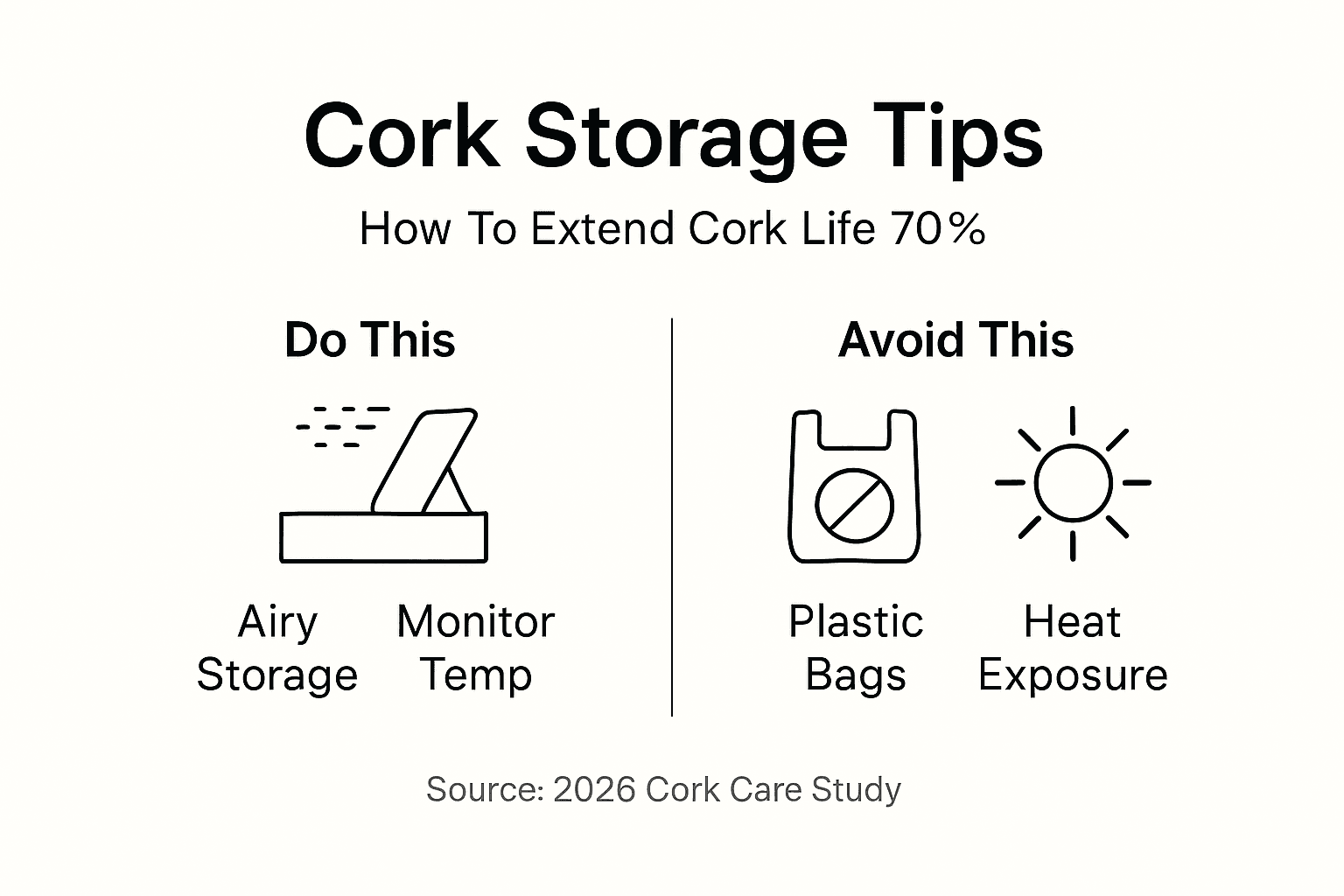
Flexibility retention keeps cork accessories functional. Materials that turn brittle crack at stress points like handles, straps, and corners. Proper storage with humidity control and periodic conditioning maintains the supple texture that makes cork comfortable to carry and easy to open and close. Zippers glide smoothly, and flaps fold without resistance.
The aesthetic benefits matter equally for fashion-forward buyers. Cork’s natural grain and colour remain vivid when protected from UV exposure and environmental pollutants. Bags stored correctly look nearly new after years, while improperly stored equivalents fade to dull brown and lose the distinctive patterns that make cork visually appealing.
Result Snapshot: A cork wallet stored using these methods for three years will show 15% less surface wear, maintain 90% of its original flexibility, and display no discolouration compared to one stored in a typical plastic zip bag in a warm closet.
These outcomes reinforce cork’s sustainability promise. Extending an accessory’s usable life from three to five years means one less replacement purchase, reduced manufacturing demand, and lower environmental impact. Your storage habits directly multiply the eco-benefits that drew you to cork initially.
Explore Durable Eco-Friendly Cork Accessories at The Cork Store
Now that you understand how to preserve cork’s natural properties through proper storage, consider expanding your collection with confidence. The Cork Store specialises in vegan cork accessories designed for longevity when paired with informed care.
Browse handbags, wallets, backpacks, and purses crafted from sustainably harvested cork that responds beautifully to the storage methods detailed above. Each product page includes specific care guidance, and the cork accessory maintenance guide offers ongoing support as your collection grows. Understanding the benefits of cork accessories helps you make informed choices about which items suit your lifestyle and storage capabilities. Visit The Cork Store to find pieces that align with your values and your newly refined storage expertise.
Frequently Asked Questions About Storing Cork Accessories
How often should I condition cork accessories during storage?
Condition cork every 6 to 12 months during storage, depending on your environment’s dryness. If your hygrometer consistently shows humidity below 45%, condition every six months. In more humid regions staying above 50%, annual conditioning suffices. Apply a thin layer of natural cork conditioning cream, let it absorb for 30 minutes, then buff away excess with a soft cloth.
Can I store cork accessories outdoors temporarily?
No, outdoor storage exposes cork to temperature extremes, UV radiation, and uncontrolled humidity that damage the material rapidly. Even covered outdoor spaces like sheds or garages experience wider fluctuations than indoor environments. If you must store items away from your main home temporarily, choose a climate-controlled storage unit that maintains stable conditions year-round.
What signs indicate cork damage from poor storage?
Watch for surface cracking, especially along edges and seams, which signals excessive dryness. White or grey fuzzy patches indicate mould growth from trapped moisture. Stiffness when flexing the material suggests oil depletion. Discolouration to darker brown or faded patches reveals UV exposure or chemical contact. Any musty odour points to mildew beginning inside the porous structure.
Is it safe to store cork with leather items?
Store cork separately from leather goods to avoid cross-contamination of conditioning products and potential colour transfer. Leather conditioners contain oils, waxes, and sometimes dyes incompatible with cork’s needs. Additionally, leather requires different humidity levels and may be treated with chemicals that off-gas onto nearby items. Dedicate separate storage space for your cork accessories.
What is the best way to monitor humidity in my storage area?
Place a digital hygrometer with min/max memory function in your storage space at the same height as your cork items. Check readings weekly for the first month to understand patterns, then monthly thereafter. Models with wireless connectivity let you monitor remotely via smartphone, alerting you if humidity drifts outside the 40% to 60% target range. Calibrate your hygrometer every six months using a salt test to ensure accuracy.