

Spot real cork in Lisbon fast: 5 checks, best shops and day trip tips
Lisbon’s best cork shopping is concentrated in the Baixa, Chiado and Príncipe Real districts, where boutiques stock genuine Portuguese cork handbags, wallets and homeware alongside imports you’ll want to avoid. Buy from a shop that names its cork’s regional origin, check the lining and stitching before paying, and if you have a spare day, book a farm tour in Alentejo to see the harvest itself. Buying guides are a solid reference if you want to check something before you commit.
TL;DR:
- Buyers should verify cork’s regional origin, inspect the lining and stitching, and prefer shops that confidently disclose their supply chain details.
- Cork products like handbags, wallets, and homeware should be chosen based on their durability, construction quality, and whether they are designed for daily use or display.
- Authentic Portuguese cork can be identified by natural variation in grain, a faint woody scent, and the ability to flex without damage, while suspiciously low prices merit caution.
- The best shopping districts are Chiado and Baixa for boutiques, with Príncipe Real offering design-focused stores, and market stalls providing cheaper but less consistent options.
- Visiting cork farms in Alentejo provides a deeper understanding of cork harvesting, with organized day trips from Lisbon offering walks, harvest demonstrations, and tastings.
Table of Contents
- Where to buy cork in Lisbon
- What cork products to buy and which suits your needs
- How cork is harvested, and why Portugal leads
- Cork tours and day trips from Lisbon
- How to spot authentic Portuguese cork
- Caring for cork on the road and at home
- What Thecorkstore’s product guides tell shoppers
- Order genuine Portuguese cork online with Thecorkstore
- Sources
Where to buy cork in Lisbon
Chiado and Baixa hold the highest concentration of cork shops within walking distance of each other, which matters if you’re comparing quality and price across a morning. Príncipe Real, a little further north, leans towards concept stores with a design focus rather than souvenir volume. Rua Augusta and the streets around Praça do Comércio carry more tourist-facing stalls, where quality varies more than it does in the boutiques a few streets back.
It helps to know what you’re actually walking into before you commit an afternoon to it.
- Dedicated cork boutiques stock curated ranges, usually with clear labelling on origin and material composition. Staff can typically tell you which region the cork came from.
- Concept and design stores mix cork with other Portuguese crafts (ceramics, textiles), often at a higher price point, aimed at buyers who want something distinctive rather than a quick souvenir.
- Market stalls near major squares offer the cheapest prices but the least consistency. Quality inspection matters far more here than in a boutique.
Most shops in the central districts open from around 10am to 7pm, with some closing for a couple of hours over lunch outside the main tourist streets. Bargaining isn’t customary in fixed-price boutiques, though market stalls sometimes have a little flexibility, especially late in the day. Whatever the setting, ask directly where the cork was harvested and processed. A shop confident in its supply chain will answer without hesitation; one that deflects the question is worth a second look before you buy. Portugal’s reputation as the world’s leading cork producer means most central Lisbon stores genuinely do stock Portuguese material, but “genuine Portuguese cork” and “well-made Portuguese cork” aren’t automatically the same thing.
What cork products to buy and which suits your needs
Cork’s biggest selling point isn’t just that it’s sustainable. It’s that the material actually performs well across a surprising range of product types, which is why Lisbon shops stock far more than the odd novelty wallet.
Handbags and travel bags dominate the shelves for good reason: cork is naturally water-resistant and considerably lighter than leather, which matters if you’re filling a suitcase. Wallets and small accessories (coin purses, cardholders, keyrings) make sensible gifts because they’re compact, inexpensive relative to bags, and durable enough to survive being posted home. Home items like coasters, placemats and trivets show off cork’s natural insulating properties, something it’s used for architecturally as well as decoratively. Jewellery, meanwhile, tends to be lightweight and hypoallergenic, appealing to buyers who can’t wear metal accessories comfortably.
Match the category to the trip:
- Travellers packing light should prioritise a cork backpack or foldable tote over a structured handbag, since cork resists creasing better than most people expect but still benefits from less bulk in a case.
- Gift buyers do best with wallets or small jewellery pieces. They’re easy to wrap and don’t need a size fitting.
- Sustainable-fashion shoppers hunting for a statement piece should look at structured handbags with reinforced stitching and metal hardware, since these show off cork’s texture while proving the maker invested in construction quality.
Check the lining fabric, the weight of the hardware, and whether the item is genuinely built for daily use or just for display. A bag that looks striking on a shelf but has flimsy zips won’t last a season of commuting.
How cork is harvested, and why Portugal leads
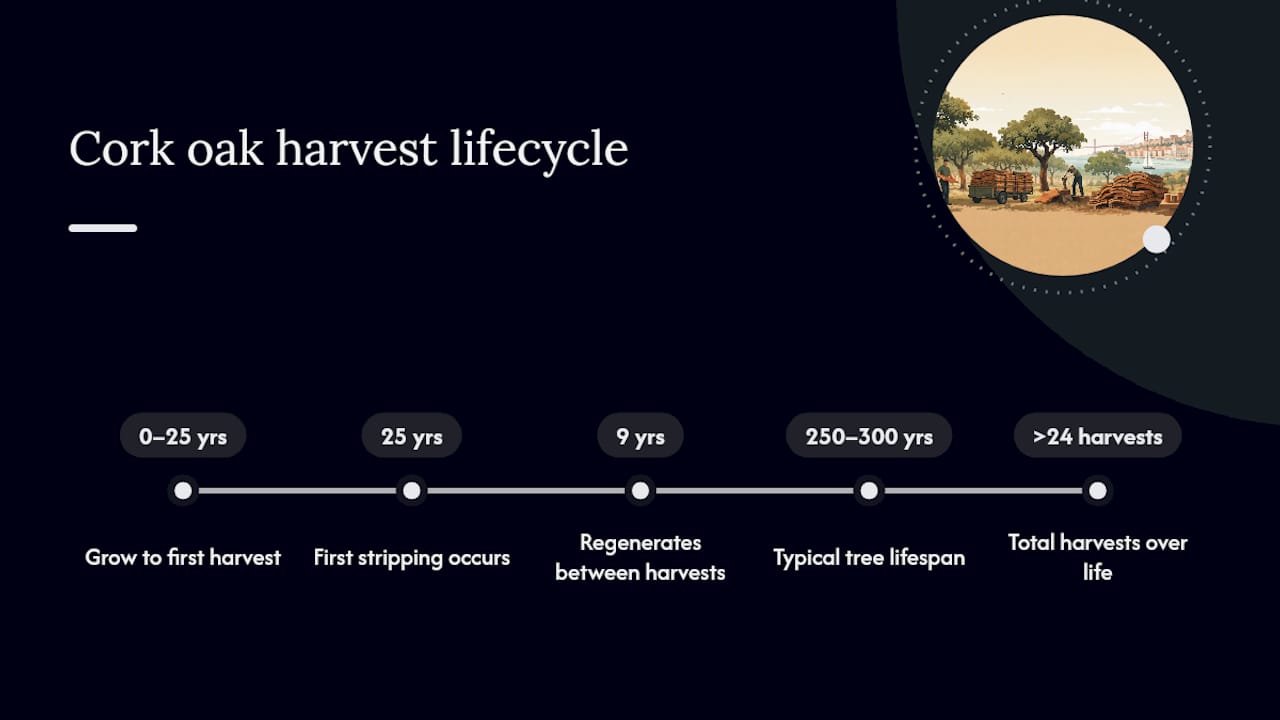
Cork comes from the bark of the cork oak, harvested by hand without felling the tree, which is why the industry markets it as renewable rather than merely recyclable. A cork oak isn’t stripped until it’s around 25 years old, and after that first harvest it’s left alone for roughly nine years between each subsequent stripping, giving the bark time to regenerate fully. The trees themselves can live 250 to 300 years, so a single oak might be harvested more than two dozen times across its lifespan.
The performance numbers behind cork’s reputation: cork granulate used in Lisbon Cruise Terminal’s structural concrete produced a finish around 40% lighter than standard concrete while still meeting insulation and structural requirements. That’s not a fashion statistic, but it explains why cork turns up in flooring, insulation and even construction as often as it does in bags.
Once harvested, the bark is dried outdoors for months before being boiled, flattened and transformed into sheets, fabric-backed veneers or granulated agglomerates. Portuguese firms convert that raw bark into everything from flooring underlay to the fabric that ends up as a handbag exterior, and companies working in engineered cork composites push the material into footwear, packaging and design products well beyond what most tourists associate with cork. Portugal produces the majority of the world’s cork not by accident, but because centuries of montado forest management have made it the only country with the scale and expertise to supply nearly every major cork application on the planet.
Cork tours and day trips from Lisbon
If a shop shelf doesn’t satisfy your curiosity, Alentejo is where the cork actually grows, and it’s close enough to Lisbon for a genuinely satisfying day trip. Organised tours in the region typically combine a walk through the montado (the open cork oak forest), a harvesting demonstration if the season allows, and a stop at a small workshop or tasting.
Practical points worth knowing before you book:
- Most operators run half-day or full-day trips, with the full-day option usually including lunch and a wine or produce tasting alongside the cork demonstration.
- Alentejo sits roughly one to two hours from Lisbon by car, and most tour companies include return transfer in the price, which removes the hassle of arranging your own driving on unfamiliar roads.
- Comfortable walking shoes matter more than you’d think. Montado terrain is uneven, and demonstrations often involve standing in open fields for stretches at a time.
- Book a few days ahead in peak season (spring through early autumn), since smaller family-run operators sell out faster than the bigger city-based agencies.
Pairing a city shopping morning with an Alentejo afternoon or full day out gives you both the retail side and the source, which is exactly how most visitors end up structuring the trip.
How to spot authentic Portuguese cork
Fakes exist, and they’re not always obvious at a glance. A few checks take under a minute and save you from a disappointing purchase.
- Look at the grain. Genuine cork shows natural variation in texture and tone across the surface. If a pattern repeats identically or looks printed rather than textured, you’re likely looking at a synthetic imitation.
- Check the underside and lining attachment. Inspecting how the cork fabric bonds to its lining reveals whether it’s a continuous cork veneer or a thin synthetic layer glued to a cheap backing. Continuous grain across the seam is a good sign.
- Fold a hidden corner. Genuine cork flexes and springs back without cracking. If a small flex leaves a permanent crease or the surface splits, the material is either poor-quality cork or not cork at all.
- Smell it. Real cork has a faint, natural woody scent, not a chemical or plastic odour.
- Ask about origin and returns. A seller confident in their sourcing will describe where the cork was harvested and processed, and will offer a clear returns policy if the item doesn’t match its description.
Price is a signal too: a wallet priced far below what comparable cork pieces cost elsewhere in the same district is worth a closer look before you hand over cash. Genuine cork isn’t the cheapest material to process, so suspiciously low prices usually mean shortcuts somewhere in the supply chain.
Pro Tip: Photograph the underside and stitching before you leave the shop. If a return or authenticity dispute comes up later, you’ll have evidence of exactly what you bought.
Caring for cork on the road and at home
Cork is genuinely low-maintenance, but a few habits keep it looking new for years rather than months.
For daily cleaning, a damp cloth handles most marks, and mild soap lifts anything stubborn. Avoid soaking cork or scrubbing hard, since excessive moisture can weaken the surface bonding over time. For deeper stains, a soft brush with a touch of diluted soap usually does the job without damaging the grain.
When packing for travel, avoid folding cork bags tightly, since cork resists creasing far better than fabric but isn’t immune to it under sustained pressure. A few practical habits:
- Stuff bags loosely with tissue paper or clothing before packing them in a case, to help them hold shape.
- Use a breathable dust bag rather than a sealed plastic one, since trapped humidity can affect the surface over long storage periods.
- Keep cork items away from direct heat sources like radiators or car dashboards in summer, which can dry the material out over time.
- Store pieces flat or upright rather than crushed under heavier luggage.
For longer-term storage between trips, a cool, dry cupboard away from direct sunlight keeps cork’s natural water resistance intact for years.
What Thecorkstore’s product guides tell shoppers
Some catalogues are built around one idea: cork can match leather’s durability without the animal product behind it, with curated collections of vegan handbags, wallets and gift sets reflecting that focus rather than trying to be everything to everyone.
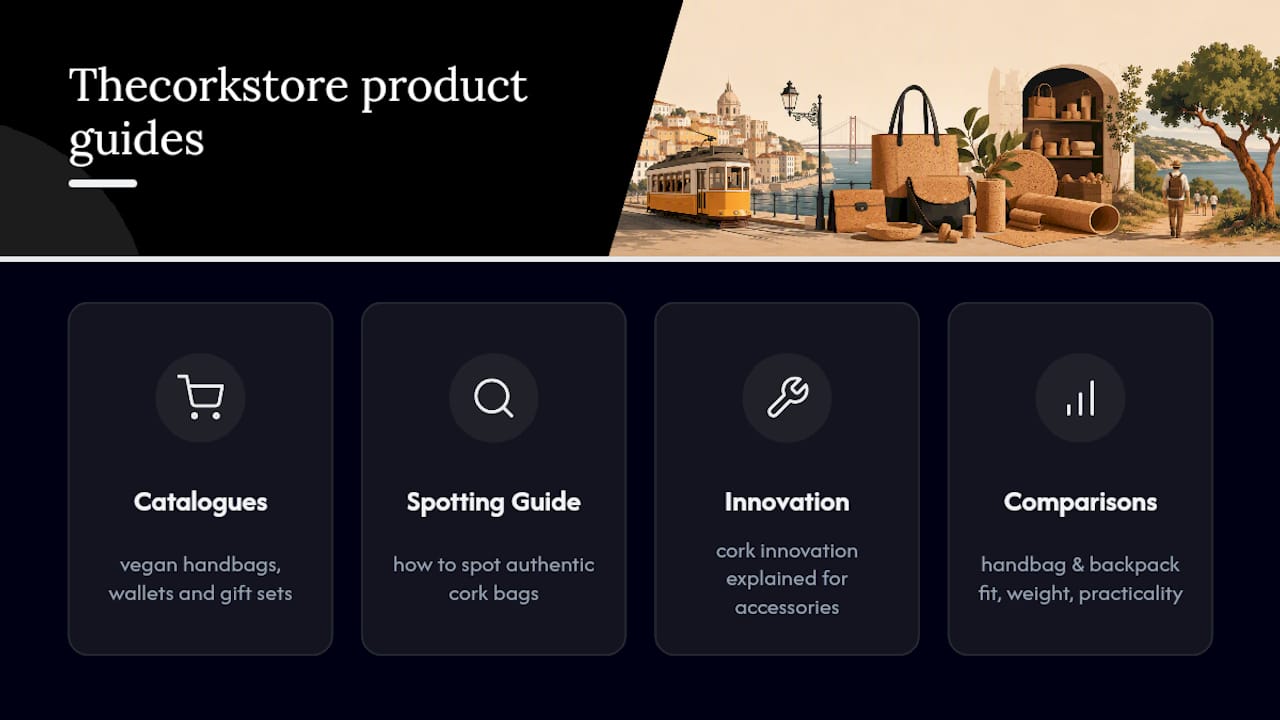
The blog content backing that catalogue does real work for shoppers outside Portugal who can’t inspect a bag in person. Guides on spotting authentic cork bags and understanding cork innovation in accessories cover exactly the checks a Lisbon shop assistant might walk you through in person, useful whether you’re buying on holiday or ordering something after you get home.
For anyone weighing up specific products rather than general buying rules, the cork handbag comparisons and travel backpack reviews go deeper into fit, weight and daily practicality than a shop display case ever could.
— Aaron
Order genuine Portuguese cork online with Thecorkstore
Not everyone travelling to Lisbon has room in their case, or the time to shop around several districts before flying home. Some online stores offer curated catalogues of vegan cork handbags, wallets, backpacks and gift sets, built by people who have done authenticity checks on your behalf.
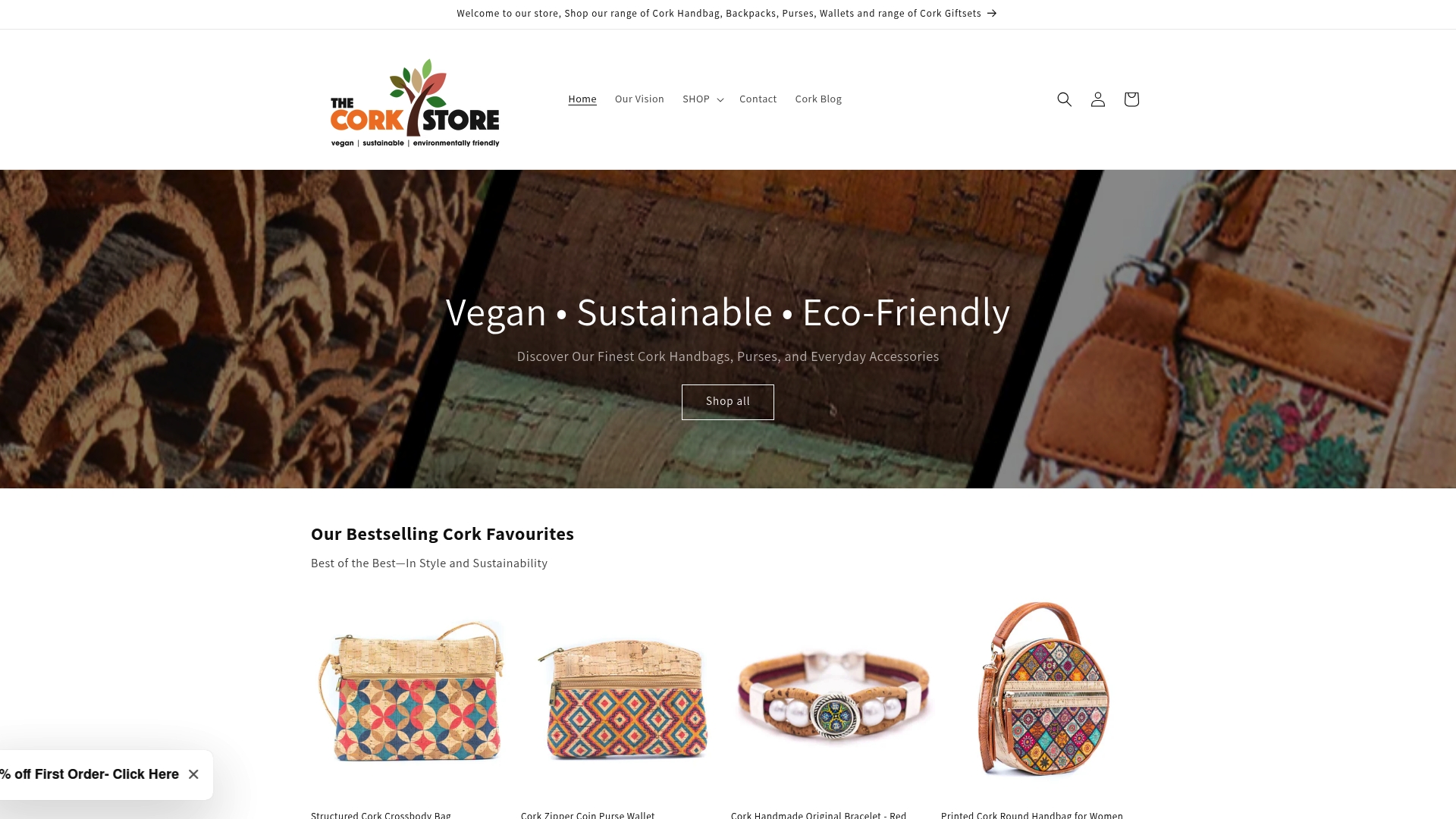
Before you order anything online, whether from Thecorkstore or elsewhere, check the same things you’d check in a Lisbon shop: material composition listed clearly, a defined returns window, and product photography that shows the lining and stitching, not just a flattering hero shot. Thecorkstore’s product pages list these details upfront, and the ultimate guide to vegan fashion alternatives is worth a read if you’re still deciding whether cork fits your wardrobe at all. If you know you want a bag or gift set without the shop-hopping, browse the current collection at Thecorkstore and check sizing and delivery details before you place an order.
Sources
- Lisbon Cruise Terminal | Amorim Cork Solutions
- CorksRibas – Leader in Innovative and Sustainable Cork Solutions
- Best cork tours around Lisbon
- All about famous Portuguese cork & how to buy the best