

How to Tell Real Cork Leather for Eco-Friendly Fashion
Choosing eco-friendly accessories can feel like a challenge when faux options look convincing at first glance. For European shoppers who value style and ethics, learning to tell authentic cork leather from imitations is a crucial skill. Understanding the unique qualities of cork leather samples empowers you to spot true craftsmanship, make informed choices, and build a wardrobe that honours sustainability as well as modern fashion.
Table of Contents
- Step 1: Prepare By Gathering Cork Leather Samples
- Step 2: Inspect Texture And Surface Patterns Closely
- Step 3: Check Flexibility And Durability Under Gentle Pressure
- Step 4: Compare Odour And Natural Scent Properties
- Step 5: Verify With Sustainability Certifications And Documentation
Quick Summary
| Key Point | Explanation |
|---|---|
| 1. Gather diverse cork leather samples | Collect samples with various textures, grades, and colours to differentiate genuine cork leather from synthetics effectively. |
| 2. Inspect texture and surface patterns | Conduct tactile examinations using touch and light reflection to assess authenticity through unique cellular structures. |
| 3. Test flexibility and durability | Gently manipulate cork leather to evaluate its resilience and ability to maintain shape under pressure, indicating quality. |
| 4. Evaluate scent characteristics | Distinguish authentic cork leather by its subtle, organic fragrance, which contrasts sharply with synthetic chemical odours. |
| 5. Verify sustainability credentials | Check for recognised certifications to ensure the cork leather is sourced responsibly and meets eco-friendly standards. |
Step 1: Prepare by gathering cork leather samples
Starting your journey into eco-friendly fashion requires careful sample collection of authentic cork leather. Understanding the nuanced characteristics of this sustainable material is crucial for making informed purchasing decisions.
Begin by sourcing multiple cork leather samples from reputable suppliers who specialise in sustainable cork processing. These samples should represent different grades, textures, and treatments to help you develop a comprehensive understanding. Look for pieces that showcase:
- Natural grain patterns
- Varied thickness ranges
- Different colour variations
- Samples from multiple regional sources
When evaluating these samples, pay close attention to their tactile qualities and visual characteristics. Authentic cork leather will have a distinct texture that feels lightweight yet durable, with subtle variations in its surface that reflect its natural origins.
Cork leather samples should demonstrate the material’s unique cellular structure and sustainable manufacturing process.
Your goal is to build a collection that allows you to confidently distinguish genuine cork leather from synthetic imitations. By gathering diverse samples, you’ll develop an expert’s eye for identifying high-quality, eco-conscious materials.
Expert tip: Always request samples from different suppliers to compare quality and ensure you’re selecting the most authentic cork leather for your sustainable fashion needs.
Step 2: Inspect texture and surface patterns closely
Understanding the subtle nuances of cork leather requires a detailed, tactile examination that goes beyond mere visual inspection. Your goal is to develop a keen eye for distinguishing authentic cork leather from synthetic imitations.
Begin by examining surface texture standards that reveal the material’s unique characteristics. Use these key assessment techniques:
- Gentle touch test: Run your fingertips across the surface
- Light reflection analysis: Observe how light interacts with the material
- Flexing and bending inspection: Check for natural resilience
- Microscopic pattern evaluation: Look for irregular cellular structures
Authentic cork leather displays a distinctive cellular texture that feels organic and slightly uneven. The surface should have subtle variations that reflect its natural origins, with microscopic irregularities that synthetic materials cannot replicate.
Genuine cork leather demonstrates a unique combination of lightweight flexibility and structural integrity that sets it apart from artificial alternatives.
Pay particular attention to the material’s natural grain patterns and how they interact with light and touch. Each piece of cork leather tells a story of sustainable production, with variations that make every sample beautifully unique.

Expert tip: Use natural daylight when examining cork leather samples to reveal the most accurate texture and colour variations.
Step 3: Check flexibility and durability under gentle pressure
Authentic cork leather reveals its true character through careful manipulation and gentle testing. Understanding how the material responds to pressure will help you distinguish genuine cork leather from inferior synthetic alternatives.
Begin by exploring cork’s mechanical properties using a systematic assessment approach. Perform these key durability checks:
- Folding test: Gently fold the sample and observe recovery
- Compression evaluation: Apply light pressure and monitor elasticity
- Crease resistance check: Observe how the material handles intentional bending
- Resilience measurement: Watch how quickly the material returns to its original shape
Genuine cork leather demonstrates remarkable structural integrity that allows it to withstand gentle pressure while maintaining its fundamental shape and appearance. The material should feel resilient, springing back smoothly without permanent deformation or visible stress marks.
Cork leather’s unique cellular structure enables it to absorb pressure while retaining its essential characteristics, making it superior to many synthetic alternatives.
Pay close attention to how the material responds to manipulation. Authentic cork leather will feel naturally responsive and adaptive, with a subtle give that speaks to its organic origins and sustainable manufacturing process.
Expert tip: Always perform flexibility tests using clean hands and on a flat, neutral surface to ensure the most accurate assessment of the material’s true properties.
Step 4: Compare odour and natural scent properties
Authentic cork leather possesses a distinctive aromatic profile that sets it apart from synthetic alternatives. Developing the ability to distinguish its natural fragrance is crucial for identifying genuine eco-friendly materials in sustainable fashion.
Begin by understanding leather scent characteristics through careful olfactory assessment. Employ these sensory evaluation techniques:
- Initial sniff test: Detect the baseline fragrance
- Warm hands transfer: Gently warm the material to release subtle notes
- Comparison breathing: Contrast with known synthetic materials
- Depth of aroma assessment: Identify underlying woody or earthy undertones
Genuine cork leather emits a subtle, organic fragrance that hints at its natural origins. The scent should be mild and reminiscent of wood, earth, and natural plant materials - worlds apart from the sharp, chemical odour of synthetic alternatives.
Authentic cork leather carries a whisper of its botanical heritage, with an aroma that speaks to its sustainable and natural production process.
Pay particular attention to the complexity of the scent, which should evolve subtly when warmed by touch. Synthetic materials typically have a flat, one-dimensional smell that cannot match the nuanced fragrance of real cork leather.
Expert tip: Allow the cork leather sample to rest at room temperature for several minutes before conducting your scent assessment to ensure the most accurate olfactory experience.
Step 5: Verify with sustainability certifications and documentation
Eco-conscious fashion enthusiasts understand that true sustainability goes beyond visual assessment. Authenticating cork leather requires careful examination of official certifications and documentation that validate its environmental credentials.
Begin by investigating forest certification standards that ensure responsible material sourcing. Look for these critical documentation elements:
- Forest management certificates: Proof of sustainable cork oak harvesting
- Organic textile certifications: Verification of ecological production processes
- Supply chain documentation: Transparent tracking of material origins
- Environmental impact statements: Detailed sustainability reporting
Genuine cork leather products should carry recognised international certifications from organisations like the Programme for the Endorsement of Forest Certification (PEFC) or the Global Organic Textile Standard (GOTS). These credentials provide concrete evidence of the material’s sustainable and ethical production.
Sustainability documentation is not just paperwork - it’s a transparent window into the environmental integrity of your fashion choices.
Pay particular attention to comprehensive traceability details that demonstrate the entire production journey. Authentic eco-friendly cork leather will have clear, verifiable documentation that tells the story of its responsible creation.
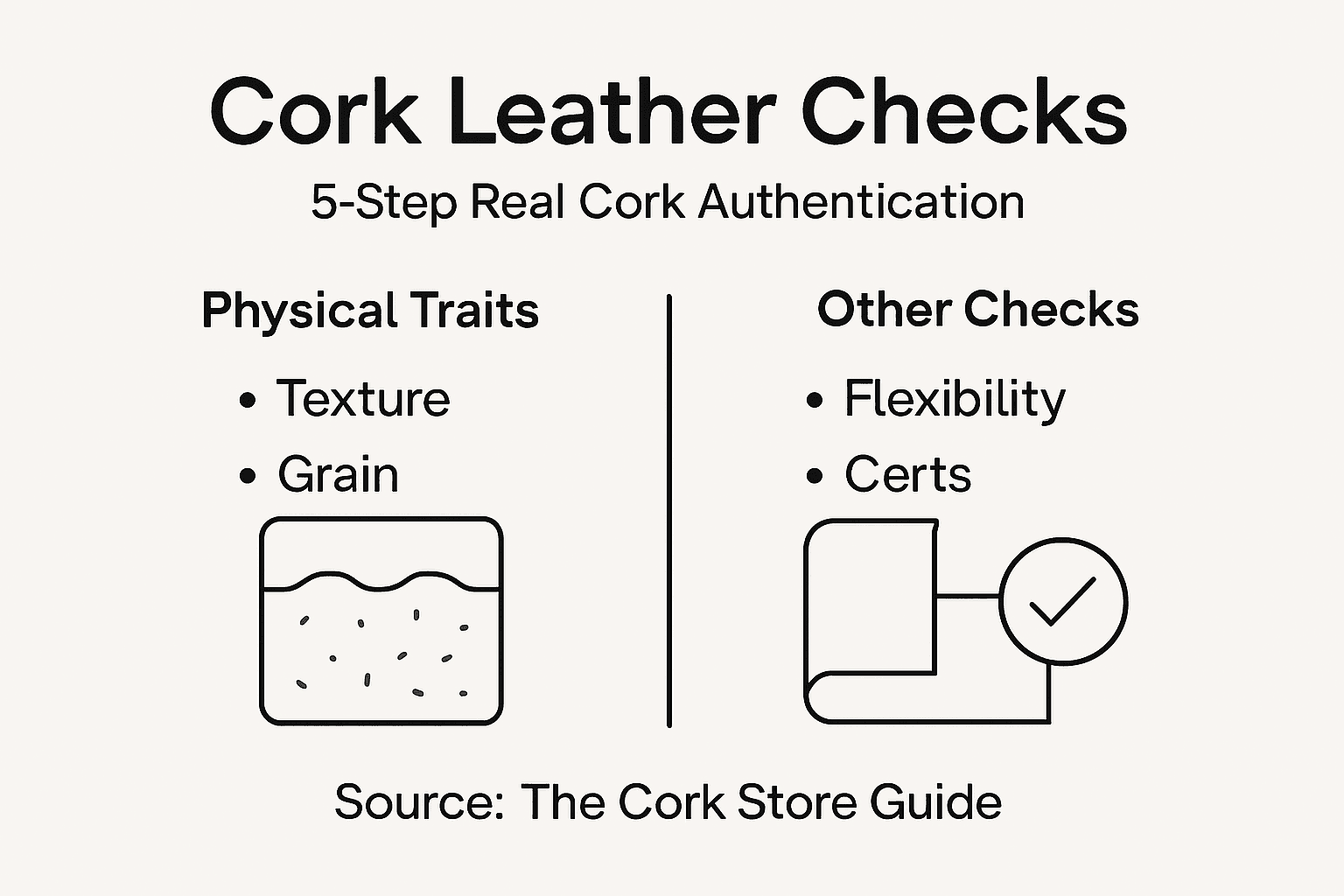
Here’s a summary of how authentic cork leather differs from synthetic alternatives:
| Attribute | Authentic Cork Leather | Synthetic Alternatives |
|---|---|---|
| Texture | Organic, uneven cellular structure | Uniform, artificial grain |
| Flexibility | Resilient, returns to shape | Often stiff or permanently creased |
| Scent | Subtle, woody, earthy notes | Sharp, chemical odour |
| Sustainability | Certified eco-friendly production | Limited or no sustainability credentials |
This guide highlights the key steps for identifying genuine cork leather:
| Step | What to Examine | Extra Verification |
|---|---|---|
| Sample Collection | Grain patterns, thickness, colour | Request samples from varied suppliers |
| Surface Inspection | Texture, light reflection | Use daylight for accuracy |
| Flexibility Test | Folding and resilience | Clean hands, neutral surface |
| Scent Assessment | Aroma complexity | Warm sample, compare scents |
| Documentation Check | Certification, traceability | Cross-reference with official bodies |
Expert tip: Request digital copies of certification documents and cross-reference them with official certification body websites for absolute verification.
Discover Authentic Eco-Friendly Style With Confidence
Identifying true cork leather can be challenging, especially with so many synthetic alternatives on the market. This article unveils key insights on recognising genuine cork leather by evaluating texture, flexibility, scent and sustainability credentials. If you seek durable, stylish and authentic eco-conscious accessories, navigating through certifications and tactile qualities is essential for making informed choices.
Explore a curated collection of certified vegan cork products that meet these exacting standards at The Cork Store. Each handbag, wallet or backpack reflects the natural resilience and unique grain patterns of authentic cork leather, backed by sustainability documentation you can trust. Start transforming your wardrobe with cruelty-free fashion choices today by visiting our landing page and browsing products crafted to satisfy both style and environmental values. Don’t wait to embrace sustainable sophistication with confidence and clarity.
Frequently Asked Questions
How can I tell if my cork leather sample is authentic?
To determine if your cork leather sample is authentic, closely inspect its texture and surface patterns. Look for organic, uneven cellular structures and natural grain variations that synthetic materials typically lack.
What characteristics should I observe when testing cork leather flexibility?
When testing cork leather flexibility, perform a folding test and apply gentle pressure to evaluate how well it maintains its shape. Authentic cork leather should bounce back smoothly without showing permanent creases or stress marks.
What should I smell for when identifying real cork leather?
Real cork leather emits a subtle, organic fragrance reminiscent of wood and earth. Conduct a sniff test and warm the material gently to identify nuanced scents that will be absent in synthetic alternatives.
What documents confirm the sustainability of cork leather?
Sustainability is verified through forest management certificates, organic textile certifications, and environmental impact statements. Always verify that the cork leather carries recognised certifications to ensure its eco-friendly credentials.
How do I compare cork leather samples from different suppliers?
Collect samples from multiple suppliers and evaluate them on texture, flexibility, and appearance. By having at least three distinct samples, you can better assess the authenticity and quality of each piece.
Recommended
- Understanding What is Cork Leather and Its Benefits – The Cork Store
- Differences Between Cork and Leather: Sustainable Fashion Impact – The Cork Store
- Cork Material Properties Explained: Eco Fashion Insights – The Cork Store
- Benefits of Handmade Cork Products for Eco Fashion – The Cork Store
- Γιατί Cruelty Free: Ο Απόλυτος Οδηγός 2024 | B Woman