

Muskin Leather Buying Checklist: 5 Checks to Verify Vegan Cork Bags
In this guide, “muskin leather” refers to cork-based vegan ‘leather’, the cork fabric used in handbags, wallets and purses. Cork itself comes straight from tree bark, so it’s plant-derived and generally vegan by nature. Finished bags aren’t automatically vegan, though. Trims, linings and adhesives sometimes sneak in animal-derived materials, so checking the full spec sheet matters more than the marketing copy.
TL;DR:
- Cork fabric is lightweight, water-resistant, and naturally antibacterial, but the final product’s sustainability depends on backing and adhesive choices.
- Harvesting cork involves peeling bark every 9 to 12 years from trees that live over 150 years, making it a highly renewable resource with ecological benefits.
- Natural cork biodegrades over time only if combined with biodegradable backing and adhesives, while synthetic finishes prevent compostability.
- Proper care includes wiping with a damp cloth, avoiding harsh chemicals, and storing lightly stuffed to prevent creasing and cracking.
- Checking full material details, sourcing origin, and labels like FSC certification ensures the cork accessory is truly vegan and eco-friendly.
Table of Contents
- What is muskin leather (cork fabric) and how does it compare with animal leather and PU?
- How sustainable is cork harvesting, and what traceability signs matter?
- How is cork fabric made, and what affects its biodegradability?
- How do you clean and store cork bags to make them last?
- What should you check before buying a cork handbag or wallet?
- Aaron’s view: why cork earns its place in an eco-conscious wardrobe
- Where to find genuine cork handbags and wallets
- Sources
- FAQ
What is muskin leather (cork fabric) and how does it compare with animal leather and PU?
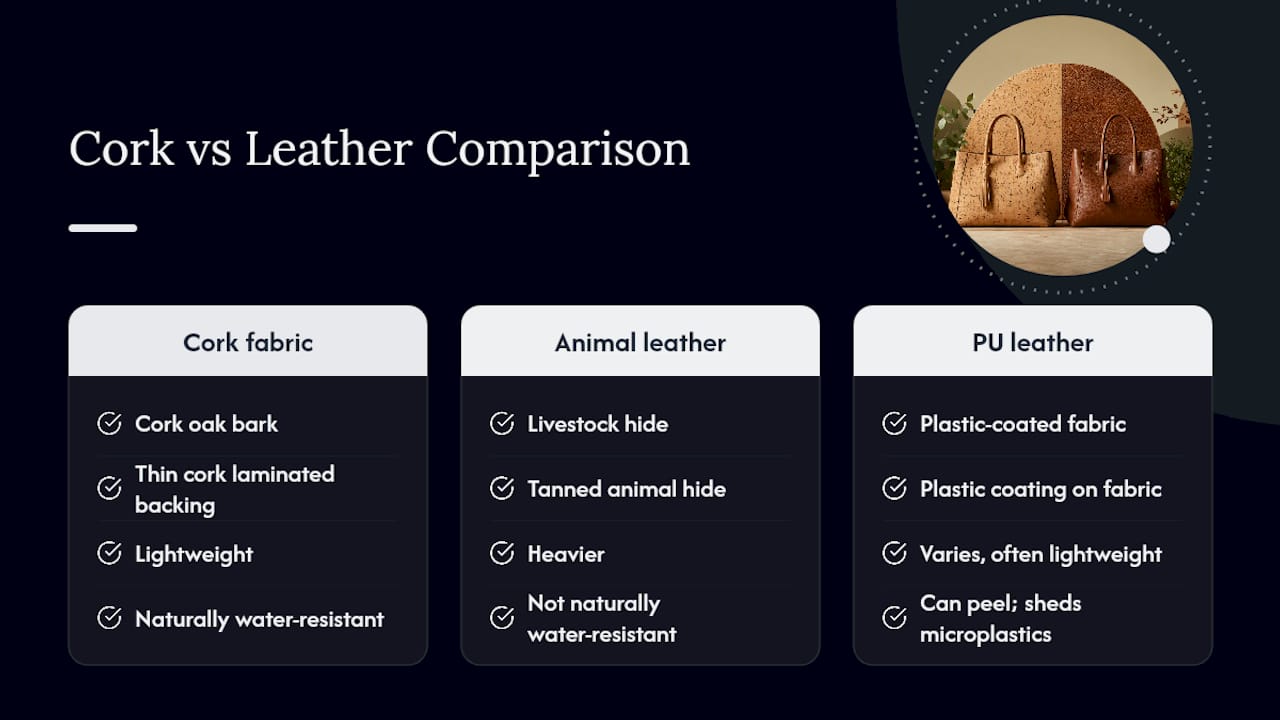
Cork fabric starts as bark stripped from the cork oak (Quercus suber), shaved into thin sheets, then laminated onto a backing such as cotton, recycled polyester or PU. That backing does most of the heavy lifting for strength, since raw cork on its own is too delicate to hold stitching and hardware.
What you get is a material that behaves nothing like animal hide. It’s lightweight, naturally water-resistant, and resists bacteria and mould without any chemical treatment, thanks to a waxy compound called suberin that sits inside the cell structure. Every sheet carries its own grain pattern, a bit like wood, so no two bags look identical.
Compare that with animal leather, which requires livestock farming, tanning chemicals and a slow ageing process, or PU leather, a plastic coating over fabric that sheds microplastics and degrades faster than people expect. Cork sits in a different category entirely: a renewable plant material with a texture that doesn’t crack or fade the way bonded leather does. It won’t develop the deep patina a good hide picks up over decades, but it also won’t peel apart after two wet winters the way cheap PU often does.
How sustainable is cork harvesting, and what traceability signs matter?
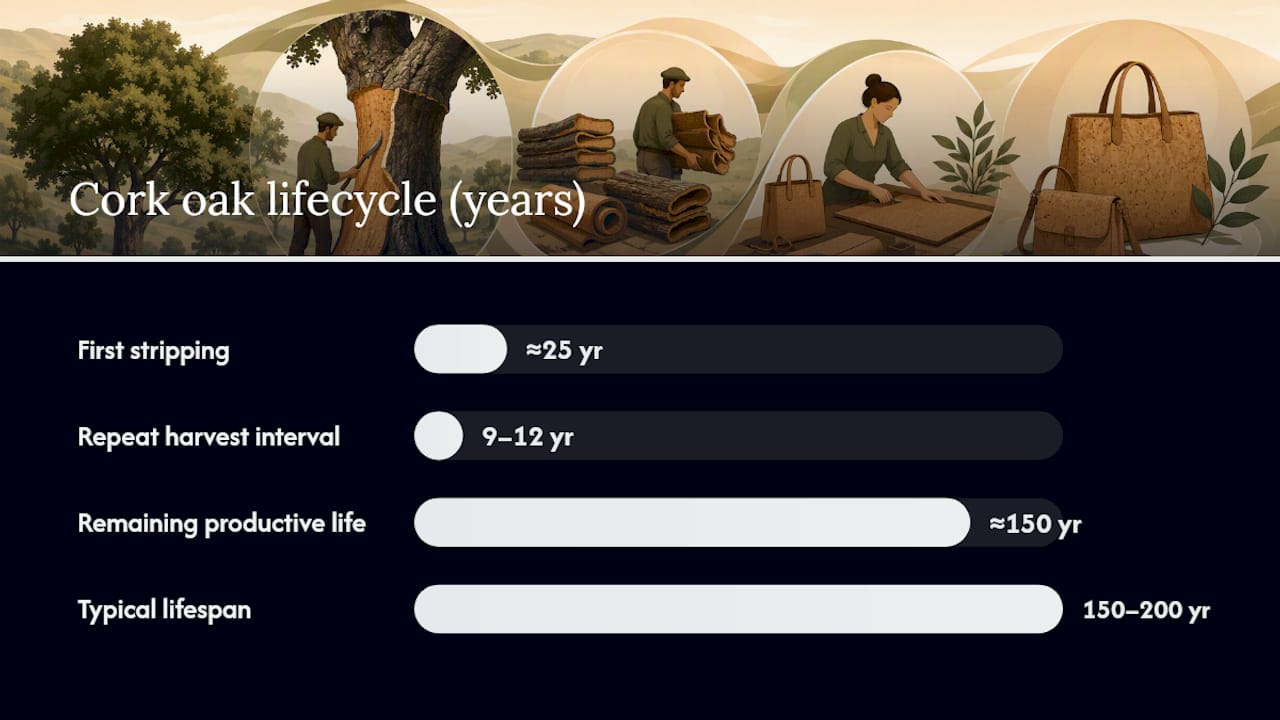
Cork trees give up their bark without being cut down. A cork oak is first stripped at roughly 25 years old, then harvested again every 9 to 12 years for the rest of its 150 to 200 year life. One tree can supply bark a dozen times or more, which is the real backbone of cork’s sustainability claim.
Pro Tip: If a product page mentions where the cork was harvested, that’s usually a good sign the supplier tracks its supply chain rather than buying anonymous stock from a broker.
Cork forests do more than grow bark. They anchor some of the most biodiverse woodland in the Mediterranean and act as long-term carbon stores, since the trees stay alive and growing for two centuries rather than being felled. Portugal produces the majority of the world’s cork and has built strong traceability systems around that dominance, which is one reason cork sourced from established Portuguese mills tends to carry clearer origin information than cheaper alternatives.
When you’re checking a listing, look for:
- Mention of FSC certification or an equivalent forestry standard
- A stated country or region of origin for the cork
- Any reference to how the bark was harvested (by hand, without felling the tree)
- Batch or supplier traceability notes on the product page
None of these guarantee perfection, but their absence is worth noticing.
How is cork fabric made, and what affects its biodegradability?
Cork bark goes through several stages before it becomes wearable material: harvested planks are air-stacked to stabilise for months, then boiled to soften the structure and increase flexibility, then shaved into thin, uniform sheets. Those sheets are laminated onto a backing fabric, a process that varies depending on the manufacturer and the intended use.
That backing decides how the finished product behaves at the end of its life:
- Organic cotton backing stays biodegradable but tends to have lower tear strength
- Recycled polyester backing improves durability but isn’t compostable
- PU backing gives a smooth, uniform finish at lower cost, though it’s plastic-based
Natural cork itself breaks down over time, but the whole product only biodegrades if the backing, adhesives and any sealants are natural too. A cork bag glued together with synthetic resin and finished with a plastic coating won’t compost the way the marketing might imply. Always check the full materials list rather than assuming “cork” on the label tells the whole story.
How do you clean and store cork bags to make them last?
Cork holds up well against everyday knocks, largely thanks to its natural water resistance, but it still needs sensible care rather than machine washing or a scrub with washing-up liquid.
- Wipe the surface with a damp cloth and a small amount of mild soap.
- Let it air dry away from direct heat rather than wringing or blotting hard.
- Avoid soaking the bag or spraying it with harsh cleaning chemicals, since these can strip the natural coating.
- Keep it away from radiators, car dashboards and direct sunlight, which dry out and crack the surface over time.
Seams and corners tend to show wear first, so avoid overstuffing the bag and check stitching every few months. Prolonged damp, like leaving it in a wet gym bag, is the fastest way to shorten its lifespan.
Pro Tip: Store cork bags stuffed lightly with tissue paper rather than flat, so the shape doesn’t crease permanently at the folds.
What should you check before buying a cork handbag or wallet?
A cork label on its own doesn’t confirm much. Some cork-based accessories mix cork panels with leather trim or wool lining, so a quick check before you buy saves disappointment later.
Run through this before adding anything to your basket:
- Read the full materials list, not just the headline fabric, for linings, trims and adhesives
- Favour organic cotton backing over synthetic if biodegradability is your priority, and check for FSC or equivalent traceability
- Look for a recognised vegan seal, such as PETA-Approved Vegan or the Vegan Trademark, which removes the guesswork around hidden animal-derived components
- Check hardware and zips for plastic-free or metal options if circularity matters to you
- Confirm the returns and warranty policy before you commit, since cork’s texture varies naturally between pieces
Reading the spec sheet properly is still the most reliable way to catch a mismatch between what a listing implies and what the bag actually contains, alongside a clear understanding of eco-friendly backing choices.
Aaron’s view: why cork earns its place in an eco-conscious wardrobe
Working through product pages for The Cork Store, the pattern that stands out is how often the interesting detail sits in the fine print rather than the headline description. Backing material, adhesive type, whether the lining is cotton or something synthetic. That’s where a bag’s actual environmental story gets told.
My habit when reviewing any listing is simple: find the materials section before the price. A page that names its backing and origin outright is doing the work most competitors skip. Curated listings that spell this out upfront save shoppers the job of emailing a retailer to ask basic questions that should already be answered.
— Aaron
Where to find genuine cork handbags and wallets
A straightforward alternative to generic marketplaces hoping a “vegan leather” listing holds up under scrutiny. Many product pages state the materials plainly, so you’re not left guessing whether the lining or trim affects the vegan claim on the label.
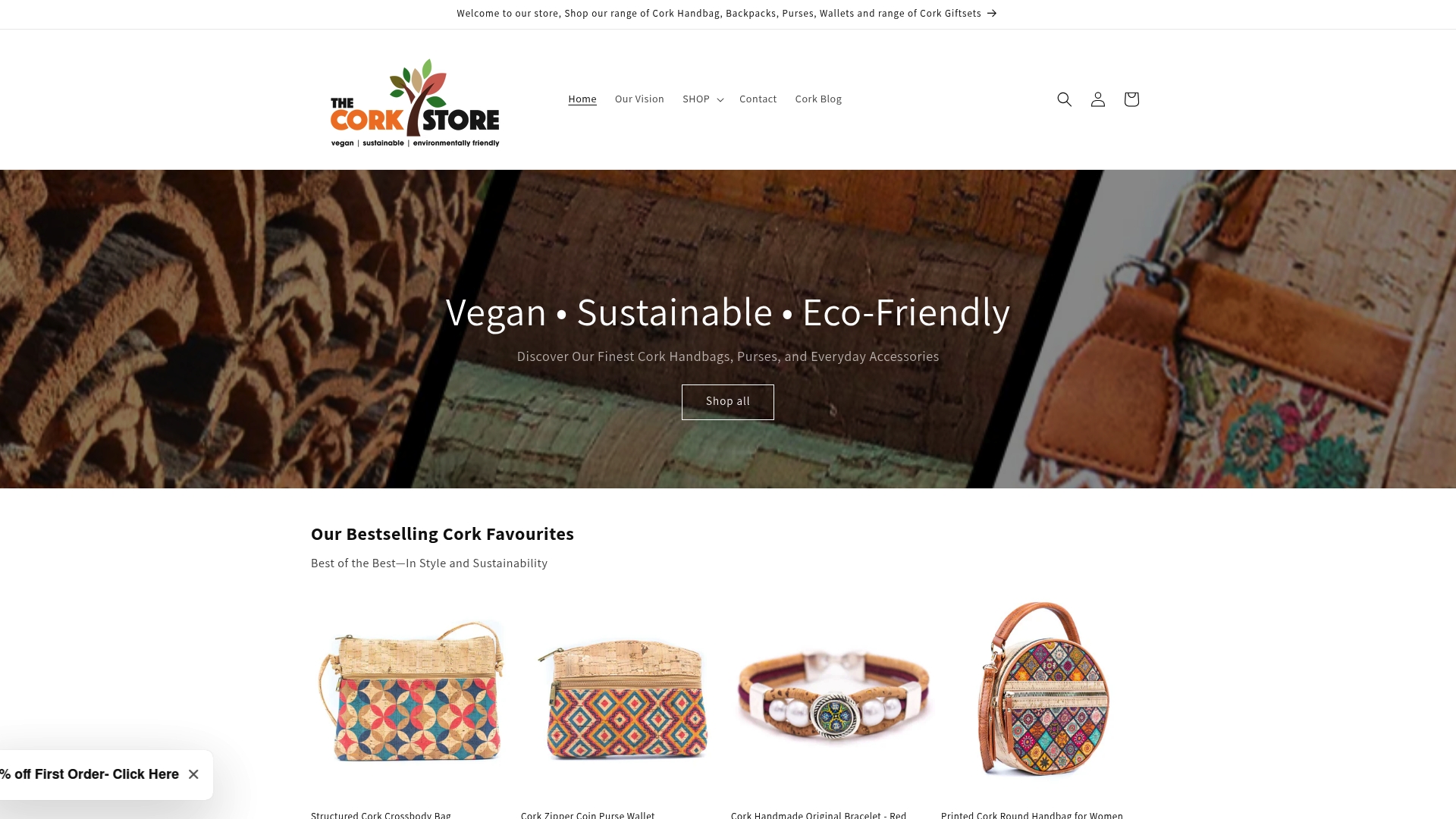
Browse the full range of cork accessories to see handbags, crossbody bags, backpacks and wallets side by side, each with images and a proper materials breakdown. If you want something small to start with, the Cork Zipper Coin Purse Wallet is an easy entry point, and the Marine Cork Wallet suits anyone after a slightly bolder finish. For something to give rather than keep, the Women’s Gift Sets collection pairs cork pieces together at a curated price point. Pick whichever fits how you actually use a bag, then check the listing’s materials section before purchase.
Sources
- Cork: Raw material and production process | Amorim Cork
- What Is Cork Fabric? Is Cork Leather Sustainable? | Sustainable Jungle
- Is Cork Leather Vegan? Material Facts & Alternatives | Vegan Wiki
- How to clean a cork bag | Foley + Corinna
FAQ
Is cork leather actually vegan?
Cork itself is plant-derived and vegan by nature, since it comes from tree bark rather than any animal. The finished bag is only vegan if its lining, trim, adhesives and backing avoid animal-derived materials too, which is why checking the full spec sheet matters more than the headline fabric.
How long does a cork handbag last?
With gentle care, cork holds up well against daily use because of its natural water resistance and antimicrobial surface. Lifespan depends mostly on how it’s stored and cleaned; avoiding soaking, harsh chemicals and direct heat is the biggest factor in keeping it intact.
Is cork more sustainable than PU vegan leather?
Cork is harvested from living trees without felling them, and a single tree can be stripped every 9 to 12 years for up to two centuries. PU leather is plastic-based and doesn’t biodegrade, whereas cork can, provided its backing and adhesives are natural too.
Where can I buy genuine vegan cork accessories?
Thecorkstore stocks handbags, wallets, backpacks and gift sets made from cork fabric, with materials listed clearly on each product page. Current prices are shown directly on the website rather than fixed in this guide.
Does cork fabric need special cleaning products?
No. A damp cloth with a small amount of mild soap is enough for routine cleaning, and soaking or harsh chemicals should be avoided since they strip cork’s natural coating. Keep bags away from direct sun and radiators to stop the surface cracking over time.