

Bags of corks: a buyer's guide to vegan cork handbags
Yes, when we talk about “bags of corks” here, we mean handbags, backpacks and wallets made from cork fabric, not sacks of loose wine stoppers. Cork fabric is a thin, flexible layer of cork bark bonded to a backing material, and it has become one of the most convincing leather alternatives on the market. It resists water thanks to a natural compound called suberin, weighs a fraction of what leather does, and comes from a tree that’s never felled to produce it.
That combination is why cork works so well for vegan and eco-conscious buyers:
- Renewable harvest: cork oak bark regrows and is harvested periodically without harming the tree.
- Naturally water resistant and light, so bags shrug off drizzle without the weight of leather.
- A genuine cruelty-free alternative, provided the backing and lining match the outer material.
Thecorkstore’s product pages are a straightforward place to start browsing once you know what to look for.
Key Takeaways
A genuinely sustainable cork bag depends less on the word “vegan” and more on what backing, lining and construction sit beneath the cork surface.
| Point | Details |
|---|---|
| Check the backing first | Cotton backings are more compostable than polyester or PU, so confirm which one you’re buying. |
| Inspect construction closely | Reinforced seams and hardware attached through fabric tabs, not raw cork, last longer under daily strain. |
| Condition, don’t strip | Use natural oil-based conditioners periodically and avoid alcohol-based cleaners that dry out the surface. |
| Longevity favours craftsmanship | A well-made, properly cared-for cork bag can outlast a poorly constructed leather equivalent. |
| Shop with the checklist in hand | Thecorkstore lists backing, lining and construction details on product pages like the All-Natural Cork Wallet Gift Set. |
Table of Contents
- What is cork fabric and why does it work for bags?
- Is cork fabric actually vegan?
- What should you check before buying a cork bag?
- How do you care for a cork bag?
- How long does a cork bag actually last?
- How do you style and use a cork bag day to day?
- Why Thecorkstore curates cork the way it does
- Ready to shop cork bags with confidence?
- Sources
What is cork fabric and why does it work for bags?
Cork fabric starts life as bark stripped from a cork oak, dried, then sliced into sheets thin enough to bend without cracking. That sheet gets bonded to a backing fabric, usually cotton, and the finished material behaves nothing like the corkboard you’d pin notes to.
The suberin in cork’s cell walls is what gives the material its water resistance, and it’s the same property that keeps wine bottles sealed. Beyond that, cork brings a few practical wins to a handbag:
- Low weight, since cork cells are mostly trapped air.
- Natural elasticity, so it flexes with daily use rather than creasing permanently.
- Stain resistance that holds up well against everyday spills.
There’s an environmental angle too. Cork oak forests store carbon and support biodiversity, and sustainably managed harvesting keeps those landscapes economically viable rather than at risk of conversion to other land use. Buying cork, in other words, helps keep the trees worth keeping.
Is cork fabric actually vegan?
Cork itself is plant material, so the surface of a cork bag is vegan by default. The catch is what sits underneath it.
Cork fabric is generally treated as a genuine vegan leather because the visible face is cork rather than animal hide, but the backing and lining are a separate question entirely. A cork sheet has to be bonded to something, and that something is usually cotton, polyester, or a polyurethane blend. Cotton backings are the most compostable option and sit closest to what most eco-conscious buyers actually want. Polyester and PU backings aren’t animal-derived either, so they’re still technically vegan, but they knock down the biodegradability that draws people to cork in the first place.
Here’s how to check before you buy:
- Read the materials list on the product page. Look specifically for “cotton backing” or “cotton canvas” rather than a vague “vegan leather” label.
- Check the lining separately from the outer material. Manufacturers sometimes pair a cork exterior with a recycled polyester or organic cotton lining, and both matter for overall sustainability.
- Look for supplier sourcing statements. A brand that names its cork region or supplier is usually more transparent about the rest of the construction too.
- Scan the product photos for a glossy, plastic-like sheen. That often signals a PU topcoat rather than a natural cork finish.
Pro Tip: Don’t stop at the word “vegan” on a listing. Search the product description for “backing” or “lining” specifically. If neither is mentioned, that’s usually a sign the retailer hasn’t checked either.
What should you check before buying a cork bag?
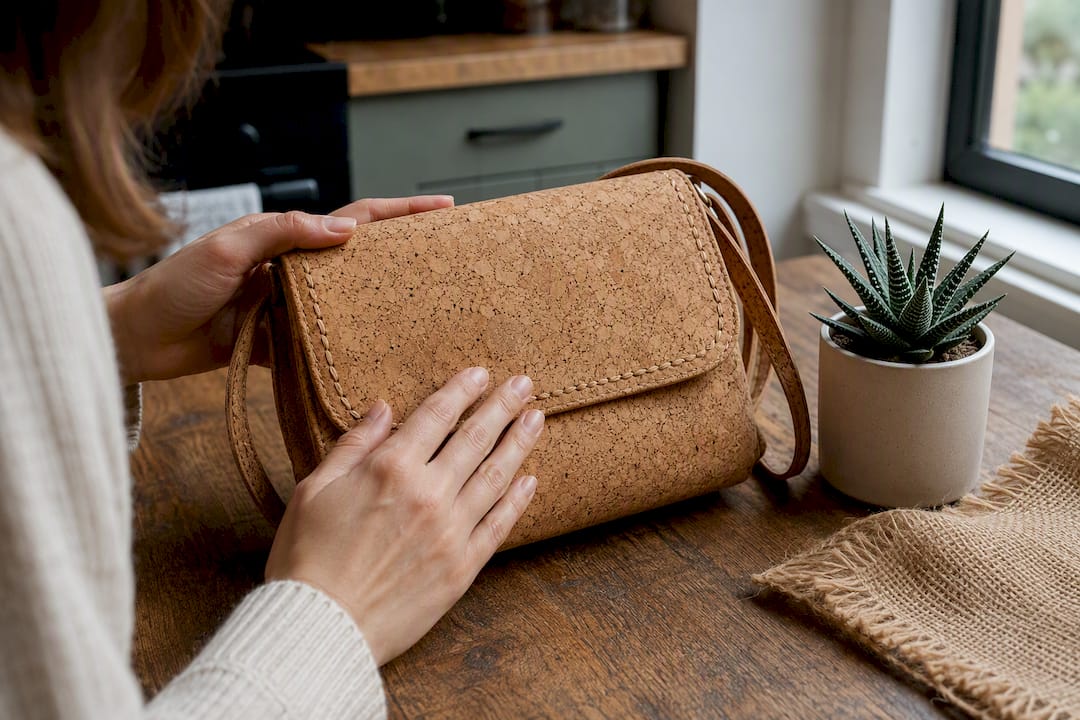
A cork bag lives or dies on three things: the material itself, how it’s put together, and whether the seller stands behind it. Run through this before adding anything to your basket.
Materials to inspect:
- Single-piece cork facing rather than patched or heavily seamed panels.
- A named backing fabric, ideally cotton, rather than an unspecified “synthetic backing”.
- A lining material that’s stated explicitly, not just implied by the product photos.
Construction to inspect:
- Stitching should be even and tight, particularly along stress points like the strap attachments.
- Seams should be reinforced or double-stitched where the bag will bear weight.
- Hardware (clasps, zips, buckles) should attach through reinforced fabric tabs, not directly into the cork sheet, which can tear under repeated strain.
Value signals worth weighing up:
- Handmade or small-batch construction, which usually means more attention to individual seams.
- A clear returns policy, since cork’s texture varies naturally from bag to bag and photos don’t always match the piece you receive.
- Multiple close-up photos showing the grain, backing edge, and interior lining, not just a single hero shot.
- Some kind of warranty or repair offer, which signals a seller expects the bag to last.
If a listing is thin on any of these, that’s usually more telling than anything the description actually says.
How do you care for a cork bag?
Cork is low-maintenance compared with leather, but it isn’t maintenance-free. Get the basics wrong and you’ll dull the finish faster than you’d expect.
- Wipe it down regularly. A damp cloth handles most daily dust and light marks. For anything stickier, use a small amount of mild soap, worked in gently rather than scrubbed.
- Skip alcohol-based cleaners entirely. They strip the natural waxes and suberin that give cork its water resistance in the first place, leaving the surface drier and more prone to cracking.
- Condition it every few months. A natural oil-based conditioner, applied sparingly, keeps the cork supple. Treat it the way you would a good pair of boots, not a plastic tote.
- Store it properly between uses. Keep the bag in a cool, dry spot out of direct sunlight, and stuff it lightly with tissue paper to help it hold its shape.
If you notice cracking along a fold line or the backing starting to peel away from the cork layer, that’s your cue to look into repair rather than pushing on and making it worse. Thecorkstore’s own maintenance guide and step by step cleaning walkthrough both go deeper into this if you want the fuller routine.
Pro Tip: Rotate between two bags if you can. Giving cork a rest between uses reduces the flex fatigue that eventually leads to cracking at the fold points.
How long does a cork bag actually last?
A well-made cork bag with proper care can last for years of regular use, and craftsmanship and maintenance tend to matter more than the material itself when it comes to lifespan. Cork’s cellular structure and high friction coefficient help it resist abrasion, so it holds its shape and surface texture better over time than you might assume from something that starts life as tree bark.
What actually shortens a cork bag’s life:
- A poor-quality or unnamed backing that separates from the cork layer under stress.
- Heavy daily use without any conditioning, which dries out the surface faster.
- Prolonged direct sunlight, which fades colour and can make the cork brittle.
- Frequent exposure to alcohol-based cleaners, which strip protective waxes.
Simple habits, oiling occasionally, storing it out of the sun, avoiding harsh cleaners, extend service life meaningfully. A cheap, poorly-backed cork bag can wear out faster than a mid-range leather one. A properly constructed cork bag, cared for, tends to outlast expectations.
How do you style and use a cork bag day to day?
Cork’s neutral, grainy texture pairs easily with most wardrobes, which is part of why it’s found favour beyond the eco-fashion niche. A structured cork tote works for the office. A cross-body or backpack style suits commuting or travel, where cork’s light weight actually matters, since you’re not adding to what you’re already carrying.
For travel specifically, cork has a few underrated advantages:
- It resists water without needing a separate rain cover, useful if you’re moving between transport and weather.
- It doesn’t develop the damp, leathery smell that can build up in synthetic bags left in humid luggage.
- Its light weight matters more than you’d think once you’re carrying it through an airport for six hours.
Warm cork tones sit naturally against denim, neutral knitwear and most autumn palettes, so it rarely needs to be styled around.
Why Thecorkstore curates cork the way it does
We built Thecorkstore around a simple frustration: too many “vegan leather” listings hide a cheap polyester backing behind a nice product photo. We check backing and lining materials before anything goes on the site, because that’s the difference between a bag that lasts and one that peels apart in a year. For more on the reasoning behind that, our guides on cork’s role in eco fashion and how cork supports sustainability go into the detail we couldn’t fit here.
— Aaron
Ready to shop cork bags with confidence?
Once you know what to check, buying a cork bag stops being guesswork and starts being straightforward. Thecorkstore’s All-Natural Cork Wallet Gift Set is a good place to see the checklist in action: clear material photos, named backing and lining, and construction details you can actually inspect before buying.
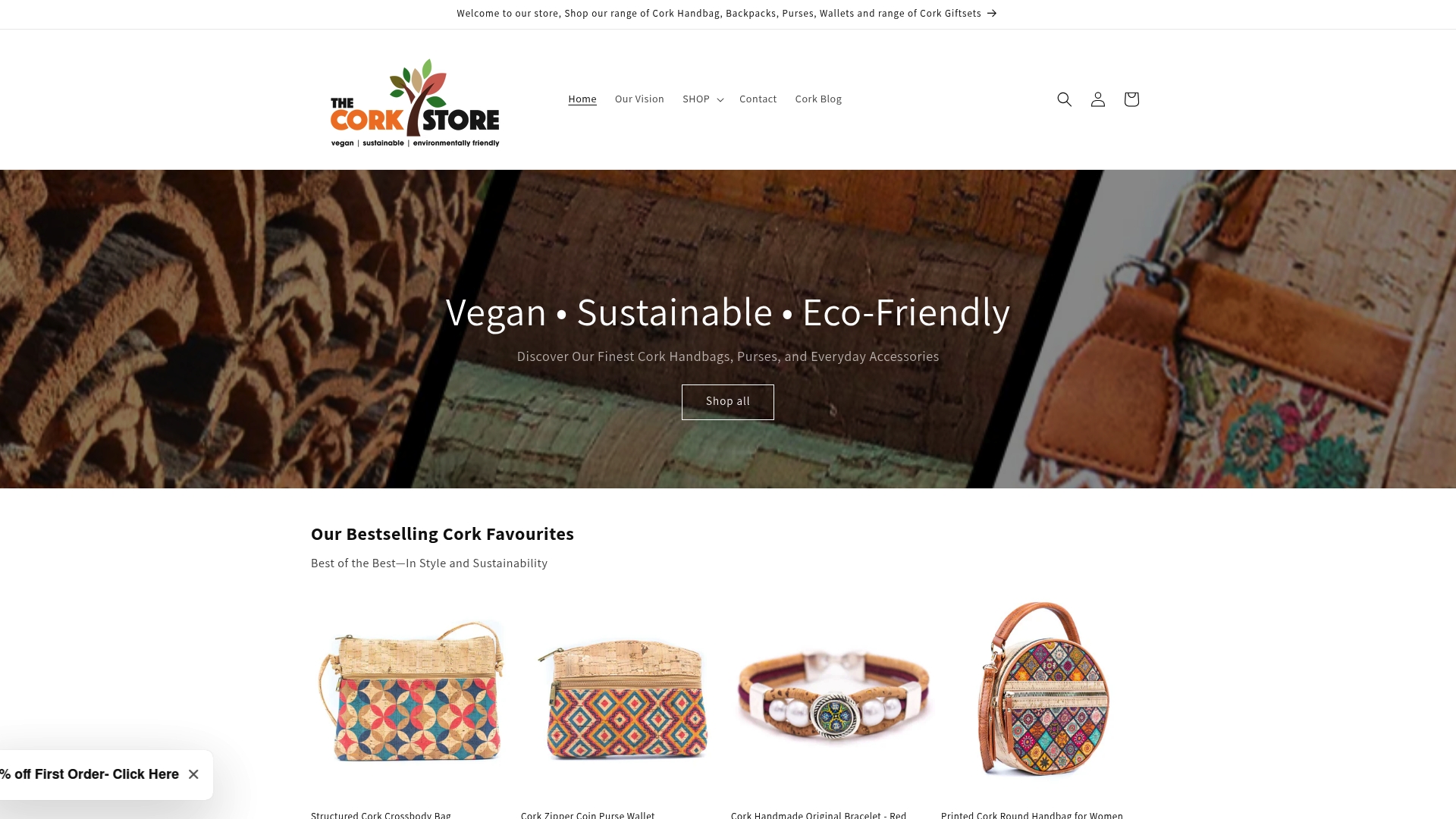
Use the same checklist from this guide on any product page, cork facing, backing material, stitching close-ups, returns policy, before you commit. If you’re shopping for someone else, the curated cork gift ideas collection is worth browsing first, and if you’d rather buy secondhand for a lower-impact option, pre-owned purses and bags are worth a look too. Pick a piece, check the specs against what you’ve just learned, and add it to your basket.
Sources
- What is cork fabric? - Sustainable Jungle
- Harvesting — Cork Institute
- A new trend in fashion: Cork fabric - The Organic Magazine
- Do cork handbags last? - StyleWhirl