

Sustainable Accessories: Style That Respects Nature
Britain’s eco-conscious scene continues to influence global style, yet many stylish consumers worldwide are misled by myths around sustainable and vegan fashion. In reality, more than 60 percent of british shoppers now demand accessories that are genuinely cruelty-free without sacrificing durability or flair. Discover how vegan cork accessories can shatter outdated stereotypes and provide solutions that respect ethical values while staying effortlessly chic.
Table of Contents
- Defining Sustainable Accessories and Common Myths
- Materials and Variations in Sustainable Accessories
- Key Qualities: Durability, Style, and Vegan Ethics
- Cork’s Role: Renewability and Eco Benefits
- Pitfalls and Greenwashing in Sustainable Fashion
- Choosing Genuine Sustainable Alternatives Responsibly
Key Takeaways
| Point | Details |
|---|---|
| Definition of Sustainable Accessories | Sustainable accessories prioritise environmental impact and ethical production throughout their lifecycle. |
| Material Diversity | Innovative materials such as cork and Piñatex play a significant role in reducing environmental impact while ensuring aesthetic appeal. |
| Consumer Awareness | Understanding the difference between authentic sustainability and greenwashing is crucial for informed purchasing decisions. |
| Holistic Approach | Responsible consumption requires examining the complete socio-economic context, including labour practices and material sourcing. |
Defining Sustainable Accessories and Common Myths
Sustainable accessories represent more than just a fashion trend - they embody a profound commitment to environmental responsibility and ethical production. While fashion industries continue to evolve, understanding what truly constitutes a sustainable accessory remains complex. Sustainable fashion lacks a clear fixed definition due to the intricate social and ecological systems involved in its production.
At its core, sustainable accessories are crafted with intentional consideration for both environmental impact and social welfare. This means examining every stage of production - from raw material sourcing to manufacturing processes, worker conditions, and eventual product lifecycle. Materials like cork, recycled polyester, organic cotton, and reclaimed textiles become cornerstone elements in creating accessories that minimise ecological harm while maintaining aesthetic appeal.
Common myths about sustainable fashion often prevent consumers from making informed choices. Misconceptions regarding cost and style persist, suggesting that eco-friendly accessories are inherently expensive or unattractive. However, contemporary sustainable design proves these assumptions false. Innovative brands demonstrate that ethical accessories can be simultaneously stylish, affordable, and environmentally conscious - challenging traditional perceptions about sustainable fashion.
Pro tip: When evaluating sustainable accessories, look beyond marketing claims and investigate the brand’s genuine commitment to transparency in their production processes.
Materials and Variations in Sustainable Accessories
Sustainable accessories represent an innovative intersection of design, environmental responsibility, and material science. Contemporary fashion is witnessing a remarkable transformation through diverse sustainable material innovations, where traditional manufacturing approaches are being reimagined with eco-conscious alternatives. These materials range from recycled metals and repurposed fabrics to groundbreaking bio-based textiles that challenge conventional production methods.
The landscape of sustainable materials is remarkably diverse, encompassing options like organic cotton, recycled polyester, plant-based leathers, and natural fibres like cork. Circular fashion accessories are increasingly utilising innovative materials that minimise environmental impact while maintaining aesthetic appeal. Particularly noteworthy are emerging materials such as Piñatex (derived from pineapple leaf fibres), mushroom leather, and reclaimed ocean plastics, which demonstrate the potential for creative and environmentally responsible design.
Material selection in sustainable accessories involves complex considerations beyond environmental impact. Designers must balance durability, performance, aesthetic quality, and ecological footprint. This holistic approach means evaluating each material’s entire lifecycle - from raw material extraction to eventual disposal or potential recycling. Cork, for instance, emerges as a particularly compelling material, offering renewable sourcing, biodegradability, and remarkable versatility across different accessory designs.
Pro tip: When exploring sustainable accessories, examine the specific material composition and ask brands about their sourcing and production transparency to make truly informed ethical choices.
Here is a comparison of notable sustainable accessory materials and their sustainability features:
| Material Type | Key Benefit | Typical Use |
|---|---|---|
| Cork | Highly renewable | Bags, wallets, hats |
| Recycled polyester | Reduces plastic waste | Belts, backpacks, hats |
| Organic cotton | Lower chemical usage | Scarves, handbags, hair accessories |
| Piñatex | Biodegradable | Footwear, wallets, fashion trims |
| Mushroom leather | Animal-free, composts | Handbags, watch straps, trainers |
| Reclaimed ocean plastics | Cleans marine waste | Jewellery, sunglasses, bag trims |
Key Qualities: Durability, Style, and Vegan Ethics
Sustainable fashion accessories represent a sophisticated intersection of ethical principles and design excellence. Sustainable accessory qualities transcend traditional fashion expectations, demanding a holistic approach that balances aesthetic appeal, environmental responsibility, and ethical production. These accessories are not merely products but statements of conscious consumption that reflect a deeper commitment to global welfare.
Durability emerges as a cornerstone of sustainable design, challenging the fast-fashion paradigm of disposable accessories. Ethical fashion research highlights consumer preferences for long-lasting products that maintain aesthetic integrity while minimising environmental impact. This approach means selecting materials and construction techniques that resist wear, retain visual appeal, and can potentially be repaired or recycled, thus extending the accessory’s functional lifecycle.
Vegan ethics play a crucial role in sustainable accessory design, representing a commitment to cruelty-free production methods. By deliberately avoiding animal-derived materials, designers create accessories that respect animal welfare while simultaneously reducing environmental strain. This approach encompasses not just material selection, but a comprehensive evaluation of production processes, ensuring that every stage of manufacturing aligns with principles of compassion and sustainability.
Pro tip: Invest in accessories that offer repair services or lifetime guarantees, as these demonstrate a genuine commitment to durability and sustainable consumption.
Cork’s Role: Renewability and Eco Benefits
Cork represents a remarkable triumph of sustainable material design, embodying the principles of ecological responsibility and innovative fashion. Cork’s remarkable renewability transforms accessory production, offering a natural alternative that respects both environmental integrity and aesthetic sophistication. Unlike conventional materials that deplete resources, cork demonstrates a unique harvesting process that allows oak trees to continue thriving and absorbing carbon throughout their lifecycle.
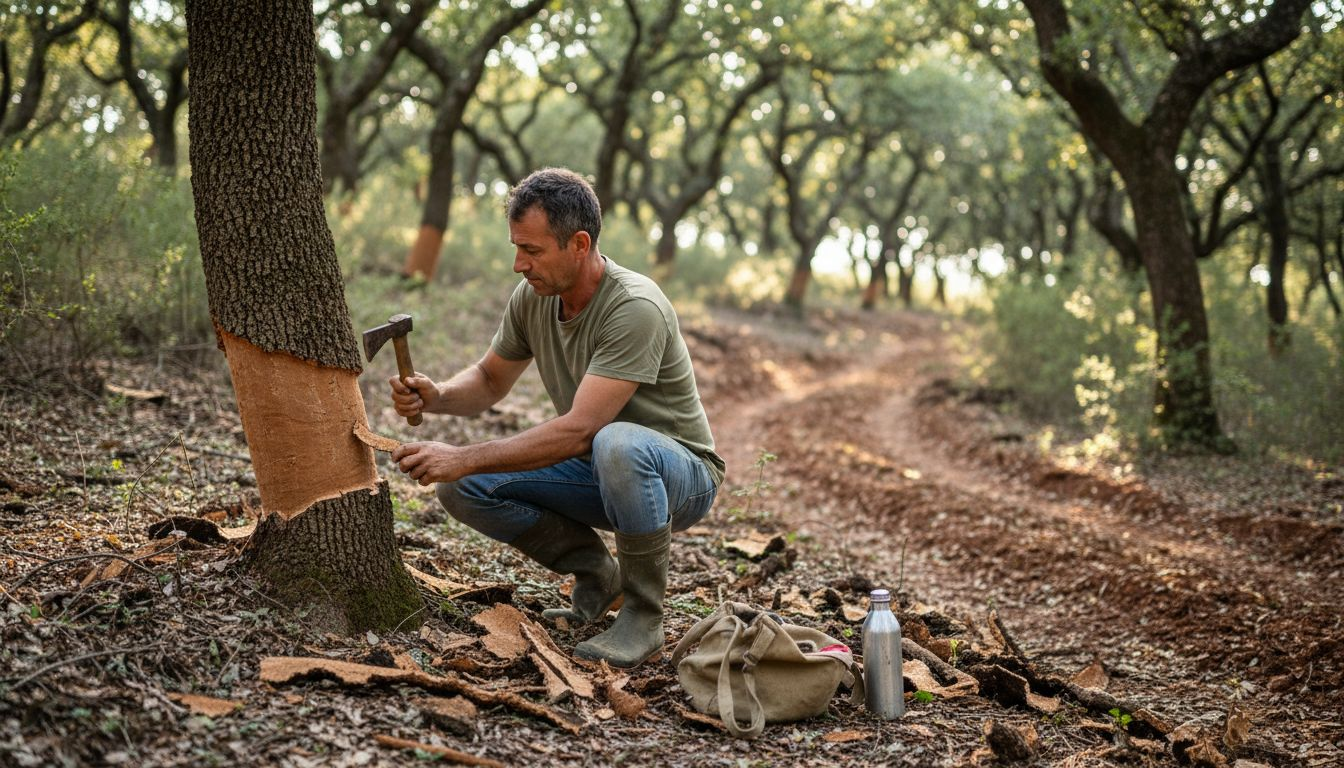
The environmental credentials of cork extend far beyond its initial harvesting. Sustainable fashion materials require comprehensive ecological assessment, and cork excels in multiple dimensions. Its production demands minimal water consumption, generates negligible waste, and supports carbon sequestration. The material’s natural properties—including remarkable durability, lightweight composition, and inherent water resistance—make it an exceptional choice for conscious consumers seeking accessories that perform brilliantly while maintaining strict environmental standards.
Moreover, cork’s lifecycle presents a compelling narrative of sustainability. The harvesting process involves carefully removing bark from cork oak trees without causing damage, allowing the tree to regenerate and continue its critical role in ecosystem preservation. This regenerative approach stands in stark contrast to traditional leather or synthetic material production, which often involves significant environmental degradation. Each cork accessory thus becomes a statement of ecological mindfulness, representing a direct investment in sustainable manufacturing practices and global environmental health.
Pro tip: When purchasing cork accessories, request information about the specific sourcing region and harvesting practices to ensure you’re supporting truly sustainable production.
Pitfalls and Greenwashing in Sustainable Fashion
Sustainable fashion confronts a critical challenge in maintaining authenticity amidst rampant marketing manipulation. Greenwashing undermines genuine sustainability efforts, creating a complex landscape where consumers must navigate misleading claims and superficial eco-credentials. Brands frequently exploit consumers’ environmental consciousness by using vague terminology, unsubstantiated eco-labels, and strategically ambiguous marketing language that suggests environmental responsibility without meaningful action.
The complexity of sustainable fashion definitions enables sophisticated corporate deception. Consumer awareness is crucial in combating misinformation about product sustainability. Many companies strategically deploy environmental buzzwords like ‘green’, ‘eco-friendly’, and ‘sustainable’ without providing concrete evidence of their claims. This practice creates a smokescreen that obscures the actual environmental impact of their production processes, materials, and supply chains.
Effective protection against greenwashing requires a multifaceted approach. Consumers must develop critical thinking skills, demanding transparency and specific, verifiable sustainability metrics from brands. This involves investigating a company’s entire production ecosystem, understanding material sourcing, labour practices, carbon footprint, and waste management strategies. Rigorous third-party certifications, comprehensive sustainability reports, and clear, measurable environmental commitments become essential tools in distinguishing genuine sustainable practices from marketing rhetoric.
Pro tip: Always request detailed documentation about a brand’s sustainability claims and be sceptical of broad, unqualified environmental statements.
The following table outlines essential tips for detecting greenwashing in sustainable fashion:
| Risk Indicator | Consumer Action | Positive Outcome |
|---|---|---|
| Vague eco-friendly language | Demand specific certifications | Clearer, verifiable information |
| Absence of impact metrics | Request sustainability reports | Accurate environmental evaluation |
| No supply chain transparency | Research supplier disclosures | Greater assurance of ethical practice |
| Only partial sustainability | Ask about holistic commitments | Understand wider brand responsibility |
Choosing Genuine Sustainable Alternatives Responsibly
Responsible fashion consumption demands a holistic approach that transcends superficial purchasing decisions. Sustainable choices require comprehensive ethical considerations, examining not just the product’s environmental impact, but its entire socio-economic context. Consumers must develop a nuanced understanding that genuine sustainability encompasses fair labour practices, material circularity, local production, and long-term environmental preservation.
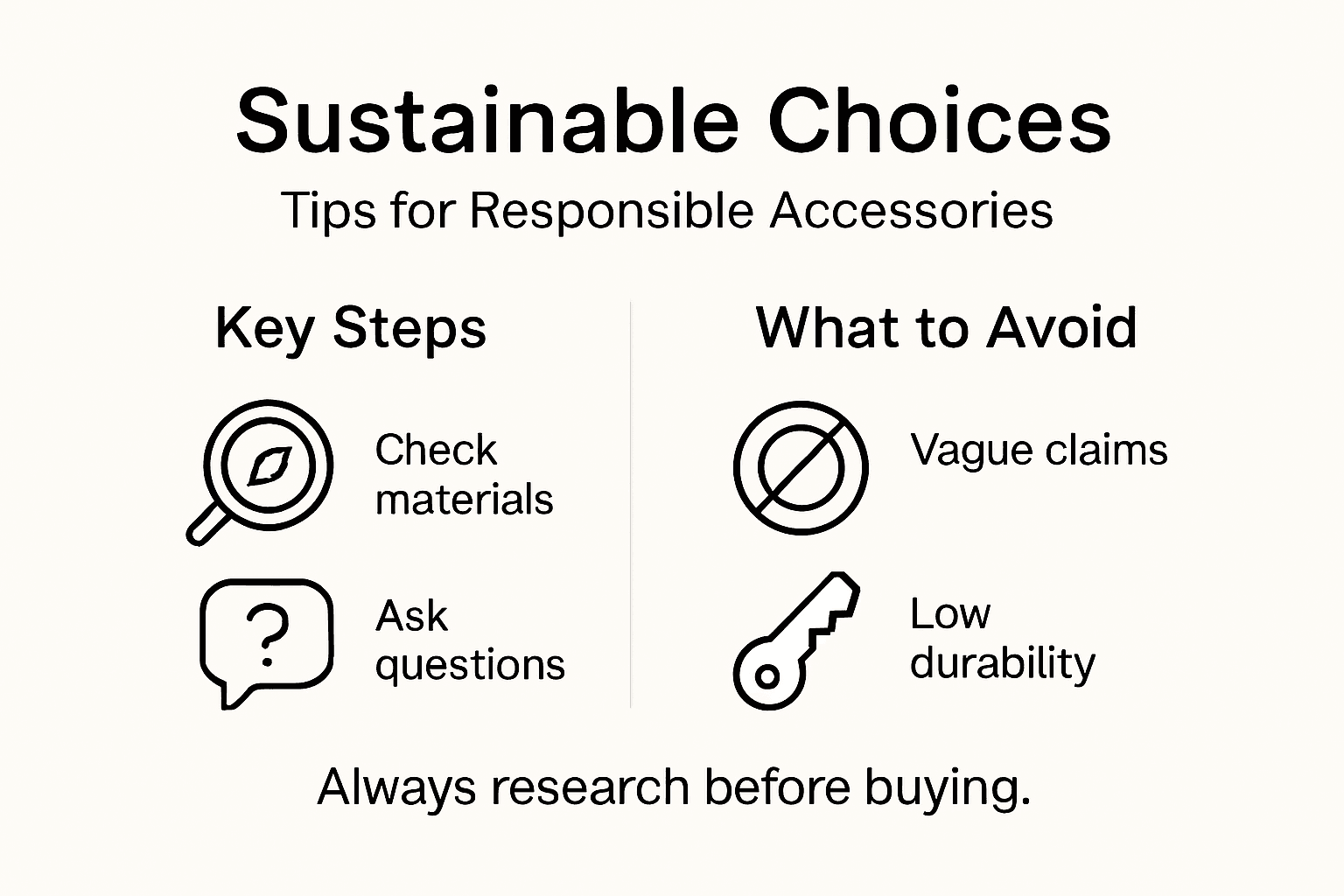
Ethical production demands rigorous consumer investigation, involving careful examination of supply chains, manufacturing processes, and corporate accountability. This means looking beyond marketing rhetoric to understand the true origins of accessories. Critical factors include traceability of materials, worker compensation, carbon footprint, and the potential for product repair, reuse, or recycling. Genuine sustainable alternatives are not merely products, but comprehensive commitments to environmental and social responsibility.
Navigating this complex landscape requires active consumer engagement and continuous learning. Practical strategies include researching brands’ sustainability certifications, understanding material lifecycles, supporting local and transparent manufacturers, and prioritising accessories designed for durability and multiple uses. By making informed choices, consumers become active participants in reshaping fashion’s environmental and ethical paradigms, transforming individual purchases into collective movements towards meaningful systemic change.
Pro tip: Develop a personal sustainability checklist that evaluates accessories across multiple dimensions: material origin, production ethics, durability, and end-of-life recyclability.
Discover Ethical Elegance with Sustainable Cork Accessories
The challenge of navigating genuine sustainable accessories in a world full of greenwashing demands clear and trustworthy solutions. If you want durable, stylish, and vegan-friendly accessories that truly respect nature’s limits and honour ethical values like those explored in “Sustainable Accessories: Style That Respects Nature,” your journey starts here. At The Cork Store, every product boasts authentic sustainability through the unique renewability and eco benefits of cork. Experience accessories crafted to stand the test of time, reduce environmental impact, and keep you aligned with conscious consumption.
Explore our curated collection of handbags, wallets, and backpacks that combine sophistication with ecological responsibility. Act now to support transparent, cruelty-free production and embrace accessories that deliver both style and substance. Visit The Cork Store’s homepage to browse pieces engineered for durability and ethical commitment. Make your next accessory a personal statement of sustainability and discover how cork can transform your wardrobe today.
Frequently Asked Questions
What are sustainable accessories?
Sustainable accessories are fashion items made with a commitment to environmental responsibility and ethical production. They consider the entire production process, including raw material sourcing, manufacturing conditions, and product lifecycle.
How do I identify genuinely sustainable accessories?
To identify genuine sustainable accessories, look for brands that are transparent about their production processes, use eco-friendly materials, and can provide certifications or detailed sustainability reports regarding their practices.
What materials are commonly used in sustainable accessories?
Common materials in sustainable accessories include cork, organic cotton, recycled polyester, Piñatex, and mushroom leather. These materials are chosen for their lower environmental impact and renewability compared to traditional materials.
Why is durability important in sustainable accessories?
Durability is crucial in sustainable accessories as it aligns with ethical consumption practices by reducing waste and promoting long-lasting products. Durable items contribute to the minimisation of environmental impact by extending the functional lifecycle of accessories.
Recommended
- 7 Key Sustainable Fashion Trends 2025 for Eco Shoppers – The Cork Store
- Sustainable Fashion Workflow: Transforming Ethical Accessories – The Cork Store
- How to Build Eco-Friendly Outfits With Sustainable Style – The Cork Store
- How to Spot Sustainable Fashion: A Step-by-Step Guide – The Cork Store
- 5 Reasons Why You Should Switch to Sustainable Swimwear – Le Club Original