

Sustainable Fashion Workflow: Transforming Ethical Accessories
Nearly 78 percent of British consumers now consider sustainability before buying fashion accessories. The growing demand for eco-conscious choices has reshaped how European brands design and manufacture vegan products, turning ethical transparency and circular production into must-have features. If you care about quality, style, and the planet, understanding sustainable fashion workflow principles is key to selecting accessories that align with your values and elevate your look.
Table of Contents
- Defining Sustainable Fashion Workflow Principles
- Types of Sustainable Materials and Processes
- Stages in Eco-Friendly Accessories Production
- Certification, Standards, and Ethical Compliance
- Common Challenges and Industry Innovations
Key Takeaways
| Point | Details |
|---|---|
| Sustainable Fashion Workflows | Brands must adopt comprehensive strategies focusing on supply chain transparency and ethical material sourcing to enhance sustainability. |
| Material Innovation | Utilising sustainable materials, such as biomaterials and recycled textiles, is crucial for reducing environmental impact and improving brand reputation. |
| Lifecycle Assessment | Continuous assessment of production stages is vital for identifying areas for improvement in ecological and ethical practices. |
| Certification and Compliance | Genuine commitment to sustainability involves rigorous ethical certifications and transparent supply chain management to avoid greenwashing. |
Defining Sustainable Fashion Workflow Principles
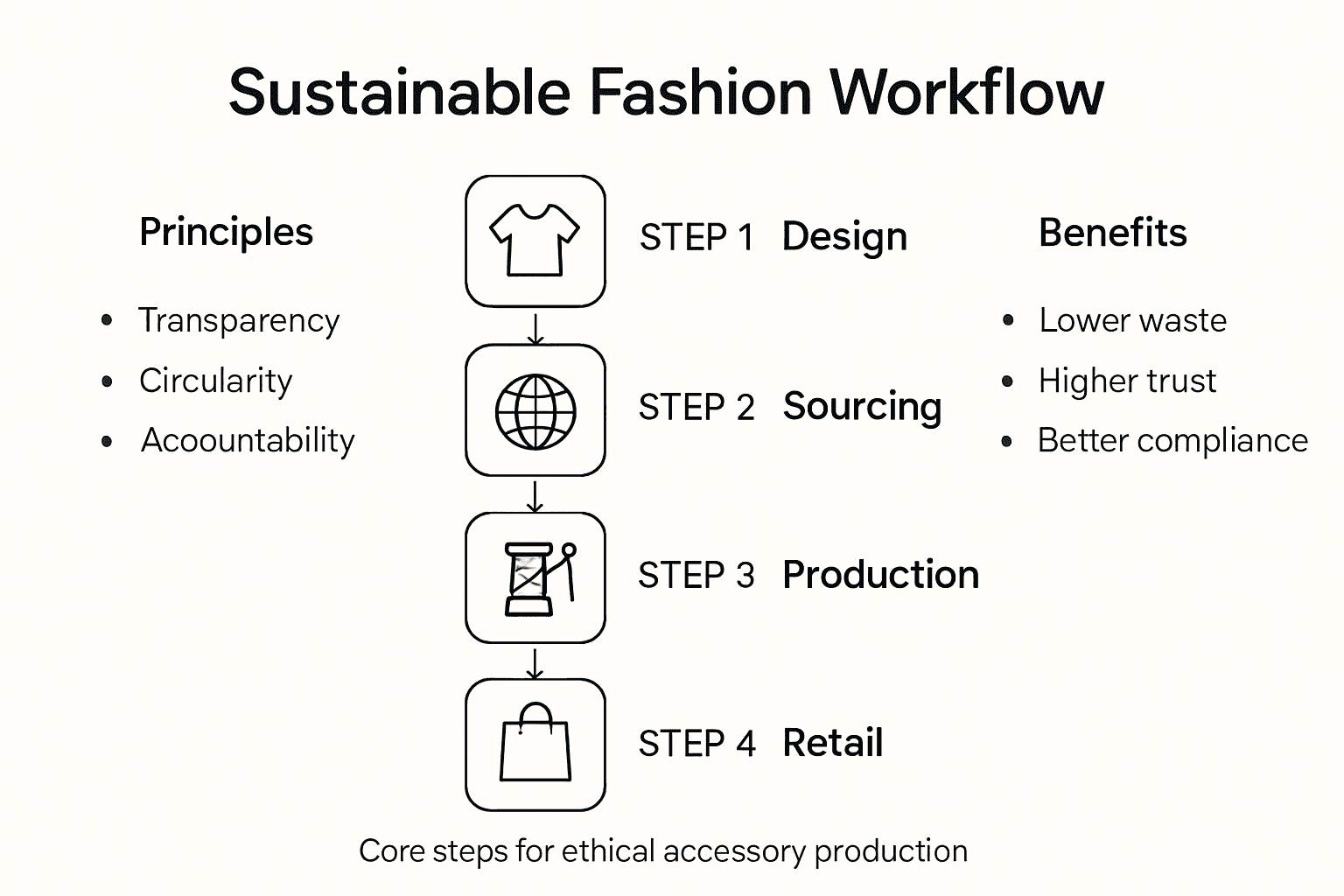
Sustainable fashion workflows represent a comprehensive strategic approach designed to transform traditional textile and accessory production into environmentally responsible and ethically conscious processes. Global research systematically explores the multifaceted principles underpinning these innovative frameworks, revealing complex transformations across operational and strategic domains.
The core principles of sustainable fashion workflows encompass several critical dimensions. These include:
- Supply Chain Transparency: Ensuring complete visibility into manufacturing processes
- Circular Economy Integration: Designing products with regenerative lifecycle capabilities
- Ethical Material Sourcing: Prioritising renewable, low-impact materials
- Carbon Footprint Reduction: Minimising environmental impact throughout production
Comprehensive bibliometric analyses of clothing brands worldwide demonstrate that successful sustainable fashion workflows require holistic approaches. These methodologies do not merely address individual production stages but create interconnected systems emphasising environmental stewardship, social responsibility, and economic viability.
Implementing sustainable fashion workflows demands a strategic commitment to continuous improvement. Brands must develop adaptive frameworks that balance ecological considerations with consumer expectations, technological innovations, and economic feasibility. This requires robust measurement systems, transparent communication strategies, and a genuine commitment to transforming traditional fashion paradigms.
Here’s how core sustainable fashion workflow principles drive business outcomes:
| Principle | Business Impact | Strategic Benefit |
|---|---|---|
| Supply Chain Transparency | Increases stakeholder trust | Reduces supply chain risk |
| Circular Economy Integration | Lowers waste management costs | Promotes product longevity |
| Ethical Material Sourcing | Enhances brand reputation | Secures responsible sourcing |
| Carbon Footprint Reduction | Lowers energy and emissions fees | Meets regulatory requirements |
Pro tip: Start by conducting a comprehensive sustainability audit of your current production processes to identify immediate areas for ecological and ethical enhancement.
Types of Sustainable Materials and Processes
Sustainable materials represent a critical frontier in transforming fashion’s environmental impact, offering innovative solutions that balance performance, ecological responsibility, and aesthetic appeal. Contemporary research explores seven comprehensive sustainability-related material categories, revealing sophisticated approaches that integrate advanced technologies like biomimicry, nanotechnology, and additive manufacturing.
Key sustainable material types include:
- Biomaterials: Derived from living organisms with minimal environmental footprint
- Recycled Textiles: Repurposed fabrics reducing waste and resource consumption
- Plant-Based Alternatives: Materials sourced from renewable agricultural resources
- Low-Impact Synthetics: Engineered materials with reduced carbon emissions
- Regenerative Fabrics: Textiles that actively contribute to environmental restoration
Comparative lifecycle assessments of green materials and production processes demonstrate significant potential for emissions reduction and environmental preservation. These innovative materials are evaluated across multiple dimensions, including environmental impact, performance efficiency, health considerations, and implementation feasibility.

Implementing sustainable materials requires a holistic approach that considers not just the material’s composition, but its entire production ecosystem. Brands must critically analyse sourcing methods, manufacturing processes, transportation logistics, and end-of-life recyclability. This demands interdisciplinary collaboration between designers, material scientists, environmental experts, and supply chain specialists to create truly transformative textile solutions.
Comparing sustainable materials and their implementation challenges:
| Material Type | Main Advantage | Key Challenge | Typical Application |
|---|---|---|---|
| Biomaterials | Renewable resource | Limited scalability | Biodegradable garments |
| Recycled Textiles | Diverts waste | Quality consistency | Upcycled accessories |
| Plant-Based | Non-toxic sources | Agricultural dependency | Vegan leather alternatives |
| Low-Impact Synthetics | Reduced emissions | Chemical processing | Durable outdoor wear |
| Regenerative Fabrics | Environmental repair | Higher production cost | Soil-enhancing fibres |
Pro tip: Conduct a comprehensive material lifecycle assessment to identify the most sustainable options for your specific fashion production requirements.
Stages in Eco-Friendly Accessories Production
Comprehensive lifecycle assessments of sustainable accessories production reveal a complex, interconnected process that demands strategic consideration at every stage of manufacturing. The journey from raw material to finished product encompasses multiple critical phases, each presenting unique opportunities for environmental stewardship and ethical innovation.
The key stages of eco-friendly accessories production include:
- Sustainable Material Sourcing
- Identifying renewable and low-impact raw materials
- Verifying ethical supply chain practices
- Prioritising materials with minimal environmental degradation
- Responsible Design
- Creating modular, adaptable designs
- Minimising waste through intelligent pattern cutting
- Developing products with end-of-life recyclability
- Ethical Manufacturing
- Implementing energy-efficient production techniques
- Ensuring fair labour practices
- Reducing water and chemical consumption
- Low-Carbon Distribution
- Optimising transportation logistics
- Using minimal, recyclable packaging
- Selecting carbon-neutral shipping methods
Research examining eco-friendly production models demonstrates that upstream processes significantly impact overall sustainability. Brands must adopt a holistic approach, understanding that each production stage contributes to the final product’s ecological footprint.
Successful implementation requires continuous monitoring, transparent reporting, and a commitment to incremental improvements. Interdisciplinary collaboration between designers, material scientists, logistics experts, and environmental consultants becomes essential in creating truly sustainable accessories that balance aesthetic appeal with ecological responsibility.
Pro tip: Develop a comprehensive sustainability scorecard to track and improve environmental performance across each production stage.
Certification, Standards, and Ethical Compliance
Comprehensive reviews of global ethical fashion certifications reveal a complex landscape of standards designed to ensure transparency, accountability, and responsible production practices across the sustainable fashion ecosystem. These certification frameworks serve as critical mechanisms for validating and communicating a brand’s commitment to environmental and social responsibility.
Key certification categories include:
-
Product-Level Certifications
- Global Organic Textile Standard (GOTS)
- OEKO-TEX Standard 100
- Bluesign Certification
-
Labour and Social Responsibility Standards
- Fairtrade International
- Ethical Trading Initiative
- Workers’ Rights Consortium
-
Environmental Impact Certifications
- Cradle to Cradle
- Forest Stewardship Council
- Regenerative Organic Certified
Critical analysis of ethical standards in fashion supply chains demonstrates that certification is not merely a compliance exercise but a comprehensive approach to transforming industry practices. Brands must navigate complex regulatory landscapes, addressing potential greenwashing risks while maintaining genuine commitment to sustainable principles.
Effective ethical compliance requires more than surface-level certifications. It demands a holistic approach that integrates transparent supply chain management, continuous improvement processes, and genuine commitment to social and environmental wellbeing. This involves rigorous third-party audits, ongoing worker protection initiatives, and transparent reporting mechanisms that go beyond traditional compliance frameworks.
Pro tip: Request and verify multiple certification standards when evaluating a brand’s ethical credentials to ensure comprehensive sustainability commitment.
Common Challenges and Industry Innovations
Global perspectives on fashion industry transformation reveal a complex landscape of interconnected challenges and groundbreaking innovations that are reshaping sustainable accessory production. The sector faces unprecedented pressures to reconcile environmental sustainability, social responsibility, and economic viability, driving radical rethinking of traditional manufacturing paradigms.
Key challenges and corresponding innovations include:
-
Resource Intensity
- Challenge: High environmental footprint
- Innovation: Advanced recycling technologies
- Alternative material development
-
Supply Chain Complexity
- Challenge: Limited transparency
- Innovation: Digital traceability systems
- Blockchain-enabled supplier verification
-
Consumer Engagement
- Challenge: Sustainability awareness gaps
- Innovation: Educational marketing strategies
- Personalised sustainability impact visualisation
Comprehensive reviews of sustainable fashion’s net-zero transition underscore the critical need for systemic innovations that address fundamental structural limitations. Technological advancements are creating unprecedented opportunities for reimagining production processes, with digital technologies playing a transformative role in enhancing transparency, efficiency, and accountability.
Successful navigation of these challenges requires a multidisciplinary approach, integrating technological innovation, policy frameworks, and collaborative ecosystem development. Brands must cultivate adaptive strategies that balance economic sustainability with environmental and social responsibility, recognising that true transformation demands holistic, interconnected solutions.
Pro tip: Develop cross-functional innovation teams that combine technological expertise, sustainability knowledge, and creative problem-solving capabilities.
Embrace True Sustainability with Stylish Vegan Cork Accessories
The article highlights the critical challenge of integrating ethical material sourcing and circular economy principles into fashion workflows. Many brands struggle to balance supply chain transparency with environmental responsibility while meeting consumer demands for stylish, durable, and eco-conscious products. At The Cork Store, we understand these key pain points and offer thoughtfully crafted accessories made from sustainable cork—a renewable, recyclable material that supports carbon footprint reduction and ethical production.
Our curated collection of vegan cork handbags, wallets, and backpacks exemplifies how fashion can be both responsible and elegant. By choosing products from our landing page, you contribute to a circular economy that integrates modular design and low-impact sourcing. Every purchase directly supports innovation in sustainable fashion workflows, aligning with your values of transparency and social responsibility.
Explore our range today and join a community that demands more from fashion—because ethical accessories should never mean compromising style or conscience.
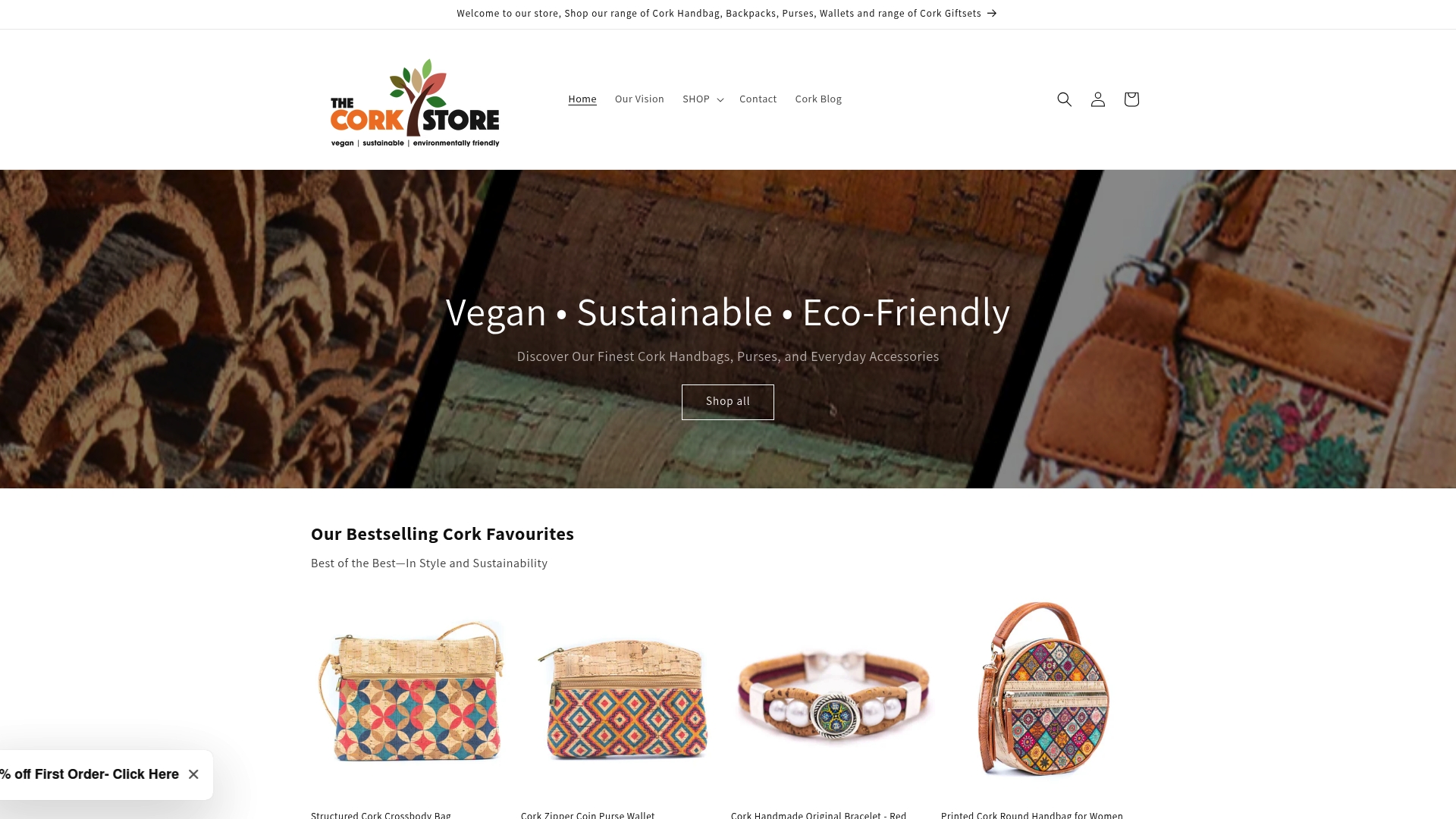
Discover the difference sustainable cork can make by visiting The Cork Store now. Take action and transform your wardrobe with accessories that reflect your commitment to a greener future.
Frequently Asked Questions
What are the core principles of sustainable fashion workflows?
Sustainable fashion workflows are based on principles such as supply chain transparency, circular economy integration, ethical material sourcing, and carbon footprint reduction. These principles help transform traditional production methods into environmentally responsible processes.
How can brands effectively implement sustainable materials in their production processes?
Brands can implement sustainable materials by conducting comprehensive lifecycle assessments, analysing sourcing methods, and collaborating with material scientists and designers. This holistic approach ensures they consider the entire production ecosystem.
What challenges do companies face when transitioning to eco-friendly accessories production?
Companies often encounter challenges such as resource intensity, supply chain complexity, and consumer engagement. Addressing these requires innovations like advanced recycling technologies, digital traceability systems, and effective educational marketing strategies.
How important are certifications in the sustainable fashion industry?
Certifications are crucial as they validate a brand’s commitment to ethical and sustainable practices. They ensure transparency and accountability within the supply chain, but effective compliance requires a holistic approach beyond surface-level certifications.
Recommended
- How to Build Eco-Friendly Outfits With Sustainable Style – The Cork Store
- Eco-Friendly Fashion Tips: Upgrade Your Wardrobe Sustainably – The Cork Store
- How to Spot Sustainable Fashion: A Step-by-Step Guide – The Cork Store
- 7 Key Sustainable Fashion Trends 2025 for Eco Shoppers – The Cork Store
- Hair Extensions for Beginners: Effortless Fullness and Length