

Four sustainable leather alternatives for accessories, why cork wins
The most realistic sustainable alternatives to leather fall into four groups: plant-based composites made from fruit and crop waste, microbial materials grown from mycelium or bacterial cellulose, recycled synthetics and rubber, and cork, which remains the most mature plant-derived option on the market. Every one of these has a catch worth knowing before you buy: most rely on a polymer coating for durability, which affects how they biodegrade at the end of their life. Cork needs the least of it.
TL;DR:
- Plant-based composites like pineapple or apple leather often rely on polyurethane coatings, which can hinder biodegradability and microplastic shedding.
- Microbial materials such as mycelium and bacterial cellulose show promise but currently lack consistent performance and established recycling options.
- Recycled synthetics like reclaimed rubber and PU reduce new plastic production but still shed microplastics and lack comprehensive recycling schemes.
- Cork remains the most proven and transparent sustainable option due to its renewable harvest, natural water resistance, and minimal synthetic use.
- Production energy sources, coating chemistry, and third-party verification critically influence the actual sustainability of alternative leathers.
Table of Contents
- What counts as a sustainable alternative to leather?
- How are plant-based leather alternatives made?
- Can mushrooms and bacteria really replace leather?
- Are recycled synthetics a genuine sustainable option?
- Why is cork one of the most proven leather alternatives?
- What do life-cycle assessments actually show?
- How do you choose the right leather alternative for you?
- What are the ethical stakes beyond the environment?
- Where can you actually buy these materials, and what do they cost?
- What’s coming next for lab-grown and plant-based leathers?
- A cork advocate’s honest take on the alternatives
- Ready for an accessory that already gets this right?
- Sources
What counts as a sustainable alternative to leather?
“Vegan leather” tells you what a material isn’t. It says nothing about whether the material is any good for the planet. That gap matters more than most shoppers realise, and it’s why the phrase “sustainable alternative to leather” needs a firmer definition before you start comparing products.
The honest industry term for what you’re actually shopping for is a bio-based or bio-fabricated material with disclosed composition. That means the brand tells you what percentage of the product is plant fibre, mycelium, or bacterial cellulose, and what percentage is a synthetic binder or coating. Materials scientists and investigative reporters have made the same point repeatedly: vegan leather isn’t automatically sustainable or eco-friendly, because many of these products are still majority plastic once you look past the marketing.
That’s the frame for this whole guide. Rather than ranking materials by how “natural” they sound, we’re looking at what each one is actually made of, how long it lasts, what happens when you throw it away, and where the trade-offs sit. Plant-based composites, mycelium and bacterial cellulose, cork, and high-quality recycled synthetics all have a legitimate place in a sustainable wardrobe. None of them is perfect, and pretending otherwise does readers no favours.
How are plant-based leather alternatives made?
Plant-based leather starts as waste from somewhere else. Pineapple leaf fibre left over from harvesting, apple pomace from juice production, grape skins from winemaking, cactus pads pruned from nopal plantations, mango that didn’t meet supermarket standards: all of it gets dried, broken down into fibres or pulp, then felted or meshed into a sheet. That sheet is the base layer. It’s rarely usable on its own, so manufacturers apply a coating, usually a bio-based resin like polylactic acid (PLA) or, more often, a conventional polyurethane (PU), to give the surface the flexibility and abrasion resistance leather buyers expect.

This is where “material honesty” becomes a practical shopping skill rather than an abstract virtue. Piñatex and similar plant composites genuinely repurpose agricultural residue that would otherwise be burned or landfilled, but the finished product’s environmental profile depends heavily on that coating. A PU-coated pineapple leather can still shed microplastic and resist composting even though the base fibre is 100% plant matter.
These materials work well for:
- Handbags, purses, and small accessories that see moderate handling
- Shoe uppers and trims where flexibility matters more than heavy abrasion resistance
- Fashion items with a shorter expected lifespan, where the environmental saving from waste-fibre sourcing outweighs a shorter usable life
They tend to struggle with heavy daily use, sustained flexing at creases, and prolonged exposure to water, where the base fibre can weaken faster than tanned leather or a V leather wide cuff bracelet – Trinity Carter.
Pro Tip: Ask the brand for two numbers before you buy: the percentage of plant-based content in the material, and the exact type of coating used. “Bio-based” means part of the material comes from plants; it says nothing about biodegradability. “Biodegradable” is a distinct, testable claim, and a brand that can’t produce a certificate for it probably can’t back the claim.
Can mushrooms and bacteria really replace leather?
Yes, in specific applications, though scale is still catching up. Mycelium leather grows from the root structure of fungi, fed on agricultural substrate in trays over one to three weeks, then harvested, dried, and tanned in a process that mirrors traditional leather finishing. Bacterial cellulose (often grown the same way as a kombucha SCOBY) works differently: bacteria excrete cellulose fibres into a liquid culture, which forms a mat that’s then dried and treated to increase strength.
Both materials shine in design contexts. Mycelium can be grown into rough moulded shapes, cutting down on offcut waste in a way that flat-cut leather or synthetics can’t match. Bacterial cellulose sheets can be grown to a specific thickness, reducing the splitting and shaving steps common in animal hide processing.
Where they lag: consistency and mechanical performance. Tensile strength and tear resistance vary batch to batch far more than with tanned leather, and neither material has matched leather’s abrasion resistance without a synthetic reinforcement layer.
- Mycelium’s environmental footprint swings wildly depending on production method. Passive cultivation with biodegradable binders can produce a genuinely low-impact material, while energy-intensive drying and synthetic tanning can push the footprint above some plastics.
- Bacterial cellulose needs less land and water than crop-based fibres but has a slower, more energy-dependent growth cycle.
- Neither material has an established recycling stream, which limits end-of-life options even when the base material is compostable.
Treat mycelium and bacterial cellulose as strong choices for limited-run design pieces or accessories from brands that publish their production data. For everyday, high-wear items, they’re still catching up to more established materials.
Are recycled synthetics a genuine sustainable option?
Recycled PU and reclaimed rubber solve a different problem than plant fibres do: they don’t reduce the amount of plastic in circulation, but they stop new plastic from being made for the same job. Recycled PU leather uses post-consumer or post-industrial plastic waste as the polymer feedstock instead of virgin petrochemicals. Reclaimed leather offcuts, stitched or bonded from tannery waste, extend the life of hide that’s already been produced rather than adding new material demand at all.
Both hold up well under daily use. Recycled PU resists water and abrasion competently, and bonded leather offcuts often outperform some plant composites on longevity because the base fibre is already tanned hide.
- Reclaimed leather offcuts reduce tannery waste but still carry the same animal-welfare and tanning-chemical questions as traditional leather.
- Recycled PU cuts virgin plastic demand but doesn’t solve microplastic shedding. As the surface wears, it sheds fragments the same way any PU product does.
- Neither material has a mainstream take-back or recycling scheme yet, so “recycled” describes the input, not necessarily the output’s next life.
If durability and low maintenance matter more to you than an entirely plant-based origin story, recycled synthetics are a defensible middle ground. Just don’t mistake “recycled” for “recyclable.”
Why is cork one of the most proven leather alternatives?
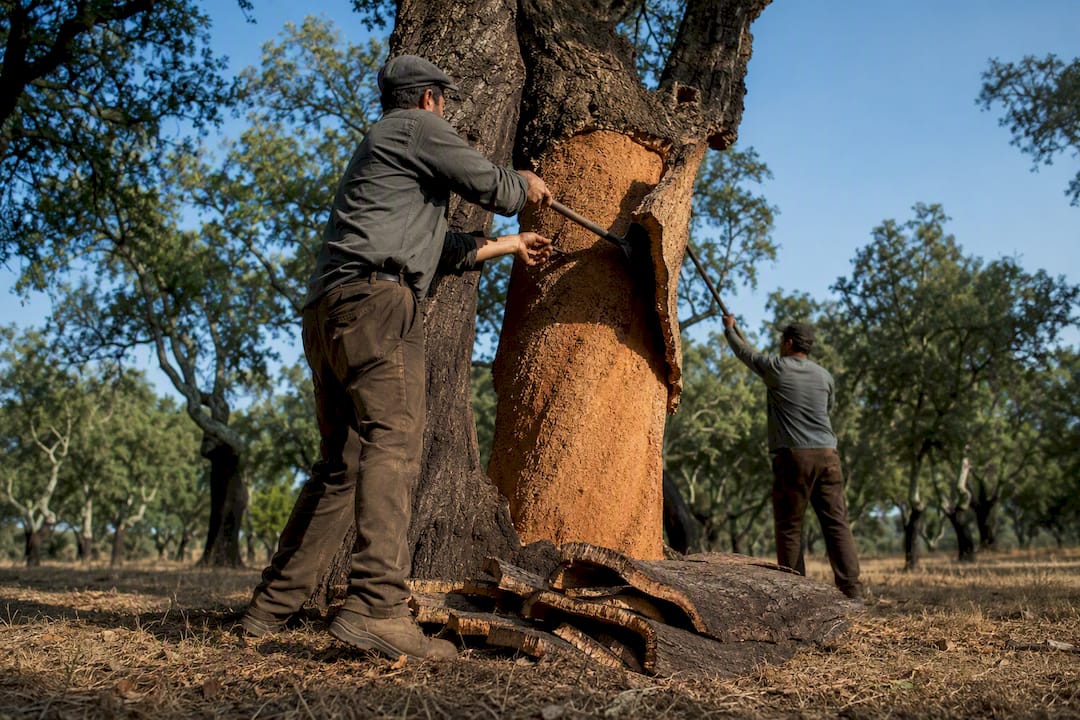
Cork has a two-thousand-year head start on every material above it. It’s stripped from the bark of the cork oak, a process that doesn’t fell or damage the tree: the bark regenerates over roughly nine years, and a single tree can be harvested dozens of times across its lifespan. That’s a genuinely renewable material stream, not a marketing claim.
Once processed, cork sheet is naturally water-resistant, lightweight, and doesn’t need a heavy polymer coating to perform as an accessory material. A cork wallet or handbag panel typically only needs a thin natural backing for flexibility, which keeps the material closer to its plant origin than pineapple or apple leather usually manages.
Care is straightforward: wipe with a damp cloth, avoid prolonged soaking, and keep it away from direct heat that can dry and crack the surface over years of use. Cork’s environmental case against conventional leather and PVC has been made consistently by manufacturers working with the material for decades, and Thecorkstore builds its entire range of handbags, backpacks, and wallets around that track record.
- Renewable harvest cycle with no tree felling required
- Naturally water-resistant surface, reducing the need for synthetic coatings
- Lightweight compared to tanned leather of equivalent thickness
- Simple end-of-life profile: natural cork is biodegradable where synthetic backings are minimal
Pro Tip: Cork is the stronger choice for everyday bags, wallets, and accessories where durability and low-maintenance care matter most. For structural items needing extreme flexibility at tight folds, such as fitted footwear, a plant-based composite or recycled synthetic may suit the shape better.
What do life-cycle assessments actually show?
Life-cycle assessments (LCAs) measure a material’s environmental cost from raw input to disposal, covering carbon emissions, water use, land impact, and energy consumption at every stage. The honest summary of current LCA research is that plant-based and microbial leathers can dramatically outperform petroleum-based PU and PVC, but the word “can” is doing a lot of work.
Comprehensive reviews of leather alternatives consistently find that outcomes swing on three variables: the energy source used in production, whether synthetic binders or coatings are added, and how far the raw material travels before processing. A mycelium leather grown with renewable energy and a biodegradable binder can sit well below PU on carbon footprint. The same material grown with grid electricity from fossil fuels and finished with a conventional PU topcoat can land close to, or even above, the plastic it was meant to replace.
That’s why presenting a single number for “how green is vegan leather” is misleading. The range matters more than the average.
Across the LCA literature, footprint estimates for plant-based and microbial leathers vary widely enough that the production method and energy source matter more than the raw material family itself.
A few checks separate a credible sustainability claim from a marketing one:
- A published, third-party LCA, not a self-reported percentage with no methodology
- OEKO-TEX certification or equivalent testing confirming the material is free from harmful substances
- B Corp status or comparable independent verification of the company’s wider environmental claims
- Disclosed coating chemistry (PLA versus conventional PU) rather than a vague “eco-friendly finish”
Experts increasingly frame this as a question of material honesty rather than labelling: specific, checkable composition and lifecycle data beats a reassuring word on a swing tag every time.
How do you choose the right leather alternative for you?
Comparing materials gets easier once you stop asking “which one is greenest” and start working through a fixed checklist against the product in front of you.
- Check the composition percentage. A brand should state what proportion of the material is plant fibre, mycelium, or recycled content, versus synthetic binder. If they can’t give you a number, treat that as a warning sign.
- Identify the coating type. PLA and other bio-based coatings biodegrade under the right conditions; conventional PU generally doesn’t. Ask directly which one you’re getting.
- Match durability to use case. A daily-carry bag needs abrasion resistance a occasional-use clutch doesn’t. Cork and recycled synthetics tend to win here; delicate plant composites suit lighter use.
- Ask about end-of-life. Does the brand offer repair, resale, or a take-back scheme? Repairability is one of the strongest levers you have over lifetime environmental impact, often stronger than the raw material choice itself.
- Look for third-party verification. OEKO-TEX, B Corp, or a published LCA carries more weight than an unverified “eco” claim on the product page.
- Weigh price against expected lifespan. A cheaper item you replace every year rarely beats a durable one you use for a decade, even if the durable one costs more upfront.
Questions worth putting to any brand directly: what percentage of this is plant-based or recycled? What’s the coating made of? Do you offer repairs? Is there a published LCA I can read?
Pro Tip: Keep leather-alternative accessories away from direct sunlight and radiators. Heat is the single biggest cause of premature cracking in both plant-based composites and cork, and it’s the easiest damage to prevent.
Red flags to walk away from: vague “eco-friendly” claims with no composition data, no stated coating type, and no way to ask a real person about the supply chain.
What are the ethical stakes beyond the environment?
Choosing a leather alternative is rarely only about carbon and water. It’s also a labour and animal-welfare question, and the two sit closer together than most guides admit.
Traditional leather production ties directly into the livestock industry, meaning animal welfare concerns sit upstream of the tannery itself. Chrome tanning, still the dominant method worldwide, uses chemicals linked to serious health risks for tannery workers in regions with weaker environmental and occupational regulation. Cruelty-free materials sidestep the welfare question entirely by design, which is precisely why they appeal to ethically motivated buyers in the first place.
But plant-based and microbial leathers aren’t automatically free of labour concerns either. Fibre processing, felting, and finishing still happen in factories, and a brand’s silence on working conditions in its supply chain is as much a red flag as silence on composition percentages. The same transparency standard that applies to material honesty should apply to labour: which country processes the fibre, under what conditions, and audited by whom.
Cork sits in an unusually strong position here. Harvesting is manual, skilled, seasonal work concentrated in established cork-producing regions, with a labour tradition that predates the sustainability conversation by centuries. That doesn’t make every cork supplier automatically ethical, but the harvesting method itself carries none of the welfare questions attached to livestock farming, and the processing chain is generally shorter and better documented than for lab-grown alternatives still scaling up their manufacturing.
Where can you actually buy these materials, and what do they cost?
Availability has shifted fast. Five years ago, plant-based and mycelium leathers were mostly limited-edition collaborations from a handful of fashion houses. Now they sit across mid-market accessory brands, though price and consistency still vary a great deal by material family.
Plant-based composites like pineapple and apple leather typically carry a modest premium over budget PU, often landing in similar territory to mid-range genuine leather once you account for the coating and finishing steps needed to make them durable. Mycelium and bacterial cellulose remain the most expensive tier, reflecting slower production cycles and smaller manufacturing runs, though costs have been falling as more producers scale up.
Cork sits at a genuinely accessible price point relative to its durability. Because the raw material harvest is established and low-tech compared with lab-grown alternatives, cork accessories don’t carry the same production premium, while still delivering multi-year durability with basic care.
Recycled PU and reclaimed leather generally price closest to conventional synthetic leather, since the manufacturing process differs mainly in feedstock sourcing rather than the finishing steps themselves.
The practical takeaway: if budget and product availability matter as much as material story, cork and recycled synthetics are currently the most reliably stocked, competitively priced options. Mycelium and bacterial cellulose remain worth watching, but expect a smaller range and a higher price for now.
What’s coming next for lab-grown and plant-based leathers?
Production methods are the fastest-moving part of this whole category. Mycelium producers are shifting toward passive cultivation methods, growing fungal biomass with lower energy input, precisely because energy source has such an outsized effect on the final carbon footprint. Expect more brands to publish that energy data as a competitive differentiator rather than an afterthought.
Coating chemistry is the other frontier. The industry’s biggest weakness right now, the reliance on conventional PU topcoats, is where most of the near-term innovation is aimed. Bio-based PLA coatings and wax-based alternatives are improving, though none yet fully match PU’s flexibility and water resistance at scale.
Regulation is starting to catch up too. EU guidance on biobased, biodegradable, and compostable plastics is pushing toward clearer labelling standards, which should make the “bio-based versus biodegradable” confusion easier to police over the next few years.
For buyers, the practical shift to watch is disclosure, not novelty. The materials that win long-term won’t necessarily be the newest ones. They’ll be the ones whose makers are willing to publish exactly what’s in them and back it with a real LCA.
A cork advocate’s honest take on the alternatives
If you want the shortest answer to which leather alternative to trust, it’s cork, and this is the position Thecorkstore takes without much hedging. It isn’t the newest material in this guide. That’s precisely the point. A material with a centuries-long harvesting tradition and a naturally water-resistant surface doesn’t need a heavy synthetic coating to hold up, which sidesteps most of the microplastic and end-of-life problems the newer bio-materials are still working through.
That said, cork isn’t the universal answer. A shoe upper needing extreme flex at a tight crease point may genuinely suit a plant composite or recycled synthetic better. Mycelium and bacterial cellulose deserve continued attention as their production energy sources improve. The honest position is that cork wins on proven durability and transparency today, while acknowledging the newer materials are worth watching as their manufacturing matures.
— Aaron
Ready for an accessory that already gets this right?
Everything this guide points towards, transparent composition, minimal synthetic coating, genuine durability, is what cork has been quietly delivering for years while newer bio-materials work out their coating chemistry and energy sourcing. That’s the practical case for choosing it now rather than waiting for a lab-grown material to catch up.
Thecorkstore builds its entire range around that case: handbags, backpacks, wallets, purses, and gift sets made from cork sheet with minimal synthetic backing, sourced from an established, low-impact harvest. If you’re weighing up a natural material for a new bag or wallet, browse the current collection and check the material notes on each listing. For anyone building a gift around cruelty-free, plant-based accessories, the gift sets are a straightforward way to give something durable without the coating trade-offs discussed throughout this guide. Have a look at what’s currently in stock and pick the piece that fits how you’ll actually use it.
Sources
- Transforming the Leather Industry: A Comprehensive Review on Leather Alternatives — JRM
- Vegan leather isn’t as sustainable or eco‑friendly as brands might claim — ABC News
- Vegan leather isn’t as sustainable or eco‑friendly as brands might claim — The Conversation