

Sustainable Fashion Terminology: Clarity for Ethical Choices
Over one third of British shoppers now actively seek out eco-friendly options when updating their wardrobes. With growing awareness of environmental and ethical issues in the fashion industry, understanding sustainable fashion terminology has become essential for anyone who wants to make informed clothing choices. This guide breaks down confusing terms and clears up common misconceptions, giving you the tools to confidently decode sustainable fashion and make choices that align with your values.
Table of Contents
- Defining Sustainable Fashion Terminology Clearly
- Distinct Types of Eco-Friendly Materials
- Understanding Certifications and Standards
- Common Misconceptions in Ethical Fashion
- Practical Implications for Conscious Shoppers
Key Takeaways
| Point | Details |
|---|---|
| Understanding Sustainable Fashion | Sustainable fashion prioritises ethical practices and environmental impact throughout a garment’s lifecycle, influencing design, manufacturing, and disposal. |
| Importance of Eco-Friendly Materials | Choosing materials like Organic Cotton, Hemp, and TENCEL™ Lyocell is essential for reducing environmental impact and ensuring sustainable production practices. |
| Certifications and Standards Matter | Familiarising oneself with sustainable fashion certifications such as GOTS and Fairtrade is crucial for verifying brands’ environmental and social responsibilities. |
| Conscious Consumer Strategies | Adopt a holistic approach by prioritising versatile, durable pieces and supporting brands with transparent supply chains to reduce overall waste. |
Defining Sustainable Fashion Terminology Clearly
Sustainable fashion represents a complex ecosystem of ethical practices and environmental considerations that go far beyond simple clothing production. Understanding the nuanced terminology requires recognising that sustainable fashion encompasses multiple interconnected dimensions of responsible design, manufacturing, consumption, and disposal.
At its core, sustainable fashion involves creating clothing and accessories through processes that minimise negative environmental impact while prioritising fair labour practices and resource conservation. This holistic approach challenges traditional fashion industry models by examining the entire lifecycle of a garment - from raw material sourcing to eventual recycling or biodegradation. Key terminology within this realm includes concepts like circular fashion, which emphasises closed-loop production systems where materials are continuously reused, and slow fashion, representing a deliberate shift away from rapid trend cycles towards more thoughtful, long-lasting wardrobe selections.
While definitions can vary, sustainable fashion fundamentally seeks to address three primary domains: environmental sustainability, social responsibility, and economic viability. Experts across academic and industry spaces consistently emphasise that true sustainability requires comprehensive consideration of ecological footprints, worker welfare, and economic transparency. This means examining everything from textile production methods and carbon emissions to worker compensation and community impact.
Expert Consumer Tip: Research brands thoroughly before purchasing, looking beyond marketing claims to understand their genuine commitment to sustainable practices and transparent supply chains.
Pro Tip: Learn to decode fabric labels and manufacturing information to make more informed, ethical purchasing decisions that align with your sustainability values.
Distinct Types of Eco-Friendly Materials
Understanding eco-friendly materials represents a critical step towards sustainable fashion consumption, offering consumers innovative alternatives to traditional textile production. These materials not only reduce environmental impact but also challenge conventional manufacturing processes by prioritising ecological integrity and resource efficiency.
Several standout eco-friendly materials have emerged as game-changers in sustainable fashion. Organic cotton leads the way, eliminating harmful pesticides and reducing water consumption compared to conventional cotton production. Hemp offers remarkable versatility, requiring minimal water and growing without synthetic fertilisers. TENCEL™ Lyocell, derived from wood pulp, demonstrates exceptional sustainability through closed-loop manufacturing processes that recycle solvents and minimise waste. Sustainable fabric technologies continue to evolve, introducing materials like recycled polyester and bamboo fabric, which transform waste streams into wearable, environmentally responsible textiles.
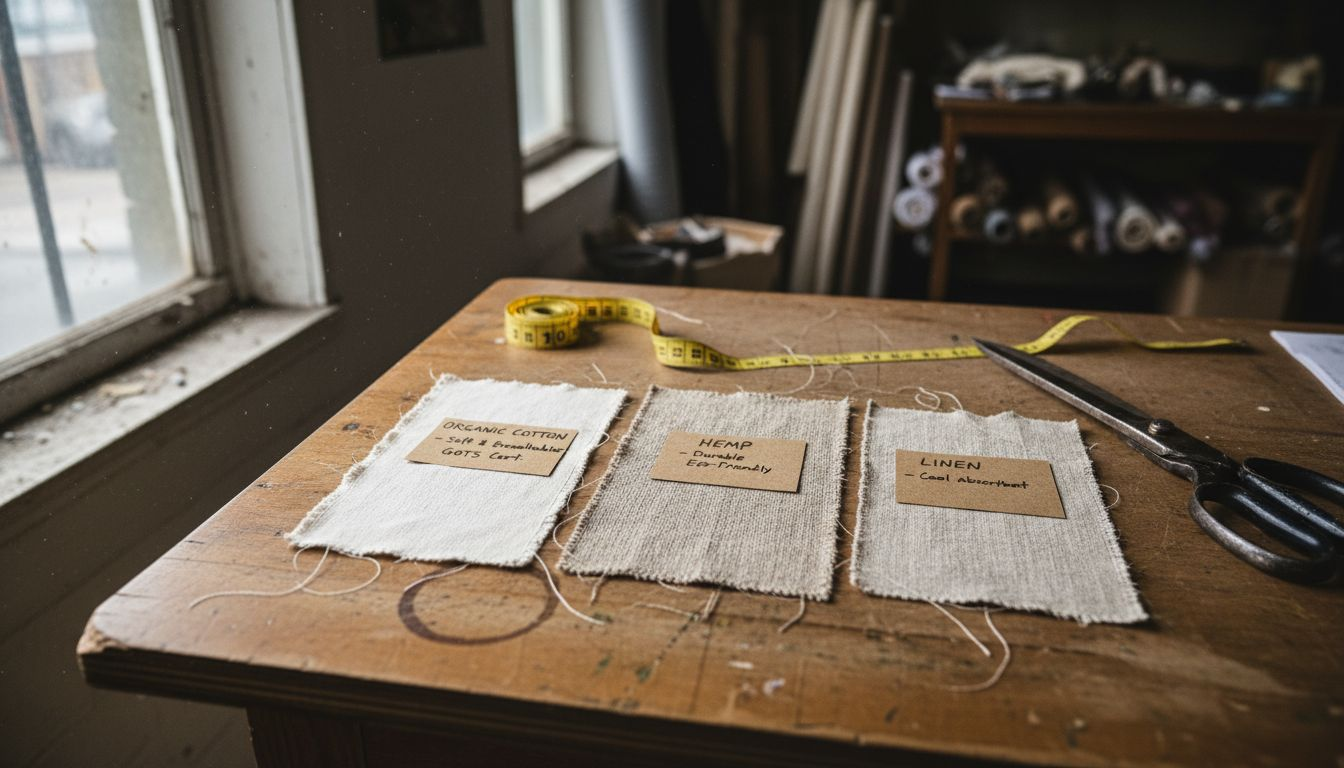
Beyond material composition, eco-friendly fabrics are evaluated through comprehensive lifecycle assessments that consider water usage, carbon emissions, chemical treatments, and biodegradability. This holistic approach ensures that sustainable materials deliver genuine environmental benefits rather than merely presenting superficial green credentials. Innovative textiles such as cork fabric, reclaimed ocean plastics, and agricultural waste-based materials showcase the fashion industry’s potential to reimagine resource utilisation and waste management.
Fabric Selection Expert: Research the complete production journey of materials, not just their end appearance.
Pro Tip: Prioritise quality and durability when selecting sustainable materials to ensure longer-lasting garments that reduce overall consumption.
Here’s a comparative overview of popular eco-friendly materials in sustainable fashion:
| Material | Sustainability Benefit | Production Notes | Durability |
|---|---|---|---|
| Organic Cotton | Low pesticide and water usage | Grown without harmful chemicals | Moderate |
| Hemp | Minimal water, no synthetic fertilisers | Naturally pest-resistant, fast growing | Highly robust |
| TENCEL™ Lyocell | Closed-loop, solvent recycling | Derived from wood pulp, low-impact process | Soft, strong |
| Recycled Polyester | Reduces plastic waste in textiles | Made from post-consumer plastics | Very strong |
| Bamboo Fabric | Low water use, fast-growing | Processing can vary in environmental impact | Soft, moderate |
Understanding Certifications and Standards
Sustainable fashion certifications represent critical mechanisms for ensuring transparency, accountability, and genuine environmental responsibility within the fashion industry. These standardised frameworks help consumers navigate the complex landscape of ethical production by providing independent verification of a brand’s sustainability claims.
Key international certifications play pivotal roles in establishing credibility and setting benchmarks for sustainable practices. Global Organic Textile Standard (GOTS) remains the world’s leading textile processing standard for organic fibres, encompassing environmental and social criteria. OEKO-TEX Standard 100 focuses on chemical safety, ensuring textiles are free from harmful substances. The Fairtrade Textile Standard addresses critical social dimensions, guaranteeing fair wages and safe working conditions for textile workers. Comprehensive sustainability standards evaluate multiple dimensions including water usage, carbon emissions, waste management, and worker welfare, preventing superficial greenwashing attempts.
Beyond individual certifications, emerging holistic frameworks like the Sustainable Apparel Coalition’s Higg Index provide sophisticated tools for measuring environmental and social impacts across entire supply chains. These advanced assessment methods enable brands to quantify their sustainability performance, identifying areas for improvement and promoting continuous ecological innovation. By integrating rigorous certification processes, the fashion industry can transform from a traditionally opaque sector into a transparent, accountable ecosystem committed to genuine environmental stewardship.
Certification Investigation Expert: Always cross-reference certification claims with official accreditation bodies to verify authenticity.
Pro Tip: Develop a critical eye for certification details, understanding that not all standards are created equal, and depth matters more than marketing claims.
Below is a quick-glance summary of major sustainable fashion certifications and what they assure:
| Certification | Focus Area | What It Assures |
|---|---|---|
| Global Organic Textile Standard (GOTS) | Organic fibres & social criteria | Organic content, safe processes, fair labour |
| OEKO-TEX Standard 100 | Chemical safety | No harmful substances in textiles |
| Fairtrade Textile Standard | Worker welfare | Fair wages and safe conditions |
| Higg Index | Environmental/social impact | Measures entire supply chain footprint |
Common Misconceptions in Ethical Fashion
Understanding sustainable fashion terminology requires dismantling prevalent myths that often mislead consumers about ethical clothing choices. Many individuals mistakenly believe that sustainable fashion is synonymous with sacrificing style, aesthetic appeal, or personal expression, when in reality, ethical fashion represents a sophisticated approach to conscious consumption.
One significant misconception is that sustainable fashion is exclusively expensive and accessible only to affluent consumers. Contrary to this belief, ethical fashion encompasses a wide spectrum of price points and strategies, including second-hand shopping, clothing repair, capsule wardrobes, and mindful purchasing of versatile, durable pieces. Another pervasive myth suggests that only brand-new, organic materials constitute sustainable fashion. Comprehensive research into fashion sustainability reveals that recycling, upcycling, and extending clothing lifecycles are equally crucial components of genuine environmental responsibility.
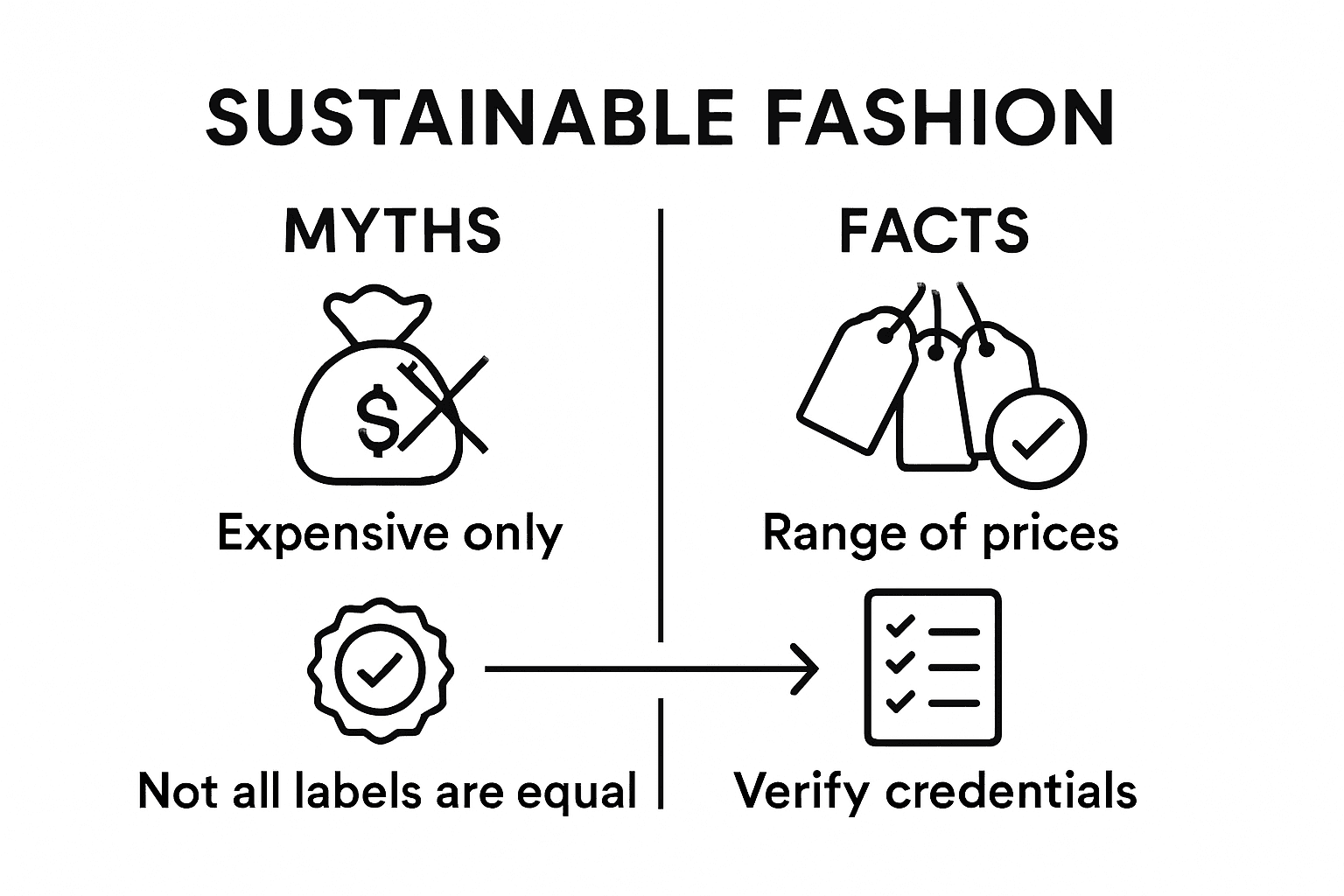
Furthermore, consumers often misunderstand the complexity of sustainability certifications. Many erroneously assume that a single certification guarantees comprehensive ethical production. In reality, true sustainability requires holistic evaluation across multiple dimensions: environmental impact, labour practices, material sourcing, waste management, and carbon footprint. Ethical fashion demands nuanced understanding beyond superficial marketing claims, challenging consumers to develop critical thinking skills and investigate production processes more deeply.
Ethical Fashion Detective: Always investigate beyond surface-level sustainability claims, asking detailed questions about production methods and corporate transparency.
Pro Tip: Develop a personal sustainability scorecard that evaluates clothing purchases across multiple ethical dimensions, not just a single environmental criterion.
Practical Implications for Conscious Shoppers
Navigating sustainable fashion choices requires strategic thinking and intentional purchasing practices that extend far beyond mere aesthetic considerations. Conscious shoppers must develop a holistic approach that evaluates clothing through multiple ethical lenses, transforming shopping from a transactional experience into a meaningful act of environmental stewardship.
Practical strategies for ethical consumption involve thorough material research and strategic wardrobe management. Textile investigation becomes crucial, with consumers learning to distinguish between genuinely sustainable fabrics and superficial marketing claims. Sustainable fabric technologies reveal that materials like organic cotton, hemp, and recycled polyester offer substantive environmental benefits. Key considerations include assessing fabric origin, production processes, water consumption, and potential for recycling or biodegradation. Conscious shoppers should prioritise versatile, durable pieces that transcend seasonal trends, effectively reducing overall clothing waste and promoting a more intentional relationship with personal fashion choices.
Beyond individual purchasing decisions, ethical fashion engagement requires broader systemic understanding. This means supporting brands with transparent supply chains, advocating for industry-wide sustainability standards, and recognising the interconnected nature of fashion’s environmental impact. Consumers can leverage their purchasing power by supporting smaller, purpose-driven brands, participating in clothing exchange programmes, and embracing repair and upcycling techniques that extend garment lifecycles.
Wardrobe Sustainability Expert: Develop a critical framework for evaluating clothing that goes beyond immediate aesthetic appeal.
Pro Tip: Create a personal ‘sustainability scorecard’ that rates potential purchases across environmental, social, and durability criteria before making buying decisions.
Embrace Clarity and Style with Truly Sustainable Accessories
Navigating the complex terminology of sustainable fashion can challenge even the most conscious shoppers. This article highlights common pain points such as understanding authentic eco-friendly materials, certifications, and the true meaning of ethical production. If you seek stylish, durable, and cruelty-free alternatives without compromising your values, exploring cork accessories offers a compelling solution. Cork embodies the principles of circular fashion and environmental responsibility discussed here, providing a renewable, vegan-friendly material with minimal ecological impact.
Discover how cork’s unique sustainability story aligns perfectly with your goals for transparency and social responsibility at The Cork Store. By choosing accessories crafted from cork, such as handbags, wallets, and backpacks, you actively support a movement beyond greenwashing, favouring genuine environmental stewardship. Start transforming your wardrobe today by visiting The Cork Store and embrace accessories that complement your ethical fashion journey.
Explore authentic sustainable fashion and make a thoughtful purchase now at The Cork Store.
Frequently Asked Questions
What is sustainable fashion?
Sustainable fashion encompasses clothing and accessories produced with minimal negative environmental impact, prioritising ethical labour practices and resource conservation throughout the garment’s lifecycle.
What are eco-friendly materials, and why are they important?
Eco-friendly materials are textiles that reduce environmental harm, such as organic cotton and TENCEL™ Lyocell. They are essential for promoting sustainability in fashion by minimising resource use and waste during production.
How can consumers identify genuine sustainable fashion brands?
Consumers can identify sustainable brands by researching their certifications (like GOTS or OEKO-TEX), understanding their supply chain transparency, and critically evaluating the authenticity of their sustainability claims.
What common misconceptions exist about sustainable fashion?
Common misconceptions include the belief that sustainable fashion is only for the wealthy or that it requires sacrificing style. In reality, sustainable options can be affordable and stylish, and ethical fashion extends beyond new organic materials to include recycling and upcycling.
Recommended
- The Essential Guide to Advantages of Sustainable Fashion – The Cork Store
- Understanding Sustainable Fashion Essentials for Eco-Conscious Living – The Cork Store
- 7 Key Sustainable Fashion Trends 2025 for Eco Shoppers – The Cork Store
- What Is Eco-Friendly Fashion? Complete Overview – The Cork Store
- The Essential Guide to Sustainability in Fashion