
Vegan Cork Backpacks UK: 3-5 Year Durability Guide 2026
Finding a vegan backpack that truly respects the planet is harder than it sounds. Many synthetic options marketed as eco-friendly release microplastics and lack genuine sustainability credentials. Cork offers a natural, renewable, and completely vegan alternative, yet navigating certifications, quality markers, and care routines can feel overwhelming. This guide empowers you to confidently select, maintain, and enjoy a stylish cork backpack that aligns with your ethical values and lasts for years.
Table of Contents
- Understanding Sustainable Cork Material
- Key Features to Assess in Vegan Cork Backpacks
- Verifying Ethical Sourcing and Certification
- Care and Maintenance Tips for Longevity
- Common Mistakes and Pitfalls to Avoid When Buying Cork Backpacks
- Design and Style Trends in Vegan Cork Backpacks
- Budgeting and Price Expectations for UK Vegan Cork Backpacks
- Discover Your Perfect Sustainable Backpack
- Frequently Asked Questions
Key Takeaways
| Point | Details |
|---|---|
| Cork is renewable and biodegradable | Harvested sustainably from cork oak bark without harming trees, mainly sourced from Portugal. |
| Certification verifies authenticity | Third-party eco-labels confirm ethical production and genuine cork material, protecting against greenwashing. |
| Natural properties support daily use | Cork backpacks are lightweight, water-resistant, and antimicrobial, making them highly functional. |
| Proper care extends lifespan significantly | Gentle cleaning and storage routines can keep your backpack in excellent condition for 3-5 years or more. |
| Beware of synthetic imposters | Check materials carefully; some vegan-labeled bags use plastic coatings or fake cork. |
Understanding Sustainable Cork Material
Cork comes from the bark of cork oak trees, harvested every nine years without cutting or damaging the tree itself. This cyclical process allows the tree to regenerate bark naturally, making cork one of the most renewable materials available. Cork bark harvesting is sustainable and enhances forest carbon absorption, as actively managed cork forests sequester significantly more CO2 than untouched woodlands. Portugal produces the majority of the world’s cork and dominates certified sustainable cork supplies reaching the UK market.
Cork is inherently biodegradable, renewable, and entirely plant-based, positioning it as an ideal vegan alternative to leather. Beyond environmental credentials, cork harvesting supports rural communities and protects biodiversity in Mediterranean ecosystems. These forests provide habitats for endangered species and maintain ecological balance. When you choose cork, you invest in a material that combines environmental responsibility with socio-economic benefits.
For UK consumers seeking sustainable cork benefits, understanding this origin story builds confidence in your purchase. Cork’s natural lifecycle means minimal processing, no animal exploitation, and a carbon footprint far lower than synthetic alternatives.
Key sustainability features of cork:
- Harvested without harming trees, allowing continuous regeneration
- Biodegradable and compostable at end of life
- Requires minimal chemical processing compared to synthetic materials
- Supports biodiversity and carbon sequestration in cork oak forests
- Provides livelihoods for rural communities in Portugal and Spain
Pro Tip: Ask retailers about the geographic origin of their cork. Portuguese cork typically comes with the strongest sustainability certifications and quality assurance.
Key Features to Assess in Vegan Cork Backpacks
When shopping for a cork backpack, start by examining the material’s natural properties. Authentic cork backpacks are remarkably lightweight, often weighing under 600 grams, yet remain durable enough for daily use. Cork backpacks are naturally lightweight, water-resistant, antimicrobial, and stain-resistant, making them practical for British weather and urban commuting. The material’s cellular structure repels moisture without synthetic coatings, and its antimicrobial qualities naturally resist odour buildup.
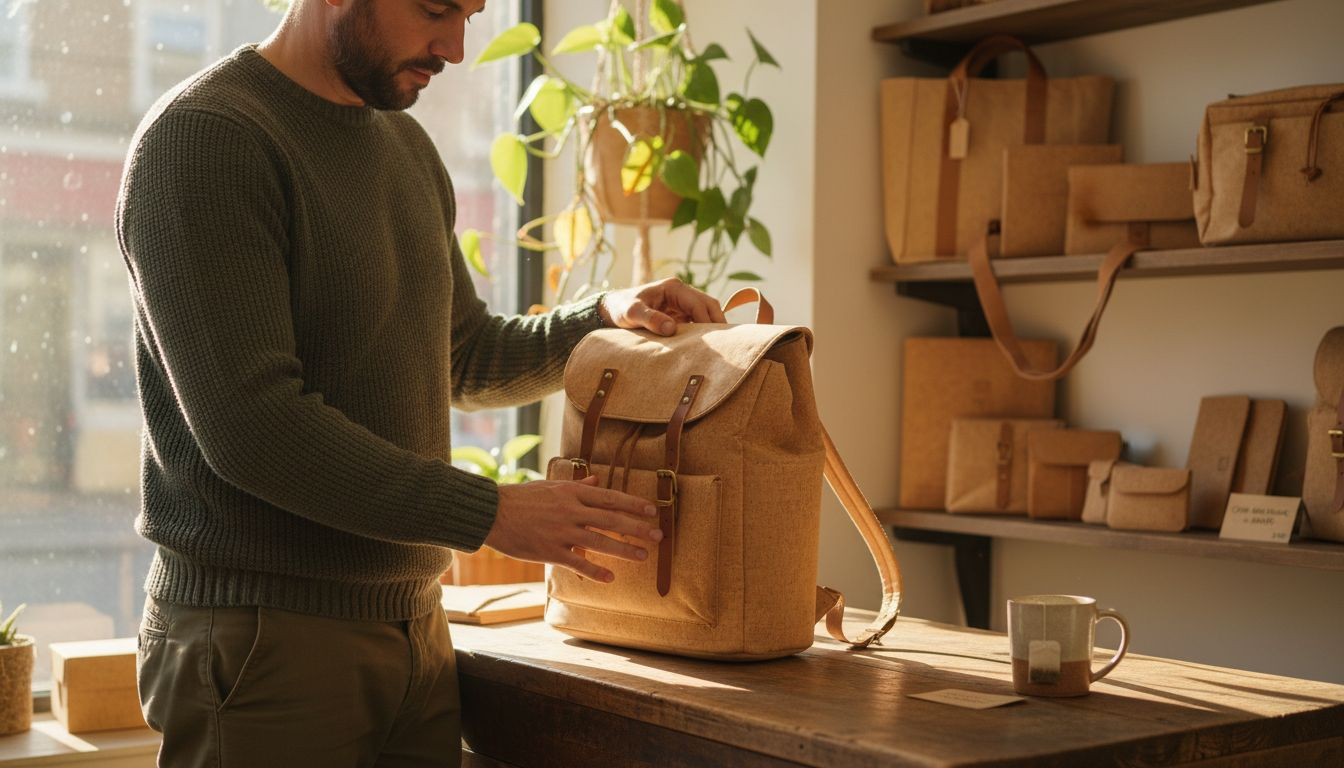
Certifications matter significantly. Look for transparent labeling that confirms minimal synthetic coatings and verifies cork origin. Quality manufacturers provide clear information about where their cork is sourced and how it’s processed. A warranty of at least two years signals manufacturer confidence in durability and construction quality. This warranty coverage protects your investment and indicates the brand stands behind its product.
Construction quality separates excellent backpacks from mediocre ones. Inspect seams for tight, even stitching with no loose threads. Zippers should glide smoothly without snagging, preferably with metal rather than plastic components. Functional design features like padded straps, interior pockets, and secure closures enhance daily usability. To verify authentic cork, check the texture closely. Real cork has visible grain patterns and a slightly soft, flexible feel, unlike rigid plastic imitations.
Essential quality indicators:
- Weight under 600g for comfortable daily wear
- Natural water repellency without heavy plastic coatings
- Even, tight stitching along all seams and stress points
- Smooth, durable metal zippers
- Visible natural cork grain and texture
| Feature | What to Look For | Red Flags |
|---|---|---|
| Material Weight | Under 600g, feels light but sturdy | Unusually heavy, feels plastic |
| Water Resistance | Natural bead formation on surface | Requires synthetic spray treatments |
| Warranty | Minimum 2 years coverage | No warranty or less than 1 year |
| Cork Texture | Visible grain, slightly soft | Uniform, hard plastic feel |
Pro Tip: Gently squeeze the cork material. Authentic cork compresses slightly and springs back, while synthetic substitutes feel rigid and unyielding.
Verifying Ethical Sourcing and Certification
Third-party eco-certifications provide the most reliable verification of sustainable cork harvesting and ethical production practices. Look for labels from recognized organizations that audit supply chains and manufacturing processes. Certified sustainable cork forests protect biodiversity and support fair trade, ensuring your purchase contributes to positive environmental and social outcomes. Portuguese suppliers generally adhere to stringent international sustainability standards, including Forest Stewardship Council guidelines and fair trade principles.
Material transparency separates trustworthy brands from those engaging in greenwashing. Ethical companies openly disclose cork origin, processing methods, and factory locations. They provide detailed product descriptions explaining how cork is harvested, who manufactures the backpacks, and what additional materials are used in construction. This transparency builds trust and allows informed purchasing decisions.
Brand return policies and warranties reflect ethical business practices. Generous return windows and comprehensive warranties demonstrate confidence in product quality and customer satisfaction. Before purchasing, review these policies carefully. Understanding your rights protects you from disappointment and ensures accountability. Remember that not all vegan-labeled bags guarantee authentic cork or genuine sustainability. Some manufacturers apply “vegan” labels to synthetic materials that harm the environment through microplastic pollution and fossil fuel dependence.
Certification and transparency checklist:
- Third-party eco-certifications from recognized auditing bodies
- Clear disclosure of cork geographic origin
- Detailed manufacturing process descriptions
- Transparent supply chain information
- Fair trade or ethical labor certifications
- Minimum 30-day return policy
- Comprehensive warranty coverage
For UK shoppers, researching ethical cork backpack brands helps identify retailers committed to genuine sustainability. Cross-reference brand claims with independent reviews and certification databases. When in doubt, contact the retailer directly with questions about sourcing and production. Reputable companies welcome inquiries and provide detailed answers. For broader context on ethical production standards, explore resources that explain certification frameworks and supply chain accountability.
Care and Maintenance Tips for Longevity
Proper maintenance preserves your cork backpack’s natural properties and extends its functional lifespan significantly. Proper care can extend the lifespan of cork backpacks to 3-5 years or more, transforming your purchase into a long-term investment. Clean your backpack regularly using mild detergent mixed with lukewarm water and a soft cloth or sponge. Gently wipe the cork surface without scrubbing aggressively, as harsh abrasion can damage the material’s cellular structure.
Avoid exposing your backpack to prolonged direct sunlight, which can dry out the cork and cause cracking. While cork naturally resists moisture, excessive heat accelerates degradation. Store your backpack in cool, dry conditions when not in use, preferably hanging or lying flat to maintain its shape. Never cram it into tight spaces or place heavy objects on top during storage.
Manufacturer instructions provide tailored guidance specific to your backpack’s construction. Follow these recommendations closely to avoid accidental damage from incompatible cleaning products or storage methods. Establishing regular care routines, such as monthly gentle cleaning and quarterly thorough inspections, significantly prolongs backpack usability and appearance.
Step-by-step care routine:
- Mix mild detergent with lukewarm water in a small bowl
- Dip a soft cloth into the solution and wring out excess water
- Gently wipe the cork surface in circular motions
- Rinse the cloth with clean water and wipe away soap residue
- Allow the backpack to air dry completely before storage
- Apply cork-specific conditioner every 6 months if recommended by manufacturer
- Inspect zippers, straps, and seams quarterly for early signs of wear
For comprehensive natural cork backpack care tips, consult resources that detail seasonal maintenance adjustments and troubleshooting common issues. Avoid using harsh chemicals, bleach, or alcohol-based cleaners, as these strip cork’s natural oils and compromise water resistance.
Pro Tip: Keep a dedicated soft cloth for cork cleaning separate from other household cleaning materials to prevent cross-contamination with harsh chemicals.
Common Mistakes and Pitfalls to Avoid When Buying Cork Backpacks
One of the most frequent buyer errors is purchasing fake cork backpacks that use heavy plastic coatings or entirely synthetic materials. Beware of synthetic or plastic-coated bags misrepresented as cork. These imposters lack cork’s natural benefits and often deteriorate quickly. Always examine product descriptions carefully and request material composition details if information seems vague or incomplete.
Neglecting recommended care routines accelerates wear and drastically reduces your backpack’s lifespan. Skipping regular cleaning allows dirt to embed in cork’s porous surface, while improper storage causes shape distortion. Treat care instructions as essential maintenance, not optional suggestions. Similarly, overlooking warranty terms and return policies before purchase removes important consumer protections. Review these policies thoroughly and save documentation for future reference.
Impulse buying often leads to regret in sustainable fashion purchases. Resist pressure to buy immediately without research. Instead, invest time comparing well-reviewed, certified products from reputable retailers. Read customer reviews focusing on long-term durability and manufacturer responsiveness to issues. Check for clear, honest product descriptions that specify exact materials used, including hardware, lining, and strap components.
Common pitfalls to avoid:
- Accepting vague product descriptions without material specifics
- Ignoring the absence of certifications or transparency information
- Choosing the cheapest option without considering quality indicators
- Overlooking return policy restrictions or warranty exclusions
- Failing to ask retailers direct questions when uncertain
- Dismissing maintenance instructions as unnecessary
- Buying from unknown sellers without verified reviews
For those concerned about durability mistakes to avoid, understanding that cheap prices often signal compromised quality helps set realistic expectations. Quality cork backpacks require skilled craftsmanship and genuine materials, which have inherent costs. When sellers offer prices significantly below market average, question what corners have been cut.
Design and Style Trends in Vegan Cork Backpacks
Cork’s natural grain patterns ensure each backpack carries unique visual character, making your purchase genuinely one of a kind. No two pieces of cork look identical, giving your accessory an artisanal quality impossible to replicate in mass-produced synthetic bags. Cork backpacks offer unique, one-of-a-kind textures with various styles from minimalist to artistic designs. This natural variation appeals to UK consumers seeking distinctive accessories that stand apart from conventional fashion.
Current style options span from minimalist everyday backpacks with clean lines to laser-cut designs featuring geometric patterns or nature-inspired motifs. Some models function as multi-wear pieces, converting from backpack to shoulder bag or crossbody through adjustable straps and versatile hardware. This flexibility maximizes wardrobe integration and practical utility across different occasions.
Cork’s natural textures complement contemporary UK fashion trends emphasizing sustainability and authenticity. The material’s warm, organic appearance pairs effortlessly with both casual and semi-formal outfits. Earth tones dominate, though some manufacturers offer dyed cork in darker shades while maintaining eco-friendly production processes. When selecting your backpack, balance aesthetic preferences with lifestyle needs. Consider how often you’ll wear it, what you’ll carry, and which style best suits your daily activities.
Popular cork backpack styles:
- Minimalist everyday designs with simple silhouettes
- Laser-cut artistic patterns for statement pieces
- Convertible multi-wear bags with adjustable straps
- Roll-top backpacks offering expandable storage
- Structured professional styles suitable for work commutes
| Style Category | Best For | Typical Features |
|---|---|---|
| Minimalist Daily | Urban commuting, casual wear | Clean lines, neutral tones, lightweight |
| Artistic/Laser-cut | Statement fashion, weekend outings | Geometric patterns, visual interest |
| Convertible Multi-wear | Versatile wardrobe integration | Adjustable straps, multiple carry options |
| Professional Structured | Work environments, formal occasions | Defined shape, interior organization |
For exploring cork backpack style options, browse collections that showcase the material’s versatility and fashion potential. Consider your personal style identity and how a cork backpack can enhance rather than compromise your aesthetic expression.
Budgeting and Price Expectations for UK Vegan Cork Backpacks
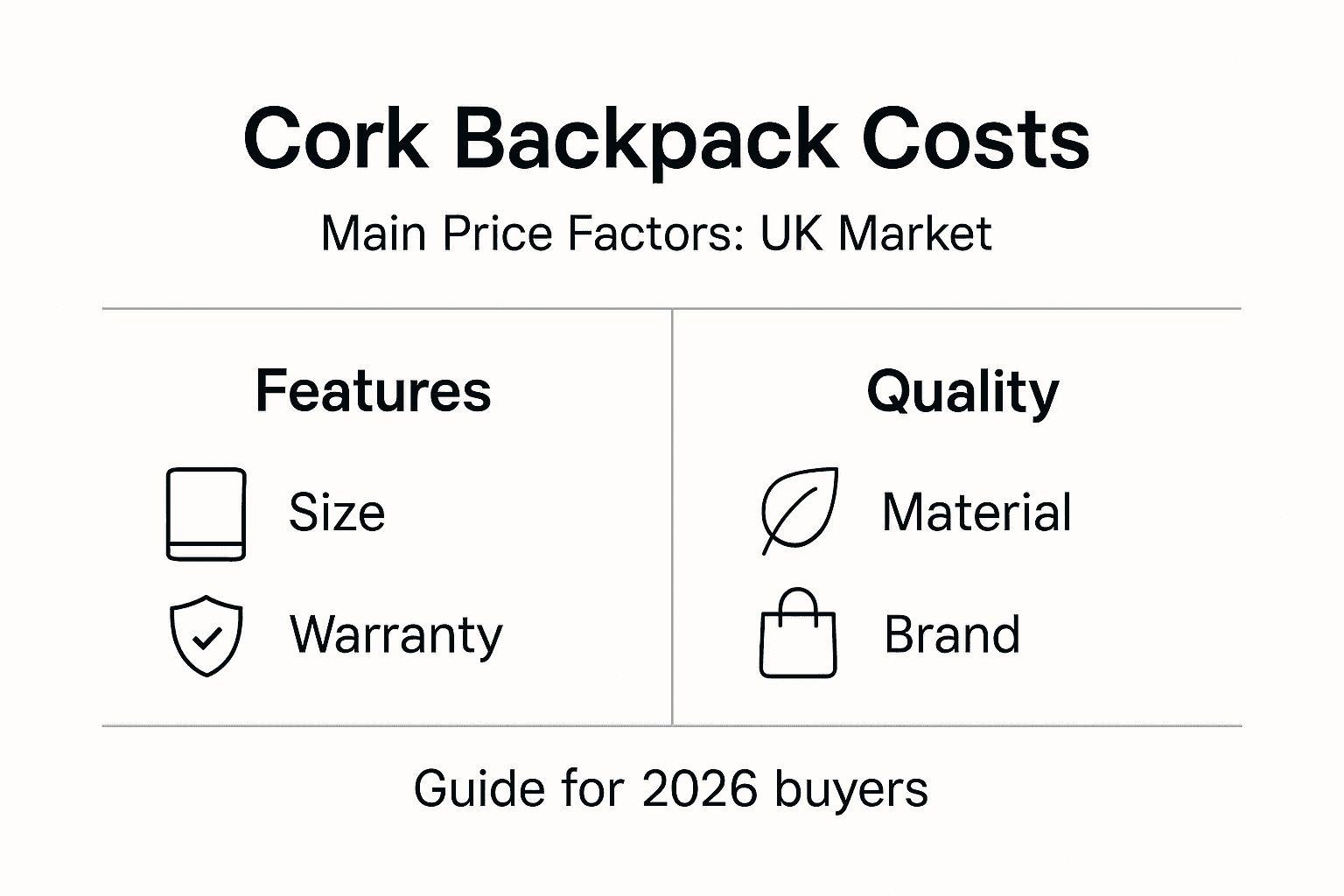
Understanding realistic price ranges helps set appropriate expectations for quality cork backpacks in the UK market. Prices range from approximately £99 to £265 based on brand, size, and design; higher price often correlates with better warranty and craftsmanship. Entry-level options around £99 typically offer basic designs and shorter warranties, while premium models at £265 include superior construction, extended warranties, and more complex designs.
Several factors influence pricing beyond base material costs. Size significantly impacts price, with larger backpacks requiring more cork and construction time. Style complexity, including laser-cutting, multiple compartments, or convertible features, adds manufacturing expenses. Brand reputation reflects investment in quality control, ethical sourcing verification, and customer service infrastructure. Warranty length directly correlates with manufacturer confidence and typically indicates higher-quality materials and construction.
Consider total cost of ownership when evaluating prices. A £265 backpack with a five-year warranty and minimal care requirements may offer better long-term value than a £99 option requiring frequent replacement. Factor in care product costs, though cork requires less maintenance than many alternatives. Cheap options often compromise durability, authentic materials, or ethical sourcing, undermining your sustainability goals.
| Price Range | Typical Features | Expected Warranty |
|---|---|---|
| £99 - £140 | Basic designs, smaller sizes | 1-2 years |
| £141 - £200 | Mid-range quality, varied styles | 2-3 years |
| £201 - £265 | Premium construction, complex designs | 3-5 years |
Price influencing factors:
- Backpack size and cork material quantity
- Design complexity and additional features
- Brand reputation and market positioning
- Warranty length and coverage comprehensiveness
- Hardware quality (metal vs plastic components)
- Country of manufacture and labor standards
For detailed price comparison of cork backpacks, review side-by-side analyses that break down specifications and value propositions. Budget realistically for quality, remembering that sustainable fashion investments pay dividends through longevity and reduced environmental impact.
Discover Your Perfect Sustainable Backpack
Armed with knowledge about cork sustainability, quality indicators, and care routines, you’re ready to make a confident, eco-conscious choice. Cork backpacks combine environmental responsibility with genuine style and functionality, offering a practical alternative to synthetic materials that harm the planet.
At The Cork Store, we curate collections of authentic vegan cork backpacks that meet rigorous sustainability and quality standards. Each piece showcases cork’s natural beauty while delivering the durability and functionality UK consumers demand. Our transparent sourcing, comprehensive warranties, and detailed care guidance ensure your purchase supports both your values and your lifestyle. Explore our range to find a backpack that reflects your commitment to ethical fashion without compromising on style or practicality. Join the growing community of eco-conscious individuals choosing cork for its unmatched combination of sustainability, uniqueness, and everyday performance.
Frequently Asked Questions
How long do cork backpacks typically last with regular use?
With proper care, quality cork backpacks last 3-5 years or longer, often outlasting synthetic alternatives while maintaining appearance and functionality throughout their lifespan.
Can cork backpacks handle British weather conditions?
Yes, cork’s natural water resistance protects contents during light rain, though prolonged exposure to heavy downpours requires additional protection like a rain cover.
Are all vegan backpacks made from sustainable materials?
No, many vegan backpacks use synthetic plastics that contribute to microplastic pollution; cork offers a genuinely sustainable, plant-based alternative with minimal environmental impact.
How do I verify a cork backpack is authentically made from real cork?
Check for visible natural grain patterns, slight flexibility when squeezed, and transparency about Portuguese sourcing; real cork feels softer than rigid plastic substitutes.
What’s the best way to clean stubborn stains from cork?
Use a paste of mild detergent and water applied gently with a soft cloth, then rinse thoroughly and air dry completely before storage.