

What is a minimalist wallet? A practical guide
TL;DR:
- A minimalist wallet is a slim, purposefully designed accessory that carries only 3 to 8 essential cards and folded cash, reducing bulk and improving comfort. Its core features include a thin profile, controlled capacity, RFID-blocking technology, and quick access, offering ergonomic and security benefits. Choosing the right wallet involves auditing your daily needs, selecting suitable materials like leather or cork, and prioritizing ease of card retrieval to live lighter and more organized.
A minimalist wallet is a slim, intentionally designed accessory built to carry only the essentials: a handful of cards and a small amount of folded cash, nothing more. Unlike a traditional billfold stuffed with receipts, loyalty cards, and forgotten notes, a compact carry wallet strips everything back to what you actually use. Typical capacity sits between 3 and 8 cards with a loaded thickness under 1 cm, making it genuinely pocketable. Brands like Bellroy, SlimFold, and Ridge have built entire product lines around this philosophy, and materials now range from full-grain leather to aluminium, titanium, fabric, and cork.
What is a minimalist wallet and how does it differ?
A minimalist wallet is defined by restraint. Where a traditional bifold can balloon to 2 or 3 cm thick when loaded, a slim carry wallet is engineered to stay flat whether you carry three cards or eight. The design goal is a loaded thickness under 1 cm, which is the threshold at which a wallet stops creating visible pocket bulge and starts sitting comfortably in a front trouser pocket.
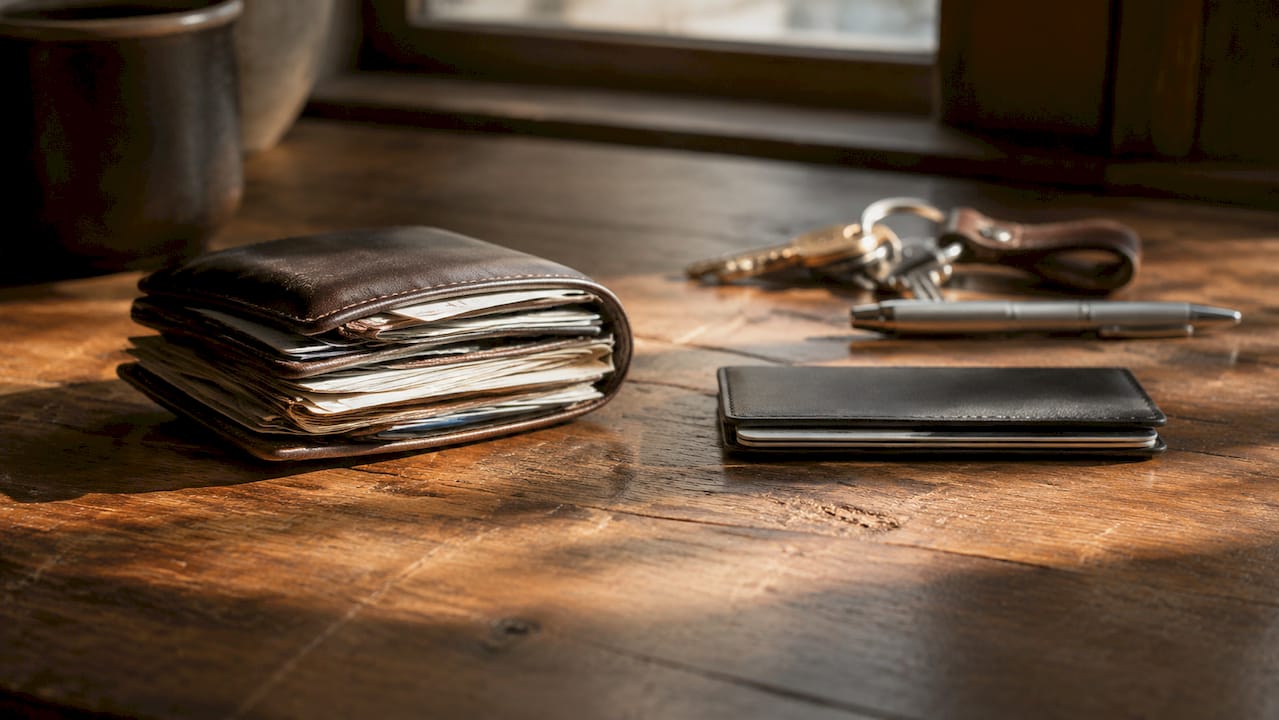
The distinction from a traditional wallet goes beyond size. A standard billfold encourages accumulation: there are slots for a dozen cards, a full-length note section, and often a coin pouch. A minimalist wallet removes those affordances deliberately. Fewer slots mean fewer cards, which means you carry only what you need. This is a design philosophy, not just a size reduction.
The term “slim wallet” is used interchangeably in retail, though “minimalist wallet” more accurately captures the intent behind the design. Bellroy, for instance, markets its Note Sleeve as a slim wallet but positions it explicitly around the idea of carrying less. SlimFold takes the same approach with its Micro Soft Shell, which weighs under 20 grams. The philosophy is consistent: carry less, access faster, live lighter.
What features characterise a minimalist wallet?
The features that define a compact carry wallet fall into a few clear categories. Understanding them before you buy saves you from purchasing something that looks minimal but functions like a traditional wallet in disguise.
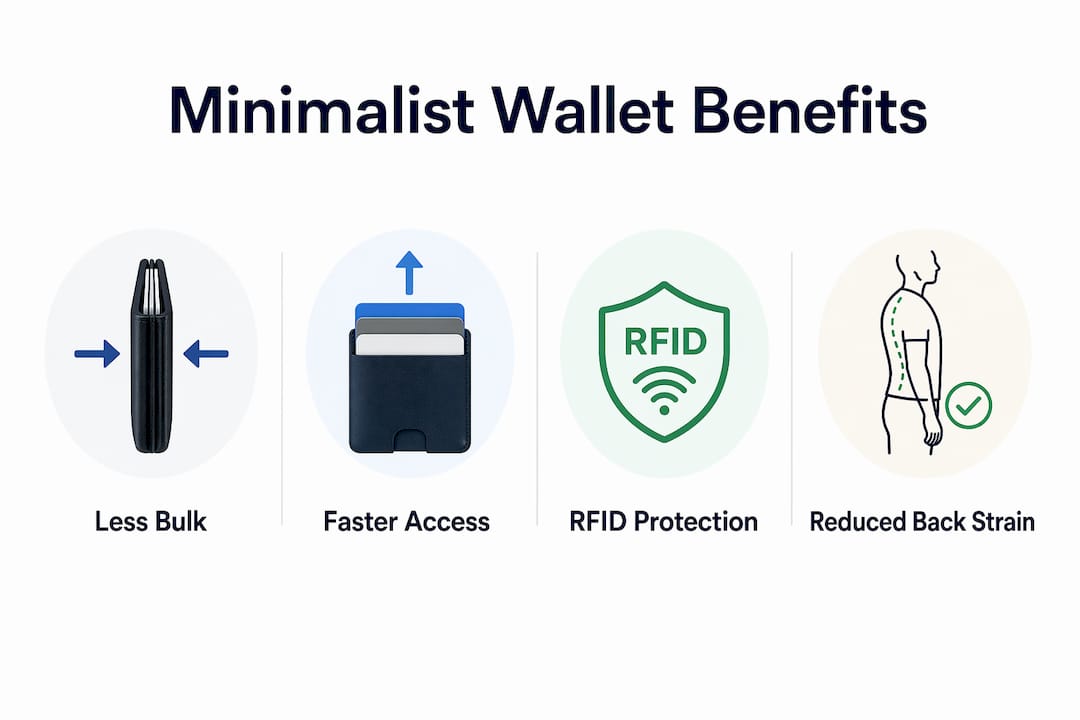
- Slim profile. The defining physical feature. A well-designed minimalist wallet stays under 1 cm when loaded to its intended capacity. Beyond that threshold, the ergonomic and aesthetic benefits disappear.
- Controlled card capacity. Most designs hold between 3 and 8 cards. Some metal wallets, like those from Ridge, use expandable plates that accommodate up to 12, though that stretches the minimalist definition considerably.
- Material choice. Full-grain leather, aluminium, titanium, fabric, and cork are the most common options. Each has a different weight, feel, and lifespan. Full-grain leather offers better durability and flexibility over time compared to metal, which can feel cold and heavy against the skin.
- RFID-blocking technology. RFID protection operates at 13.56 MHz, the frequency used by most contactless credit cards and ID documents. It prevents unauthorised wireless scanning without adding bulk.
- Quick card access. A thumb slot, fan-out mechanism, or pull tab allows you to retrieve a specific card in seconds. This is what separates a genuinely useful slim wallet from one that just looks good in product photos.
- Elastic bands. Common in fabric and hybrid wallets. Elastic components inevitably loosen over time and are typically the first structural point of failure. If longevity matters to you, prioritise wallets with stitched or rigid structures instead.
Pro Tip: Before buying, check whether the wallet has a dedicated cash pocket or relies on folding notes around the card stack. A separate note section keeps cards accessible and prevents the wallet from thickening unevenly.
What are the benefits of using a minimalist wallet?
The benefits of minimalist wallets extend well beyond aesthetics. The most immediate is ergonomic. Switching to front-pocket carry improves pelvic alignment and reduces pressure on the sciatic nerve, which is the root cause of the lower back pain that chronic back-pocket wallet users often develop without connecting it to their wallet at all. Sitting on a 2 cm billfold for eight hours a day creates a measurable postural imbalance. A slim front-pocket wallet eliminates that entirely.
“Reducing what you carry physically can lead to reduced mental clutter and better daily focus.” This insight, supported by research cited by the American Psychological Association, explains why so many people report feeling lighter and more organised after switching. The wallet is a proxy for broader decluttering habits.
The security benefit is concrete and underappreciated. RFID-blocking technology in modern slim wallets prevents contactless card skimming, a form of digital theft that requires no physical contact with your wallet. For anyone using a contactless Visa, Mastercard, or Oyster card, this protection is genuinely useful rather than a marketing feature.
Practically, a decluttered wallet speeds up every transaction. When you carry only the cards you use daily, you stop rifling through a stack of eight to find your debit card at the checkout. The psychological benefit of reduced cognitive load is real: fewer choices in your wallet means one less micro-decision every time you pay. Over the course of a day, those seconds and that mental friction add up.
How to choose the right minimalist wallet for your lifestyle
Choosing a slim carry wallet well requires honesty about your actual habits, not your aspirational ones. Follow this process before spending anything.
- Conduct a carry audit. Empty your current wallet completely. Sort everything into two piles: items you have used in the past 30 days, and everything else. Retain only the essentials used within the past 30 days and discard the rest. Most people discover they carry 10 to 15 cards but use only 3 or 4 regularly.
- Count your actual daily cards. This number determines the wallet capacity you need. If you use 4 cards daily, a 6-card wallet gives you a sensible margin without encouraging overfilling.
- Choose your material. Leather ages well and feels warm in the hand. Metal protects cards from bending but adds weight. Cork is lightweight, water-resistant, and vegan, making it a strong choice for anyone prioritising sustainability. You can explore cork wallet benefits in detail if that material appeals to you.
- Assess access design. A wallet that is too tight to retrieve cards from quickly defeats the purpose. A good minimalist wallet balances tolerance for movement, neither gripping cards so firmly that extraction requires two hands, nor so loosely that cards fall out.
- Decide on RFID protection. If you use contactless payment cards or an NFC-enabled ID, built-in RFID blocking is worth prioritising. Most quality slim wallets include it as standard.
- Consider cash handling. If you regularly carry notes, check that the wallet has a dedicated folded-cash section rather than relying on wrapping notes around the card block.
Pro Tip: If you are torn between two capacity options, choose the smaller one. Wallets that are overloaded beyond their design capacity distort in shape and bend card edges, which makes them harder to use and shortens their lifespan.
Minimalist wallet vs traditional wallet: materials and styles compared
The minimalist wallet vs traditional wallet debate often comes down to what you are willing to leave behind. Here is how the main material and style options compare.
| Wallet type | Capacity | Thickness (loaded) | Durability | Best for |
|---|---|---|---|---|
| Full-grain leather slim | 4 to 8 cards | Under 1 cm | High, improves with age | Everyday carry, classic style |
| Metal (aluminium/titanium) | 6 to 12 cards | 0.8 to 1.2 cm | High, but cold and heavy | Card protection, travel |
| Cork slim | 3 to 6 cards | Under 0.8 cm | Good, water-resistant | Eco-conscious, lightweight carry |
| Elastic/fabric | 4 to 8 cards | Variable | Lower, elastic degrades | Budget-conscious buyers |
| Traditional bifold | 8 to 16 cards | 2 to 3 cm | Variable | Those who carry many cards |
A few points worth noting beyond the table. Metal wallets from brands like Ridge protect cards from physical bending, which matters if you carry cards in a bag rather than a pocket. However, metal adds weight and coldness against skin, which makes them less comfortable for front-pocket carry over a full day. Cork wallets occupy an interesting position: they are among the lightest options available, naturally water-resistant, and entirely vegan, which makes them a strong fit for anyone exploring eco-friendly wallet choices.
Elastic and fabric wallets are the most affordable entry point into minimalist carry, but their lifespan is the shortest. The elastic inevitably loosens, and once it does, the wallet loses its structure entirely. For a longer-term investment, leather or cork are the more reliable choices.
Key takeaways
A minimalist wallet works because it forces you to carry only what you use, which reduces bulk, back strain, and daily friction in equal measure.
| Point | Details |
|---|---|
| Defined by restraint | A minimalist wallet holds 3 to 8 cards at under 1 cm loaded thickness, by design. |
| Ergonomic advantage | Front-pocket carry reduces sciatic nerve pressure and prevents chronic lower back pain. |
| RFID protection matters | Built-in blocking at 13.56 MHz prevents contactless card skimming without adding bulk. |
| Audit before you buy | Sort your current wallet and retain only cards used in the past 30 days before choosing a capacity. |
| Material shapes experience | Cork and leather outperform elastic for longevity; metal adds protection but weight. |
Why I think most people buy the wrong slim wallet
I have tried most of the popular slim wallet formats over the years, and the single most common mistake I see is buying for aspiration rather than reality. Someone carries eight cards daily, buys a four-card wallet because they intend to cut down, and then spends a week cramming cards in until the stitching starts to strain. The wallet gets blamed. The habit never changes.
The carry audit is not optional. It is the entire point. Until you physically empty your wallet and count what you actually reach for each day, you are guessing. And guessing leads to buying a wallet that is either too small to be useful or large enough to recreate the bulk you were trying to escape.
The other thing I have learned is that access speed matters more than most buyers realise. A minimalist wallet should prioritise efficient access to the cards you use most, not just slim dimensions. A wallet that looks perfect in a flat-lay photograph but requires two hands and thirty seconds to retrieve your debit card is not a minimalist wallet. It is a frustrating one.
Cork has genuinely surprised me as a material. I expected it to feel fragile or novelty-ish, but a well-made cork wallet is light, warm to the touch, and holds its shape well. For anyone who cares about sustainability and wants something that does not look like every other slim wallet on the market, it is worth serious consideration. You can read more about organising with cork wallets if you want a practical sense of how they fit into daily life.
— Aaron
Explore eco-friendly minimalist wallets from Thecorkstore
If you have done your carry audit and you are ready to make the switch, Thecorkstore offers a curated range of cork wallets that sit at the intersection of slim design, durability, and genuine sustainability. Cork is naturally water-resistant, entirely vegan, and lighter than leather or metal, making it one of the most practical materials for everyday carry.
The All-Natural Cork Wallet Gift Set is a particularly strong starting point, whether you are buying for yourself or looking for a thoughtful gift for someone simplifying their lifestyle. For a broader selection of vegan cork accessories, the cork gift collection covers everything from card holders to full purses, all made without animal products and designed to last.
FAQ
What is a minimalist wallet used for?
A minimalist wallet is designed to carry only your daily essentials: typically 3 to 8 cards and a small amount of folded cash. It replaces a traditional bulky billfold with a slim, front-pocket-friendly alternative that reduces bulk and speeds up access.
How many cards can a minimalist wallet hold?
Most minimalist wallets hold between 3 and 8 cards, with a loaded thickness under 1 cm. Metal options like those from Ridge can hold up to 12, though this pushes the boundaries of what genuinely qualifies as minimalist carry.
Do minimalist wallets block RFID?
Most modern minimalist wallets include RFID-blocking technology operating at 13.56 MHz, the frequency used by contactless credit cards and ID documents. This prevents unauthorised wireless scanning without adding any noticeable thickness.
Is cork a good material for a minimalist wallet?
Cork is lightweight, naturally water-resistant, and entirely vegan, making it one of the most practical and sustainable materials for a slim wallet. It holds its shape well and is a strong alternative to leather or metal for eco-conscious buyers.
How do I know which minimalist wallet is right for me?
Start by auditing your current wallet and counting only the cards you have used in the past 30 days. That number determines the capacity you need. Then choose a material based on your priorities: leather for longevity, cork for sustainability and lightness, or metal for card protection during travel.