
What Is Natural Cork? Sustainable Style for All
Finding truly sustainable materials can be challenging when you care about both style and the planet. For fashion lovers who refuse to compromise on ethics, natural cork stands out as a cruelty-free choice with genuine environmental benefits. Grown in the Mediterranean region, cork is a renewable material harvested without harming trees, offering stylish durability that aligns perfectly with vegan values and an eco-conscious wardrobe.
Table of Contents
- Defining Natural Cork and Its Origins
- Key Characteristics and Unique Qualities
- Harvesting Methods and Sustainability Practices
- Natural Cork in Fashion and Daily Life
- Comparing Cork With Other Vegan Materials
Key Takeaways
| Point | Details |
|---|---|
| Natural Cork is Sustainable | Harvested from the bark of the cork oak tree, it is a renewable, cyclic process that does not harm the tree. |
| Durable and Performance-Driven | Cork accessories last over 20 years, developing character with age while remaining lightweight and water-resistant. |
| Environmental and Social Impact | Choosing cork supports forest conservation, local economies, and protects biodiversity in the Mediterranean region. |
| Cork vs. Synthetic Alternatives | Cork is biodegradable and avoids the environmental issues associated with synthetic options, making it a truly sustainable choice. |
Defining Natural Cork and Its Origins
Cork isn’t just a trendy material—it’s a natural substance with thousands of years of history. Natural cork originates from the outer bark of the cork oak tree, scientifically known as Quercus suber, a species native to the Mediterranean region. Understanding where cork comes from helps explain why it’s genuinely sustainable.
What Makes Cork Naturally Unique
The cork oak tree produces a thick, fibrous bark layer that can be harvested without harming the tree. Unlike logging, cork harvesting is a cyclical, renewable process. The tree regenerates its bark approximately every 9 to 12 years, meaning the same tree can be harvested repeatedly throughout its 200-year lifespan.
The biological formation of cork involves a specialised cellular structure. Cork consists of millions of tiny, hollow cells filled with air, creating its signature lightness and insulating properties. This natural architecture gives cork its distinctive cushioning feel—something synthetic materials struggle to replicate authentically.
Geographic Origins and Cultural Heritage
Cork oak forests thrive primarily in the Iberian Peninsula, particularly in Portugal and Spain, though smaller populations exist across Mediterranean regions. Portugal alone produces over half the world’s cork supply, making it central to cork’s global story.
These forests aren’t merely industrial sites. They represent ancient ecosystems supporting diverse wildlife, traditional communities, and regional economies that have depended on cork for centuries. The cultural significance runs deep in Mediterranean countries where cork harvesting remains a respected craft.
Key characteristics of natural cork:
- Completely renewable—trees aren’t cut down, only their bark is harvested
- Biodegradable and compostable at the end of its life
- Naturally hypoallergenic and antimicrobial
- Lightweight yet durable across decades of use
- Develops character and patina as it ages
Why It Matters for Your Style
When you choose cork accessories, you’re not just selecting a material—you’re supporting sustainable forestry practices that preserve Mediterranean ecosystems. Cork production generates no toxic waste and requires minimal water compared to synthetic alternatives.
Natural cork offers genuine sustainability without compromise—it’s a material that gets better with time whilst respecting the planet.
This makes cork particularly meaningful for anyone seeking truly ethical fashion. Your cork wallet or handbag carries the story of forests that have stood for centuries, harvested responsibly by communities committed to conservation.
Pro tip: When evaluating cork products, look for items from brands sourcing directly from established Portuguese or Spanish cork forests—this ensures you’re supporting authentic, long-standing sustainable practices rather than newer ventures with unproven environmental credentials.
Key Characteristics and Unique Qualities
Cork’s appeal goes far beyond its trendy aesthetic. The material possesses genuine physical properties that make it one of nature’s most functional substances. These qualities stem from cork’s unique cellular composition and chemical structure, which determine everything from durability to comfort.

The Science Behind Cork’s Strength
Cork’s foundation lies in a compound called suberin, a waxy substance that coats each of cork’s millions of hollow cells. This coating creates a naturally impermeable barrier, explaining why cork repels water and resists gas penetration. The cells themselves contain air, giving cork its characteristic lightness without sacrificing strength.
The cellular structure of cork provides exceptional compressive strength and elasticity. When pressed, cork compresses smoothly and returns to its original shape, making it ideal for everyday accessories that endure constant handling. This resilience outlasts synthetic materials that become permanently deformed over time.
Core properties that define cork’s performance:
- Low density paired with high compressive strength
- Waterproof nature thanks to suberin coating on every cell
- Elasticity and resilience—returns to shape after compression
- Natural antimicrobial properties resist odours and bacteria
- Sound dampening ability due to trapped air in cellular structure
- Temperature regulation—insulates naturally
Why These Qualities Matter for Fashion
When you wear a cork bag or carry a cork wallet, you’re holding a material engineered by nature to withstand pressure, moisture, and repeated use. Unlike synthetic leather that cracks and peels, cork develops a beautiful patina as it ages—getting better, not worse.
Water resistance means your cork accessories survive spills, rain, and humid environments without damage or odour absorption. The natural antimicrobial properties keep your items fresher longer, eliminating the musty smell that synthetic materials often develop.
Cork’s combination of durability and comfort creates accessories that feel luxurious whilst genuinely standing the test of time.
Elasticity is perhaps cork’s most underrated quality. Your cork wallet flexes when you open it, your bag adjusts to contents weight, and the material never feels rigid or uncomfortable. This adaptive nature makes cork accessories genuinely pleasant to use daily.
The breathable nature of cork prevents moisture and heat buildup. Your items stay fresh, dry, and comfortable against your body—something purely synthetic alternatives cannot replicate.
Pro tip: Before purchasing cork accessories, gently press the surface with your thumb—quality cork should spring back immediately, indicating proper elasticity and long-term durability.
Harvesting Methods and Sustainability Practices
Cork harvesting differs fundamentally from logging or other extractive industries. The process is designed to preserve trees whilst producing a valuable material—a genuinely circular system that has worked for centuries across Mediterranean forests.
How Cork Is Actually Harvested
Workers carefully strip the outer bark from cork oak trees using traditional hand tools, a skilled craft requiring years of training. The tree itself remains completely unharmed because only the protective bark layer is removed, not the living wood beneath.
Sustainable cork harvesting happens on a cycle of approximately 9 to 12 years. After stripping, the bark naturally regenerates, allowing the same tree to be harvested multiple times throughout its 200-year lifespan. One tree can produce cork for generations.
Key aspects of the harvesting process:
- Skilled workers remove bark by hand using traditional techniques
- No chemicals or machinery damage the tree’s living tissue
- Trees remain rooted and continue growing normally
- Regeneration cycle allows harvesting every 9–12 years
- Same tree can be harvested 15–20 times in its lifetime
Environmental Benefits Beyond the Material
Cork oak forests provide far more than cork. These Mediterranean ecosystems support extraordinary biodiversity, serving as habitats for endangered species including Iberian lynx and imperial eagles. The forests themselves act as carbon sinks, sequestering significant atmospheric CO2.
The traditional harvesting method preserves this ecological balance. Unlike industrial logging that clears landscapes, cork harvesting maintains forest structure and supports healthy tree populations. Local communities benefit economically whilst stewarding these ancient woodlands.
Cork production generates genuine environmental benefits—it actively protects forests rather than depleting them.
Cork oak forests also provide critical ecosystem services. Their root systems prevent soil erosion, regulate water flow, and maintain hydrological balance in semi-arid Mediterranean regions. Harvesting cork incentivises forest preservation, making conservation economically viable for rural communities.
Sustainability advantages of cork production:
- Zero tree destruction—forests remain intact
- Carbon sequestration supports climate goals
- Biodiversity hotspots are actively protected
- Local economies remain viable long-term
- Renewable material with minimal processing waste
- Supports traditional livelihoods and cultural practices
When you purchase cork accessories, you’re literally funding forest conservation. Your wallet or bag represents a direct investment in Mediterranean ecosystem protection.
Below is a summary of key benefits offered by responsibly harvested cork:
| Benefit | Environmental Value | Social Value |
|---|---|---|
| Carbon sequestration | Reduces atmospheric CO2 | Healthier local air |
| Biodiversity preservation | Habitat for endangered species | Safeguards community lands |
| Zero tree destruction | Maintains natural forests | Supports rural economies |
| Soil erosion reduction | Prevents land degradation | Enhances agricultural viability |
| Sustainable livelihoods | Promotes circular economy | Protects craft traditions |
Pro tip: When shopping for cork products, seek items from Portuguese or Spanish makers—these regions have centuries-old cork traditions with proven environmental accountability and fair-trade harvesting practices.
Natural Cork in Fashion and Daily Life
Cork has quietly revolutionised how environmentally conscious consumers approach everyday accessories. What started as traditional wine bottle stoppers has evolved into a thriving fashion category, offering genuinely stylish alternatives to synthetic and animal-derived materials.
Cork Accessories That Actually Work
Cork now appears in everyday items you’d never expect. Handbags, wallets, backpacks, and purses crafted from cork provide the functionality of traditional materials without the ethical compromises. These aren’t niche novelties—they’re practical, beautiful alternatives adopted by fashion-forward consumers worldwide.
The lightweight and durable properties of cork make it ideal for fashion applications. Cork bags flex with your contents, never crack or peel, and develop subtle character marks that enhance rather than diminish their appeal. Your accessory improves with age instead of deteriorating.
Why cork works brilliantly in fashion:
- Lightweight yet structurally strong enough for daily wear
- Water-resistant surface handles spills and rain naturally
- Naturally antimicrobial prevents odour buildup
- Soft texture feels pleasant against skin and fabrics
- Vegan alternative completely cruelty-free
- Biodegradable at end of product life
Beyond Accessories: Cork in Everyday Life
Cork extends far beyond bags and wallets. Fashion designers incorporate cork accents into clothing, whilst home décor enthusiasts embrace cork coasters, cork-lined trays, and decorative wall elements. The material’s versatility means sustainable options exist for nearly every lifestyle need.
Natural cork biodegradability ensures that when your cork items eventually reach end-of-life, they return to nature without persistent waste. This matters profoundly for conscious consumers tired of synthetic products lasting forever in landfills.
Common cork products in modern lifestyles:
- Handbags, wallets, and purses
- Phone cases and tablet sleeves
- Belts and clothing accents
- Yoga mats and fitness accessories
- Home organising items
- Gift sets and decorative pieces
Living Your Values Through Material Choices
Selecting cork isn’t about compromise. You’re not sacrificing style, durability, or functionality. Instead, you’re choosing a material that aligns with your values whilst delivering genuine performance.
Cork fashion proves that ethical choices and personal style aren’t mutually exclusive—they enhance each other.
When you carry a cork bag or wear cork accessories, you’re making a visible statement about what matters to you. These pieces spark conversations about sustainability, opening doors to discuss why material choices matter for environmental and animal welfare.
Every cork purchase directly supports Mediterranean forest conservation and traditional livelihoods. Your fashion choices literally fund ecosystem protection.
Pro tip: Invest in quality cork accessories from established makers rather than trendy fast-fashion alternatives—premium cork items develop beautiful patina and last decades, making them genuinely sustainable investments that outperform cheaper synthetic options.
Comparing Cork with Other Vegan Materials
The vegan fashion market offers numerous alternatives to animal-derived materials, yet not all plant-based options are equally sustainable. Cork stands apart from other vegan materials through its unique combination of performance, renewability, and genuine environmental benefit.
Cork Versus Synthetic Vegan Alternatives
Many “vegan leather” alternatives rely on polyurethane or PVC—essentially plastics derived from fossil fuels. These synthetic options mimic leather aesthetically but carry significant environmental costs. They shed microplastics, never biodegrade, and their production generates toxic waste streams.
Cork operates on an entirely different principle. Rather than mimicking leather through chemical engineering, cork is genuinely leather-like through natural material properties. Cork’s renewable harvesting cycle contrasts sharply with the petrochemical dependency of synthetic alternatives, making it a fundamentally more sustainable choice.
Key differences between vegan material types:
- Cork: Natural, renewable, biodegradable, supports forests
- Synthetic (PU/PVC): Petroleum-based, non-renewable, microplastic shedding
- Pineapple leaf fibre: Plant-based but heavily processed, chemical-intensive
- Mushroom leather: Emerging option, still limited durability data
- Recycled plastic: Better than virgin plastic, but still microplastic-prone
Performance and Longevity Comparison
Here’s where cork genuinely outshines competitors. Synthetic vegan leathers typically last 2-4 years before showing wear, cracking, or peeling. Cork accessories last decades, developing character rather than deterioration.
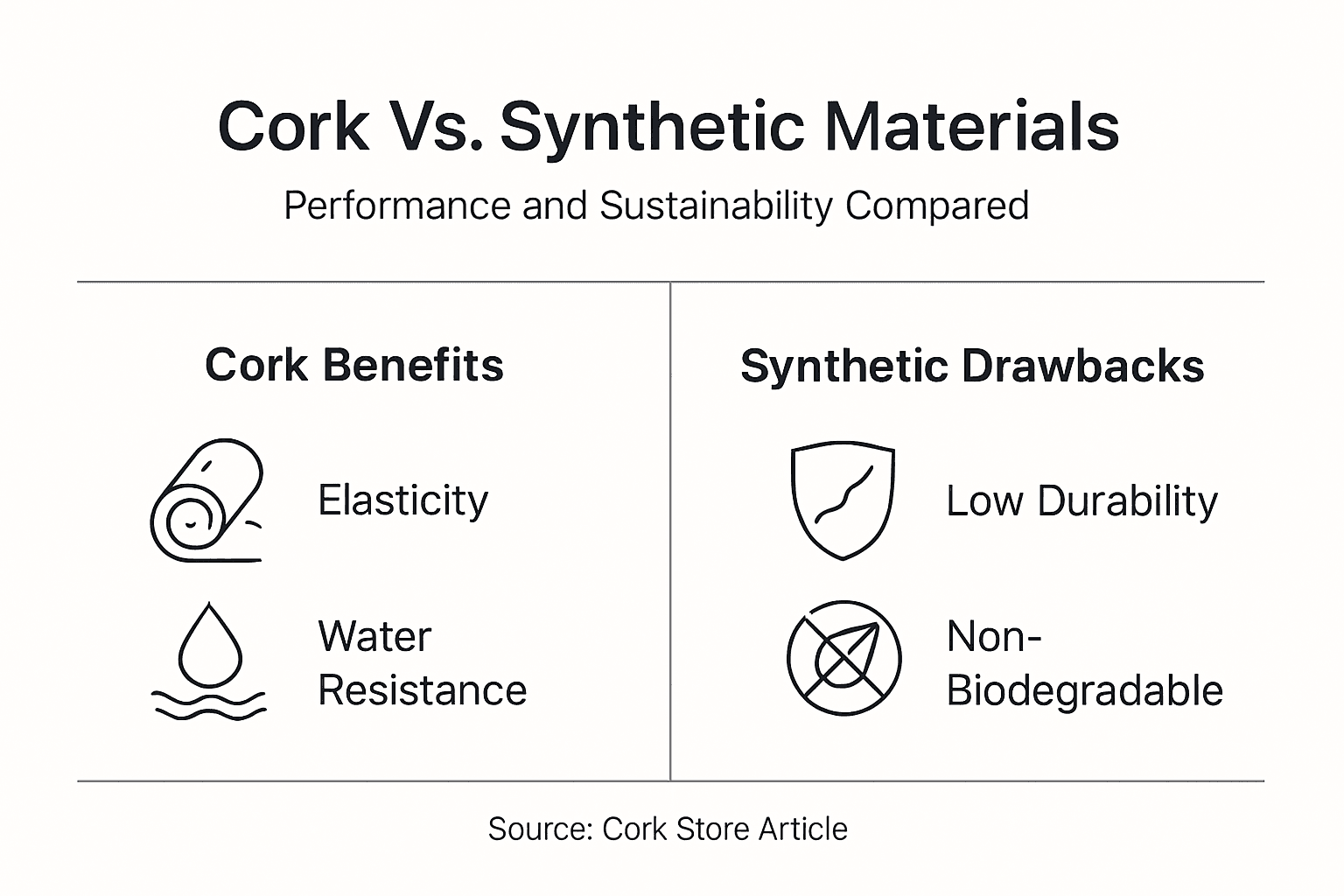
Cork’s exceptional elasticity and water resistance without petrochemical processing means your accessories handle daily use far better than synthetic alternatives. A cork wallet flexes naturally; synthetic materials become rigid or sticky over time.
Comparison of key performance metrics:
To help visualise the main differences between popular vegan materials in fashion, see the table below:
| Material Type | Sustainability Impact | Lifespan Expectancy | Biodegradability |
|---|---|---|---|
| Natural Cork | Supports forest conservation | 20+ years | Fully compostable |
| Synthetic Vegan (PU) | Fossil fuel production | 2–4 years | Not biodegradable |
| Pineapple Leaf Fibre | Requires intensive processing | 3–5 years | Partially biodegradable |
| Mushroom Leather | Still experimental | Unknown | Biodegradable |
| Recycled Plastic | Reduces landfill waste | 4–6 years | Low, microplastics shed |
- Durability: Cork wins (20+ years vs 2–4 years for synthetics)
- Water resistance: Cork (natural) vs synthetics (requires coatings)
- Flexibility: Cork maintains elasticity; synthetics stiffen or crack
- Repairability: Cork can be conditioned; synthetics deteriorate irreversibly
- Biodegradability: Cork fully compostable; synthetics persist indefinitely
Why This Matters for Your Choice
Selecting cork isn’t just about choosing vegan—it’s about choosing genuinely sustainable. Other vegan alternatives often substitute one problem (animal harm) for another (plastic pollution and microplastic contamination).
Cork proves that vegan doesn’t have to mean synthetic or environmentally compromised.
When you purchase cork accessories, you’re supporting renewable forestry, avoiding fossil fuel dependency, and investing in products that will serve you beautifully for decades. Your choice actively protects Mediterranean ecosystems rather than contributing to plastic pollution.
Cork’s natural origin means your accessories biodegrade completely at end-of-life, returning nutrients to soil rather than persisting as microplastics in oceans and bodies.
Pro tip: When comparing vegan alternatives, ask the retailer about material sourcing and end-of-life biodegradability—cork’s transparency on both fronts outmatches most synthetic competitors, making it the most verifiably sustainable vegan choice.
Discover Sustainable Style with Authentic Cork Accessories
The article highlights the challenge of finding truly sustainable and durable materials in fashion that align with your values without compromising on style or quality. You want accessories made from natural, renewable resources like cork that support Mediterranean forest conservation and offer durability, water resistance, and timeless elegance. Cork’s unique qualities make it an excellent choice for those seeking ethically sourced, vegan alternatives that develop character over time and contribute to ecological balance.
Explore our curated selection of Stylish Cork Bags – Eco-Friendly & Sustainable | The Cork Store and Women’s Cork Accessories | Eco-Friendly Everyday Style – The Cork Store to find your perfect vegan cork companion. Each piece helps protect ancient cork oak forests, celebrates traditional craftsmanship, and offers a lightweight, versatile, and antimicrobial option fit for daily use.
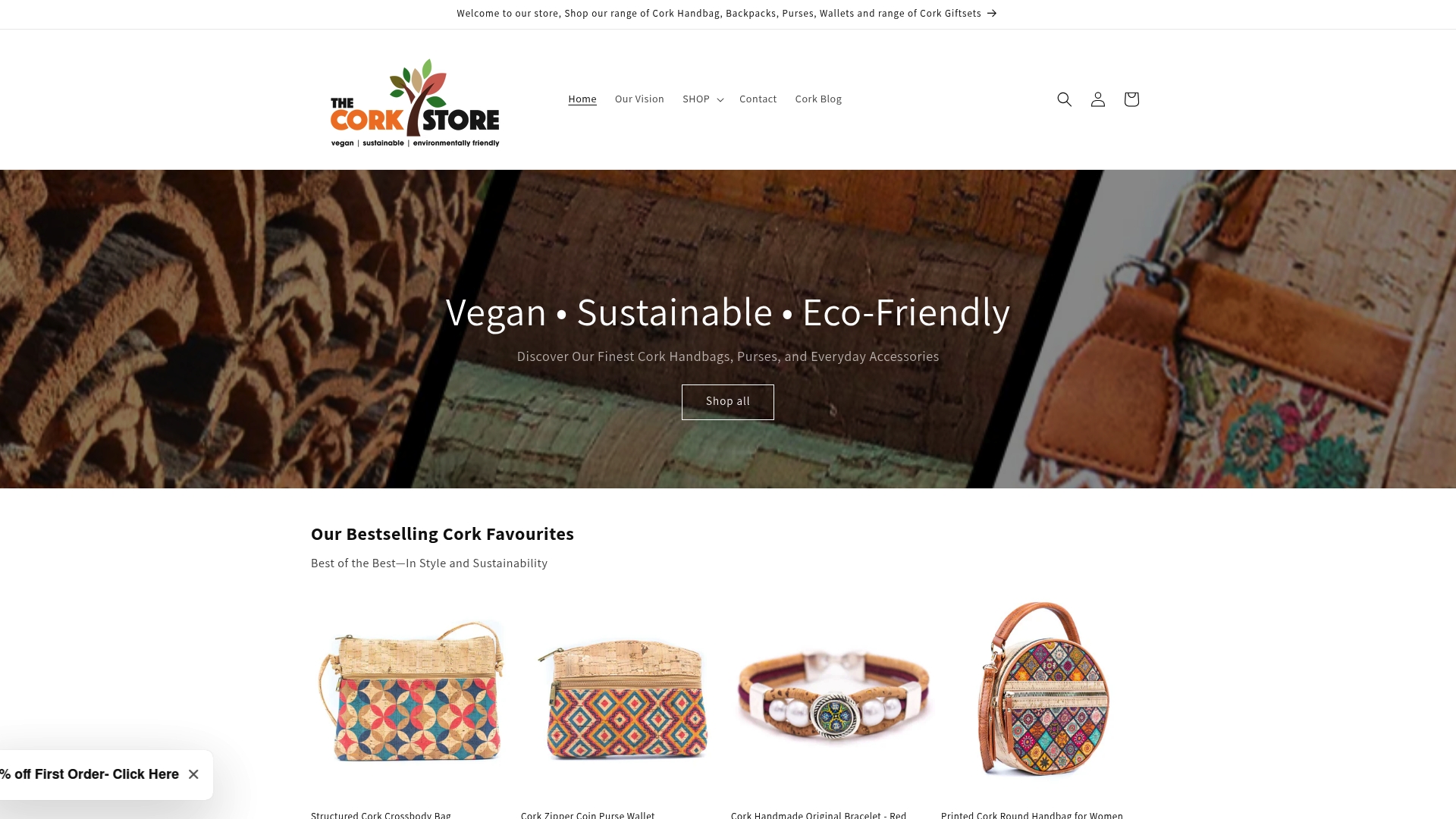
Ready to embrace genuinely ethical fashion that honours nature and stands the test of time? Visit The Cork Store today and select your eco-friendly cork accessory to make a meaningful statement and support sustainable style now.
Frequently Asked Questions
What is natural cork made from?
Natural cork is derived from the outer bark of the cork oak tree, scientifically known as Quercus suber. It consists of millions of tiny, hollow cells filled with air, which contribute to its lightweight and insulating properties.
How is cork harvested sustainably?
Cork harvesting is a meticulous process that involves carefully stripping the outer bark from cork oak trees by hand, without damaging the living tissue of the tree. This method allows the tree to regenerate its bark every 9 to 12 years, enabling multiple harvests throughout its lifetime.
What are the main advantages of using cork in accessories compared to synthetic materials?
Cork offers several benefits over synthetic materials, including being lightweight, water-resistant, naturally antimicrobial, and biodegradable. Unlike synthetic options, cork ages beautifully, developing a unique patina over time, and it’s durable enough to withstand daily use.
Why should I choose cork accessories for my sustainable fashion choices?
By choosing cork accessories, you’re supporting sustainable forestry practices and helping conserve Mediterranean ecosystems. Cork is a renewable material that generates minimal waste and actively protects the environment, making it an ethical choice for fashion-conscious consumers.