
Which Vegan Leathers Last a Decade and Which Fail in Months
“Vegan leather” is a marketing umbrella, not a material. Most of it is plastic, typically PVC or PU, though a growing share comes from plant fibres, fungal mycelium, bacterial cellulose or cork. Being animal-free doesn’t automatically mean low-impact, and the details of how each version is made decide whether it’s genuinely a better choice or just a rebrand.
TL;DR:
- Most vegan leather options rely heavily on plastics like PVC or PU, which shed microplastics and are difficult to recycle at end of life.
- Plant-based leathers such as pineapple leaf fiber or cork often contain synthetic binders, making their ecological benefits dependent on durability and disposal methods.
- Cork is a more authentic vegan leather alternative because it is renewable, naturally water-resistant, and free of plastic lamination, extending product lifespan.
- The environmental impact of vegan leather depends more on production processes, product longevity, and recycling options than on the raw material alone.
- Consumers should prioritize transparency, product durability, and proper disposal practices over marketing claims and trendy ingredient names.
Table of Contents
- What is vegan leather made of? The main material families
- How vegan leather is actually made
- Material profiles: what each type actually contains
- Environmental trade-offs: why lifecycle matters more than ingredients
- How to read vegan leather labels and spot greenwashing
- Buying and caring for vegan leather to make it last
- Regulation and expert caution on vegan leather claims
- Why cork holds up as a genuine vegan leather alternative
- What actually matters when you’re choosing vegan leather
- Choose cork accessories built to outlast the trend cycle
- Sources
What is vegan leather made of? The main material families
Walk into any shop selling “vegan leather” goods and you’re actually looking at one of six distinct material families, each with its own chemistry and its own trade-offs. Knowing which one you’re holding matters more than the label on the tag.
- Synthetic plastics (PVC and PU): petroleum-derived polymers coated onto a fabric backing, still the industry default because they’re cheap, consistent and easy to mass-produce.
- Recycled plastics (rPET and similar): existing plastic waste, often bottles, reprocessed into a leather-like coating or fibre base.
- Plant-based leathers: made from pineapple leaf fibre, cactus, apple pomace, grape skins or cork, using agricultural by-products as the raw input.
- Fungal and microbial materials: mycelium (mushroom root structure) or SCOBY (the bacterial cellulose used in kombucha) grown into sheets.
- Cork: bark harvested from the cork oak without felling the tree, one of the few options that’s both plant-based and largely free of plastic construction.
- Silicone: a synthetic polymer alternative that behaves differently to PVC/PU in terms of durability and disposal.
PVC and PU dominate the market because they’re durable enough for handbags and shoes at a price point that scales. Recycled plastics and silicone sit somewhere between “traditional synthetic” and “next-generation material”, using existing waste streams or different chemistry to reduce virgin fossil-fuel input without fully solving the plastic problem.
How vegan leather is actually made
Almost every vegan leather, whatever it’s marketed as, goes through a similar construction process.
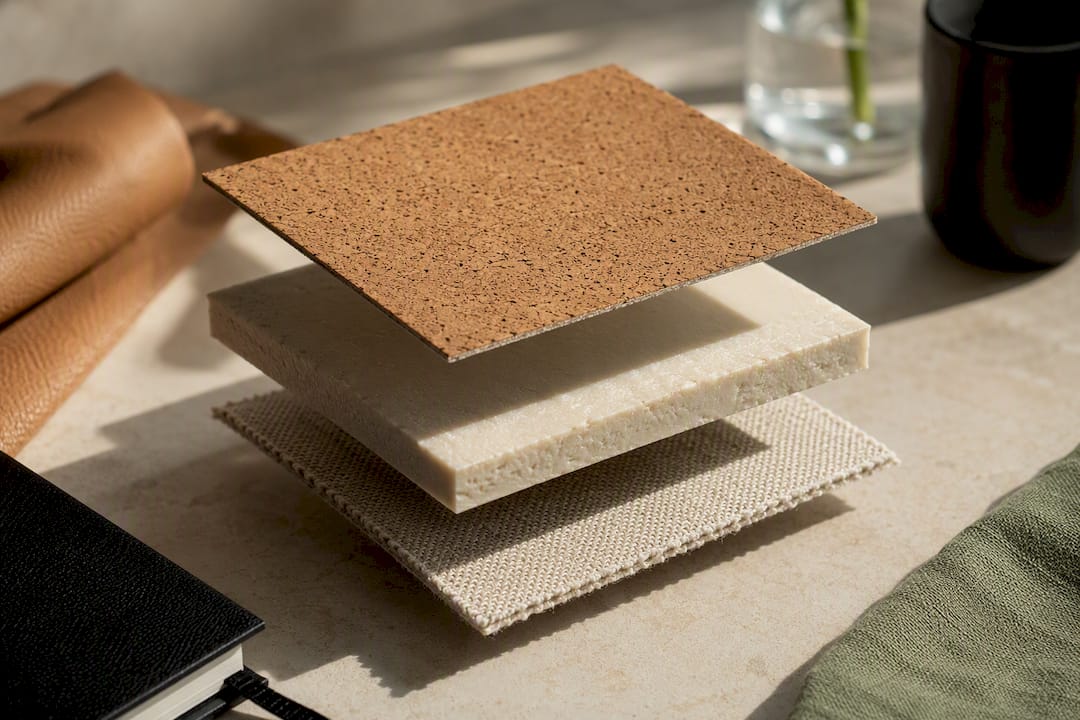
- A backing fabric is chosen. Usually cotton, polyester or a cotton-polyester blend, this gives the material its structural strength since most surface coatings alone would tear.
- A coating or fibre mat is applied. For PVC/PU, this means layering the polymer directly onto the backing. For plant-based versions like pineapple leaf fibre, the raw fibres are processed into a non-woven mat first.
- Binders and resins are introduced. This is the step most marketing glosses over. Plant fibres alone lack the tensile strength for a wallet or shoe upper, so manufacturers add plastic resin, often polyurethane, or a polyester backing to hold everything together.
- Embossing creates texture. A heated die presses a grain pattern into the surface to mimic animal hide.
- Finishing and lamination seal the product. A top coat improves water resistance and colour retention but also fuses the layers into a single laminate that’s very hard to separate later.
That lamination step is the crux of the durability-versus-recyclability tension. A well-finished coating resists scuffing and cracking for years. The same fusion of fibre, resin and backing that gives it strength also makes it almost impossible for standard recycling streams to pull apart.
Pro Tip: If a product description says “made from pineapple” or “cactus-based” without naming the backing or binder, assume there’s polyurethane or polyester in there too. Look for brands that list the full composition, not just the star ingredient.
Material profiles: what each type actually contains
Each vegan leather material carries its own chemistry, its own strengths, and its own caveats. Here’s what sits behind the marketing name.
- PVC (polyvinyl chloride): requires plasticisers such as phthalates to stay flexible, and can release dioxins if burned at end of life, making disposal a genuine chemical concern rather than a footnote.
- PU (polyurethane): a different polymer chemistry to PVC, generally considered less toxic to produce and dispose of, though it still sheds microplastics over its lifespan and isn’t biodegradable.
- Cork: harvested from the bark of the cork oak roughly every nine years without harming the tree, giving it a renewable supply chain that few other materials can match, alongside natural water resistance and long-term durability.
- Piñatex and similar plant fibres: made from pineapple leaf waste, a genuine by-product of existing agriculture, but typically bound with a polyurethane resin coating to achieve wearable strength.
- Mycelium leather: grown from fungal root networks in controlled conditions, an impressive biotech process, though scale and long-term wear durability still lag behind established PU.
- SCOBY (bacterial cellulose): the same culture used to make kombucha, grown into sheets and dried, currently more of an experimental material than a mainstream retail option.
- rPET and recycled blends: reduce reliance on virgin fossil-fuel plastic, but mixing recycled and virgin fibres in one laminate makes the finished product harder to recycle a second time.
- Silicone: highly durable and resistant to cracking, but essentially non-biodegradable and not part of standard recycling infrastructure.
The gap between “plant-based” marketing and “plastic-free” reality is the single most common source of confusion for shoppers. Kering’s Environmental Profit & Loss analysis found that vegan leather production can carry up to a third lower impact than animal leather in some scenarios, but that figure depends entirely on which vegan material, which manufacturing process, and how long the finished product actually lasts.
Environmental trade-offs: why lifecycle matters more than ingredients
Focusing purely on what a material is made from misses most of its environmental footprint. Production, use and end-of-life all matter, and durability often outweighs the raw ingredient list entirely.
A cheap PVC bag that lasts eight months and ends up in landfill can create more waste over time than a well-made leather bag used for a decade. Equally, a “sustainable” plant-based wallet that falls apart in a year, because the binder wasn’t durable enough, can generate more replacement purchases and more emissions than either option. Kering’s own lifecycle work suggests impact comparisons hinge on raw materials, manufacturing energy and, critically, product lifetime, not on a single “vegan versus animal” label.
A short-lived plant-based novelty item can generate more cumulative waste and emissions than a durable, well-made synthetic or properly tanned animal leather product used for years.
Three factors decide how a given vegan leather actually performs over its life:
- Chemical toxicity during production and disposal, particularly for PVC’s plasticisers and any dioxin release if incinerated.
- Microplastic shedding during normal wear, an ongoing issue for PU and PVC surfaces that isn’t captured by “vegan” labelling at all.
- Recyclability at end of life, where laminated constructions combining plant fibre, plastic resin and polyester backing are exceptionally difficult for standard municipal recycling to process, usually requiring specialist industrial recycling or ending up downcycled into lower-grade products.
None of this makes vegan leather worse than animal leather by default, tanning chemicals and livestock farming carry their own well-documented impacts. It does mean the “vegan” tag alone tells you almost nothing about the footprint you’re actually buying.
How to read vegan leather labels and spot greenwashing
A little label literacy saves you from paying a premium for marketing rather than material. Before buying, run through these checks.
- Look for a stated plant-content percentage. A genuine plant-based leather will usually disclose what proportion is organic fibre versus synthetic binder, not just “made with pineapple”.
- Check whether “recycled” refers to the whole product or one layer. A recycled backing under a virgin plastic coating is a different claim to a fully recycled material.
- Ask the retailer directly about backing and resin type if it isn’t listed. A brand confident in its sourcing will usually answer specifically rather than repeating the word “eco-friendly”.
- Treat vague claims as a red flag. “Sustainable”, “vegan” and “eco” with no supporting detail, especially on limited-edition or celebrity-driven collections, are marketing shortcuts rather than evidence.
- Look for third-party certification or a documented supply chain rather than a brand’s own unverified claim.
Regulatory scrutiny of exactly this kind of vague claim is increasing, which is worth remembering next time a product page leans hard on the word “vegan” without saying what’s actually inside.
Buying and caring for vegan leather to make it last
The single biggest lever you have over a vegan leather item’s environmental impact isn’t which material you choose. It’s how long you keep using it.
- Prioritise construction quality over material novelty. A well-made PU bag that lasts a decade usually beats a poorly bonded plant-fibre item that delaminates in a year.
- Wipe-clean plastics (PVC, PU) with a damp cloth and avoid harsh solvents that can crack the coating.
- Condition cork lightly and keep it dry, since cork tolerates moisture well but benefits from occasional care to keep its surface supple.
- Handle mycelium and SCOBY leathers gently, avoiding prolonged water exposure, as these materials are still catching up to synthetic durability.
- Repair before replacing, and check resale platforms before binning anything, most vegan leather goods have more life left than shoppers assume.
Pro Tip: Check your local council’s recycling guidance before assuming a “vegan leather” item is recyclable at kerbside. Mixed-material laminates almost always aren’t, and putting them in the wrong bin can contaminate an entire batch of genuinely recyclable material.
Regulation and expert caution on vegan leather claims
Lawmakers are catching up with marketing language faster than most shoppers realise. EU legislation addressing misleading environmental and sustainability claims signals that vague “vegan” and “eco” labelling is coming under formal scrutiny, not just consumer scepticism.
Materials scientists are sounding a similar note of caution from the research side. Professor Theanne Schiros has warned that plant-origin marketing can obscure the synthetic binders doing the structural work underneath, and recommends shoppers prioritise reduced plastic content and product longevity over buzzwords on a swing tag.
That’s a useful filter:
- Treat any unverified “vegan” or “plant-based” claim as a starting point for questions, not a finished sustainability case.
- Favour brands publishing full material breakdowns over those relying on a single hero ingredient in their marketing copy.
- Recognise that third-party verification, not brand self-description, is what actually builds trust in a supply chain.
Why cork holds up as a genuine vegan leather alternative
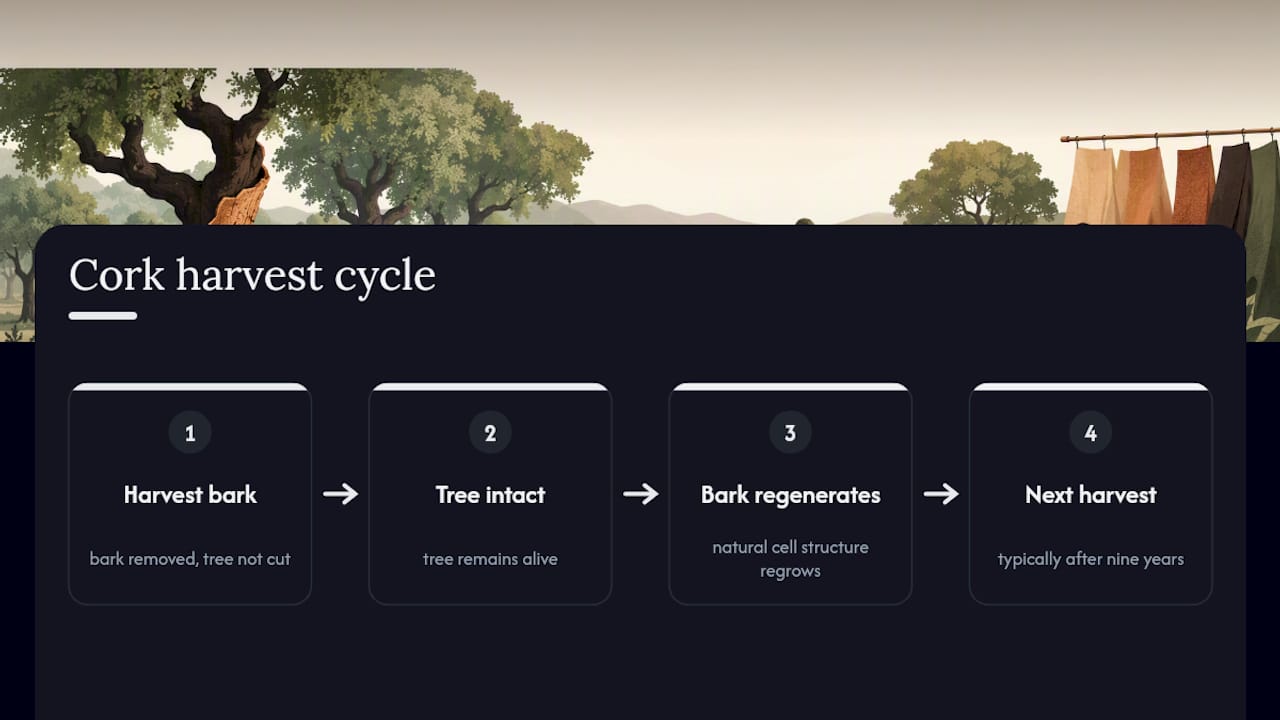
Thecorkstore has built its entire catalogue around one material precisely because cork avoids most of the plastic-binder problem affecting pineapple and cactus leathers. Cork oak bark regenerates after each harvest, typically on a nine-year cycle, without the tree being cut down, giving it a renewable supply chain that’s rare among vegan leather materials.
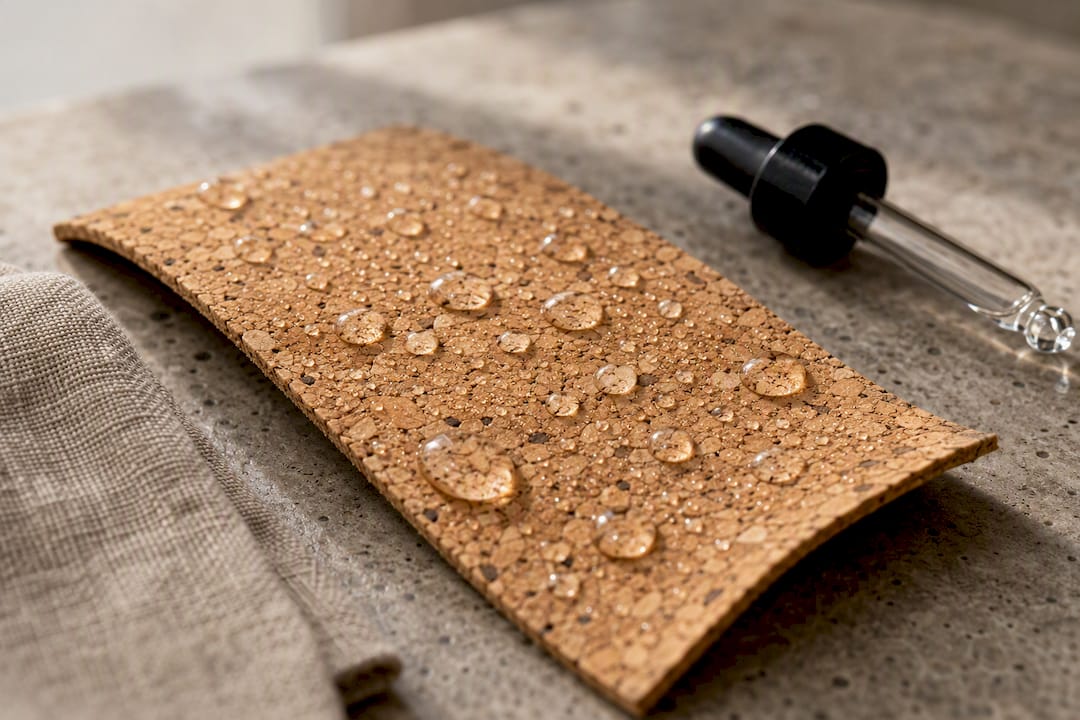
Beyond sourcing, cork’s natural cell structure gives it water resistance and durability that holds up under everyday handbag and wallet use, ageing well rather than cracking the way some plastic-coated surfaces do over time. It’s a material Thecorkstore has spent years working with directly, across handbags, wallets and accessories, learning what actually lasts and what doesn’t.
What actually matters when you’re choosing vegan leather
The evidence here points to a fairly uncomfortable conclusion for anyone hoping “vegan” alone settles the sustainability question: it doesn’t, not even close. The material family matters less than most marketing suggests. What matters more is whether a product is built to survive years of use, and whether its end-of-life route is anything better than landfill.
Conventional shopping advice tends to fixate on the hero ingredient, pineapple, cactus, mushroom, as though naming the plant settles the ethics of the purchase. It doesn’t. A pineapple-leaf wallet held together with polyurethane resin is still, chemically, mostly plastic. The more useful question isn’t “what plant is this from?” but “what’s actually holding it together, and how long will that hold?”
If you take one thing from this, prioritise durability and transparency over novelty. Cork earns its place in that conversation honestly, not because it’s trendy, but because its production genuinely avoids the plastic-lamination problem that undermines so many other “plant-based” claims. That’s a rarer thing in this category than the marketing would have you believe.
— Aaron
Choose cork accessories built to outlast the trend cycle
Thecorkstore exists because most “vegan leather” on the market solves the animal-free problem while quietly recreating the plastic one. Cork doesn’t need a polyurethane resin to hold its shape or a polyester backing to survive daily use, which means fewer hidden plastics between you and the material you actually chose.
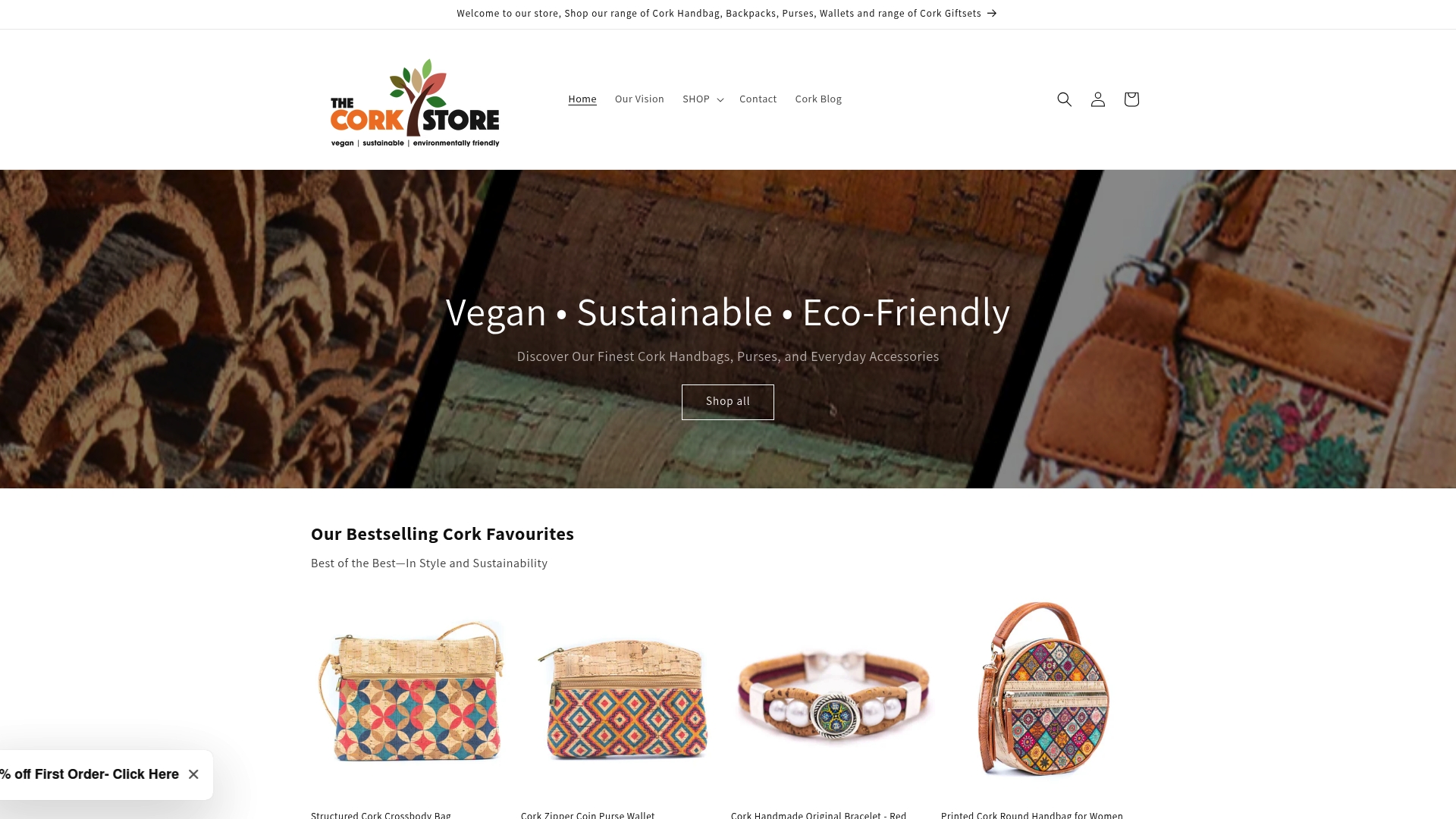
Every handbag, wallet and accessory in the cork wallet collection is built from bark harvested without felling a single tree, finished to resist water and wear rather than just look the part on day one. If you’re ready to swap a plastic-laminated bag for something with a genuinely renewable supply chain, browse the current range at Thecorkstore and see which piece fits the way you actually use a bag day to day.
Sources
- Vegan leather isn’t as sustainable or eco‑friendly as brands might claim | The Conversation
- Environmental Profit & Loss 2017 | Kering
- What Is Vegan Leather? | WebMD