
Role of Cork in Zero Waste Fashion
Choosing accessories often means facing a tough balance between style, ethics, and sustainability. So many options promise eco-friendly benefits, but few materials genuinely support a circular, zero waste future with real impact. Zero waste principles prioritise materials that can be reused, recycled, or naturally break down without harming the planet. Cork stands out as a renewable, cruelty-free alternative that aligns with your values, showing how fashion can be both responsible and truly beautiful.
Table of Contents
- Defining Cork and Zero Waste Principles
- Types of Cork Products for Zero Waste
- How Cork Harvesting Minimises Impact
- Recycling and End-of-Life for Cork
- Comparing Cork to Conventional Materials
- Common Misconceptions and Best Practices
Key Takeaways
| Point | Details |
|---|---|
| Embrace Zero Waste Principles | Adopting zero waste principles fosters a circular economy, promoting the design of products that minimise waste and environmental impact. |
| Cork as a Sustainable Material | Cork is a renewable, biodegradable resource that demonstrates exceptional reusability while supporting ecosystems through responsible harvesting. |
| Cork’s Versatility | A diverse range of cork products, from fashion accessories to construction materials, highlights its adaptability in various industries, aligning with zero waste goals. |
| Combat Misconceptions | Understanding the true sustainable qualities of cork can enhance consumer confidence in making eco-friendly choices in fashion and home goods. |
Defining Cork and Zero Waste Principles
Zero waste represents an innovative sustainability approach transforming how we design, consume, and manage materials. At its core, zero waste is a comprehensive strategy aimed at eliminating waste generation through circular design principles. Designing out waste and pollution becomes the fundamental objective, challenging traditional linear consumption models.
Cork emerges as an exceptional material perfectly aligned with zero waste principles. Harvested from cork oak trees through a unique process that preserves tree health, this natural material embodies regenerative sustainability. Key characteristics of cork include:
- Renewable resource harvested without tree destruction
- Biodegradable and environmentally low-impact
- Capable of multiple material use cycles
- Supports continuous material regeneration
The harvesting process itself demonstrates remarkable ecological sensitivity. Cork is extracted by carefully removing bark from cork oak trees, which naturally regenerates, ensuring no permanent damage occurs. Sustainable bark removal techniques enable continuous material production without compromising forest ecosystems.
Zero waste principles fundamentally challenge traditional resource consumption by promoting a circular economy framework. This approach prioritises designing products that can be continuously reused, recycled, or biodegraded, minimising environmental impact and resource depletion. Cork represents an exemplary material that intrinsically embodies these sustainability goals.
Pro tip: When selecting sustainable fashion items, prioritise materials like cork that demonstrate clear regenerative and low-waste production processes.
Types of Cork Products for Zero Waste
Cork has evolved into a remarkably versatile material, transforming traditional waste streams into innovative sustainable products. Advanced material processing techniques have enabled cork’s expansion beyond traditional applications, creating a diverse range of zero waste solutions across multiple industries.
The primary categories of cork products supporting zero waste principles include:
-
Fashion Accessories
- Wallets and purses
- Backpacks and handbags
- Shoes and sandals
- Belts and watch straps
-
Home Goods
- Coasters and placemats
- Decorative panels
- Insulation materials
- Sustainable packaging
-
Construction Materials
- Composite building panels
- Acoustic insulation
- Flooring solutions
- Thermal regulation components
Cork’s remarkable material properties make it an ideal candidate for zero waste product design. Cork product varieties encompass natural cork, cork granulates, composite agglomerates, and expanded materials, each offering unique sustainability advantages. These products leverage cork’s natural biodegradability, renewability, and capacity for multiple use cycles.
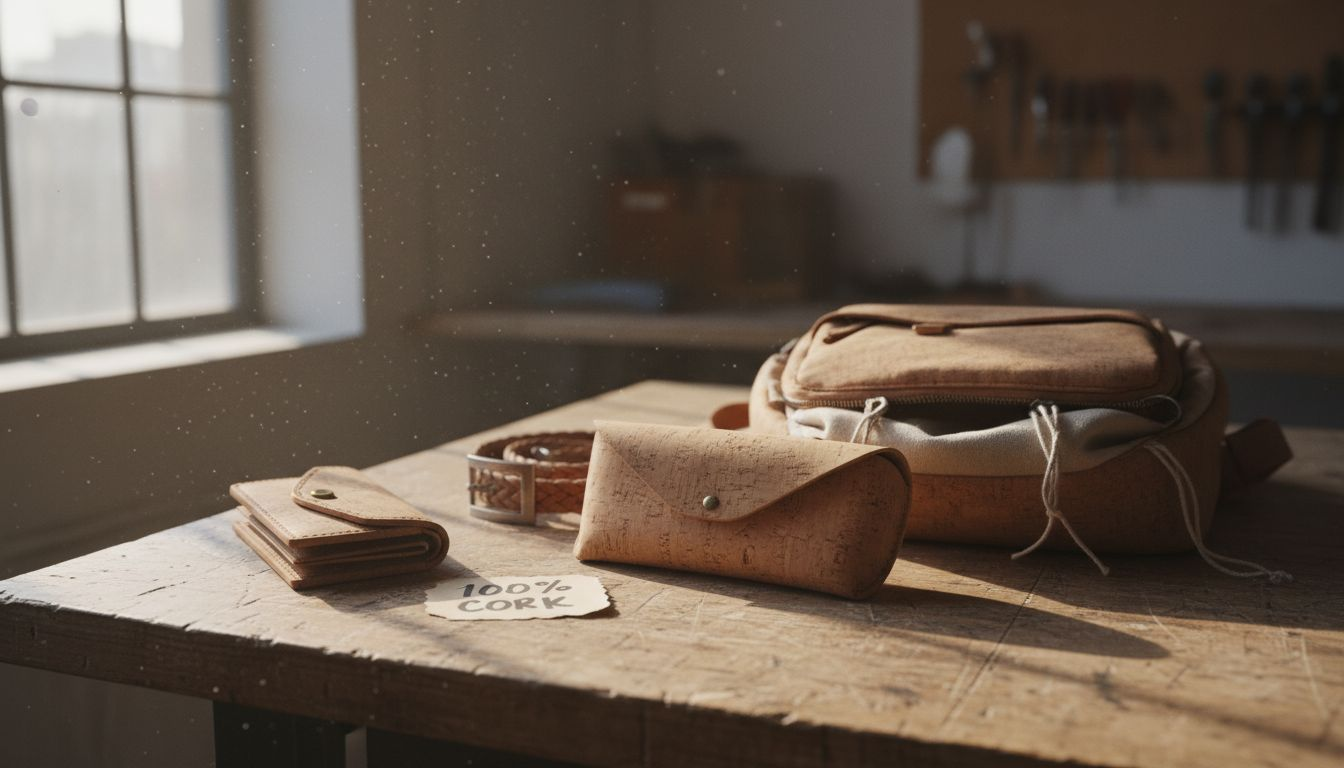
The versatility of cork extends beyond traditional applications, with innovative designers continuously discovering new ways to integrate this sustainable material into circular economy models. By transforming what was once considered waste into functional, stylish products, cork demonstrates the potential for regenerative design principles in fashion and manufacturing.
Pro tip: When shopping for sustainable accessories, look for products that explicitly highlight their cork composition and zero waste manufacturing process.
How Cork Harvesting Minimises Impact
Cork harvesting represents a remarkable example of sustainable resource management that actively protects and regenerates natural ecosystems. Low-impact manual extraction techniques ensure that cork oak trees remain healthy and continue contributing to environmental sustainability throughout their lifecycle.
The cork harvesting process involves several distinctive characteristics that minimise ecological impact:
- Bark removal occurs only every 9-12 years
- No trees are cut down during extraction
- Manual harvesting preserves tree health
- Periodic removal stimulates tree growth and carbon absorption
- Supports local forest ecosystem biodiversity
Unique environmental benefits of cork oak forest management include:
- Enhanced carbon sequestration
- Soil stabilisation
- Water conservation
- Habitat preservation for multiple species
Sustainable cork extraction methods actively contribute to ecosystem regeneration. The careful harvesting process allows cork oak forests to absorb more atmospheric carbon, transforming these landscapes into critical carbon sinks that play a significant role in mitigating climate change.
By prioritising tree health and employing regenerative harvesting techniques, cork production demonstrates how responsible material sourcing can create positive environmental outcomes. The interconnected benefits extend far beyond simple material extraction, supporting biodiversity, landscape preservation, and sustainable economic opportunities for local communities.
Pro tip: When purchasing cork products, research the origin and harvesting practices to ensure you’re supporting truly sustainable production methods.
Recycling and End-of-Life for Cork
Cork recycling represents a critical strategy in achieving zero waste fashion objectives, transforming potential waste into valuable material streams. Innovative cork recycling techniques are reshaping how we approach material circularity, offering sustainable solutions for end-of-life cork products.
The primary recycling pathways for cork materials include:
- Grinding into granular composites
- Repurposing for insulation materials
- Creating new flooring components
- Manufacturing acoustic panels
- Developing industrial composite materials
Recent scientific developments have expanded cork’s recyclability potential through advanced processing methods. Material recovery technologies now enable sophisticated dissolution-precipitation techniques that can extract and reuse cork and polymer components without significant degradation.
The recycling ecosystem for cork products currently faces several challenges:
- Limited collection infrastructure
- Insufficient public awareness
- Lack of standardised recycling processes
- Fragmented industry coordination
These obstacles present opportunities for innovation in circular economy approaches. By developing more robust recycling systems, the fashion and manufacturing industries can significantly reduce waste and create more sustainable material lifecycles.
Pro tip: Collect and donate used cork products to specialised recycling programmes to support material circularity and reduce landfill waste.
Comparing Cork to Conventional Materials
Sustainable materials are revolutionising product design, with cork emerging as a superior alternative to conventional synthetic materials. Cork composites outperform synthetic materials in critical performance metrics like thermal insulation, sound absorption, and environmental impact.
Key comparative advantages of cork over conventional materials include:
-
Renewable Resource
- Naturally regenerative harvesting
- No permanent ecosystem destruction
- Minimal processing requirements
-
Performance Characteristics
- Superior thermal stability
- Excellent acoustic insulation
- Lightweight structural properties
- Enhanced durability
-
Environmental Impact
- Lower embodied energy
- Biodegradable composition
- Carbon sequestration potential
- Reduced waste generation
Comparative material assessments demonstrate cork’s significant advantages over traditional building and manufacturing materials like concrete, plastic, and plywood. Its unique cellular structure enables superior performance while maintaining remarkable ecological credentials.
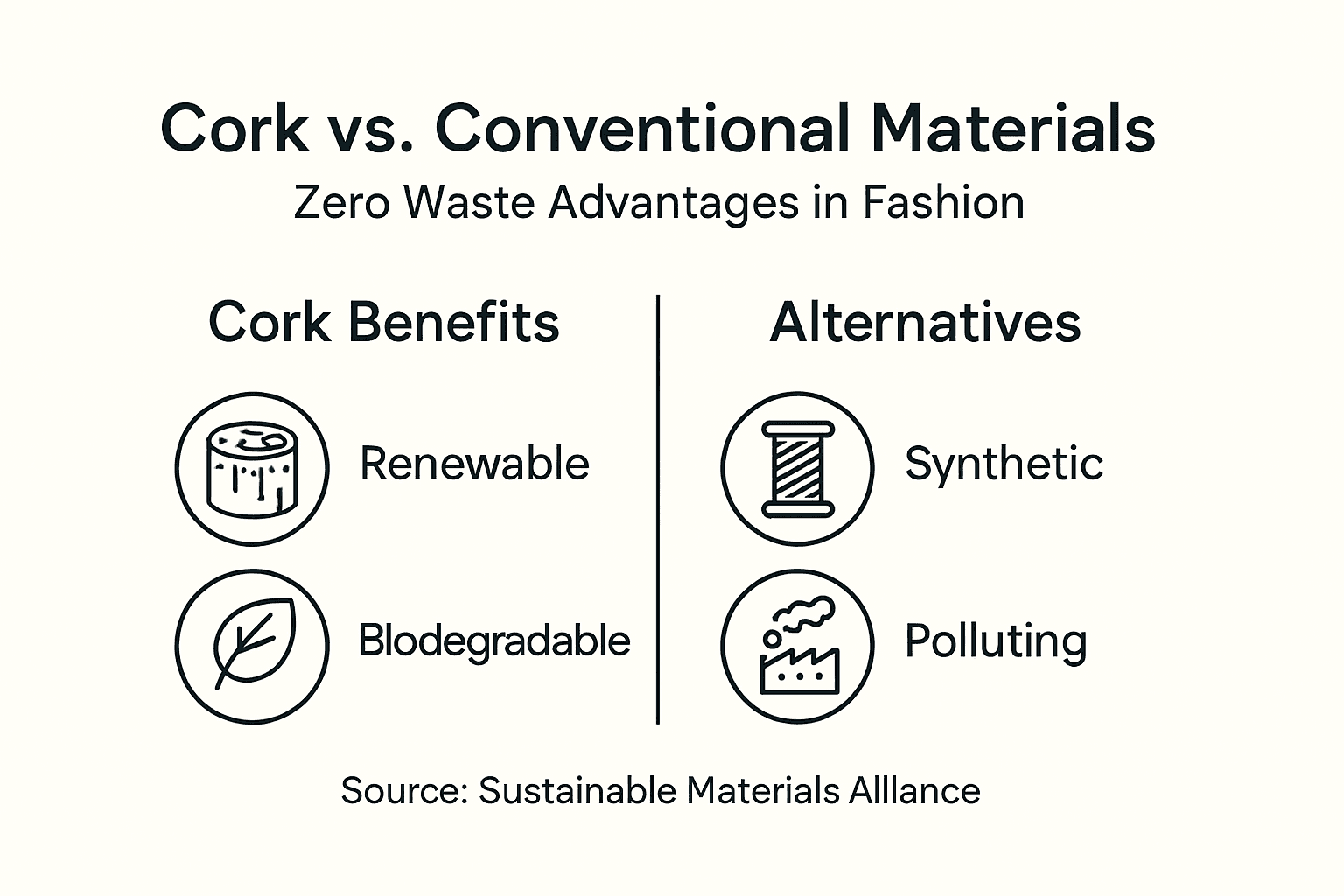
Beyond technical specifications, cork represents a holistic approach to material selection that prioritises environmental sustainability. By choosing cork over conventional synthetic materials, consumers and industries can actively contribute to reducing carbon footprints and supporting regenerative economic models.
Here’s a summary highlighting how cork contributes to zero waste goals versus traditional materials:
| Aspect | Cork Material | Conventional Alternatives |
|---|---|---|
| Resource Renewal | Regenerative harvesting | Extraction depletes source |
| Waste Generation | Minimises landfill waste | High disposal rates |
| Environmental Impact | Supports ecosystems | Often polluting |
| End-of-Life Options | Recyclable, biodegradable | Rarely recycled, persists |
Pro tip: When evaluating material choices, consider the full lifecycle environmental impact, not just immediate performance characteristics.
Common Misconceptions and Best Practices
Zero waste fashion involving cork materials requires nuanced understanding beyond simplistic assumptions. Many consumers hold misconceptions that can prevent them from fully embracing sustainable material choices, potentially undermining their environmental impact efforts.
Common misconceptions about cork in sustainable fashion include:
For quick reference, here are common misconceptions regarding cork in fashion and the actual facts:
| Misconception | Reality | Consumer Benefit |
|---|---|---|
| Cork is fragile | Resistant to wear | Longer product lifespan |
| Only brown finishes | Diverse colours and textures | Fashion versatility |
| Damages trees when harvested | Harvesting is sustainable | Eco-friendly production |
-
Durability Myths
- Cork is not fragile or weak
- Withstands significant wear and tear
- Naturally water-resistant
- Maintains structural integrity over time
-
Aesthetic Misunderstandings
- Not limited to brown, earthy tones
- Available in diverse colours and finishes
- Can mimic leather and synthetic textures
- Adaptable to contemporary fashion designs
-
Environmental Impact Misbeliefs
- Harvesting does not damage trees
- Supports forest ecosystem health
- Promotes carbon sequestration
- Enables circular material economy
Best practices for integrating cork into sustainable wardrobes involve thoughtful selection and responsible care. Consumers should prioritise understanding material origins, verifying sustainable harvesting practices, and investing in high-quality cork products that demonstrate commitment to environmental stewardship.
Care and maintenance are crucial for extending cork product lifecycles. Proper storage, gentle cleaning techniques, and avoiding extreme temperature variations can significantly enhance product durability and performance.
Pro tip: Research the specific production methods of cork products to ensure genuine sustainability beyond surface-level marketing claims.
Embrace Zero Waste Fashion with Stylish Cork Accessories
The challenge of minimising waste and supporting regenerative materials like cork is at the heart of achieving zero waste fashion. If you want to take meaningful action beyond awareness, explore sustainable accessories that combine eco-friendly values with durability and style. Cork’s natural renewability and responsible harvesting practices make it an ideal material to help you reduce waste while looking great.
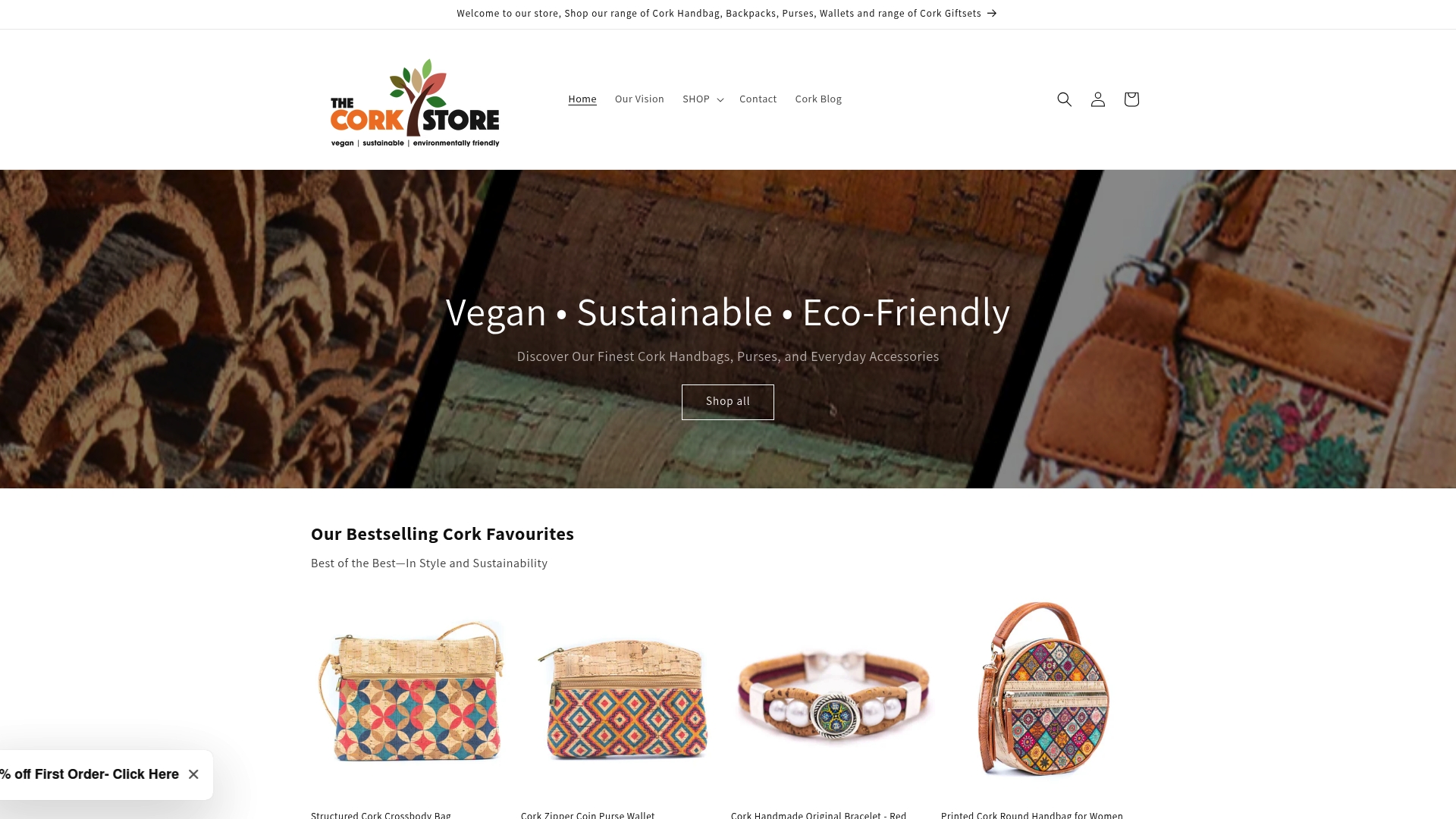
Discover a curated range of vegan cork products including handbags, wallets, backpacks, and gift sets designed to elevate your sustainable wardrobe. Each item highlights cork’s exceptional qualities of biodegradability and low environmental impact, supporting your efforts to make ethical fashion choices today. Visit The Cork Store to shop these unique accessories and join a community committed to zero waste principles. Don’t wait — transform your style and help protect the planet now.
Frequently Asked Questions
What is zero waste fashion, and how does cork fit into this concept?
Zero waste fashion aims to eliminate waste generation by promoting circular design principles. Cork, as a sustainable material, aligns with this concept due to its renewability, biodegradability, and ability to be reused and recycled, making it an excellent choice for eco-friendly fashion.
How is cork harvested sustainably?
Cork is harvested by manually removing the bark of cork oak trees every 9-12 years without cutting down the trees. This process allows the trees to regenerate and remain healthy, thereby minimising ecological impact and supporting local biodiversity.
What types of products can be made from cork in the context of zero waste?
Cork can be transformed into a variety of zero waste products including fashion accessories (wallets, bags, shoes), home goods (coasters, insulation materials), and construction materials (flooring, acoustic panels), demonstrating its versatility in sustainable design.
How does recycling cork contribute to sustainability?
Recycling cork involves repurposing it into composite materials, insulation, and other products, effectively transforming potential waste into valuable resources. This process supports circular economy principles and helps reduce landfill waste.
Recommended
- Understanding the Role of Cork in Sustainable Fashion – The Cork Store
- Role of Cork in Eco Fashion: Sustainable Style Unpacked – The Cork Store
- Environmental Impact of Cork – Sustainable Fashion Choice – The Cork Store
- Sustainable Fashion 2025: Why Cork Leads the Eco Revolution – The Cork Store
- Read - Top Biodegradable Clothing Materials for Sustainable Fashion. SLY Collective Underwear