
Cork vs Leather: The Sustainable Style Choice
Most british vegan accessories enthusiasts are surprised to learn that over 13 million tonnes of leather waste are generated worldwide each year, placing huge pressure on the planet. As sustainable fashion gains momentum, understanding the true difference between cork and traditional leather is vital for anyone seeking stylish, animal-friendly alternatives. This guide explores how innovative materials like cork offer practical, ethical, and eco-conscious benefits for those committed to reducing environmental impact without sacrificing quality or design.
Table of Contents
- Defining Cork And Leather Materials
- Production Methods And Environmental Impact
- Durability, Aesthetics, And Everyday Use
- Vegan Credentials And Animal Welfare Issues
- Costs, Maintenance, And Longevity Compared
Key Takeaways
| Point | Details |
|---|---|
| Sustainability of Materials | Cork is a renewable resource with low environmental impact, unlike leather which contributes to ecological challenges through animal farming and chemical processes. |
| Durability and Maintenance | Cork accessories are durable, require minimal maintenance, and adapt gracefully over time compared to leather which can crack and requires more care. |
| Ethical Considerations | Choosing cork or synthetic vegan leather aligns with ethical consumerism, addressing animal welfare and promoting sustainable practices within the fashion industry. |
| Long-Term Value | While initial costs may vary, cork offers a compelling long-term investment due to its longevity and reduced replacement needs, contrasting with the higher upkeep associated with leather. |
Defining Cork and Leather Materials
Cork and leather represent two fundamentally different material approaches to creating sustainable and functional accessories. Natural materials like cork are obtained from the bark of cork oak trees, representing a renewable resource with extraordinary properties. Unlike traditional leather, which requires animal hide processing, cork offers an innovative alternative that minimises environmental impact.
The unique characteristics of cork include remarkable attributes such as lightweight composition, exceptional elasticity, natural impermeability, superior insulation capabilities, and inherent durability. Cork’s origin in Mediterranean oak forests, particularly in Portugal and Spain, contributes significantly to both ecological preservation and regional economic sustainability. These forests serve as critical carbon sinks while providing a sustainable material harvesting ecosystem.
Leather, by contrast, is traditionally produced from animal hides through complex physical and chemical treatments, with properties varying widely based on manufacturing techniques. While leather has historically been prized for protection, comfort, and aesthetic qualities in clothing and accessories, contemporary consumers are increasingly examining its environmental and ethical implications.
Pro tip: When evaluating sustainable materials, consider not just the final product, but the entire production process and ecological footprint of cork versus traditional leather manufacturing.
Here’s a comparison of material properties affecting accessory performance:
| Material Attribute | Cork | Traditional Leather | Synthetic Vegan Leather |
|---|---|---|---|
| Source Sustainability | Renewable, regenerative harvest | Animal-based, finite resource | Bio-based or petrochemical |
| Environmental Impact | Low emissions, promotes forests | Chemical waste, high emissions | Varies, often lower footprint |
| Animal Welfare | Fully vegan, cruelty-free | Relies on animal hides | Generally vegan, ethical focus |
| Water Resistance | Naturally repels moisture | Prone to water damage | Varies, can be waterproof |
| Maintenance | Easy cleaning, minimal care | Requires conditioning, careful cleaning | Often needs specific care |
| Unique Aesthetics | Organic, textured, individual | Traditional, polished, uniform | Wide range, imitates leather |
Production Methods and Environmental Impact
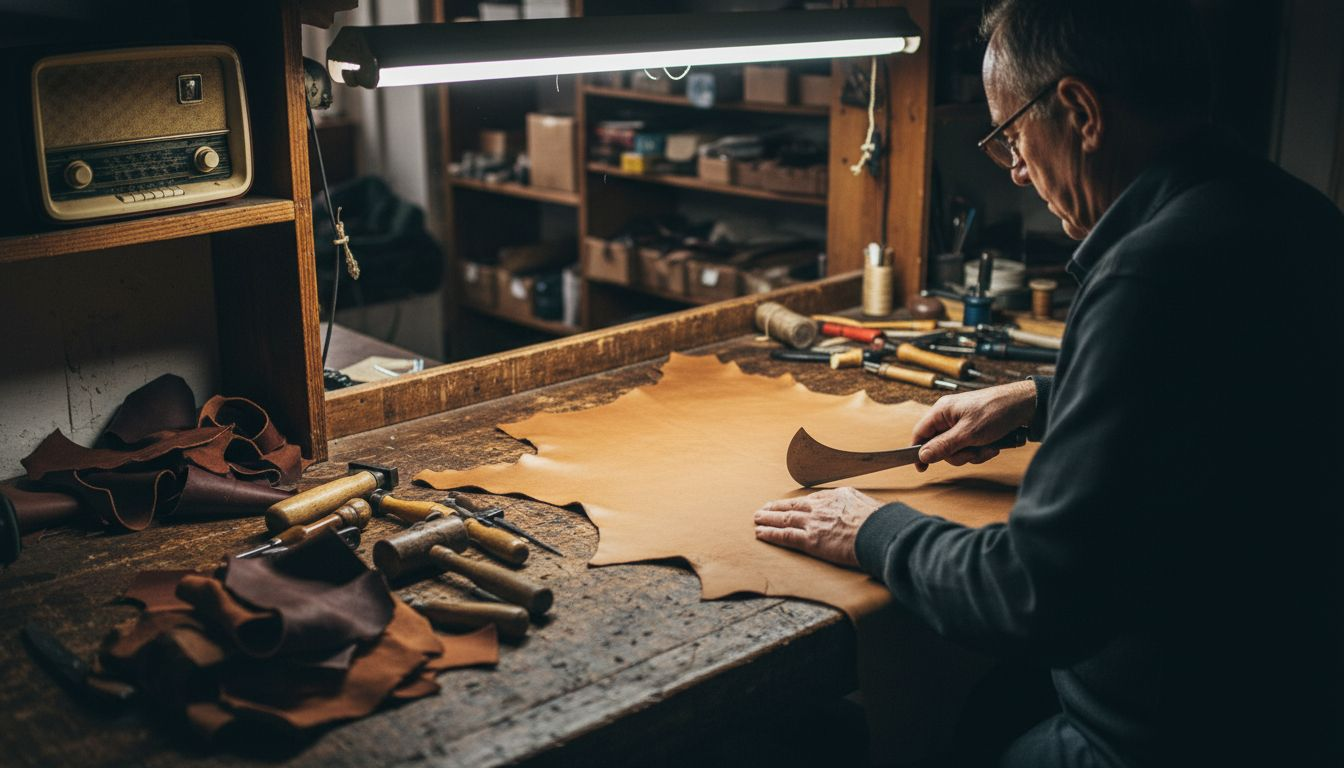
Leather production involves complex manufacturing processes with significant environmental consequences. Leather manufacturing historically evolved from vegetable tanning to chrome tanning, presenting substantial ecological challenges including water pollution, chemical waste generation, and considerable greenhouse gas emissions. Traditional leather processing requires extensive chemical treatments that often introduce harmful substances into manufacturing ecosystems.
In contrast, cork production represents a markedly different environmental approach. Cork harvesting occurs through a sustainable bark extraction method that does not harm cork oak trees, allowing repeated harvesting over decades. Each extraction actually stimulates tree growth and increases carbon sequestration, making cork a uniquely regenerative material. The Mediterranean cork forests, particularly in Portugal and Spain, function as critical ecological systems that support biodiversity while providing renewable raw materials.
Sustainable alternatives are emerging to address the leather industry’s environmental footprint, including bio-based and synthetic vegan leather options. These innovative materials aim to reduce resource consumption, minimise chemical usage, and provide environmentally responsible alternatives to traditional leather production. Life Cycle Assessment studies continue to evaluate and improve manufacturing techniques, highlighting the importance of transparent supply chains and ecological accountability.
Pro tip: When selecting accessories, research the full production journey of materials to understand their true environmental impact beyond superficial sustainability claims.
Durability, Aesthetics, and Everyday Use
Cork accessories present a fascinating alternative to traditional leather, offering remarkable durability and unique aesthetic qualities. Longitudinal studies investigating cork product performance reveal consistently positive user experiences across household and personal contexts, demonstrating the material’s impressive resilience and adaptability. Unlike leather, which can crack or degrade, cork maintains its structural integrity while developing a subtle, characterful patina that tells a story of use and experience.
The visual characteristics of cork distinguish it as a truly exceptional material. Its natural texture provides a sophisticated, organic appearance that seamlessly transitions between casual and professional settings. The lightweight nature of cork ensures comfort during everyday use, while its inherent flexibility allows accessories to adapt to various environmental conditions without compromising structural integrity. The material’s unique cellular structure enables it to resist moisture, repel dirt, and maintain its aesthetic appeal with minimal maintenance.
While leather has traditionally dominated the accessory market, cork offers a compelling alternative that balances performance, sustainability, and aesthetic innovation. Its natural variations in colour and texture mean that each cork accessory becomes a unique statement piece, reflecting individual style while maintaining environmental consciousness. The material’s ability to withstand daily wear without significant deterioration makes it an increasingly attractive option for discerning consumers seeking both functionality and ethical design.
Pro tip: Rotate and alternate your cork accessories to ensure even wear and maintain their distinctive visual character over time.
Vegan Credentials and Animal Welfare Issues
Vegan fashion choices represent a profound ethical statement that extends far beyond personal style. Contemporary research highlights significant animal welfare concerns inherent in traditional leather production, revealing complex ethical challenges surrounding animal slaughter and industrial farming practices. The leather industry’s reliance on animal hides raises critical questions about cruelty, exploitation, and the fundamental rights of sentient beings.
Consumer awareness regarding ethical product choices has dramatically increased in recent years, with more individuals actively seeking cruelty-free alternatives that align with their moral principles. This shift represents more than a fashion trend—it’s a fundamental reimagining of our relationship with material consumption. Cork emerges as a revolutionary alternative, offering a material that is not only vegan but also environmentally regenerative, providing consumers with an opportunity to make compassionate choices without compromising on quality or aesthetic appeal.
Plant-based and synthetic vegan leather alternatives, including cork, mycelia, and other innovative materials, present a comprehensive solution to the ethical dilemmas posed by traditional leather production. These materials demonstrate that style, durability, and ethical considerations can coexist harmoniously. By choosing vegan leather options, consumers actively participate in a broader movement that challenges industrial practices, promotes animal welfare, and supports more sustainable manufacturing approaches that respect both environmental and ethical boundaries.
Pro tip: Research the supply chain and production methods of your accessories to ensure they truly align with your ethical and environmental values.
Costs, Maintenance, and Longevity Compared
Cork accessories present a nuanced economic proposition that extends far beyond initial purchase price. Comparative life cycle assessments reveal cork’s distinctive maintenance and durability characteristics, demonstrating that while upfront costs might differ from traditional leather, the long-term value proposition is remarkably compelling. The material’s inherent resilience means fewer replacements and reduced long-term expenditure, making cork a financially savvy choice for discerning consumers.
Maintenance requirements for cork differ significantly from leather, offering both challenges and advantages. Cork’s unique cellular structure allows for easier cleaning and more straightforward preservation, requiring minimal specialised treatment. Unlike leather, which demands regular conditioning and can be susceptible to water damage, cork naturally resists moisture and maintains its structural integrity with simple, occasional care. This reduced maintenance regime translates directly into time and cost savings for the consumer, without compromising aesthetic appeal or functional performance.
The longevity of cork accessories challenges conventional expectations about sustainable materials. While traditional leather may develop a predictable patina, cork evolves more dynamically, maintaining its structural integrity and visual character over extended periods of use. Each cork item develops a unique narrative of wear, reflecting individual usage patterns while retaining its fundamental qualities. This characteristic makes cork not just a material choice, but an investment in a personalised, enduring accessory that transcends transient fashion trends.
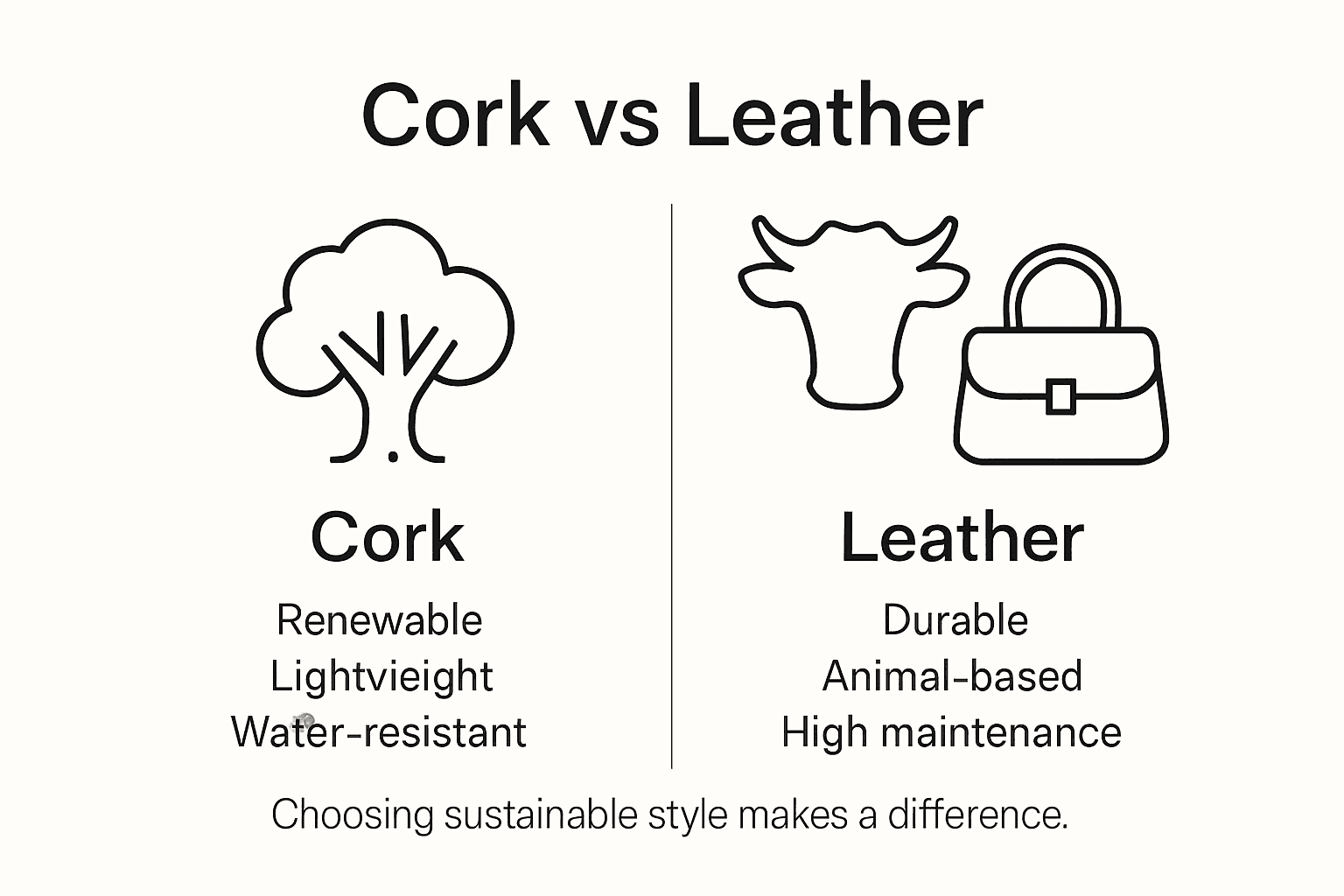
Below is a summary of the long-term economic and practical value of cork versus leather accessories:
| Aspect | Cork Accessories | Leather Accessories |
|---|---|---|
| Upfront Cost | Moderate, varies with design | Often higher for genuine |
| Longevity | Durable, adapts to wear | Can crack, needs repair |
| Maintenance Cost | Low, simple upkeep | Higher, requires products |
| Replacement Rate | Less frequent, retains quality | More frequent, aesthetic loss |
| Value Over Time | Unique patina, sustainable spend | May fade or lose character |
Pro tip: Invest in a soft, dry cloth for regular cork accessory maintenance, and avoid prolonged exposure to direct sunlight to preserve colour and texture.
Discover Sustainable Style with Cork Accessories at The Cork Store
Choosing between cork and leather for your accessories involves careful thought about sustainability, durability and ethical impact. If you want to embrace a truly eco-conscious lifestyle without sacrificing style or quality, explore the exceptional range of goods at The Cork Store. Our curated collection of vegan cork handbags, wallets and backpacks offers an innovative alternative that aligns perfectly with the growing demand for cruelty-free and environmentally responsible fashion.
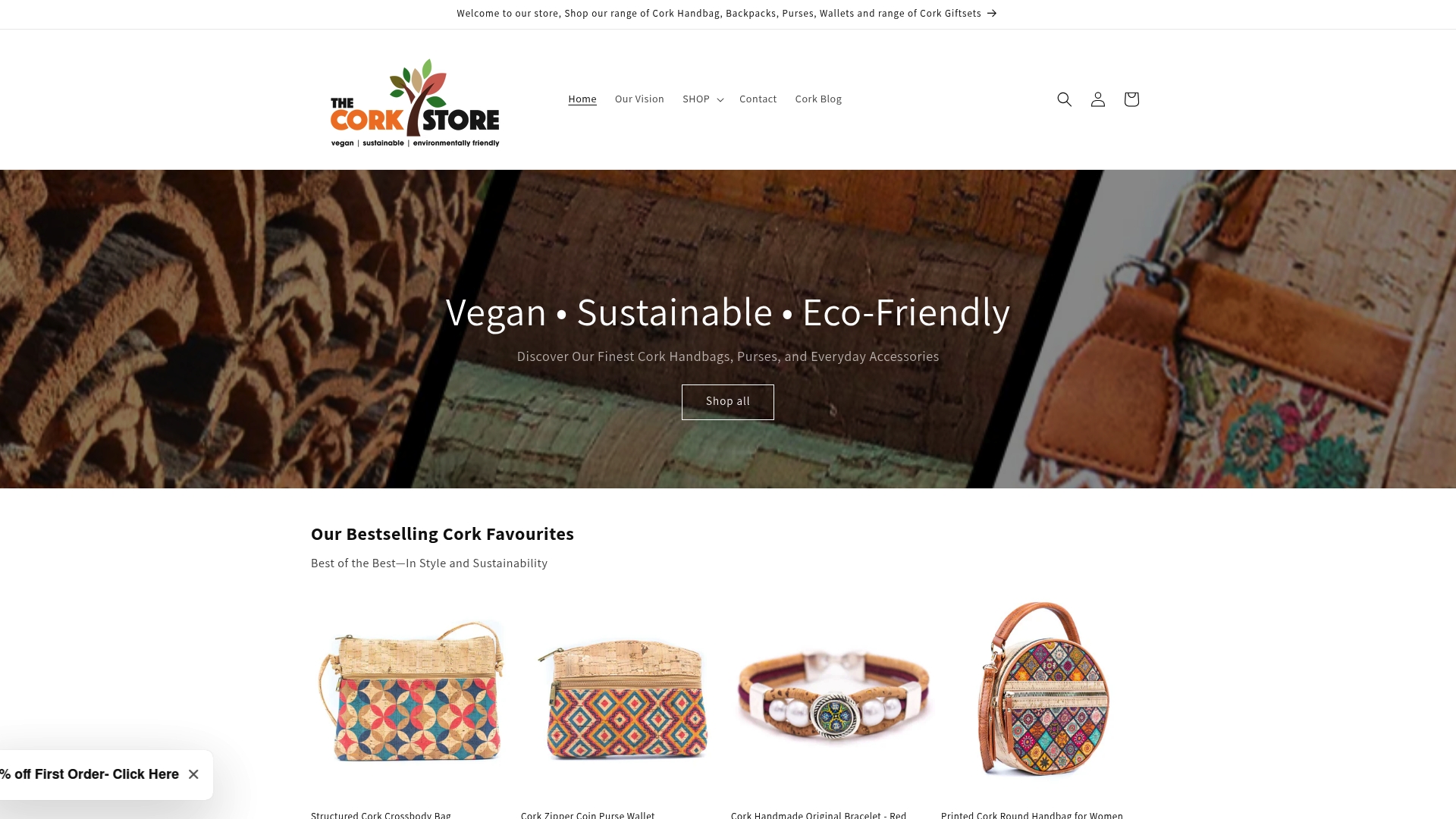
Make the switch today to accessories that combine lightweight durability, natural water resistance and elegant design. Browse bestselling items and new arrivals designed to complement your values and daily needs. Visit The Cork Store online now and safeguard both the planet and your style with sustainable cork accessories that tell a meaningful story. Start shopping now to enjoy lasting quality and ethical peace of mind.
Frequently Asked Questions
What are the main environmental benefits of cork over leather?
Cork production involves sustainable harvesting practices that do not harm trees, promoting ecological preservation and carbon sequestration. In contrast, leather production often results in high emissions and chemical waste due to complex processing.
How does the durability of cork compare to traditional leather?
Cork is highly durable and maintains its structural integrity over time, while leather can crack or degrade with use. Cork develops a unique patina that adds character without losing quality, making it a long-lasting choice for accessories.
Is cork a suitable material for everyday accessories?
Yes, cork is lightweight, flexible, and naturally water-resistant, making it ideal for everyday use. Its unique cellular structure helps resist moisture and dirt, requiring minimal maintenance while remaining stylish and functional.
How does the cost of cork accessories compare to leather options?
While the upfront cost of cork accessories may vary, their low maintenance needs and high durability often translate to better long-term value compared to leather, which typically requires more frequent replacements and specialised care.
Recommended
- Cork Vs Traditional Leather – Sustainable Fashion Choices – The Cork Store
- Understanding What is Cork Leather and Its Benefits – The Cork Store
- Why Cork Is Durable: Complete Guide to Its Longevity – The Cork Store
- Environmental Impact of Cork – Sustainable Fashion Choice – The Cork Store
- Eco-Friendly Roofing Options in Vancouver: A Roofer’s Honest Take