
Grade A Cork Wall Covering: Buy Cork Bags With Confidence
“Cork wall covering” in fashion means cork fabric, the plant-based material Thecorkstore uses for its handbags, wallets and purses instead of animal leather or PU. It is cork oak bark, sliced thin and laminated to a textile backing. This guide covers how it is made, how to judge quality from a product photo, how to look after it, and where to buy it with confidence.
TL;DR:
- Cork fabric’s quality depends heavily on its grade, backing material, and proper lamination, with Grade A offering the best durability and consistency.
- Only buy cork accessories with clearly stated grade, verified FSC or PETA certification, and high-quality backing materials to ensure long-lasting performance.
- Proper care involves spot cleaning with mild soap, avoiding heat and chemicals, and storing the item stuffed in a breathable dust bag away from sunlight.
- Cork’s water resistance, elasticity, and antimicrobial properties make it a practical, eco-friendly alternative to leather and PU in both fashion and accessories.
- Thecorkstore exclusively stocks Grade A cork products, guaranteeing high quality, thorough sourcing, and durability compared to lower-grade, unverified options.
Table of Contents
- What is cork fabric and how is it made?
- Why eco-conscious buyers are choosing cork over leather and PU
- How is cork quality graded, and what should you check before buying?
- How do you care for a cork handbag or wallet?
- Which cork accessories suit which occasions?
- How should you buy cork accessories online?
- What do cork accessories cost, and why does the price vary so much?
- Beyond bags: where else does cork fabric turn up?
- Could cork cause allergies or skin sensitivities?
- How sustainable is cork fabric, really?
- Why Thecorkstore only stocks Grade A cork
- Shop the curated cork collection
- Sources
What is cork fabric and how is it made?
Cork fabric starts as bark stripped from a living cork oak, and the tree is never felled. A single tree can be harvested roughly every nine years, with the first strip usually happening once the tree reaches 20 to 30 years old. That harvest cycle is one reason cork keeps turning up in sustainability conversations: the tree keeps growing, keeps sequestering carbon, and keeps producing bark for decades.
Once stripped, the raw bark goes through several stages before it resembles the material on a handbag:
- Drying in open air to stabilise the bark
- Boiling or steaming, which increases elasticity and softens the cells
- Flattening under heat and pressure
- Slicing into thin sheets, typically under a millimetre thick
- Laminating those sheets onto a fabric backing, usually cotton, microfiber or polyester
That last step matters more than most buyers realise. Two products can use cork from the same forest and still feel completely different in the hand, purely because one uses a brushed cotton backing and the other uses a thin, stiff polyester one.
Why eco-conscious buyers are choosing cork over leather and PU
Cork holds up well against both animal leather and PU (polyurethane) leather on the properties that actually matter day to day: flexibility, weight and resistance to water. Where PU tends to crack and peel within a couple of years and animal leather needs conditioning to stay supple, cork’s cellular structure gives it natural elasticity that does not degrade the same way with normal use.
That performance comes down to suberin, the waxy compound that makes up a large part of cork’s cell walls. Suberin is naturally water-repellent and has antimicrobial properties, which is why cork bags shrug off light rain and resist the odours that build up in synthetic linings over time.
The sustainability case goes beyond the material itself. Because the tree is never cut down, a working cork forest stays a forest indefinitely, supporting the biodiversity of the Mediterranean cork oak landscapes where most of the world’s cork is grown. Sustainably managed cork forests function as long-term carbon stores precisely because harvesting bark does not interrupt the tree’s growth cycle.
A few practical things to expect when you shop:
- Natural texture and colour variation from sheet to sheet, since cork is a natural material, not a printed one
- Slightly different hand feel depending on backing thickness and finish
- Better durability in areas of high friction, like bag corners, on thicker Grade A sheets
Pro Tip: Two cork bags can look nearly identical in photos and wear completely differently after a year. If a listing doesn’t mention the backing material, ask before you buy.
How is cork quality graded, and what should you check before buying?
Cork fabric is generally sold under a Grade A, B or C classification, and the letter tells you a lot about what you’re getting. Grade A cork is the densest and most consistent, commonly measuring thin thickness; it’s what you want for a bag or wallet that gets daily handling. Lower grades tend to show more surface flaws and thinner, less uniform coverage, which shows up as cracking or bald patches sooner.
Before adding anything to your basket, run through this shortlist:
- Check the grade. If a listing doesn’t state Grade A, B or C, ask the seller directly.
- Read the backing material. A high-quality brushed backing gives cork a leathery hand; a flimsy one feels stiff and board-like no matter how good the cork layer is.
- Look for certifications. FSC certification confirms the cork came from a responsibly managed forest, and PETA-Approved Vegan labelling confirms no animal-derived materials anywhere in the piece.
- Zoom in on the photos. Edge finishing, stitch consistency, lining quality and hardware plating all tell you more about overall build quality than the product description usually does.
Honest sellers tend to be specific rather than vague. “Genuine cork fabric” without a grade or backing detail is a soft flag worth a follow-up question.
How do you care for a cork handbag or wallet?
Cork is genuinely low-maintenance, but it isn’t indestructible, and a few habits make the difference between a bag that lasts years and one that looks tired within months.
- Spot-clean only. A damp cloth lifts most marks; machine washing and ironing are the two things every cork sewing guide warns against, since heat and agitation break down the surface.
- Skip harsh chemicals. Mild soap and water is plenty. Solvents and strong detergents strip cork’s natural finish.
- Store it stuffed. Tissue paper or a rolled cloth inside keeps the shape from collapsing during storage.
- Use a breathable dust bag, not plastic, and keep bags out of direct sunlight for long stretches, since UV exposure can fade natural cork tones over time.
- Handle small repairs gently. A loose thread can usually be trimmed and tucked, but anything involving the lamination itself is a job for a professional rather than a DIY fix.
For a fuller walkthrough, Thecorkstore’s cork bag maintenance guide and accessory care guide both go deeper on specific stain types and everyday habits.
Which cork accessories suit which occasions?
A structured cork tote or crossbody handles daily wear well: light enough for all-day carrying, sturdy enough to survive a commute. For travel, cork’s water resistance earns its keep, particularly in a duffel or weekend bag that might end up on a wet pavement or in an overhead locker. Smaller cork wallets and card holders work just as well for formal occasions, since natural cork’s understated grain reads as quietly premium rather than casual.
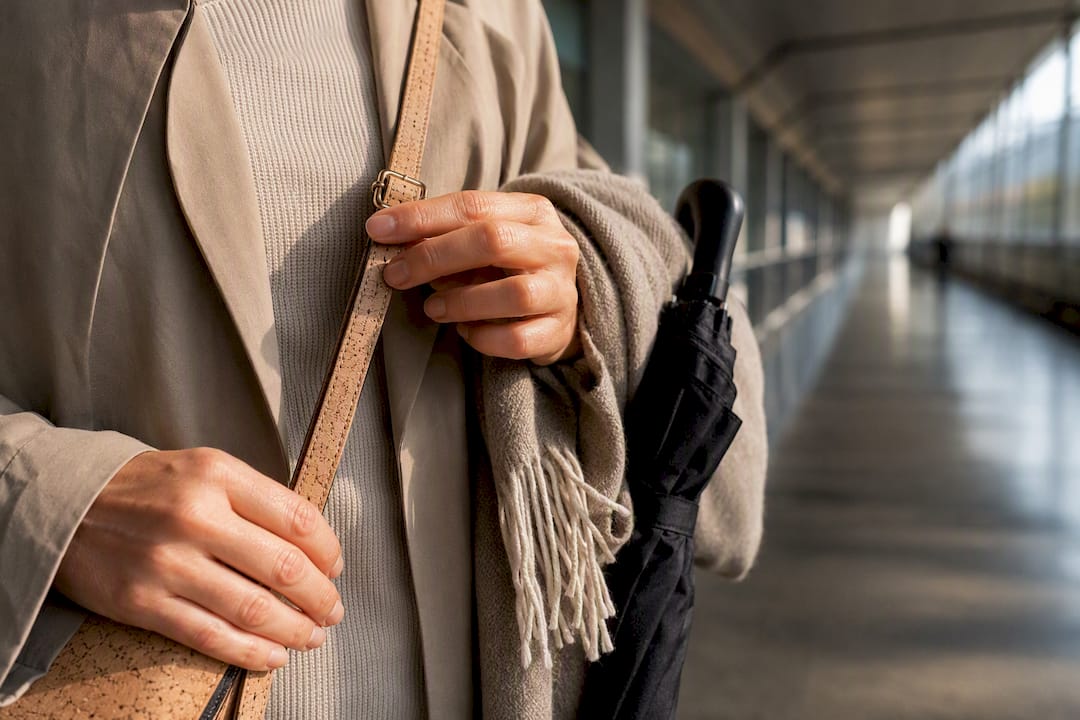
On colour and finish, natural cork tones (warm honey, deep walnut, muted grey) pair easily with most wardrobes, while printed cork, patterned with anything from botanical designs to bold colour blocks, suits buyers who want a statement piece rather than a neutral one.
A few pairing ideas worth considering:
- Brass or gold hardware against natural cork tones for a warmer look
- Organic cotton linings inside the bag, which keep the whole piece animal-free and plastic-free
- Adjustable canvas or cork straps for versatility between shoulder and crossbody wear
Cork gift sets, pairing a wallet with a smaller pouch or cardholder, make sense for anyone shopping for a vegan friend without knowing their exact style preference. Thecorkstore’s styling guide has more outfit-specific pairings if you want to see it worn rather than described.
How should you buy cork accessories online?
Before checkout, run through a short mental list: confirm the grade and backing material, check for FSC or PETA-Approved Vegan certification, study the product photos for stitching and edge quality, and read the returns policy properly rather than skimming it.
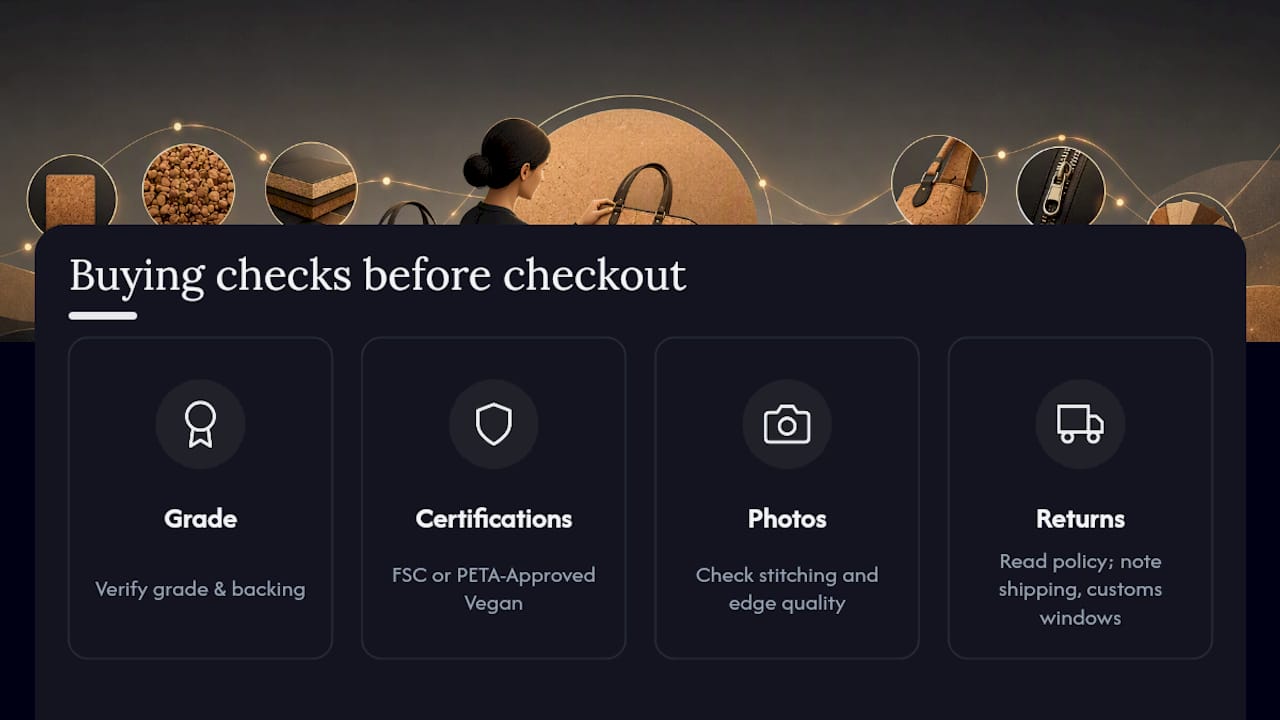
International orders bring their own small print. Shipping times, customs handling and return windows all vary by destination, so it’s worth confirming these on the product page itself rather than assuming standard terms apply everywhere.
Thecorkstore curates its range specifically around verified cork quality and straightforward checkout, so buyers aren’t left guessing about grade or sourcing. The full buying guide covers this in more depth, including what “verified” actually means for cork accessories specifically.
What do cork accessories cost, and why does the price vary so much?
Price differences in cork fashion accessories almost always trace back to two things: cork grade and backing quality. A cardholder or small pouch in lower-grade cork with a basic backing sits at the budget end, while a full-size Grade A cork handbag with a brushed cotton backing, reinforced stitching and solid hardware sits considerably higher.
Construction complexity adds another layer. A simple flat wallet costs less to produce than a structured tote with multiple compartments, metal zips and a fully lined interior. Certification adds a small premium too. FSC-certified cork and PETA-Approved Vegan labelling both involve verification costs that responsible sellers pass through, but they’re the clearest signal you’re getting what the listing claims.
It’s worth treating an unusually cheap “genuine cork” bag with some scepticism. Producing real cork fabric properly, from the nine-year harvest cycle through boiling, drying and lamination, has a floor cost that thin, unbranded listings sometimes don’t reflect. If a price looks too low for a full-size bag with a stated Grade A cork layer, the backing or the grading claim is usually where corners have been cut.
Buying a well-made cork piece once tends to work out cheaper over years of use than repeatedly replacing a PU alternative that cracks within a couple of seasons. That’s less about upfront price and more about cost per year of actual wear.
Beyond bags: where else does cork fabric turn up?
Cork fabric’s flexibility and durability make it useful for more than finished handbags. Bag manufacturers commonly use it for straps, small pouches, phone cases and decorative accents, letting a single sheet of cork stretch across several product lines rather than one. Its light weight is part of the appeal here: a full-grain leather strap adds noticeable heft to a bag, while a cork one barely registers.
It also shows up in accessories adjacent to fashion, wallets, laptop sleeves, notebook covers, where the same water resistance and surface durability that suit a handbag suit a daily-carry item. The material’s visual character, that fine, natural grain with subtle colour variation, tends to read as premium and tactile in ways that printed synthetic finishes struggle to match. For eco-conscious buyers building out a wardrobe of vegan accessories rather than a single bag, this versatility is part of the draw: a cork wallet, cardholder and bag strap can all come from compatible material without relying on animal hide or petroleum-based plastic anywhere in the set.
Could cork cause allergies or skin sensitivities?
Genuine reactions to cork fabric are rare. Cork itself is generally classed as hypoallergenic, and its natural, plant-derived composition means it lacks the chemical tanning agents and synthetic coatings that sometimes trigger skin irritation with treated animal leather or certain PU finishes.
That said, “cork fabric” is a composite product, not pure cork. Reactions, when they happen, more commonly trace back to the backing material, an adhesive used in lamination, or a dye applied to printed cork designs, rather than the cork bark itself. Anyone with a known sensitivity to specific fabric dyes or adhesives should check the full material composition on a product listing rather than assuming “cork” alone rules out any reaction.
If you have particularly sensitive skin, look for listings that specify a natural cotton backing and undyed, natural cork tones, since these keep the ingredient list about as simple as a fashion accessory gets.
How sustainable is cork fabric, really?
Cork’s environmental case rests on three things happening together: the tree survives every harvest, the forest keeps functioning as a carbon sink, and the material itself biodegrades far more readily than PU or chrome-tanned leather at the end of its life. None of that is true by default; it depends on responsible forestry and honest sourcing.
That’s where certification earns its place. FSC certification specifically verifies that the cork oak forest a piece came from is managed to standards that protect long-term forest health, not just harvested for a quick yield. Buyers who care about the sourcing story, not just the finished bag, should treat an FSC label as a meaningful filter rather than a nice extra.
Compared with the alternatives it’s replacing, cork’s advantage is structural rather than marginal. Animal leather production carries the land, water and methane footprint of livestock farming. PU leather is petroleum-derived and doesn’t biodegrade on any practical timescale. Cork sits apart from both: a renewable bark harvest from a tree that keeps growing, processed with heat and pressure rather than heavy chemical treatment, and did not exist as an animal or a barrel of oil the year before it became a bag.
Why Thecorkstore only stocks Grade A cork
Sourcing well is harder than it sounds. Cork quality varies enormously between suppliers, and a lot of what gets marketed as “genuine cork leather” online uses thin, low-grade sheets over backing that won’t survive a year of real use. Thecorkstore built its curation process around Grade A cork specifically because that’s the grade that actually performs the way buyers expect a premium vegan material to perform, in durability, in hand feel, in how it ages.
That standard shapes every product on the site, not just the flagship pieces. It’s a stricter bar than the market generally sets for itself, and it’s one worth holding suppliers to.
— Aaron
Shop the curated cork collection
Thecorkstore exists because most cork fashion listings don’t tell you what grade you’re buying or what’s holding the material together, and that guesswork is exactly what the checklist above is meant to solve. Every piece in the collection uses Grade A cork with a verified backing, so you’re not left cross-referencing certifications and photos before you can trust a listing.
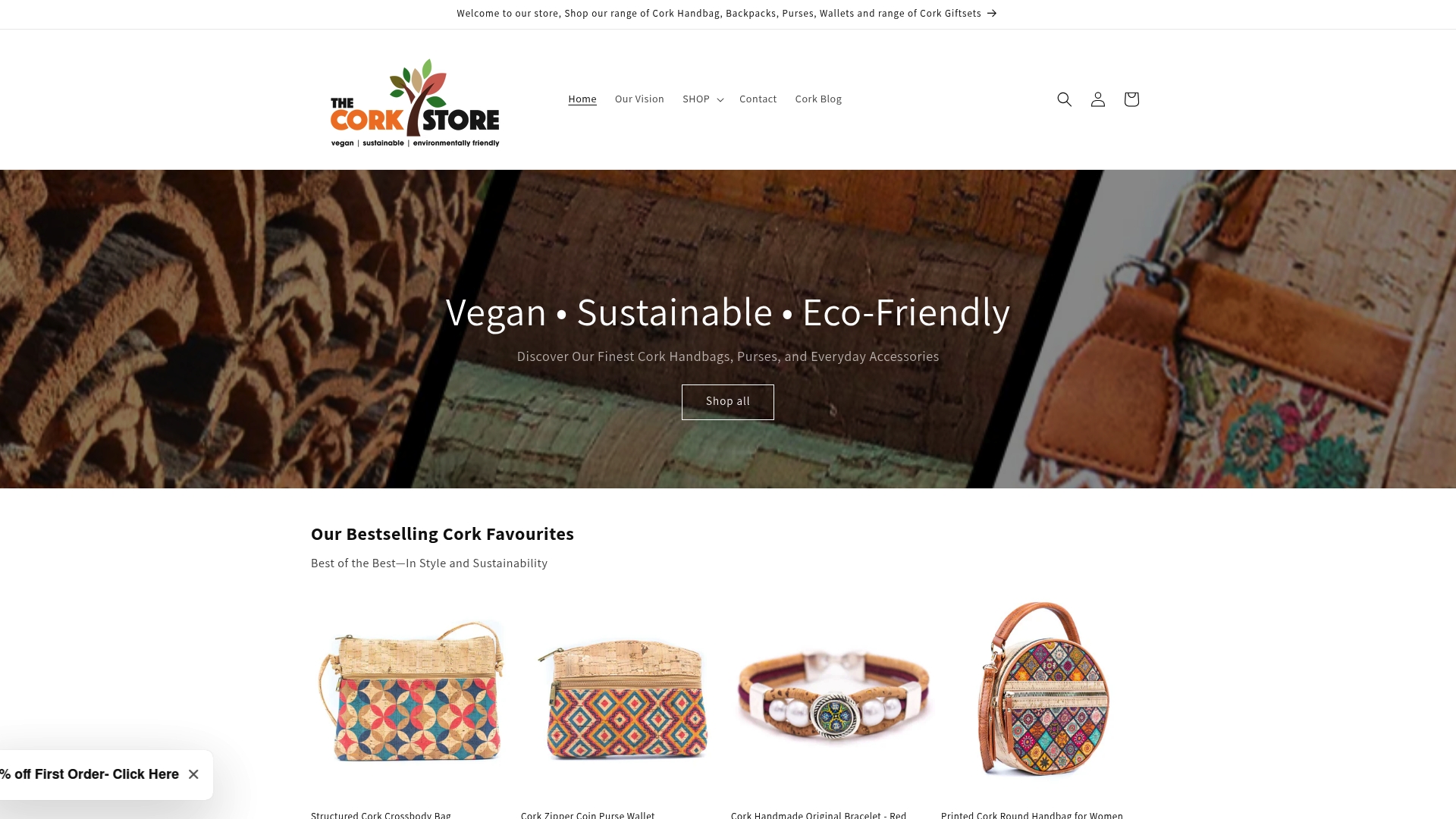
Browse the full range of handbags, wallets and gift sets, each listed with its grade, backing material and care details up front, and check out securely once you’ve found the piece that fits. Start at the Thecorkstore collection to see current stock and sizing.
Sources
- Cork fabric is a sustainable material worth embracing — Natural Cork Council
- What is cork fabric? Is cork leather sustainable? — Sustainable Jungle
- Cork couture: sewing with cork fabric — SewDaily
- Cork fabric: how it’s made — CSMB Cork
- Sewing with cork — Threads magazine