
How to identify quality cork products: eco buyer's guide
TL;DR:
- Genuine cork features visible lenticels, irregular grain patterns, and a lightweight, textured feel.
- High-quality cork accessories use durable woven or microsuede backing and have strong, even construction.
- Look for FSC and GOTS certifications to ensure cork products are sustainably sourced and environmentally responsible.
Not every product labelled ‘cork’ deserves that name. The eco-accessories market has grown rapidly, and with it comes a wave of imitations that look the part but fall short on sustainability, durability, and authenticity. If you care about what you buy and where it comes from, knowing how to separate genuine, high-grade cork from synthetic lookalikes is genuinely useful knowledge. This guide walks you through the visual cues, physical tests, construction checks, and certifications that reveal whether a cork product is the real thing or simply greenwashing dressed up in earthy tones.
Table of Contents
- What makes cork a quality choice?
- How to evaluate cork: texture, structure and natural flaws
- Check the backing and construction for durability
- A sustainable checklist: certifications and eco-standards
- Put cork to the test: physical properties and everyday performance
- Why the ‘perfect’ product is often the wrong one
- Explore our range of certified cork accessories
- Frequently asked questions
Key Takeaways
| Point | Details |
|---|---|
| Assess natural texture | Genuine cork always features visible pores and irregular patterns not found in synthetic imitations. |
| Check eco certifications | Certifications like FSC and GOTS verify the cork’s sustainability and ethical sourcing. |
| Examine backing and build | Quality cork products will have natural woven or microsuede backings, not synthetic materials. |
| Test real-world durability | Premium cork is lightweight, water-resistant, and ages beautifully for long-term use. |
What makes cork a quality choice?
Cork comes from the bark of the cork oak tree (Quercus suber), harvested by hand every nine to twelve years without cutting the tree down. That process alone makes it one of the most benefits of cork products in the sustainable fashion world. The tree continues to live, absorb CO2, and regenerate its bark, which means each harvest actively supports the ecosystem rather than depleting it.
But what does ‘quality’ actually mean when it comes to cork fabric used in accessories? It means the material retains its natural character. What is natural cork reveals that the bark contains millions of tiny air-filled cells, giving it that distinctive lightweight, slightly spongy feel. Quality cork fabric preserves these properties rather than processing them out.
One of the clearest signs of genuine cork is its appearance. Natural texture with visible lenticels, irregular patterns, and unique markings from the cork bark distinguish real cork from uniform synthetics. No two pieces of cork look identical, which is precisely the point.
Here is what sets natural cork apart:
- Visible lenticels (small pores across the surface)
- Irregular grain patterns that shift across each piece
- Lightweight feel despite its structural strength
- Natural CO2 sequestration during the tree’s growth cycle
- Biodegradability at end of life, unlike PU or plastic alternatives
“Cork forests are among the most biodiverse in the world, supporting over 200 animal species and 135 plant species in the Mediterranean region.” This is not just a material. It is an ecosystem.
Synthetic cork, by contrast, tends to look almost too perfect. The cork fabric explained resource notes that manufactured alternatives lack the organic character that makes natural cork both beautiful and traceable to its source.
How to evaluate cork: texture, structure and natural flaws
With cork’s value clear, let’s look at physical cues to judge item quality up close.
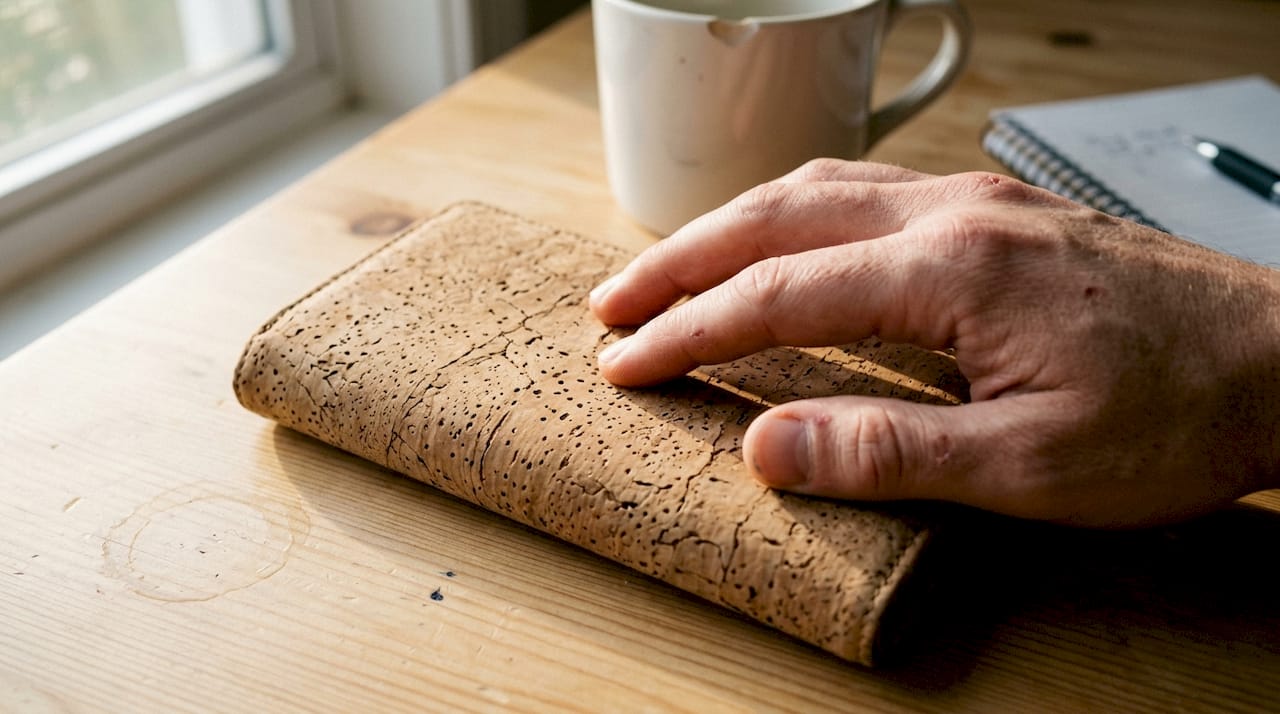
The most reliable indicator of genuine cork is its surface texture. Run your fingers across it. Real cork feels slightly warm, subtly textured, and never perfectly smooth. Synthetics tend to feel cooler, more plastic-like, and uniform in a way that nature simply does not produce.
Look closely at the surface under good light. Natural cork shows pores and lenticels, small cracks, and occasional wormholes. These are not defects. They are proof of origin. Fewer and smaller flaws indicate a higher grade, with Grade A cork showing no pores larger than 2mm, but some natural variation is always present and always welcome.
Here is a quick comparison to keep in mind:
| Feature | Natural cork | Synthetic cork |
|---|---|---|
| Surface texture | Irregular, warm, tactile | Uniform, smooth, cool |
| Lenticels visible | Yes | No |
| Pattern repetition | Never repeats | Often repeats |
| Weight | Very light | Heavier |
| Eco credentials | Excellent | Poor to moderate |
When inspecting a product, work through this checklist:
- Look for lenticels across the surface. They should be visible but not gaping.
- Check for pattern repetition. If the grain repeats identically, it is likely synthetic.
- Feel the weight. Genuine cork is noticeably light.
- Examine edges and seams for exposed cork cross-section, which shows natural cell structure.
- Assess small imperfections. A few wormholes or fine cracks are fine. Large voids or excessive crumbling are not.
When comparing cork vs. leather accessories, cork’s natural irregularity is actually one of its most appealing qualities. Each piece is genuinely one of a kind.
Pro Tip: Hold the product at an angle under natural light. The lenticels on real cork will catch the light differently across the surface, creating a subtle shimmer effect that synthetics cannot replicate.
Check the backing and construction for durability
Once you recognise the surface characteristics, construction quality is the next differentiator.
Cork fabric is always bonded to a backing material to give it structure and flexibility. That backing matters enormously, both for durability and for the product’s overall sustainability credentials. High-quality cork fabric uses woven or microsuede backing. Avoid nonwoven backings, which crack over time, and PU or synthetic backings, which undermine the product’s biodegradability.
Here is how the main backing types compare:
| Backing type | Durability | Eco credentials | Flexibility |
|---|---|---|---|
| Woven fabric | Excellent | High | Good |
| Microsuede | Very good | High | Excellent |
| Nonwoven | Poor | Moderate | Low |
| PU/synthetic | Moderate | Low | Moderate |
Beyond the backing, look carefully at the construction of the item itself. The role of cork in eco fashion is partly about longevity. A well-made cork accessory should last years, not months.
Signs of strong construction include:
- Neat, even seams with no fraying or loose threads
- Painted or sealed edges that prevent the cork from peeling at the borders
- Reinforced stress points at handles, zips, and corners
- Consistent cork thickness across the entire panel
- Lining quality that matches the exterior in care and finish
Also check how the cork panel is attached to the backing. Peel a corner gently if possible. The bond should be firm and even. Delamination (where the cork separates from the backing) is a sign of poor adhesive work and will shorten the product’s life significantly. The cork fabric sustainability argument only holds if the product actually lasts.
A sustainable checklist: certifications and eco-standards
Durability matters, but true eco-quality includes ethical sourcing. Here is how to check.
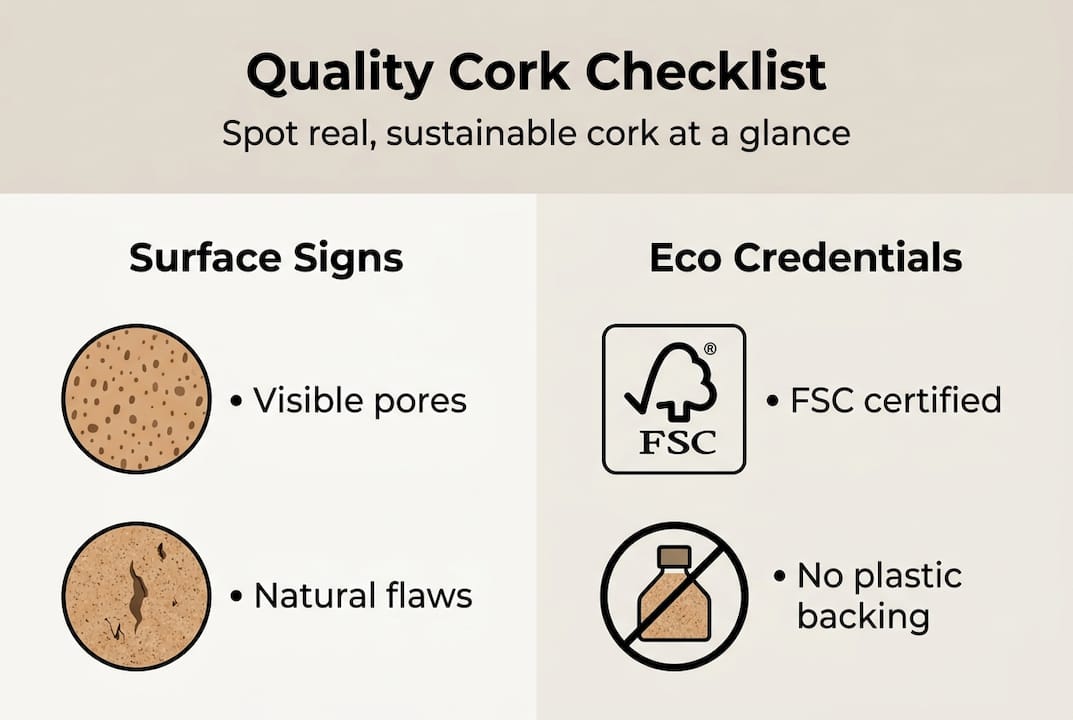
Certifications are the most reliable shortcut for verifying a product’s environmental credentials. They cut through marketing language and give you something concrete to look for. FSC for sustainable sourcing from responsibly managed cork oak forests is the gold standard. GOTS (Global Organic Textile Standard) covers organic backings. Avoid products that use synthetic binders or PFAS treatments, which are chemical coatings linked to environmental harm.
Cork forests are remarkable carbon sinks. The environmental impact of cork is genuinely positive: cork oak forests sequester up to 73 tonnes of CO2 per tonne of cork harvested, making certified cork one of the most climate-positive materials available in fashion.
Here are the key certifications to look for:
- FSC (Forest Stewardship Council): Confirms the cork comes from a responsibly managed forest.
- GOTS (Global Organic Textile Standard): Applies to any organic fabric backing used in the product.
- OEKO-TEX Standard 100: Ensures the finished product is free from harmful substances.
- Vegan Society certification: Confirms no animal-derived materials were used anywhere in production.
The cork sustainability benefits go beyond the material itself. Certified supply chains support fair labour practices and responsible land management across the cork-producing regions of Portugal, Spain, and Morocco.
Pro Tip: Be sceptical of vague eco-language like “natural,” “earth-friendly,” or “green.” These terms have no legal definition. Certifications do. If a brand cannot name a specific certification, that is worth noting.
Put cork to the test: physical properties and everyday performance
Certifications and design set expectations. Now for practical tests you can do before buying.
Genuine, high-quality cork has a distinctive physical character. It should feel flexible and springy, not stiff or brittle. High-quality cork is water-resistant, stain-resistant, and lightweight with high abrasion resistance. It ages gracefully without cracking, which is one of the reasons it is such a compelling choice for everyday accessories.
When you have a product in hand, try these simple checks:
- Bend test: Gently flex the cork panel. It should bend without cracking or creasing permanently.
- Press test: Press your thumbnail lightly into the surface. It should leave a very slight impression that recovers quickly.
- Damp wipe test: Wipe the surface with a barely damp cloth. Water should bead or wipe away cleanly, not soak in.
- Weight check: Compare to a similar leather item. Cork should feel noticeably lighter.
- Scratch resistance: Drag a fingernail lightly across the surface. Quality cork resists light scratching well.
The cork handbags benefits include this natural resilience. A well-made cork bag handles daily use without showing the kind of wear that cheaper alternatives display within months. The cork durability facts back this up: laminated cork actually has higher abrasion resistance than leather.
Pro Tip: Real cork develops a gentle patina over time, darkening slightly at points of regular contact. This is not damage. It is character, and it means the material is behaving exactly as it should.
Why the ‘perfect’ product is often the wrong one
Here is something that might surprise you: the most common mistake eco-conscious shoppers make is rejecting cork products for looking imperfect. A small lenticel, a faint wormhole, a subtle variation in colour across a panel. These are treated as flaws when they are actually the opposite.
The market has conditioned us to expect uniformity. Leather goods are buffed, dyed, and finished to remove all trace of the animal they came from. Synthetic materials are manufactured to be identical every time. So when we encounter a material that looks genuinely natural, our instinct is sometimes to question its quality rather than celebrate it.
At The Cork Store, we see this regularly. Customers occasionally ask whether a product is “faulty” because the grain does not match perfectly across two panels. It is not faulty. It is real. That variation is what makes each piece unique, and it is exactly what you should be looking for when you want to be certain you are buying the genuine article.
Sustainability is not about perfection. It is about authenticity. A cork accessory that shows its natural origins, carries a credible certification, and is built with honest construction will outlast and outperform a flawless-looking synthetic every time.
Explore our range of certified cork accessories
If you are ready to shop with confidence, The Cork Store makes it straightforward. Every product in our collection is crafted from natural cork fabric with woven or microsuede backing, sourced from responsibly managed cork oak forests.
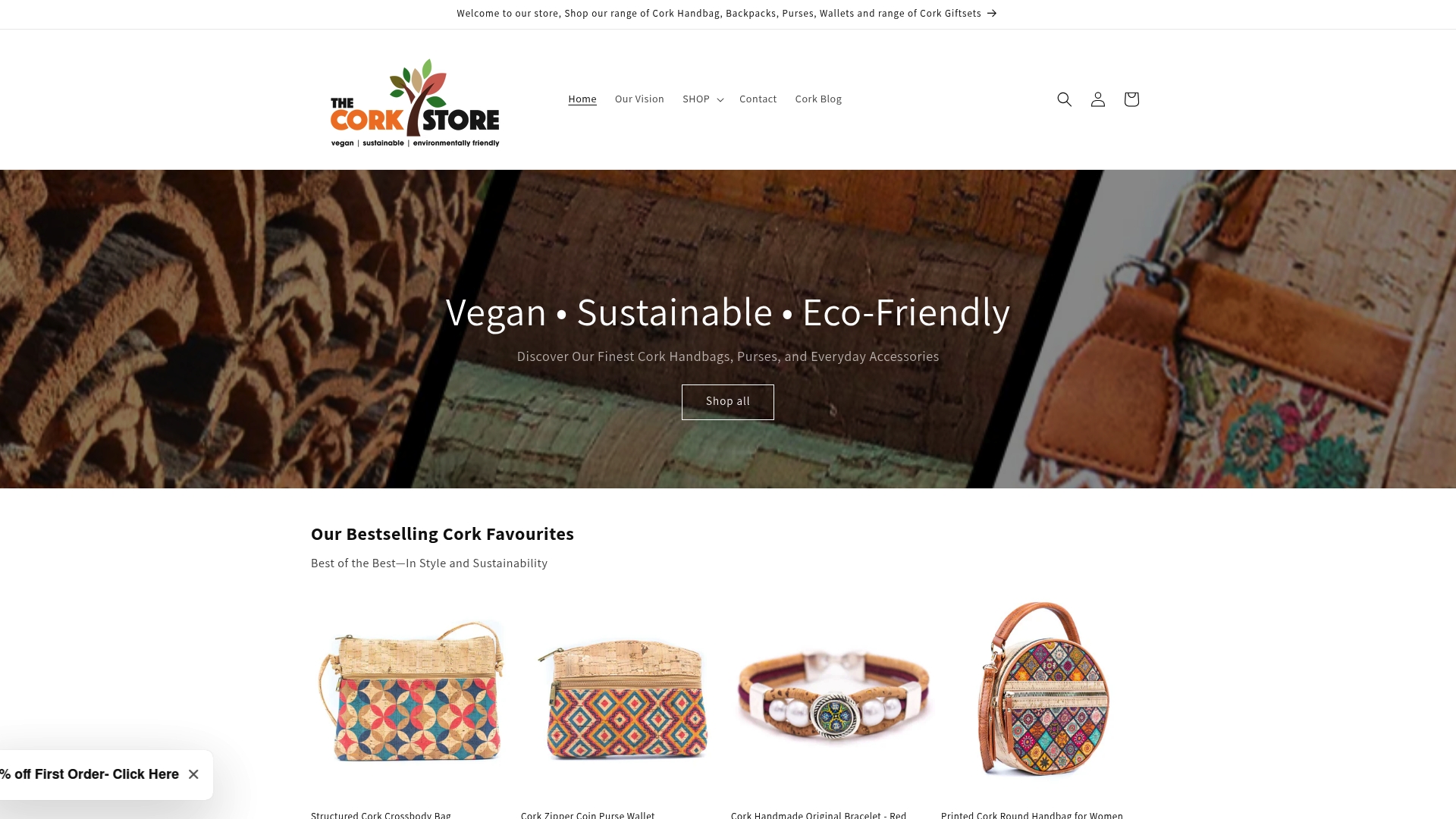
We believe sustainable fashion should not require compromise on style or quality. Our cork handbags, wallets, and accessories are designed to meet the standards covered in this guide: natural texture, honest construction, and verifiable eco-credentials. Whether you are new to cork or adding to an existing collection, you will find pieces that look beautiful and last. Browse our full range and see the difference that genuine cork makes.
Frequently asked questions
How do I know if a cork product is real or synthetic?
Look for visible lenticels and irregular patterns across the surface. Synthetic cork is manufactured to be uniform, so any repetition in the grain is a strong indicator it is not natural.
What backing material should I look for in cork fashion accessories?
Woven or microsuede backing gives the best combination of durability and sustainability. Avoid PU or plastic backings, which crack over time and compromise the product’s eco credentials.
Are cork products really sustainable and biodegradable?
Genuine cork is both sustainable and biodegradable, particularly when sourced from FSC-certified cork forests that meet verified environmental and social standards.
How durable are quality cork products?
Laminated cork resists abrasion better than leather and ages without cracking, making it well-suited to daily use in bags, wallets, and accessories.
What certifications indicate truly eco-friendly cork?
Look for FSC for the cork itself and GOTS for organic backings. These are independently verified standards, unlike vague marketing terms such as “natural” or “eco-friendly.”