
Cork sales explained: how to buy vegan cork accessories
Cork sales mean buying vegan, sustainable accessories made from cork oak bark, not property listings in County Cork. If you’re shopping for a handbag, wallet or backpack made from cruelty-free material, start by browsing Thecorkstore’s curated collections, sorted by bestsellers, new arrivals and gift sets. Check each product page for three things before adding to basket: the cork-to-backing ratio, the lining material, and any certification marks.
Prices for cork textiles sit in a realistic band rather than a bargain-bin one. Research into cotton–cork blended fabric puts sample pricing at $24 to $40 per metre, which explains why a well-made cork bag costs closer to a mid-range leather one than a fast-fashion synthetic.
- Browse handbags and crossbody bags first if you want an everyday piece.
- Check wallets and purses for stitch quality if you’re buying for daily wear.
- Look at gift sets when shopping for someone else.
- Confirm the backing fabric (cotton preferred) before you buy.
TL;DR:
- Verify that cork accessories have cotton backing, as it is biodegradable and more sustainable than polyester or PU-backed cork.
- Look for certification marks such as FSC, PETA-Approved Vegan, GOTS, or OEKO-TEX to confirm ethical sourcing and safety.
- Choose specific product types for daily use: handbags should have metal hardware, wallets need strong stitching, and backpacks require reinforced straps.
- Clean cork accessories with a damp cloth and mild soap, avoiding heat, solvents, and machine washing to prevent damage.
- Shop from curated collections that display certification details, material ratios, and clear seam images to ensure product quality and authenticity.
Table of Contents
- What makes cork a genuinely sustainable material choice?
- Which cork accessory suits your needs?
- How do you evaluate a cork product before buying?
- How do you clean and store cork accessories?
- What Thecorkstore brings to a cork purchase
- Browse curated cork collections at Thecorkstore
- Key Takeaways
- Sources
What makes cork a genuinely sustainable material choice?
Cork comes from the bark of the cork oak tree, stripped by hand roughly every nine years without felling a single tree. The tree survives, regrows its bark, and keeps absorbing carbon for decades, which is why forestry bodies treat cork oak landscapes as a biodiversity asset rather than a resource to exhaust. Specialist brands lean on this story, and the credible ones back it with paperwork: FSC-certified cork and PETA-Approved Vegan processes show up repeatedly among artisan cork accessory makers.
Beyond the ethics, cork simply performs well as a bag material. It’s naturally light, resists water without needing a heavy waterproof coating, and holds its shape better than you’d expect from something that looks like a wine-bottle stopper. Cork’s natural water resistance and durability make it a fair leather substitute for anyone who wants a bag that survives a rainy commute.
Not all cork fabric is equal, though. Manufacturers bond a thin cork veneer onto a backing fabric, and that backing decides what happens at the end of the product’s life:
- Cotton-backed cork is compostable and the more sustainable choice.
- Polyester or PU-backed cork lasts well but isn’t biodegradable.
- Backing material rarely appears in marketing copy, so you often have to check the product description directly.
A blend worth knowing about is 90% cotton to 10% cork, which tests well for durability and can be laundered using conventional methods, unlike heavier all-cork panels that need spot cleaning only. When you’re comparing listings, four certification marks are worth scanning for: FSC (responsible forestry), PETA-Approved Vegan (no animal-derived material anywhere in construction), GOTS (organic textile processing, relevant for cotton linings), and OEKO-TEX (tested for harmful substances). None of these are decorative badges. Each one verifies a separate part of the supply chain.
Which cork accessory suits your needs?
Cork accessories aren’t one product wearing different shapes. Each category has its own weak points, and knowing them saves you from buying the wrong thing.
- Handbags and crossbody bags. These take the most daily stress, so check the hardware (zips, clasps, buckles) is metal rather than moulded plastic, and confirm the closure sits flush when the bag is full.
- Wallets and purses. Small items get handled constantly, so stitching quality matters more here than almost anywhere else. Look closely at seam lines in product photos and check whether the lining is stated separately from the cork exterior.
- Backpacks and travel or duffel bags. These carry real weight, so straps need reinforced stitching at the anchor points, and the internal frame or panelling should be described, not just implied by a photo.
- Bracelets and small accessories. Cork’s low weight makes it a natural fit for jewellery, and these pieces need almost no maintenance, which makes them easy, low-risk gifts.
- Gift sets and presentation options. A curated gift set usually pairs a wallet with a small accessory or bracelet, and the better ones arrive already boxed, which matters if you’re buying for someone else and won’t see it before it’s wrapped.
Cork has moved well past novelty status in fashion. Coverage of cork’s rise in sustainable fashion points to mainstream designers picking it up alongside niche ethical brands, which is part of why the accessory range has widened from “cork wallet” to genuine backpacks and travel bags in the last few years.
How do you evaluate a cork product before buying?
Marketing copy tells you what a brand wants you to think. The product page’s technical details tell you what you’re actually getting, and the two don’t always match.
Start with the material label. It should state the percentage of cork against backing fabric and name that backing outright. If a listing only says “cork” with no backing mentioned, that’s a gap worth emailing the seller about before you buy.
Certifications and origin claims come next. FSC, PETA-Approved Vegan, GOTS, and OEKO-TEX marks should link to something verifiable, and phrases like “handcrafted in Portugal” (where most cork is harvested) carry more weight than an unattributed “eco-friendly” label. Product pages that specify backing materials and show close-up seam photography tend to be the ones worth trusting, because that level of detail is hard to fake.
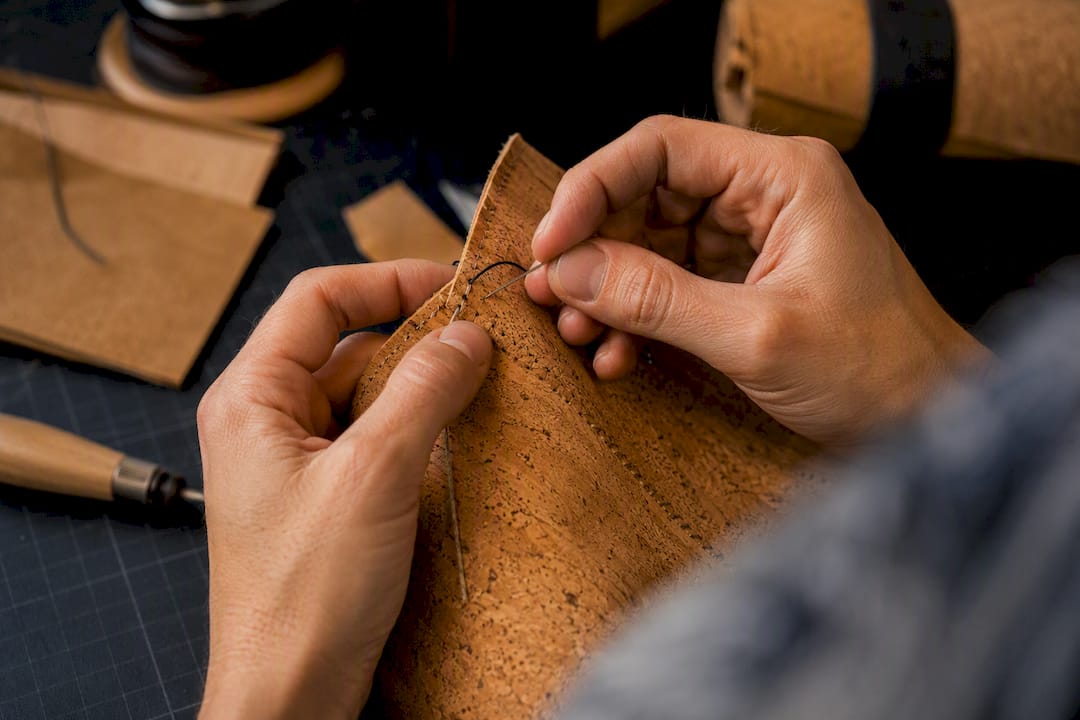
Then look at construction cues directly: seam finishing, how the edges are bonded, and whether hardware is described as metal or plastic. Finally, check the policies around the purchase. Warranty terms, returns windows, delivery timeframes and packaging claims (plastic-free mailers, for instance) tell you how much the seller stands behind the product.
Pro Tip: If a cork bag seems unusually cheap for its size, check whether the backing is stated at all. Unlabelled backing is the single biggest predictor of a product that won’t hold up.
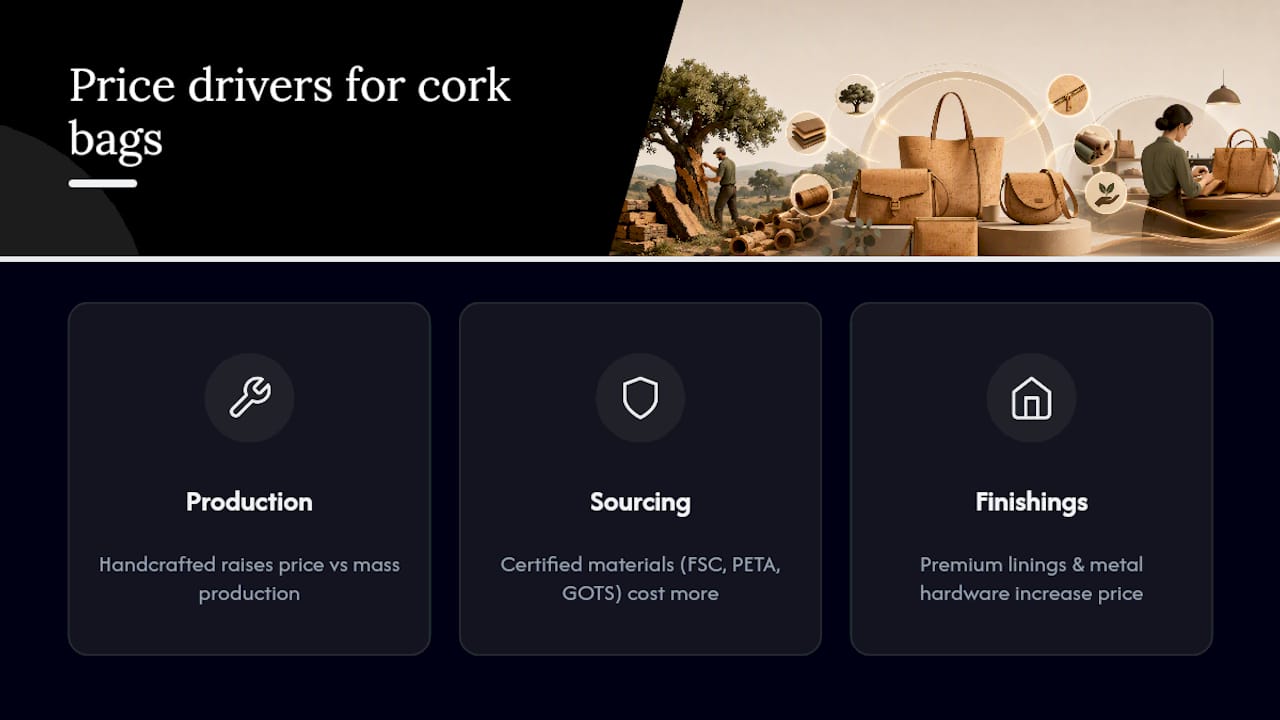
Price differences between similar-looking cork bags usually come down to three things: handcrafted construction versus mass production, certified materials versus unverified sourcing, and premium linings or hardware versus budget alternatives.
How do you clean and store cork accessories?
Cork accessories reward light-touch care rather than deep cleaning. Treat them like a good leather bag, not like a coat you’d throw in the wash.
- Wipe the surface with a slightly damp cloth for daily upkeep, and skip oils, alcohol-based cleaners, or strong solvents entirely.
- For spots or light stains, dab (don’t scrub) with a damp cloth and a small amount of mild soap, then let it air dry away from direct heat.
- Never machine wash or tumble dry a cork item. Heat and agitation can crack the cork veneer or separate it from its backing.
- Store bags upright or lightly stuffed with paper, away from radiators and direct sun, and avoid tight folding creases that weaken the surface over time.
Supplier care guidance consistently points to gentle cleaning and heat avoidance as the two habits that matter most for cork’s lifespan. Small scuffs are usually fine left alone. Anything deeper, like a torn seam or a lifted edge, is worth sending to a specialist restorer rather than attempting a home fix that could make the damage permanent.
What Thecorkstore brings to a cork purchase
Thecorkstore operates as a specialist retailer built around curated cork collections, backed by blog content that goes deeper into sustainability claims and product care than a typical product page allows. Browse the wallet-specific guidance or the wider vegan accessories guide if you want more detail before deciding. Individual author credentials and customer testimonials aren’t currently listed on product pages, and adding them would strengthen buyer confidence further.
— Aaron
Browse curated cork collections at Thecorkstore
Once you know what to check for, buying becomes a lot less of a gamble. Thecorkstore’s product collection groups bestsellers, new arrivals and gift sets so you can compare cork-to-backing ratios and certifications side by side, with images clear enough to spot seam quality before checkout.
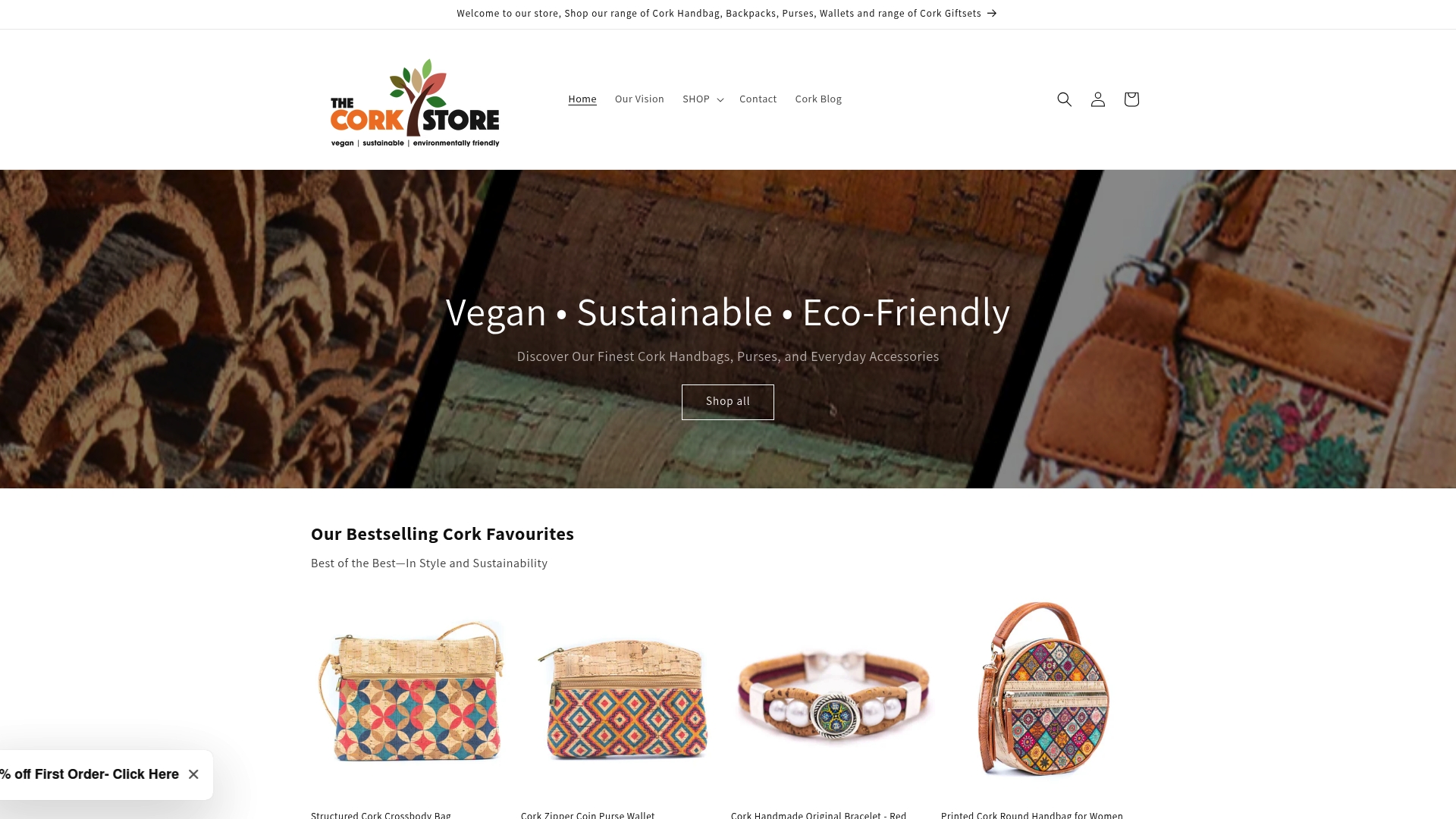
If you’re buying for someone else, the vegan gift guide is the fastest way to find a boxed set that suits a specific recipient, whether that’s a first-time cork buyer or someone already committed to cruelty-free fashion. For sizing questions, care queries, or details not covered on a product page, Thecorkstore’s blog and customer support sit alongside the shop itself. Have a look at the current bestsellers and start narrowing down your first cork piece today.
Key Takeaways
Cork accessories deliver genuine sustainability only when cotton backing, verified certifications, and solid construction back up the marketing claims.
| Point | Details |
|---|---|
| Check the backing fabric | Cotton-backed cork is compostable; polyester or PU backing lasts but isn’t biodegradable. |
| Verify certifications | Look for FSC, PETA-Approved Vegan, GOTS and OEKO-TEX marks rather than unverified “eco-friendly” labels. |
| Match category to use | Handbags need strong hardware, wallets need tight stitching, backpacks need reinforced straps. |
| Clean gently, store carefully | Use a damp cloth only, avoid solvents and heat, and never machine wash cork accessories. |
| Shop curated collections | Thecorkstore groups bestsellers and gift sets with certification and material details on each product page. |
Sources
- Blended Fabric: An Innovative and Sustainable Apparel Textile for the Fashion Industry
- Cork fabric care: a guide to cleaning, maintenance, and restoration – MB Cork