

How Cork Is Harvested – The Art of Sustainable Material
Finding cruelty-free accessories that truly reflect your values can be a challenge for many eco-conscious Europeans. The search for stylish options often leads back to cork harvesting, a process where expert hands carefully remove bark from cork oaks without harming the tree, keeping forests healthy and thriving for centuries. This balance between skilled craft and ecological responsibility reveals how modern fashion can honour both aesthetics and the environment.
Table of Contents
- Cork Harvesting Explained – Key Concepts
- Traditional Versus Modern Harvest Methods
- Tree Care and Sustainable Harvest Practices
- Environmental Impact and Ethical Concerns
- Common Misconceptions About Cork Harvesting
Key Takeaways
| Point | Details |
|---|---|
| Sustainable Practice | Cork harvesting is a sustainable method that allows cork oak trees to be utilised without permanent damage, supporting environmental conservation. |
| Traditional and Modern Methods | A blend of traditional manual techniques and modern innovations ensures both the preservation of artisanal skills and the enhancement of worker safety. |
| Environmental Benefits | Cork oak forests play a vital role in carbon sequestration, preventing soil erosion, and supporting biodiversity. |
| Common Misconceptions | Many misunderstandings exist about cork harvesting; it responsibly removes only the outer bark, allowing trees to live and thrive post-extraction. |
Cork Harvesting Explained – Key Concepts
Cork harvesting is a remarkable sustainable practice that transforms cork oak trees into versatile material without causing permanent damage. Cork extraction techniques represent an intricate balance between human skill and environmental preservation, creating a unique agricultural process that supports forest ecosystems.
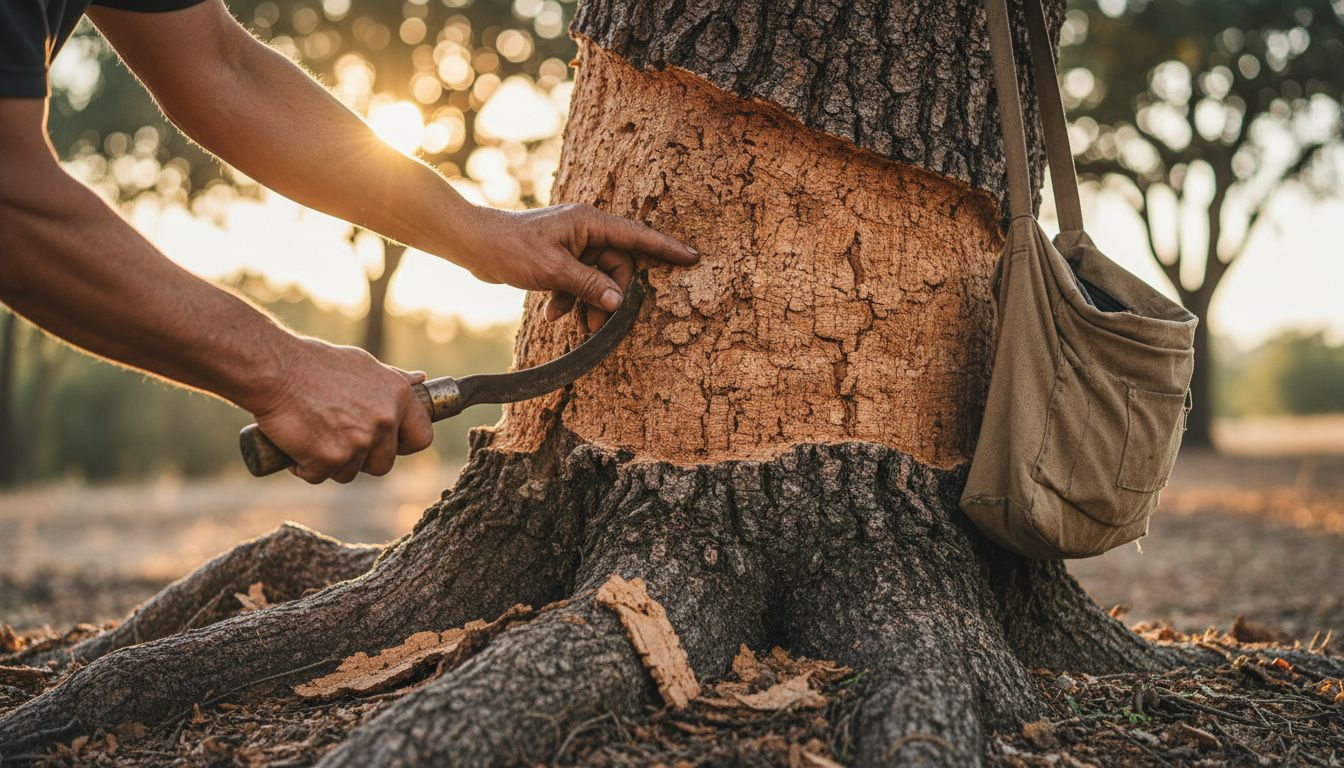
The cork harvesting journey begins when cork oak trees reach approximately 25 years of age. At this point, skilled workers can carefully remove the outer bark through a precise method that allows the tree to regenerate. Key aspects of this process include:
- Making strategic vertical and horizontal cuts in the bark
- Carefully extracting the bark sheet without harming the tree’s core structure
- Cleaning and preparing the harvested bark for processing
- Marking each harvest to track the tree’s production cycle
Most cork oak trees can be harvested every nine to twelve years, with some remarkable specimens producing bark for up to 150-200 years. Sustainable harvesting ensures that each tree remains healthy and continues contributing to carbon sequestration and biodiversity.
Cork harvesting represents a perfect harmony between human economic needs and environmental conservation.
The extraction process requires exceptional skill and understanding of the cork oak’s biological characteristics. Harvesters must use specialised tools and techniques to remove the bark without causing lasting damage to the tree’s living tissues. This delicate process demands years of training and a deep respect for the natural growth cycles of cork oak forests.
Pro tip: When purchasing cork products, look for certifications that demonstrate sustainable harvesting practices and support responsible forest management.
Traditional Versus Modern Harvest Methods
Cork harvesting represents a delicate balance between time-honoured techniques and contemporary innovations. Traditional manual harvesting methods have remained remarkably consistent, preserving the core principles of sustainable forest management while subtly integrating modern safety and efficiency improvements.
Traditional cork harvesting is characterised by several distinctive practices:
- Using specialised hand axes for precise bark removal
- Working in small teams of skilled workers
- Relying on generational knowledge and manual expertise
- Minimising potential damage to the living cork oak tree
- Maintaining direct physical connection with the forest ecosystem
Modern approaches have introduced subtle technological enhancements without compromising the fundamental manual techniques. These innovations include:
- Ergonomic safety equipment for harvesters
- Lightweight precision cutting tools
- Advanced tracking systems for forest management
- Improved protective gear for workers
The essence of cork harvesting remains fundamentally human: a careful dialogue between skilled workers and living trees.
The progression from traditional to modern methods reflects an evolutionary approach that respects both ecological balance and worker safety. While mechanisation has touched many agricultural practices, cork harvesting remains predominantly a manual craft, demonstrating the enduring value of human skill and ecological mindfulness.
Here’s a concise comparison of traditional and modern cork harvesting methods:
| Aspect | Traditional Approach | Modern Approach |
|---|---|---|
| Tools Used | Hand axes, manual tools | Ergonomic, precision tools |
| Worker Safety | Basic protective gear | Advanced safety equipment |
| Process Efficiency | Relies on manual skill | Enhanced by technology |
| Knowledge Transfer | Generational, informal | Formal training, digital tracking |
| Ecological Impact | Minimal, manual extraction | Controlled, still minimal |
Pro tip: When purchasing cork products, seek those from producers who maintain traditional harvesting techniques and prioritise worker welfare.
Tree Care and Sustainable Harvest Practices
Cork oak forests represent a remarkable ecosystem where sustainable resource management meets environmental preservation. Sustainable forest management practices ensure that these magnificent trees continue to thrive while providing valuable material for numerous industries.
Key principles of responsible cork oak tree care include:
- Protecting the tree’s core living tissues during bark extraction
- Maintaining strict harvesting cycles of nine to twelve years
- Preventing damage that could compromise tree health
- Supporting natural regeneration processes
- Preserving the overall forest ecosystem
The sustainability of cork harvesting extends far beyond simple material extraction. These practices actively contribute to environmental conservation by:
- Preventing soil erosion
- Supporting carbon sequestration
- Protecting biodiversity
- Maintaining habitat integrity for endangered species
- Creating economic opportunities for local communities
Sustainable cork harvesting represents a delicate balance between human needs and ecological preservation.
Skilled harvesters play a crucial role in maintaining the health of cork oak forests. Their expertise ensures that each tree can continue producing bark for up to 200 years, creating a renewable resource that supports both environmental and economic sustainability. The careful approach to tree management demonstrates how human intervention can work harmoniously with natural systems.
Pro tip: When selecting cork products, research the harvesting practices of the producers to ensure genuine ecological responsibility.
Environmental Impact and Ethical Concerns
The cork industry represents a remarkable example of sustainable resource management that prioritises environmental preservation and ethical production. Positive environmental impact extends far beyond simple material extraction, creating a holistic approach to ecological responsibility.
Key environmental benefits of cork production include:
- Preventing widespread desertification in Mediterranean regions
- Supporting critical carbon sequestration processes
- Maintaining complex ecosystem biodiversity
- Protecting soil integrity and water retention
- Creating sustainable economic opportunities for local communities
Ethical considerations in cork harvesting are fundamentally different from many other industrial resource extraction methods. The process ensures minimal ecological disruption through:
- Non-invasive bark removal techniques
- Strict regulated harvesting cycles
- Protection of living tree structures
- Preservation of entire forest ecosystems
- Long-term sustainability of cork oak forests
Ethical cork production represents a harmonious relationship between human needs and environmental conservation.
The environmental credentials of cork production extend beyond immediate ecological benefits. Cork oak forests serve as critical carbon sinks, actively contributing to climate change mitigation strategies while supporting complex wildlife habitats. These forests represent a sophisticated example of how human economic activities can coexist with and actively support natural environmental systems.
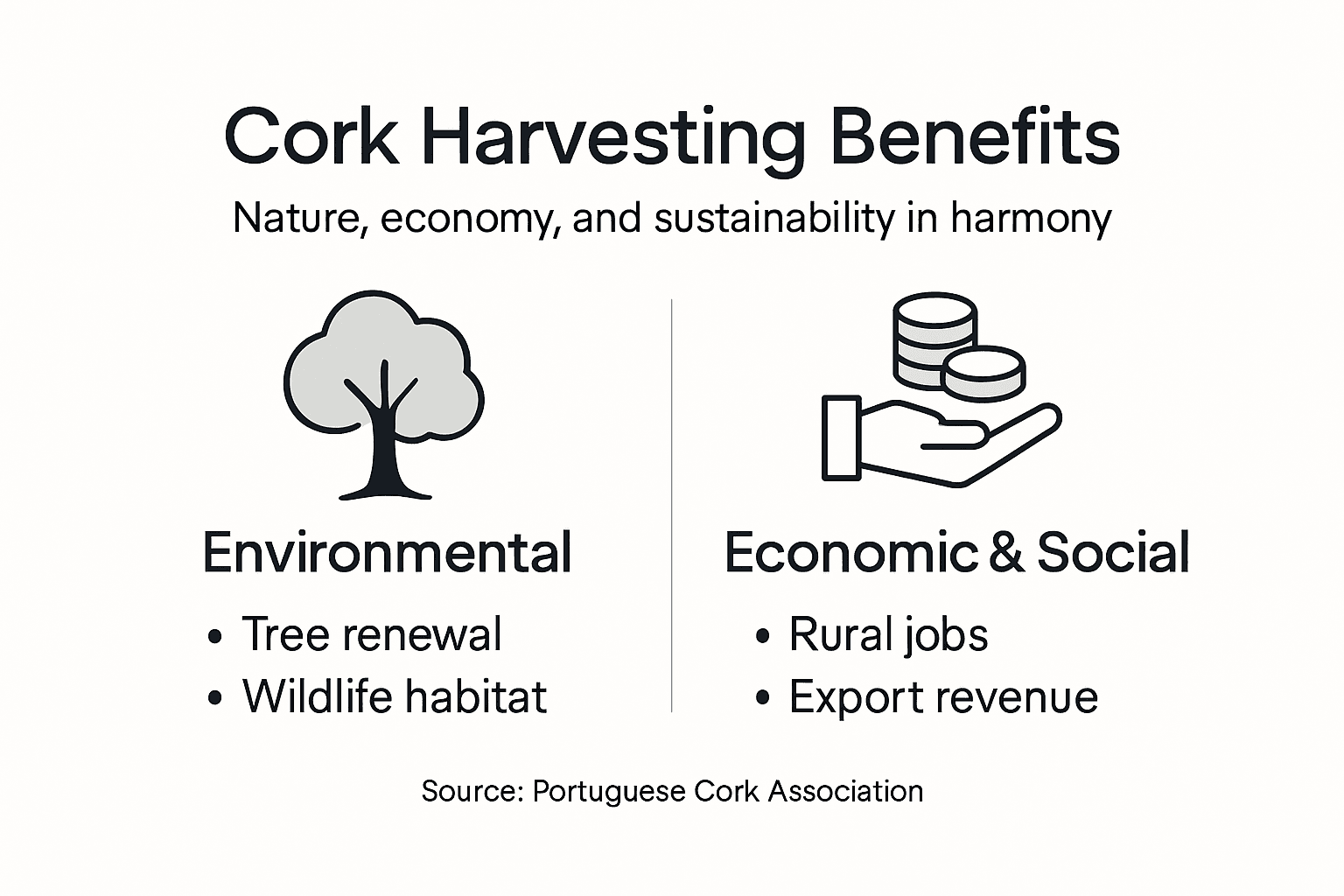
The following table summarises the environmental contributions of cork oak forests:
| Benefit | Description | Impact on Ecosystem |
|---|---|---|
| Carbon Sequestration | Absorbs CO₂ via tree growth | Mitigates climate change |
| Soil Conservation | Roots prevent erosion | Maintains soil integrity |
| Biodiversity Support | Habitat for rare wildlife | Preserves endangered species |
| Water Regulation | Enhances retention | Sustains local water cycle |
| Economic Opportunities | Provides local employment | Reduces rural poverty |
Pro tip: Always research the sourcing practices of cork products to ensure you are supporting genuinely sustainable production methods.
Common Misconceptions About Cork Harvesting
Misunderstandings about cork harvesting often stem from limited knowledge of this sustainable practice. Widespread misconceptions about cork continue to persist despite the industry’s transparent and environmentally responsible approach.
Common myths about cork harvesting include:
- Believing trees are cut down during cork extraction
- Assuming the harvesting process damages tree health
- Thinking cork production harms the environment
- Perceiving cork as a limited or unsustainable resource
- Imagining cork harvesting as a destructive industrial process
In reality, cork harvesting represents a nuanced and carefully managed ecological practice that challenges these misconceptions:
- Only the outer bark is carefully removed
- Trees remain alive and continue growing after extraction
- Harvesting supports forest biodiversity
- Cork oak trees can be harvested multiple times
- The process actively contributes to environmental preservation
Cork harvesting is not destruction, but a sophisticated dialogue between human needs and natural regeneration.
The manual, traditional nature of cork extraction ensures minimal ecological disruption. Skilled workers understand that each harvest must preserve the tree’s long-term health, enabling cork oak forests to thrive for centuries. This approach transforms cork from a simple material into a symbol of sustainable resource management.
Pro tip: Ask manufacturers about their specific cork harvesting practices to truly understand the ecological credentials of your cork products.
Discover the True Beauty of Sustainable Cork Accessories
The art of harvesting cork is a remarkable example of nature and human skill working in harmony. This ancient, sustainable practice protects cork oak trees while providing a versatile, eco-friendly material that is perfect for ethical fashion lovers like you. If you value products crafted with respect for the environment and appreciate the careful balance between ecology and style highlighted in this article, explore our collection of vegan cork accessories designed to reflect these very principles.
Experience the elegance of handbags, wallets, and backpacks made from cork that is sustainably harvested without harming the trees. By choosing from our curated range, you support responsible forest management and ethical production. Now is the perfect time to join a community passionate about durable, cruelty-free fashion that truly honours nature’s delicate cycles. Take the next step towards a more sustainable wardrobe by visiting The Cork Store and discover how your choices can nurture the planet while looking effortlessly stylish.
Frequently Asked Questions
How is cork harvested without harming the tree?
Cork is harvested by making strategic vertical and horizontal cuts in the tree’s outer bark. Skilled workers carefully extract the bark sheet while ensuring the tree’s core structure remains unharmed, allowing it to regenerate.
What are the benefits of sustainable cork harvesting?
Sustainable cork harvesting helps prevent soil erosion, supports carbon sequestration, protects biodiversity, and maintains habitat integrity for various species, all while providing economic opportunities for local communities.
How often can cork oak trees be harvested?
Cork oak trees can typically be harvested every nine to twelve years. Some trees are capable of producing cork for up to 150-200 years, depending on their health and growing conditions.
What misconceptions exist about cork harvesting?
Common misconceptions include the belief that trees are cut down during cork extraction, that harvesting damages tree health, and that cork is an unsustainable resource. In reality, only the outer bark is removed, allowing the tree to continue growing and contributing to the ecosystem.