

How Cork Production Supports Forests: Complete Guide
Over 70 percent of the world’s cork comes from carefully managed forests, yet few people realise just how sustainable and unique cork production truly is. The british market is seeing a growing demand for eco-friendly materials, making it valuable to understand how cork transforms from tree bark into everyday products. Discover how this remarkable, renewable process supports biodiversity, fosters local communities, and offers a truly sustainable resource.
Table of Contents
- Defining Cork Production And Its Unique Process
- Types Of Cork Forests Around The World
- Sustainability Benefits For Forest Ecosystems
- Biodiversity Protection And Wildlife Habitats
- Economic And Social Impacts On Local Communities
Key Takeaways
| Point | Details |
|---|---|
| Sustainable Cork Production | Cork production involves carefully harvesting the bark of cork oak trees, allowing for regeneration and ensuring long-term ecological health. |
| Ecological Benefits | Cork oak forests act as vital carbon sinks and support rich biodiversity, enhancing soil conservation and combating climate change. |
| Economic Impact | Cork forests provide significant economic benefits to local communities through employment and sustainable resource utilisation, preserving traditional practices. |
| Wildlife Habitats | These forests create essential habitats for diverse species, fostering ecological resilience and supporting intricate biological networks. |
Defining Cork Production And Its Unique Process
Cork production represents a fascinating and sustainable process that transforms the bark of cork oak trees into versatile materials through a carefully orchestrated sequence of steps. The cork production process begins with harvesting the outer bark from cork oak trees, a delicate procedure that requires exceptional skill and precision.
The harvesting process is remarkably gentle and designed to protect the tree’s long-term health. Skilled workers carefully remove the bark using specialised hand tools, ensuring they do not damage the inner bark or trunk. This selective extraction allows the tree to continue growing and regenerating its bark, making cork one of the most sustainable natural materials available. Mature cork oak trees, typically around 25 years old, can be harvested every nine to twelve years without causing permanent harm.
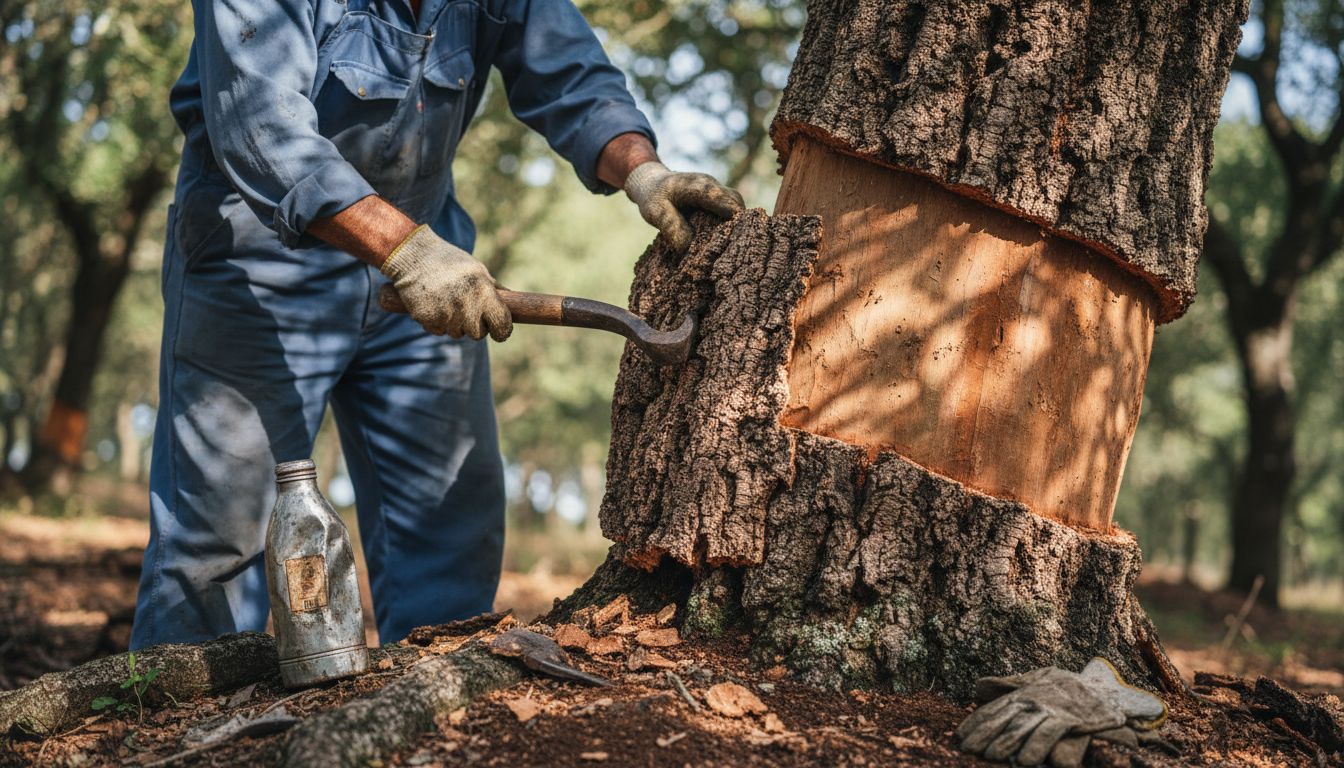
Once harvested, the cork bark undergoes a meticulous transformation. The raw bark is boiled to enhance its elasticity and volume, a crucial step that makes the material more workable and prepares it for various applications. After boiling, the bark is left to rest and stabilise, allowing it to develop the signature lightweight and resilient characteristics that make cork so unique. Skilled artisans then slice the bark into precise strips and punch out specific shapes, such as wine stoppers or textile materials, with minimal waste. Any remaining cork fragments are ingeniously repurposed into additional products, reflecting the industry’s commitment to sustainability and resource efficiency.
Types Of Cork Forests Around The World
Cork forests represent a unique and critically important ecosystem spanning several Mediterranean regions, with a fascinating global distribution. Sustainable forest management plays a crucial role in preserving these remarkable landscapes that support both ecological diversity and economic opportunities.
Globally, cork oak forests cover approximately 2.2 million hectares, predominantly concentrated in Mediterranean countries. Portugal, Spain, and Morocco emerge as the primary guardians of these remarkable woodlands. The Al-Maamora Forest in Morocco stands as the world’s largest Quercus suber forest, spanning an impressive 130,000 hectares. This expansive woodland showcases remarkable biodiversity, hosting not just cork oak trees but also eucalyptus, pines, and acacias, creating a complex and interdependent ecosystem.
These forests are more than just timber resources; they are living, breathing ecosystems that support extraordinary wildlife and provide critical environmental services. Cork oak forests act as natural carbon sinks, helping mitigate climate change while supporting intricate networks of plant and animal species. The trees’ unique ability to regenerate bark makes them exceptional sustainable resources, allowing repeated harvesting without destroying the tree itself. Their fragmented distribution suggests an ancient, resilient landscape that has adapted to challenging environmental conditions over millennia, making them not just forests, but living historical monuments of ecological resilience.
Sustainability Benefits For Forest Ecosystems
Cork oak forests represent a remarkable environmental solution, offering extraordinary sustainability benefits that extend far beyond traditional timber resources. Sustainable forest management plays a critical role in preserving these unique ecosystems and their multifaceted environmental contributions.
The ecological impact of cork oak forests is profound and multidimensional. Research demonstrates that these forests support exceptional biodiversity, with plant diversity reaching up to 135 species per square metre. Their environmental contributions are substantial, including critical soil conservation mechanisms that prevent erosion and enhance rainwater absorption. These forests function as natural carbon sinks, actively reducing atmospheric greenhouse gases and providing a powerful natural defence against climate change.
Beyond carbon sequestration, cork oak forests serve as crucial ecological barriers. They prevent soil degradation, combat desertification, and create complex habitats that support intricate networks of plant and animal species. The unique regenerative capacity of cork oak trees allows for sustainable harvesting without causing permanent damage, making them an exceptional model of ecological balance. Their ability to continue growing and producing bark after repeated harvests demonstrates a remarkable symbiosis between human economic needs and natural ecosystem preservation, offering a sustainable alternative to more destructive resource extraction methods.
Biodiversity Protection And Wildlife Habitats
Wildlife conservation finds a powerful ally in cork oak forests, creating intricate ecosystems that support an extraordinary range of plant and animal species. Sustainable forest management plays a crucial role in maintaining these complex biological networks.
The Los Alcornocales Natural Park in Spain exemplifies the remarkable biodiversity potential of cork oak forests. This extraordinary landscape hosts a rich tapestry of wildlife, including iconic species such as storks, kites, and the critically endangered Iberian lynx. The forest’s diverse composition, featuring multiple oak species and olive trees, creates layered habitats that support intricate ecological interactions. Similarly, Al-Maamora Forest in Morocco demonstrates how cork oak woodlands serve as critical biodiversity reservoirs, supporting complex ecosystems with cork oaks, eucalyptus, and acacias.
These forests are more than mere landscapes; they are living, breathing ecological sanctuaries that provide critical habitats for numerous species. By maintaining interconnected vegetation layers and preserving soil integrity, cork oak forests create microenvironments that support everything from tiny invertebrates to large mammals. Their unique structure allows for wildlife movement, genetic diversity, and ecological resilience, making them essential guardians of biodiversity in increasingly fragmented landscapes. The preservation of these forests is not just about protecting trees, but about maintaining entire ecological systems that represent centuries of evolutionary adaptation.
Economic And Social Impacts On Local Communities
Cork forests represent far more than environmental resources; they are dynamic economic ecosystems that support entire regional communities. Sustainable economic development finds its roots in these remarkable woodland landscapes.
The Al-Maamora Forest exemplifies the profound socioeconomic significance of cork oak woodlands, supporting over 50 enterprises and generating substantial employment opportunities. Local communities benefit from diverse forest resources, including timber, cork, and firewood, creating a multifaceted economic infrastructure. Cork production in regions like Extremadura highlights the industry’s potential, with high-quality cork becoming a valuable export commodity that drives regional economic growth.
Beyond direct economic contributions, cork forests create intricate social networks that preserve traditional knowledge and sustainable livelihood practices. The industry supports skilled artisan communities, maintaining generational expertise in cork harvesting and processing. These woodlands represent more than economic assets; they are cultural landscapes that embody local heritage, ecological wisdom, and community resilience. By providing stable, sustainable income sources, cork forests help prevent rural depopulation, support local agricultural traditions, and create economic opportunities that are deeply interconnected with environmental preservation.
Discover How Your Choice of Cork Products Can Support Sustainable Forests
Cork production offers a brilliant example of how sustainable practices protect precious ecosystems and benefit local communities. The article highlights how cork oak trees regenerate their bark without harm, promoting biodiversity and fighting climate change. If you care about eco-conscious living and want to make a real difference you can start by choosing accessories made from this remarkable material. By embracing cork products you support forest conservation and reduce environmental impact in a meaningful way.
Explore our exclusive collection of vegan cork handbags, wallets, and backpacks crafted with care and sustainability in mind. Each item is designed to be cruelty-free and stylish while directly contributing to the preservation of cork oak forests worldwide. Don’t wait to make an ethical fashion statement that helps protect vital ecosystems. Visit The Cork Store today and join a growing community that chooses products with purpose.
Frequently Asked Questions
What is the cork production process?
The cork production process begins with the careful harvesting of the outer bark from cork oak trees. Skilled workers use specialised hand tools to gently remove the bark, allowing the tree to continue growing and regenerating its bark. Once harvested, the cork is boiled for elasticity, rested to stabilise, and then shaped into various products, like wine stoppers, with minimal waste.
How do cork forests contribute to sustainability?
Cork forests provide significant sustainability benefits by acting as natural carbon sinks, preventing soil erosion, and supporting ecological diversity. They allow for sustainable harvesting every nine to twelve years without permanent damage, aiding in biodiversity conservation and offering a sustainable alternative to more destructive resource extraction methods.
What role do cork forests play in biodiversity protection?
Cork oak forests serve as critical habitats for a wide array of plant and animal species. Their layered vegetation creates microenvironments and supports biodiversity, including endangered species. By preserving these forests, we maintain entire ecological systems essential for wildlife conservation.
How do cork forests impact local communities economically?
Cork forests support local economies by providing diverse resources like timber, cork, and firewood, generating employment opportunities and fostering sustainable development. The industry also maintains traditional knowledge and artisanal skills, creating economic networks that help sustain rural communities.
Recommended
- Understanding Why is Cork Sustainable for Our Planet – The Cork Store
- Complete Guide to the Cork Production Process – The Cork Store
- How Cork Promotes Sustainability: Complete Guide – The Cork Store
- Cork Production Process: Complete Sustainable Guide – The Cork Store
- 7 Eco Friendly Clothing Materials Every Business Should Know – The Ocean Straw