
How to make eco-conscious purchases: a practical guide
TL;DR:
- Eco-conscious shopping involves evaluating a product’s full lifecycle, labour conditions, and end-of-life impact rather than just the price or trend. Implementing waiting periods, verifying trusted certifications, and prioritizing repair and secondhand options help reduce waste and lower environmental harm. These habits save money, foster deliberate consumption, and support sustainable brands and practices.
Eco-conscious purchasing is the deliberate practice of buying products that minimise environmental harm, uphold ethical labour standards, and consider full lifecycle impact rather than price or trend alone. Shoppers who adopt this approach consistently report savings of £800–£2,400 annually by cutting unnecessary consumption. Certifications such as GOTS (Global Organic Textile Standard), Fair Trade, and B Corp provide reliable starting points for identifying trustworthy brands. This guide gives you a practical framework for how to make eco-conscious purchases, from the questions you ask before buying to the habits you build over time.
What key questions should guide eco-conscious purchases?
The most effective way to start buying sustainably is to pause before every purchase and run through a short decision framework. Eco-conscious shopping shifts buying from a transaction into a deliberate, value-aligned decision. Seven questions make that shift concrete.
- Do I genuinely need this? Desire and need are not the same. A third pair of trainers is a want; a replacement for worn-out footwear is a need.
- How long will it last? A product used for ten years has a fraction of the environmental cost of one replaced annually.
- What is it made from? Natural, recycled, or renewable materials generally carry lower environmental costs than virgin synthetics.
- Who made it, and under what conditions? Supply chain transparency matters. Brands with published ethical audits are more accountable.
- Can I buy it secondhand or borrow it? For items used infrequently, ownership is rarely the most sustainable option.
- What happens to it at end of life? Products that cannot be repaired, recycled, or composted will end up in landfill.
- Am I buying this under marketing pressure? Flash sales and countdown timers manufacture urgency. Recognising that pressure is the first step to resisting it.
Working through these questions takes roughly 90 seconds. That brief pause is enough to stop most impulse purchases before they happen.
Pro Tip: Keep a monthly wish list in a notebook or a free app like Google Keep. Revisit it at the end of each month. You will find that roughly half the items no longer feel necessary, which is the most sustainable outcome of all.
How do waiting periods improve eco-conscious buying habits?
Behavioural strategies are the backbone of green purchasing methods. Two rules, applied consistently, do more to reduce wasteful consumption than any single product swap.
- The 72-hour rule applies to smaller purchases, typically under £50. When you feel the urge to buy, wait three full days. This waiting period breaks the link between marketing-driven urgency and the act of spending.
- The 30-day list applies to larger investments. Write the item down with the date. If you still want it after a month, research it properly and buy with intention.
- Unsubscribe from retailer emails. Promotional messages are designed to create desire for things you did not know you wanted. Removing that trigger is a structural fix, not a willpower exercise.
- Avoid browsing without intent. Scrolling product pages is the digital equivalent of wandering a supermarket hungry. Both reliably produce purchases you did not plan.
Buying less is the most ethical choice in most categories. The item never manufactured carries zero carbon footprint, zero labour cost, and zero end-of-life problem. Waiting periods make “not buying” the default outcome rather than the exception.
Pro Tip: When you add something to your 30-day list, also note why you want it. Reviewing your reasons after a month reveals patterns in your spending triggers, which is far more useful than any budgeting app.
Which certifications and features indicate genuine sustainability?
Many brands label packaging as eco-friendly with little substantive backing. Trusted certifications and published transparency reports are the only reliable way to move beyond marketing claims.
Certifications worth trusting
| Certification | What it covers | Why it matters |
|---|---|---|
| GOTS | Organic textile production and processing | Covers both fibre and labour standards |
| Fair Trade | Worker wages and conditions | Independently audited supply chains |
| B Corp | Overall business social and environmental performance | Requires recertification every three years |
| Cradle to Cradle | Product design for circularity | Assesses material health and recyclability |
| Bluesign | Chemical safety in textile manufacturing | Reduces water and energy use in production |
Beyond certifications, repairability and modularity are the most reliable indicators of a genuinely sustainable product. A product designed for repair extends its useful life and reduces waste far more effectively than one made from organic materials but impossible to fix. Look for standardised fasteners, publicly available spare parts, and easy-to-sew seams.
End-of-life planning is the step most shoppers skip entirely. Before buying, check whether the manufacturer offers a take-back programme, trade-in scheme, or certified refurbishment service. Products made from mixed materials, such as fabric bonded to foam bonded to plastic, are almost always destined for landfill because no recycler can separate them economically.
To spot greenwashing, look for vague language like “eco-friendly,” “natural,” or “green” without certification or data to support the claim. Legitimate brands publish supplier lists, environmental impact reports, and clear end-of-life guidance. If that information is absent, treat the claim with scepticism.
For practical guidance on spotting ethical accessories, Thecorkstore’s guide on identifying eco-friendly accessories is a useful reference.
What sustainable habits go beyond buying new products?
The most overlooked area of eco-conscious consumer habits is everything that happens before you buy new. Secondhand purchasing displaces demand for new production and keeps products in circulation at a fraction of the carbon cost. Thrift stores, certified refurbishment platforms, and peer-to-peer rental models all reduce embodied emissions without requiring you to go without.
- Buy secondhand first. Platforms like Vinted, Depop, and eBay carry millions of items in excellent condition. For electronics, certified refurbishment from manufacturers such as Apple Certified Refurbished or Samsung Certified Pre-Owned guarantees quality.
- Borrow before you buy. Power tools, camping equipment, specialist kitchen appliances, and formal wear are all items most people use fewer than five times. Libraries of Things, now operating in cities including London, Bristol, and Edinburgh, lend exactly these categories.
- Repair rather than replace. A broken zip, a cracked screen, or a worn sole is not a reason to discard a product. Local cobblers, tailors, and repair cafés handle most common repairs cheaply and quickly.
- Support local and small producers. Shorter supply chains reduce transport emissions. Local artisans also tend to produce in smaller batches, which means less overstock and less waste.
Making responsible purchases also means thinking about reducing fashion waste in your wardrobe specifically, since clothing is one of the highest-impact categories for most households.
How can you track and improve your eco-conscious habits?
Measurement drives improvement. Without tracking, eco-conscious consumer habits remain intentions rather than outcomes. The simplest system uses four categories: what you bought, why you bought it, how long you expect it to last, and whether a secondhand or borrowed option was available.

A notebook works perfectly well. A spreadsheet works better if you want to spot patterns across months. Apps such as Notion or Airtable allow you to build a simple personal purchasing log with filters and summaries.
A practical household buying policy
Household buying policies are more durable than individual product decisions. A written policy removes the need to make the same decision repeatedly. The most effective structure follows four steps in order: repair first, borrow second, buy used third, and buy new only when the first three options fail.
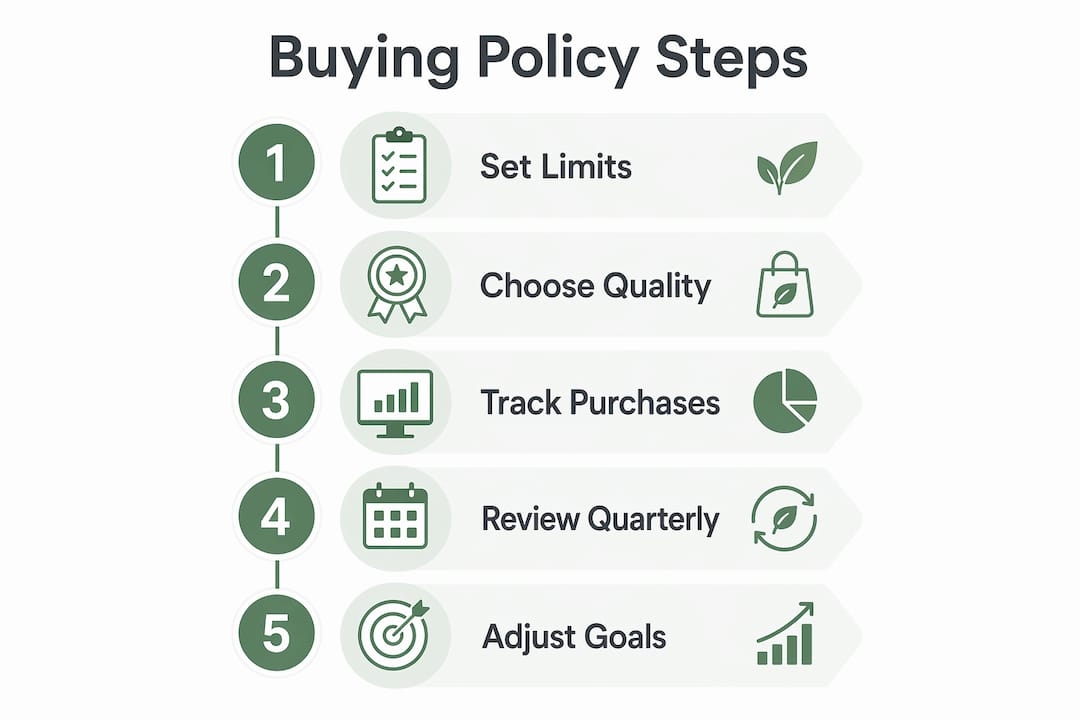
Apply this policy to specific categories and set measurable targets. For example, limit clothing purchases to four new items per quarter, track the average lifespan of electronics before replacement, and record how many repairs you complete versus replacements you make.
Consumers who focus on fewer, higher-quality, longer-lasting items consistently save money while reducing environmental impact. That alignment of financial and environmental benefit is the strongest argument for tracking: it shows you the cost of not changing your habits.
Pro Tip: At the end of each quarter, review your log and calculate the total number of purchases you made versus the number you considered and rejected. A rising rejection rate is a direct measure of growing eco-consciousness, and it is far more motivating than abstract carbon calculations.
For a broader view of how these habits connect to style choices, Thecorkstore’s eco-conscious shopping guide covers sustainable fashion decisions in depth.
Key takeaways
Eco-conscious purchasing requires a system, not just good intentions: waiting periods, lifecycle thinking, and a household buying policy produce consistent results where one-off product swaps do not.
| Point | Details |
|---|---|
| Ask seven questions before buying | Run a quick decision framework to separate genuine need from impulse desire. |
| Apply waiting periods | Use the 72-hour rule for small purchases and the 30-day list for larger ones. |
| Verify certifications | Trust GOTS, Fair Trade, B Corp, and Cradle to Cradle over vague eco-labelling. |
| Prioritise repair and secondhand | Buying used or repairing existing items reduces carbon impact more than buying new eco-products. |
| Track and set household policy | A repair-first, borrow-second, used-third, new-last policy builds durable sustainable habits. |
What I have actually learnt from buying with intention
The shift that changed everything for me was not switching to organic cotton or finding a better certification checklist. It was accepting that the most sustainable purchase is usually no purchase at all.
That sounds obvious until you realise how much of what we buy is driven by boredom, marketing, or the vague feeling that a new thing will solve a problem that is not really about the thing. I spent years buying “better” products and feeling virtuous about it, while still accumulating far more than I needed. The waiting period rules broke that cycle more effectively than any product research ever did.
The second thing I learnt is that eco-conscious habits compound. The first month of tracking purchases feels tedious. By month three, you start to see your own patterns clearly, and that visibility is genuinely motivating. You stop needing willpower because the habit becomes the path of least resistance.
The uncomfortable truth in conscious consumption is that buying less matters more than buying better. That does not mean deprivation. It means being deliberate about what earns a place in your life. When you do buy, buy well, buy things that last, and buy from brands that can account for every step of their supply chain. The rest takes care of itself.
— Aaron
Sustainable cork accessories from Thecorkstore
If you are ready to replace a worn-out accessory with something genuinely sustainable, Thecorkstore offers a range of vegan cork products that are renewable, cruelty-free, and built to last.
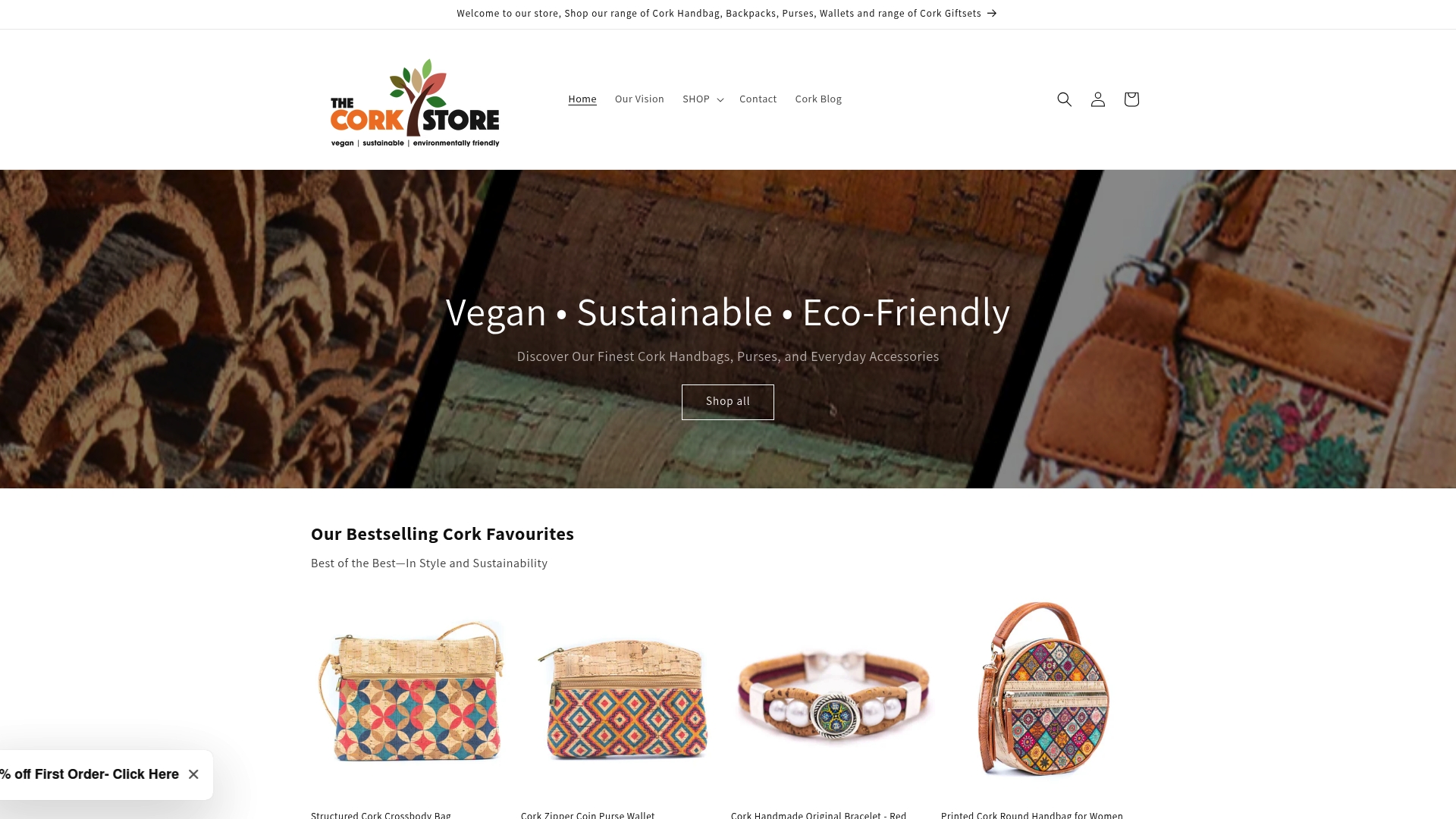
Cork is harvested without felling the tree, making it one of the few materials that actively supports the ecosystem it comes from. Thecorkstore’s cork wallet gift set is a practical, well-made choice for anyone looking to give or receive a sustainable alternative to leather. For a wider selection, the full range of vegan cork gifts covers everything from handbags to purses, all made with the same commitment to ethical, low-impact materials.
FAQ
What is eco-conscious shopping?
Eco-conscious shopping is the practice of evaluating a product’s full lifecycle, labour conditions, and end-of-life impact before purchasing. It prioritises sustainability over price or trend.
Which certifications should I look for when buying sustainably?
GOTS, Fair Trade, B Corp, and Cradle to Cradle are the most reliable certifications. Each is independently audited and covers different aspects of environmental and social performance.
Does buying secondhand really make a difference?
Secondhand purchasing displaces demand for new production and carries significantly lower carbon impact. Certified refurbishment and rental models are equally effective for electronics and infrequently used items.
How do waiting periods help reduce impulse buying?
The 72-hour rule for small purchases and the 30-day list for larger ones break the link between marketing pressure and spending. Most impulse desires fade within that window without any active effort.
Can eco-conscious shopping actually save money?
Tracking purchasing habits and reducing unnecessary consumption can lead to annual savings of £800–£2,400. Buying fewer, higher-quality items also reduces replacement costs over time.