
Eco-conscious shopping: Guide to sustainable style in 2026
TL;DR:
- Sustainable fashion offers stylish, cruelty-free options that rival traditional high-street designs.
- Eco-conscious shopping involves considering sustainability, ethics, and transparency at every product stage.
- Choosing durable, secondhand, and plant-based materials helps reduce environmental impact and supports systemic change.
A striking 83% of UK consumers say sustainability influences their fashion buying decisions, yet many still feel that ethical shopping means settling for dull designs or spending a fortune. That tension between values and practicality is real, but it is built on outdated assumptions. Sustainable fashion has quietly become one of the most exciting spaces in retail, offering stylish, cruelty-free options that rival anything you would find in a conventional high-street store. This guide breaks down what eco-conscious shopping actually means, how to do it well, and where to find alternatives to leather that you will genuinely want to carry.
Table of Contents
- Defining eco-conscious shopping: What it means for you
- Practical steps for eco-conscious shopping: How to shop sustainably
- Stylish cruelty-free alternatives to leather: Plant-based and vegan options explained
- Challenges, pitfalls, and progress: Navigating the realities of eco-shopping
- A realistic path: What most eco-conscious guides skip
- Explore sustainable style with The Cork Store
- Frequently asked questions
Key Takeaways
| Point | Details |
|---|---|
| Eco-conscious shopping defined | Making thoughtful purchases based on sustainability and ethical values is key. |
| Practical step-by-step methods | Prioritise certifications, shop secondhand, and choose durable quality to maximise impact. |
| Cruelty-free leather alternatives | Plant-based and cork products offer stylish options without the environmental downsides of plastics. |
| Navigate challenges and pitfalls | Beware of greenwashing, high costs, and ensure purchases align with genuine eco-friendly claims. |
| Application beats intention | Real change comes from conscious action, not just good intentions; seek progress over perfection. |
Defining eco-conscious shopping: What it means for you
Eco-conscious shopping is not simply buying a tote bag made from recycled plastic bottles. At its core, ethical purchasing prioritises sustainability and ethics at every stage of a product’s life, from raw material sourcing through to end-of-life disposal. It is intentional. It asks you to pause before you buy and consider who made the product, what it is made from, and what happens to it afterwards.
This kind of shopping is rooted in three values:
- Sustainability: Choosing materials and brands that reduce environmental harm, whether through lower carbon emissions, responsible land use, or biodegradable end products.
- Ethics: Supporting fair wages, safe working conditions, and supply chains free from exploitation, both human and animal.
- Transparency: Favouring brands that openly share their sourcing, manufacturing processes, and environmental impact data.
Understanding supply chains is a big part of this. When you know where your bag was made and what it cost the planet to produce, you become a far more empowered buyer. The advantages of sustainable fashion are not just environmental either. Sustainable pieces tend to be made with greater attention to quality, meaning they last longer and offer better value over time.
The shift is already well underway across Europe. A remarkable 69% of Europeans now factor sustainability into their purchasing decisions. This is not a niche movement any longer. It reflects a genuine and growing expectation that brands behave responsibly and that consumers have better choices available to them.
If you want to stay ahead of where fashion is heading, exploring eco-friendly fashion trends 2026 gives a clear picture of how the industry is adapting to meet this demand. Styles rooted in natural materials, plant-based dyes, and circular design are moving from the margins to the mainstream.
With the foundation set, let’s explore how to put eco-conscious values into practical action when shopping.
Practical steps for eco-conscious shopping: How to shop sustainably
Knowing you want to shop sustainably and actually doing it are two different things. The good news is that a clear, step-by-step approach makes the whole process far less overwhelming.
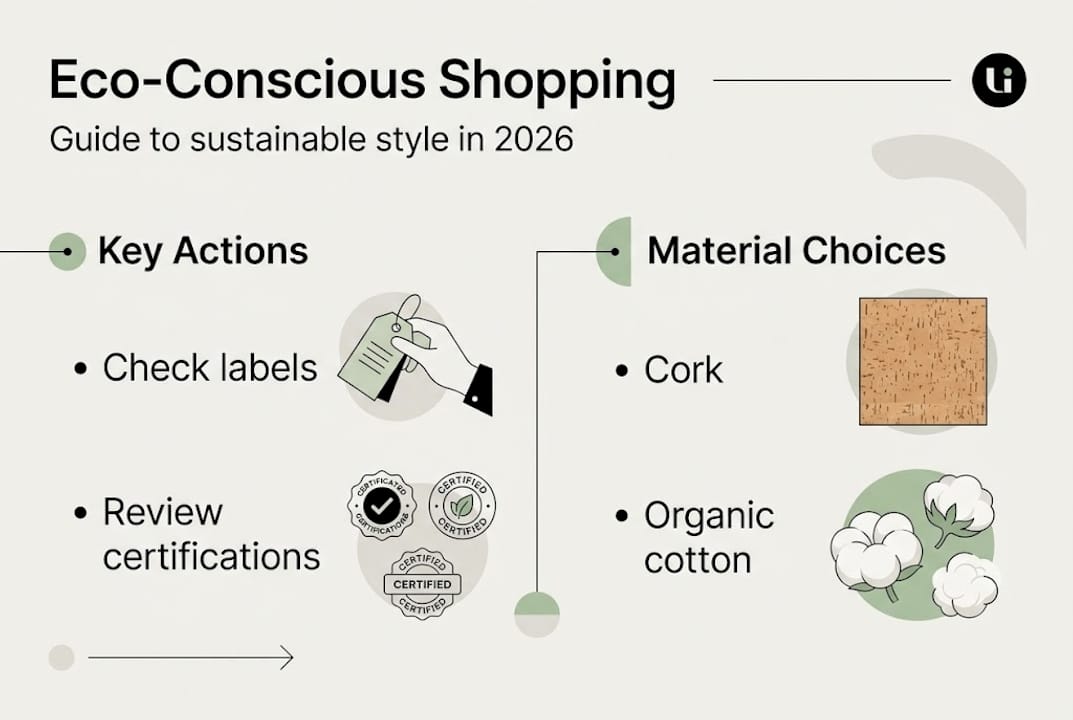
- Research certifications before you buy. Labels matter when they are backed by independent verification. Look for GOTS (Global Organic Textile Standard), Fair Trade, B Corp, or OEKO-TEX certifications as reliable markers of credibility.
- Explore secondhand and resale first. Buying preloved is consistently one of the most impactful choices you can make. It extends a product’s life and reduces demand for new production.
- Apply the need versus want test. Ask yourself honestly whether you need the item or simply want it. Buying fewer, better-quality pieces is always more sustainable than buying in bulk, even if each piece is labelled eco-friendly.
- Check material origins. Core methodologies include researching brands, reviewing certifications, shopping secondhand, and checking supply chain transparency before committing to a purchase.
- Choose durability over trend. A well-made cork bag that lasts a decade has a far smaller environmental footprint than three fast-fashion alternatives replaced every couple of years.
Pro Tip: Before buying any new accessory, spend two minutes on a brand’s website looking for a dedicated sustainability or ethics page. If they cannot point to specific certifications or supply chain information, that silence tells you something important.
To help you compare the main certification schemes at a glance:
| Certification | Focus area | Best for |
|---|---|---|
| GOTS | Organic textiles | Clothing, fabric accessories |
| Fair Trade | Worker welfare | Clothing, food, homeware |
| B Corp | Overall business ethics | Any product category |
| OEKO-TEX | Chemical safety in textiles | Clothing, bags, accessories |
Learning to spot sustainable fashion in practice saves time and money. For broader context on where the industry is moving, the latest sustainable fashion trends provide excellent grounding. You will also find practical sustainable shopping tips from consumer experts useful when building your own buying criteria.
With clear steps in mind, it is important to consider the materials and alternatives that align with these principles.

Stylish cruelty-free alternatives to leather: Plant-based and vegan options explained
The word ‘vegan’ on a label can be genuinely misleading. Many products marketed as vegan leather are made from polyurethane (PU) or PVC, both petroleum-based plastics. As the evidence shows, many vegan leathers contain plastics and microplastics that cause real environmental harm, particularly at end of life when they break down in landfill.
The distinction that matters is between plastic-backed vegan leather and genuinely plant-based materials. The latter are the ones worth seeking out:
- Cork: Harvested from the bark of cork oak trees without cutting them down. Naturally water-resistant, lightweight, and biodegradable. One of the most credible options available today.
- Piñatex: Made from pineapple leaf fibres, a byproduct of pineapple harvesting. Strong and textured with a look that rivals traditional leather.
- Apple leather: Derived from apple industry waste, giving the material a circular-economy credential.
- Cactus leather: Produced from nopal cactus, which requires minimal water and no irrigation in many climates.
- MIRUM: A fully plastic-free, plant-based material that is both certified and compostable.
For a thorough breakdown of vegan leather alternatives and how they compare, it is worth reading the full guide. Cork deserves particular attention for accessory buyers. Exploring cork as vegan leather reveals a material that is genuinely sustainable from forest to finished product. And when you place it alongside animal leather in a direct cork vs leather comparison, the environmental case is difficult to argue against.
Pro Tip: When evaluating any ‘vegan’ accessory, check the material composition label. If it lists polyurethane without any plant-based component, it is plastic. Prioritise plant-based leather fabric options such as Piñatex, apple, cactus, cork, and MIRUM instead.
Knowing your material options is essential, but true eco-consciousness means recognising deeper challenges and nuances.
Challenges, pitfalls, and progress: Navigating the realities of eco-shopping
Eco-conscious shopping is not without friction. Even well-intentioned buyers run into real barriers, and understanding them honestly is far more useful than pretending the path is straightforward.
The most common obstacles include:
- Greenwashing: Brands using vague language like ‘eco-friendly’ or ‘conscious collection’ without substantiation. Without third-party certification, these claims mean very little.
- Price barriers: Genuinely sustainable products often cost more upfront because ethical production costs more. This is a real challenge for many shoppers.
- Short product lifespans: Some products labelled sustainable still fail to last, undermining the environmental case for buying them in the first place.
- The intention-behaviour gap: Research consistently shows that consumers who say they prioritise sustainability do not always follow through at the point of purchase. Stress, habit, and convenience win out more often than we like to admit.
These are not reasons to give up. They are reasons to shop with greater precision. Understanding ethical consumerism as a systemic practice rather than a series of individual perfect choices helps enormously.
“Greenwashing is among the most significant risks facing eco-conscious shoppers today. Vague claims are everywhere, but regulators are increasingly cracking down on unsubstantiated green claims across the UK and EU.”
The regulatory environment is tightening, which is good news. The UK Competition and Markets Authority and the EU Green Claims Directive are both moving to require evidence behind sustainability marketing. In the meantime, evidence-based tools like certifications remain your best protection. A clear sustainable style guide helps you navigate animal leather avoidance with confidence, while understanding the advantages of vegan leather makes the alternatives feel far more appealing. The evidence around greenwashing and plastic-backed vegan products continues to mount, reinforcing the importance of looking beyond the label.
By understanding these challenges, you are equipped for smarter shopping and real impact. But what does the real path to effective eco-conscious shopping look like?
A realistic path: What most eco-conscious guides skip
Most guides tell you to ‘just buy vegan’ and call it done. We think that misses the point almost entirely. The material a product is made from is only one part of its environmental story. How far it travelled, how long it lasts, and what happens when you no longer want it matter just as much.
Full lifecycle thinking is the framework that most advice leaves out. A cork bag made locally and kept for fifteen years will always outperform a plant-based alternative shipped from the other side of the world and discarded after two seasons. Durability is not a boring consideration. It is arguably the single most powerful lever an individual consumer has.
Secondhand and resale deserve far more attention than they typically receive. Buying a quality preloved accessory sidesteps production emissions entirely. It is the most direct expression of circular thinking available to you right now.
And here is the uncomfortable truth: individual consumer choices, while meaningful, are limited without systemic change. Support brands and campaigns pushing for policy reform, not just better products. Following fashion trends for conscious shoppers is a good way to stay connected to both the innovations and the advocacy shaping this space.
Explore sustainable style with The Cork Store
If you are ready to move from reading to shopping, The Cork Store is a natural next step for anyone seeking accessories that genuinely deliver on their eco-credentials.
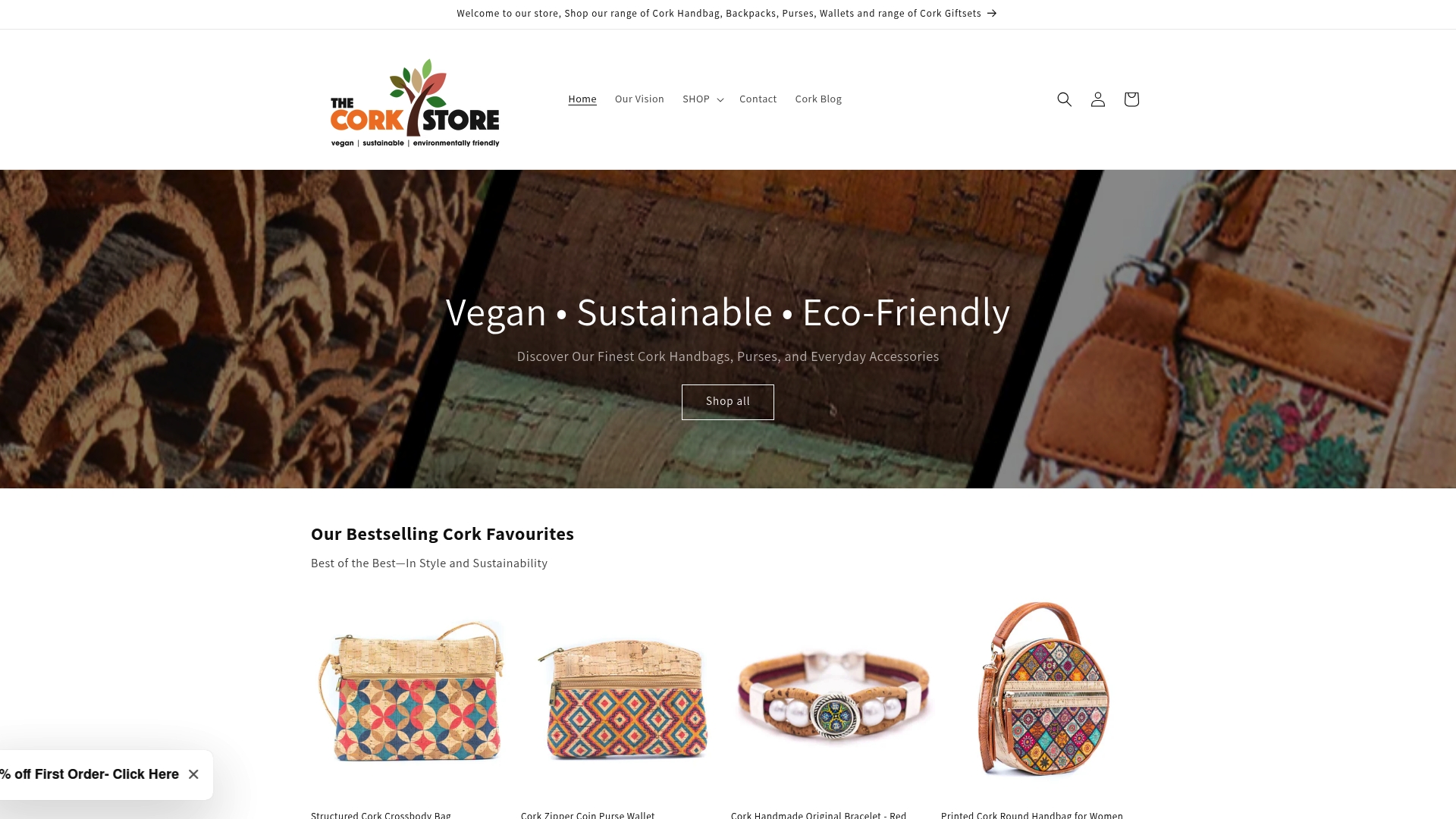
Cork is one of the most honestly sustainable materials available for fashion accessories. Every bag, wallet, and purse at The Cork Store is crafted from natural cork, offering a cruelty-free, vegan, and biodegradable alternative to leather with real style credentials. Whether you are buying for yourself or looking for eco-friendly vegan gifts for someone who shares your values, the range covers everything from everyday carry to special occasion pieces. This is where evidence-based eco-shopping meets genuinely beautiful design.
Frequently asked questions
What makes shopping eco-conscious?
Eco-conscious shopping prioritises sustainability, ethical production, and transparency in every purchase, from material sourcing through to how a brand treats its workers and the environment.
Are all vegan leather products sustainable?
No. Many vegan leathers contain PU or PVC plastics that shed microplastics and do not biodegrade, making plant-based alternatives such as cork or Piñatex a far better choice.
How can I spot greenwashing while shopping?
Look for verifiable third-party certifications such as B Corp or GOTS, and treat vague ‘eco-friendly’ claims without evidence as a warning sign. Reliable greenwashing guidance recommends demanding proof before trusting any brand’s green marketing.
What are the main barriers to eco-conscious shopping?
Cost, greenwashing, short product lifespans, and the intention-behaviour gap are the most commonly cited obstacles for consumers trying to shop more sustainably.
Recommended
- Top eco-friendly fashion trends 2026 for conscious shoppers – The Cork Store
- Eco-Friendly Fashion Tips: Upgrade Your Wardrobe Sustainably – The Cork Store
- 7 Key Sustainable Fashion Trends 2025 for Eco Shoppers – The Cork Store
- Why sustainable materials transform eco-conscious style in 2026 – The Cork Store
- What Is Sustainable Graphic Clothing? Eco Impact Guide – 3 Wizard Clothing