

Cork Non Leather Purses That Last 5+ Years for UK Shoppers
For the best mix of ethics, durability and style, choose a certified vegan purse made from a genuinely durable non-leather material, cork or a high-quality bio-based or recycled PU, over a cheap synthetic. Cork resists water, wears in rather than out, and carries a stronger environmental story than most plastics. The sections below cover the materials on the market, how to check quality and claims, styling for different uses, and where to actually buy.
TL;DR:
- Cork purses are considered the most sustainable non-leather option due to their renewable harvest and water resistance, lasting over five years with proper care.
- Quality verification involves checking detailed material breakdowns, durable stitching, solid hardware, and transparent supply-chain claims rather than relying solely on vegan labels.
- Recycled and bio-based PU options reduce environmental impact but are less durable, typically lasting three to four years, and may require careful maintenance to avoid cracking.
- Proper cleaning involves wiping cork with a damp cloth, avoiding soaking, while vegan suede and coated canvas need gentle brushing and surface cleaning respectively.
- Ethical and environmental benefits are maximized by choosing cork, which involves no animal suffering and boasts a significantly lower impact profile than traditional leather or petrochemical-based synthetics.
Table of Contents
- What are non-leather purses UK shoppers should know about?
- How do I choose a non-leather purse in the UK?
- Which purse style suits your lifestyle?
- How do you clean and care for a non-leather purse?
- Why cork stands out: Thecorkstore’s expert perspective
- Is non-leather actually better for the environment than traditional leather?
- What are the ethical benefits of choosing a non-leather purse?
- What’s new in non-leather purse design in the UK?
- What actually matters when buying a non-leather purse
- Shop cork purses built to actually last
- Sources
- FAQ
What are non-leather purses UK shoppers should know about?
“Vegan leather” covers a wide range of materials, and the label alone tells you almost nothing about quality or environmental impact. Some are genuinely low-impact, others are just plastic with better marketing. Knowing which is which stops you paying premium prices for a purse that will crack within a year.
- Cork: harvested from the bark of the cork oak without felling the tree, cork is naturally water-resistant, lightweight, and develops a distinctive grain over time. It resists scuffing well but can feel firmer than fabric alternatives, and repairs are usually straightforward re-stitching rather than patching.
- PU (polyurethane): the most common “vegan leather,” PU is affordable and can look convincingly like leather when finished well. Cheaper grades peel and crack within a couple of years; better grades with a fabric backing last considerably longer.
- Recycled PU / RPET-backed fabrics: often blend recycled plastic bottles into the backing or lining. These reduce virgin plastic use but are still petrochemical-based, so “vegan” and “eco-friendly” aren’t automatically the same thing, a distinction PETA itself is careful to draw when guiding consumers on animal-free products.
- Bio-based PU: incorporates plant material, such as bamboo or corn starch, into the coating. Performance varies by brand and it’s worth checking the actual percentage of bio content rather than taking the label at face value.
- Vegan suede: a brushed synthetic finish, soft to the touch but more prone to marking and harder to clean than smooth finishes.
- Coated canvas: durable and often the most water-resistant fabric option, though it can feel less “premium” without good hardware.
Check the lining and hardware too. A cotton or RPET lining with reinforced stitching at stress points, corners, strap attachments, usually outlasts a flimsy polyester lining with glued seams.
How do I choose a non-leather purse in the UK?
Work through this checklist before you buy, whether you’re browsing online or in a shop:
- Check the material breakdown. A good listing states the exact outer material, lining, and any bio-based percentage, not just “vegan leather.” Product pages that list material composition, lining and dimensions in detail, as some UK vegan bag retailers do, are a strong sign of a transparent brand.
- Inspect stitching and edge finish. Even, tight stitching with no fraying at the edges usually means better construction throughout.
- Look at the lining quality. Cotton, RPET, or a branded fabric lining tends to wear better than thin unbranded polyester.
- Assess hardware. Solid metal zips and clasps that don’t wobble outlast plastic-coated alternatives.
- Ask about water resistance. Cork and coated canvas perform well in British weather without extra treatment; most PU needs care to avoid pooling water.
- Read the returns and warranty policy. Brands confident in their materials usually offer at least 30 days and a clear repair or replacement process.
- Verify ethical claims properly. Look for third-party certification or transparent supply-chain statements rather than a vague “eco-friendly” sticker. Verified giving schemes such as 1% for the Planet are one concrete way to check a brand’s environmental commitments beyond the material itself.
Pro Tip: If a listing doesn’t mention lining material or exact dimensions, email the retailer before buying. A brand with nothing to hide will answer within a day.
On price: expect a range of prices reflecting quality differences, with basic PU purses being the most affordable but shorter-lived, better-constructed bio-based or recycled options at mid-range prices, and well-made cork pieces typically costing more but lasting longer with proper care.
Which purse style suits your lifestyle?
Matching the style to how you actually use it matters more than chasing trends.
- Coin purse: small change and cards only, best as a secondary item inside a bigger bag.
- Card wallet: slim, minimal, ideal for commuters who want to travel light with just cards and a phone.
- Clutch: evenings and events, look for a wrist strap or detachable chain for practicality.
- Crossbody: daily use and travel, check strap length adjusts enough for over-the-shoulder and cross-body wear.
- Shoulder bag: work and everyday errands, prioritise a zipped internal pocket and enough card slots to skip carrying a separate wallet.
For sizing, check card slot count and whether a standard smartphone fits in the main compartment; that single detail saves more disappointment than any style photo. Crossbodies and coated canvas totes travel best; slim card wallets suit commuting; clutches in cork or vegan suede work well for evenings. Anyone building a longer-term, capsule approach to accessories will find similar thinking in advice on building a wardrobe that actually lasts, where fewer, better pieces beat frequent replacement.
How do you clean and care for a non-leather purse?
Cleaning routines differ by material, and getting this wrong is the fastest way to shorten a purse’s life.
- Cork: wipe with a damp cloth and mild soap, avoid soaking, and let it air dry away from direct heat.
- PU: use a soft cloth with water and a small amount of mild detergent; avoid alcohol-based cleaners, which cause cracking.
- Vegan suede: brush gently with a soft-bristle brush; treat marks with a specialist suede eraser rather than water.
- Coated canvas: wipe with a damp cloth; a soft brush lifts ground-in dirt from textured weaves.
Store purses stuffed lightly with tissue to hold shape, away from direct sunlight and damp cupboards that encourage mildew. Loose stitching can often be repaired at home with a curved needle and strong thread; a snapped zip or peeling coating is better left to a cobbler or repair specialist.
Pro Tip: Rotate two or three purses rather than using one daily. Materials that rest between uses, especially PU, last noticeably longer than those under constant strain.
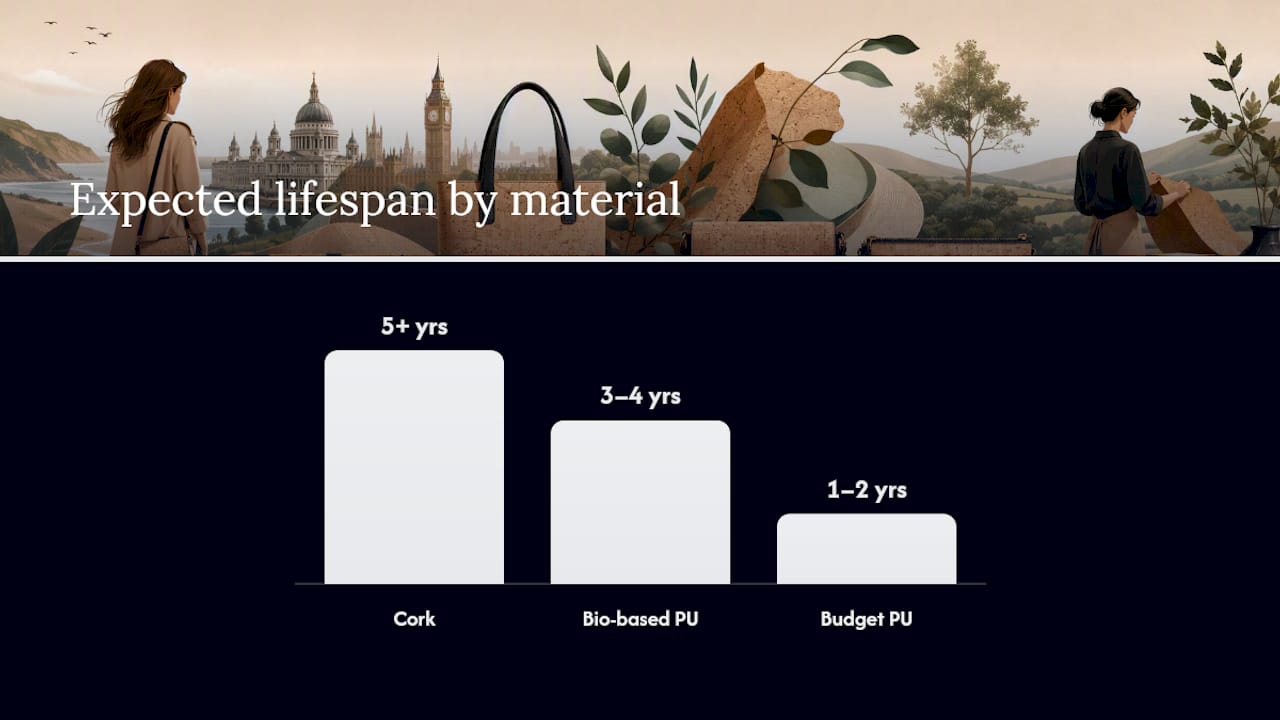
With reasonable care, cork purses commonly last five-plus years, well-made bio-based PU three to four years, and budget PU one to two years before edges start to peel.
Why cork stands out: Thecorkstore’s expert perspective
Cork’s ecological credentials are hard to beat among non-leather materials. It’s harvested from the bark of the cork oak, stripped without felling the tree, which regrows its bark over the following years. Standard PU production relies on petrochemical inputs from start to finish, with no equivalent renewable harvest cycle.
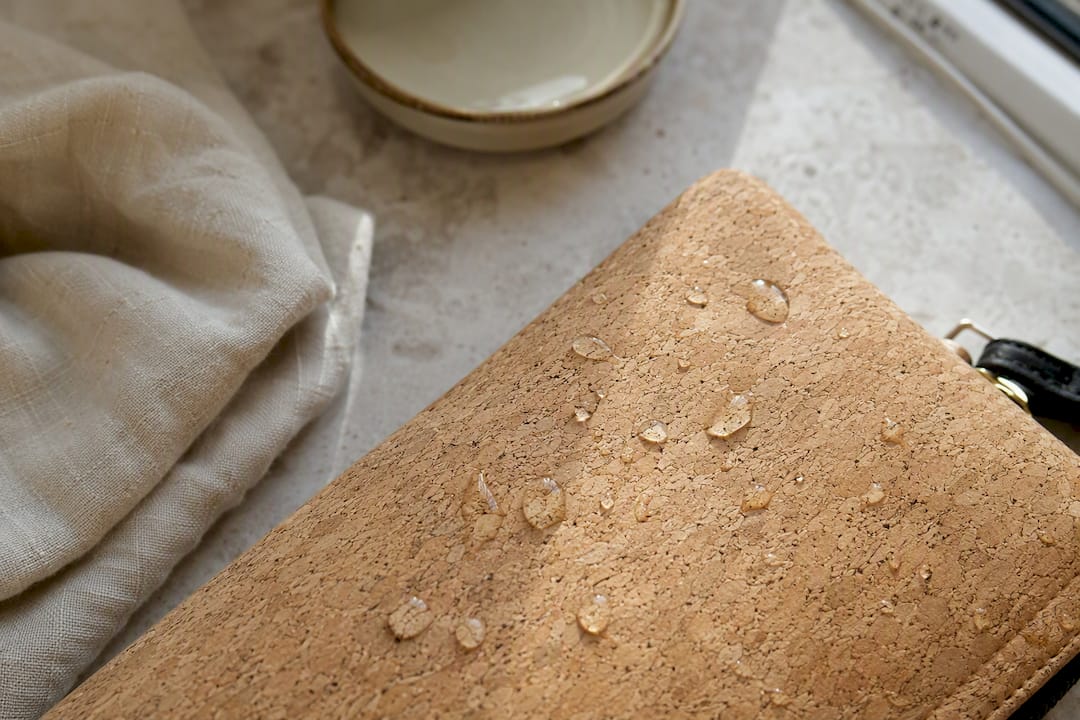
In daily use, cork’s practical case is just as strong. It’s naturally water-resistant, noticeably lighter than most PU alternatives of the same size, and carries a texture no synthetic quite replicates, slightly grained, warm to the touch, and it improves with light wear rather than degrading.
Some businesses have built their offerings around this material precisely because it solves the durability complaints most vegan purse buyers eventually run into with cheaper PU. If you want the deeper detail on how cork fabric is made and finished, our guide to cork fabric for vegan bags covers the process, and our piece on choosing a vegan leather purse in the UK walks through the buying criteria in more depth. Aaron, contributor at Thecorkstore, has spent years tracking how these materials perform after the first year of real use, which is where most quality differences actually show up.
Is non-leather actually better for the environment than traditional leather?
Traditional leather carries a heavy environmental cost long before it reaches a handbag: cattle farming drives land use and methane emissions, and the tanning process typically uses chromium and other chemicals that require careful treatment to avoid water pollution. Non-leather materials avoid the farming footprint entirely, but that doesn’t make every alternative automatically green.
Standard PU is petroleum-derived and non-biodegradable, so it swaps one environmental problem for another, plastic persistence, rather than solving it outright. Recycled PU and RPET-backed fabrics improve on this by diverting existing plastic waste, though they’re still fundamentally synthetic. Bio-based PU sits somewhere in the middle, reducing virgin petrochemical content without eliminating it.
Cork is the clearest exception. Because it’s bark rather than a farmed hide or a manufactured plastic, its production involves no animal rearing, no tanning chemicals, and a renewable harvest that doesn’t require the tree to be cut down. That’s a meaningfully different environmental profile from either leather or standard PU, and it’s a large part of why cork keeps appearing in UK roundups of sustainable and vegan handbag brands.
The honest takeaway: no material is impact-free, but the gap between the best and worst non-leather options is wide enough that the specific material you choose matters more than the broad “vegan” label on its own.
What are the ethical benefits of choosing a non-leather purse?
The clearest ethical case for non-leather purses is the most obvious one: no animal is farmed or slaughtered to make them. Leather production is a co-product of the meat industry, but it still relies on animal life and death at scale, something PETA has long campaigned against through its guidance on animal-free clothing and accessories.
Beyond animal welfare, non-leather purses let shoppers align a purchase with a broader ethical stance without compromising much on look or function, especially now that cork and bio-based PU have closed much of the quality gap with traditional leather. That matters for the growing number of UK shoppers who identify as vegan or cruelty-free but still want a purse that looks considered rather than obviously synthetic.
There’s also a public appetite angle worth noting. Limited-run, charity-linked bags have shown how quickly UK consumers respond to products with a clear ethical story attached, one Cumbrian charity tote sold out rapidly after launch, raising funds while giving buyers something to feel good about beyond the purchase itself. Non-leather purses tap into that same instinct on a daily basis: every use is a small, visible choice that didn’t cost an animal its life.
That said, ethical buying isn’t just about the “no leather” tick box. A synthetic purse made in poor conditions from unrecyclable plastic isn’t automatically the more ethical choice over a well-made leather alternative from a transparent, accountable producer. The material matters, but so does everything else the brand is willing to disclose about how it’s made.
What’s new in non-leather purse design in the UK?
British designers and retailers have moved well past the flat, shiny “pleather” look that defined budget vegan bags a decade ago. Textured finishes, cork grain, brushed vegan suede, matte bio-based coatings, now dominate new releases because they read as considered rather than as a leather substitute apologising for itself.
Bio-based PU has genuinely improved. Brands are blending bamboo and corn-derived coatings into their bases at higher percentages than a few years ago, closing some of the durability gap that used to separate synthetic options from the best cork and canvas pieces.
Transparency has become a design feature in its own right. More UK product pages now list full material breakdowns, care instructions, and lining composition upfront, following the same pattern seen in detailed listings that spell out bamboo-based leather and lining materials, rather than burying that detail in a returns policy nobody reads.
Cork specifically has moved from niche curiosity to a recognised category. Where it once appeared mostly on smaller accessories, it’s now showing up in full-size shoulder bags, crossbodies, and structured purses with metal hardware finishes that wouldn’t have suited the material a few years ago. Expect that trend to continue as more UK buyers actively search for cork by name rather than stumbling on it as an alternative.
What actually matters when buying a non-leather purse
Most buying advice on non-leather purses stops at “check it’s vegan” and calls that ethical due diligence done. That’s not enough. A purse can be entirely animal-free and still be a poor environmental choice, made from unrecycled petroleum plastic with no lining transparency and a two-year lifespan.
What the evidence here actually points to is durability as the real ethics test. A purse that falls apart in eighteen months gets replaced, and that replacement has its own manufacturing footprint. Buying one well-made cork or high-quality bio-based piece that lasts five years beats buying three cheap PU purses over the same period, on cost and on impact.
The conventional advice also underrates material transparency as a filter. Brands willing to state exact lining composition and bio-based percentages are, in practice, the ones making better products, not just better marketing copy. If a listing is vague about what’s actually in the bag, treat that as the first warning sign, ahead of price or styling.
Prioritise the material’s actual track record over the label on the tag. That single shift in thinking will do more for your wardrobe and your conscience than any amount of vegan-badge-spotting.
— Aaron
Shop cork purses built to actually last
Thecorkstore is the alternative to gambling on unlabelled “vegan leather” online: every purse is made from cork with the material breakdown stated upfront, no vague eco-claims, no guessing what’s inside the lining.
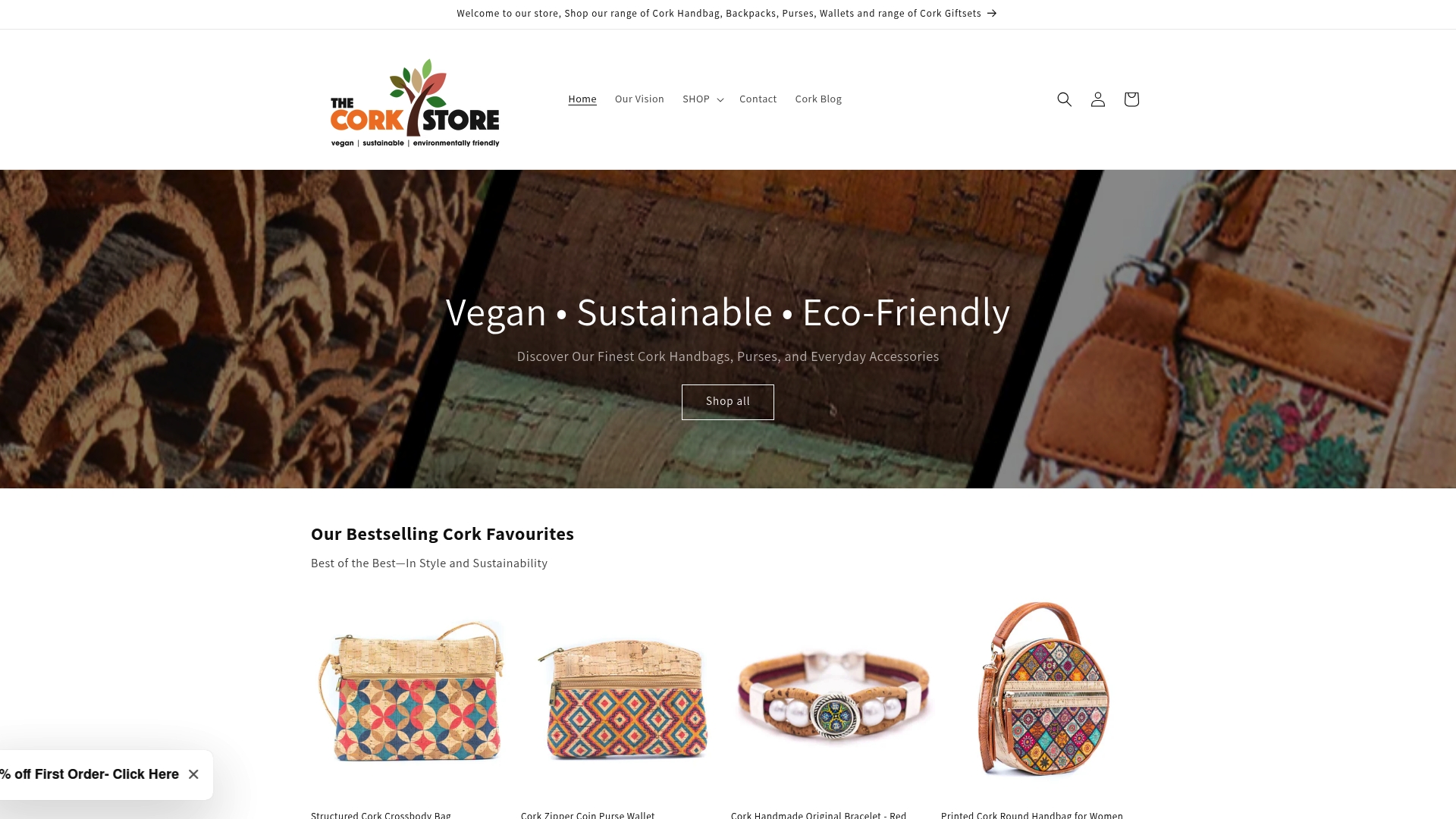
Our collection covers coin purses, card wallets, crossbodies, and gift sets, all built around cork’s natural water resistance and long wear, so you’re not choosing between ethics and something that survives daily use. If you want the reasoning behind why we build almost everything around this one material, our piece on cork handbags and the future of sustainable fashion lays it out in full, and our style-versus-sustainability checklist is worth a read before you buy anything vegan online.
Browse the current tan cork purse collection, check our returns policy, and get in touch if you have questions about sizing or care before you order.
Sources
- PETA
- UK vegan handbag brands with sustainable style
- Herdy bag featuring Windermere resident’s design for charity
- Luella Vegan Bio-Based Bamboo Leather Chain Purse in Brown
FAQ
Which luxury brands don’t use leather?
Several luxury and premium fashion houses have introduced fully vegan lines using materials such as cork, bio-based PU, and mushroom leather, though policies vary by brand and by collection, so it’s worth checking each brand’s current material statement rather than assuming an entire label is leather-free.
What are some good non-leather designer purses?
Look for smaller, design-led brands that state their materials clearly, cork purses with structured hardware, bio-based PU pieces with a stated plant content percentage and coated canvas designs with quality stitching, rather than relying on the word “designer” alone as a quality signal.
What are handbags made from if not leather?
Common alternatives include cork, PU (polyurethane), recycled PU or RPET-backed fabrics, bio-based PU made with bamboo or corn derivatives, vegan suede, and coated canvas, each with different durability and water-resistance profiles.
Are cork purses actually durable?
Cork resists water and scuffing well and typically lasts five years or more with basic care, making it one of the more durable non-leather materials available to UK shoppers, provided it’s cleaned with a damp cloth rather than soaked or scrubbed.
How can I check if a purse is genuinely cruelty-free?
Check for a clear material breakdown on the product page, look for recognised vegan guidance such as that published by PETA, and be wary of vague “eco-friendly” labels with no supporting detail on lining, coating, or supply chain.