

Plant-based accessories list: your 2026 UK guide
Cork wallets, Piñatex tote bags, mushroom leather belts. The plant-based accessories list has grown from a niche curiosity into a genuinely stylish category, and UK shoppers have never had more choice. These are fashion items made from renewable agricultural materials, not animal hides and not PVC plastic, and the difference in environmental impact is real.
The core accessory types you will find across this category:
- Wallets and cardholders (cork, apple leather, MIRUM®)
- Tote bags and handbags (Piñatex, cactus leather, grape leather)
- Backpacks and briefcases (cork, mushroom leather)
- Belts (corn leather, apple leather)
- Passport holders and travel accessories (cork, recycled plant fibres)
Brands leading this space in the UK include Thecorkstore for cork accessories, Doshi for vegan microfibre pieces, and Filbert for luxe plant-based bags. Each takes a different material route, but all share a commitment to cruelty-free production.
What makes plant-based materials genuinely sustainable?
Not all vegan accessories are equal. The distinction that matters most is whether the material comes from a plant source or a plastic one.
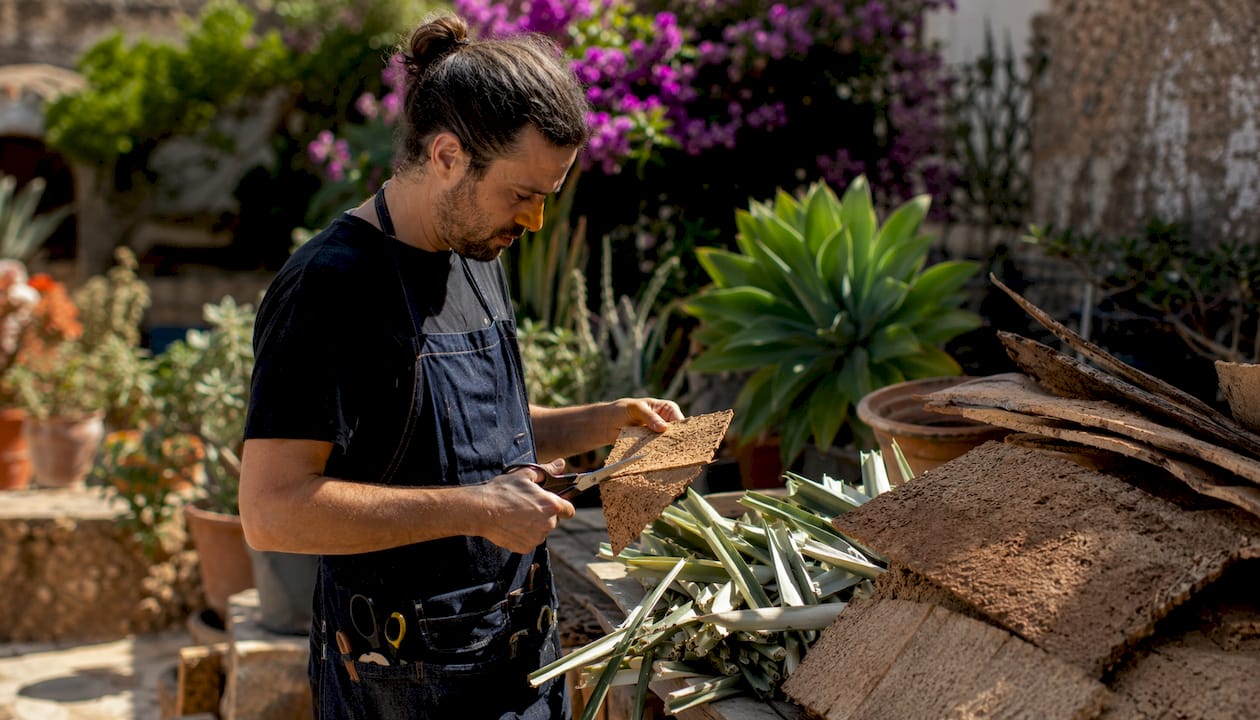
Cork is harvested from the bark of cork oak trees without felling them, making it renewable and water-resistant by nature. The bark regenerates every nine years, so the tree lives on. Cork is also lightweight and naturally resistant to moisture, which is why it works so well for wallets and bags. Thecorkstore’s entire range is built on this material, and their cork wallet benefits page explains the durability case in detail.
Piñatex transforms pineapple leaf fibres, an agricultural by-product that would otherwise be discarded, into a strong, leather-like textile used in handbags and shoes. It was developed by Ananas Anam and has become one of the most recognised plant-based materials in fashion.
Mushroom leather, or mycelium leather, is biodegradable and mimics animal leather in both look and feel. It is grown rather than farmed, which means the production footprint is dramatically lower than conventional hides.
Apple leather uses upcycled apple waste, specifically the skins and cores left over from juice production, processed into a durable sheet material. Brands like ALÉNORE use water-based dyes and certified threads alongside it to keep the full lifecycle as clean as possible.
The contrast with plastic-based vegan leather is stark. Traditional PVC and polyurethane vegan leathers carry significant environmental costs, from fossil fuel inputs to end-of-life pollution. Plant-based options avoid both.
“Plant-based leathers from agricultural waste require specific processing techniques to ensure durability and water resistance matching animal leather.” The best brands invest in that processing rather than cutting corners with plastic coatings.
UK brands worth knowing for plant-based accessories
The UK market has a strong cluster of brands working seriously with plant-based materials, and the range of styles is wider than most people expect.
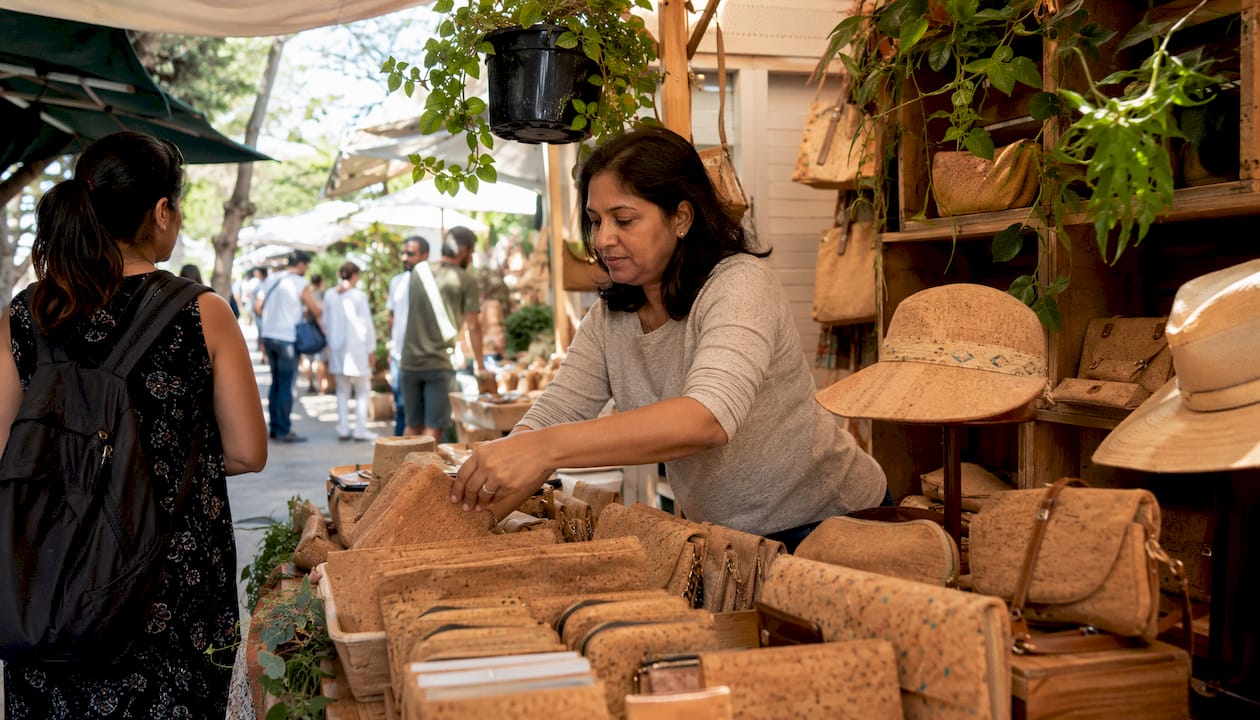
Thecorkstore is the UK’s specialist cork accessories retailer, selling vegan cork handbags, wallets, backpacks, and gift sets. Cork’s natural texture gives each piece a distinctive look, and the material ages well without cracking. Their blog also functions as a genuine education resource on sustainable fashion, which reflects a transparency that is increasingly rare.
Doshi focuses on vegan microfibre and PU accessories, offering wallets, belts, and bags at accessible price points. The brand is explicit about its no-animal-products position and has built a following among shoppers who want everyday pieces without the ethical compromise.
Filbert sits at the more luxurious end, producing plant-based bags with a premium finish. The brand demonstrates that choosing cruelty-free materials does not mean accepting a drop in quality or aesthetic.
Emerging brands are pushing further still. SENTIENT, founded in Mexico City, uses MIRUM® alongside cactus leather and apple leather, with each piece made in small batches by artisans. Kairi, a London-based brand, was among the first in the UK to introduce cactus and apple leather bags, keeping designs clean and season-agnostic. For something genuinely unusual, Leafii makes accessories from teak leaves, hand-harvested and sealed to create a lightweight, water-resistant material with a completely unique grain.
Pro Tip: When researching a brand, look for named certifications such as OEKO-TEX®, PETA-Approved Vegan, or GRS (Global Recycled Standard). These are independently verified, unlike self-declared “eco-friendly” claims.
How to choose plant-based accessories that actually last
Buying well once beats replacing cheaply twice. Here is what to look at before you commit.
Material origin and processing matter more than the label. Ask whether the plant-based material has been finished with a plastic coating, which undermines the biodegradability argument. Cork and uncoated apple leather are generally cleaner choices than heavily laminated alternatives.
Durability indicators to check:
- Stitching quality at stress points (handles, zip pulls, corners)
- Hardware material (Italian brass or recycled metal beats cheap zinc alloy)
- Lining fabric (recycled polyester or organic cotton rather than virgin plastic)
- Water resistance, either natural (cork) or achieved through plant-based treatments
Certifications and ethical labels are your shortcut through greenwashing. Look for PETA-Approved Vegan, Vegan Society certification, or B Corp status. BLUMI, for example, carries OEKO-TEX®, GRS, and USDA Biobased certification, which covers the material, the recycled content, and the bio-based inputs separately.
Price expectations are shifting. A well-made cork wallet from Thecorkstore sits in a comparable range to a mid-market leather wallet. Next-gen materials like MIRUM® and cactus leather command a premium because production volumes are still relatively low, but prices are falling as the category scales.
Care tips by material:
- Cork: wipe with a damp cloth, avoid prolonged soaking, condition occasionally with a natural wax
- Apple leather: keep away from sharp edges and direct heat; a light buff with a soft cloth maintains the surface
- Piñatex: spot-clean only; avoid machine washing, which breaks down the fibre structure
- Mushroom leather: treat like a fine suede; brush gently and store away from moisture
Pro Tip: Slow fashion principles apply here too. Buying a timeless plant-based bag that you will carry for five years is categorically more sustainable than buying three trend-led pieces in the same period, regardless of what they are made from.
Why the next generation of plant-based materials changes everything
The gap between plant-based accessories and animal leather used to be a real one, mostly in durability and finish. That gap has largely closed, and the materials now entering the market are genuinely ahead on several measures.
MIRUM® is a plastic-free, bio-based material made entirely from natural ingredients including plant oils, natural rubber, and cork. Unlike most plant-based leathers, it contains no polyurethane backing, which means it is fully biodegradable at end of life. Brands using MIRUM® and bio-based fibres are setting a new benchmark for what ethical production can look like.
The distinction between plant-based leather and plastic-based vegan leather is one that sustainable fashion experts consistently emphasise. PVC and polyurethane alternatives avoid animal cruelty but introduce a different set of environmental problems, from microplastic shedding to non-biodegradable waste. Choosing materials with a genuinely plant-based lifecycle is the more complete answer.
“Supporting brands with transparent, ethical production models encourages further innovation in sustainable plant-based materials.” The brands investing in next-gen materials today are the ones shaping what the whole category looks like in five years.
Slow fashion sits at the heart of this. Purchasing fewer, high-quality accessories that last several years reduces waste far more effectively than switching to a “sustainable” material but still buying at fast-fashion frequency. Carter Wade, for instance, produces limited-edition bags in small batches specifically to resist the pull of trend-driven overproduction.
Pro Tip: Before buying, check whether a brand publishes its supply chain information. Brands like HolySand and Thecorkstore make their sourcing and production practices visible, which is a stronger signal of genuine commitment than any single certification alone.
Key takeaways
Plant-based accessories made from cork, Piñatex, apple leather, and mushroom leather offer genuinely sustainable alternatives to both animal leather and plastic-based vegan materials.
| Point | Details |
|---|---|
| Material choice is the foundation | Cork, Piñatex, apple leather, and mushroom leather each offer different durability and environmental profiles. |
| Plastic-based vegan leather is not the same | PVC and polyurethane alternatives avoid animal products but carry significant environmental costs unlike plant-based options. |
| Certifications cut through greenwashing | Look for PETA-Approved Vegan, OEKO-TEX®, GRS, or B Corp status before buying. |
| MIRUM® leads next-gen innovation | It is fully plastic-free and biodegradable, setting a new standard for plant-based accessory materials. |
| Slow fashion multiplies the impact | Buying one well-made plant-based accessory that lasts years beats buying several trend-led pieces, whatever the material. |