
Qualities of Durable Cork – Why It Outshines Leather
Choosing accessories that match your eco-friendly values often means balancing style, durability, and sustainability. Cork stands out as a truly innovative material thanks to its renewable origins in Mediterranean regions like Portugal, Spain, and France and its remarkable honeycomb-like cellular structure. This unique makeup gives cork products exceptional lightweight strength, elasticity, and full biodegradability, making them a thoughtful vegan alternative to leather for anyone committed to ethical fashion and environmental responsibility.
Table of Contents
- What Makes Cork a Unique Material
- Key Characteristics of Durable Cork
- Water Resistance and Everyday Practicality
- Cork Versus Leather and Synthetics
- Caring for and Maximising Cork’s Longevity
Key Takeaways
| Point | Details |
|---|---|
| Unique Properties of Cork | Cork’s remarkable lightweight, elasticity, and thermal regulation make it an exceptional, sustainable material for various applications. |
| Environmental Benefits | Harvested without harming cork oak trees, cork is a renewable, biodegradable resource with a negative carbon footprint. |
| Durability and Water Resistance | Cork’s high suberin content provides excellent durability and water resistance, making it ideal for moisture-sensitive environments. |
| Comparison with Alternatives | Unlike leather and synthetic materials, cork is cruelty-free, requires minimal maintenance, and boasts superior ecological advantages. |
What Makes Cork a Unique Material
Cork is a remarkable natural material with extraordinary characteristics that set it apart from conventional options. Unique cellular architecture defines its exceptional performance, making it a sustainable alternative for numerous applications.
The material’s distinctive properties emerge from its incredible structure and composition. Cork’s cellular composition features a honeycomb-like arrangement that provides remarkable benefits:
- Exceptional lightweight design
- Outstanding thermal regulation
- Superior mechanical strength
- Natural elasticity and compressibility
- Complete biodegradability
Originally harvested from cork oak trees in Mediterranean regions like Portugal, Spain, and France, cork’s sustainable production process ensures no trees are harmed during extraction. The bark regenerates, making cork a genuinely renewable resource.
Chemically, cork is dominated by unique compounds including suberin, lignin, and cellulose. These elements contribute to its remarkable durability and versatility. Modern nanotechnology has further expanded cork’s potential, transforming it from a traditional material to an innovative, functional substance with applications across multiple industries.
Pro tip: When evaluating sustainable materials, consider cork’s holistic environmental profile, which extends far beyond simple renewability.
Key Characteristics of Durable Cork
Cork’s durability stems from its extraordinary chemical composition and remarkable structural integrity. Unique biopolymer structure provides exceptional resistance to wear, moisture, and environmental challenges.
The material’s core durability characteristics include several critical properties:
- High suberin content (approximately 45%)
- Natural water-resistant barrier
- Exceptional mechanical strength
- Remarkable elasticity
- Resistance to microbial degradation
- Thermal insulation capabilities
Chemical complexity of cork emerges from its intricate cell wall composition. Lignin, cellulose, and polyphenolic compounds work synergistically to create a material that withstands significant environmental stress.
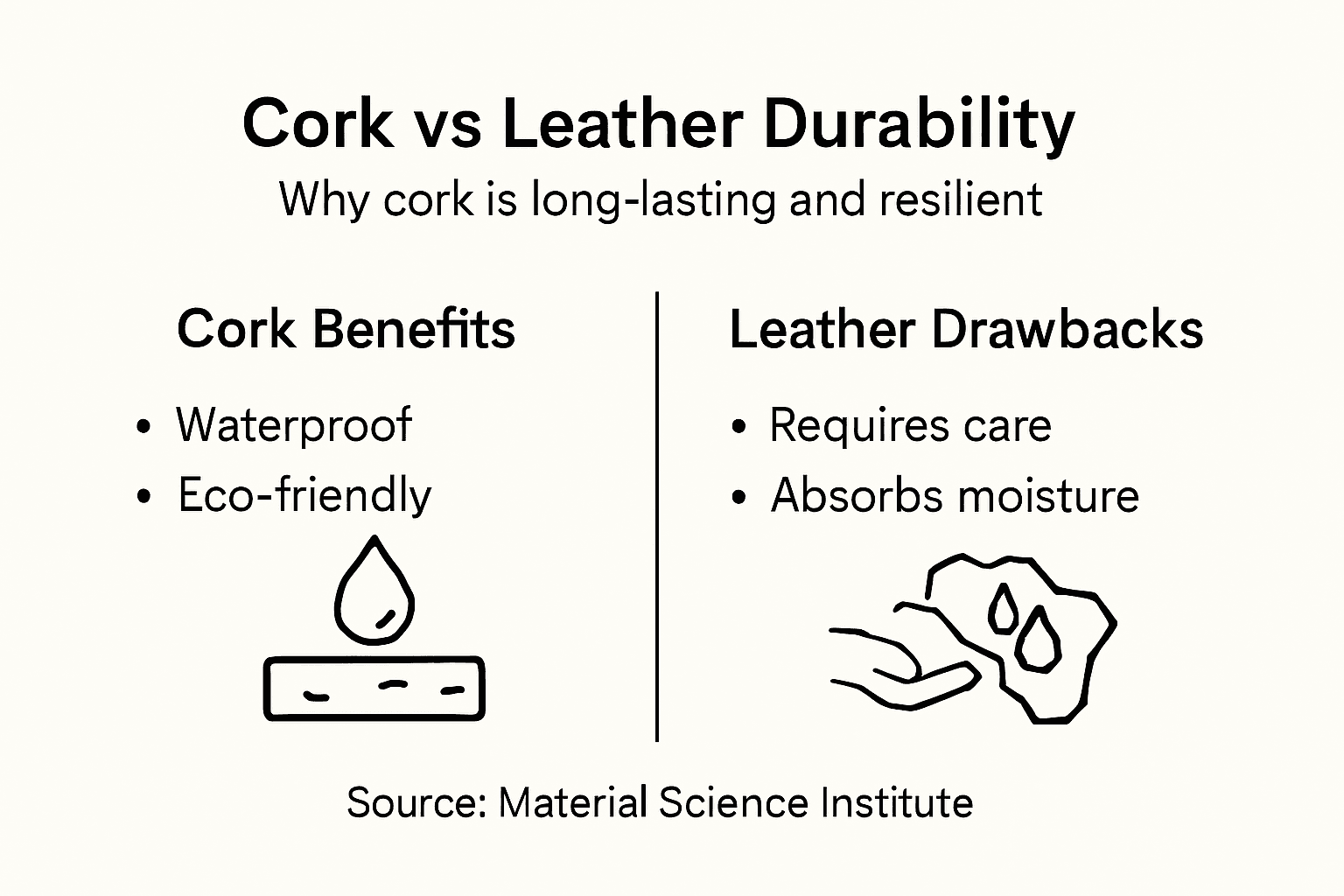
The hydrophobic nature of suberin ensures cork remains stable and functional in diverse conditions. Its cellular structure allows for compression and rapid recovery, making it ideal for applications requiring repeated use and resilience.
Pro tip: When assessing cork’s durability, examine its cellular structure and chemical composition rather than relying solely on surface appearances.
Water Resistance and Everyday Practicality
Extraordinary water-resistant properties define cork’s exceptional utility in everyday applications. The material’s unique cellular structure transforms what might seem like a simple bark into a remarkable solution for moisture-sensitive environments.
Cork’s water resistance emerges from several critical characteristics:
- Suberin-enriched cellular walls
- Natural hydrophobic composition
- Ability to prevent water penetration
- Structural integrity under moisture exposure
- Rapid water-repellent recovery
- Minimal absorption capabilities
Chemical composition of cork plays a pivotal role in its water-resistant performance. Ester bonds and polyphenols work synergistically to create a natural barrier against moisture, ensuring durability in challenging conditions.
Outdoor exposure tests demonstrate cork’s remarkable resilience. Its ability to maintain physical properties after prolonged moisture contact makes it an ideal material for accessories, outdoor gear, and environments requiring consistent performance.
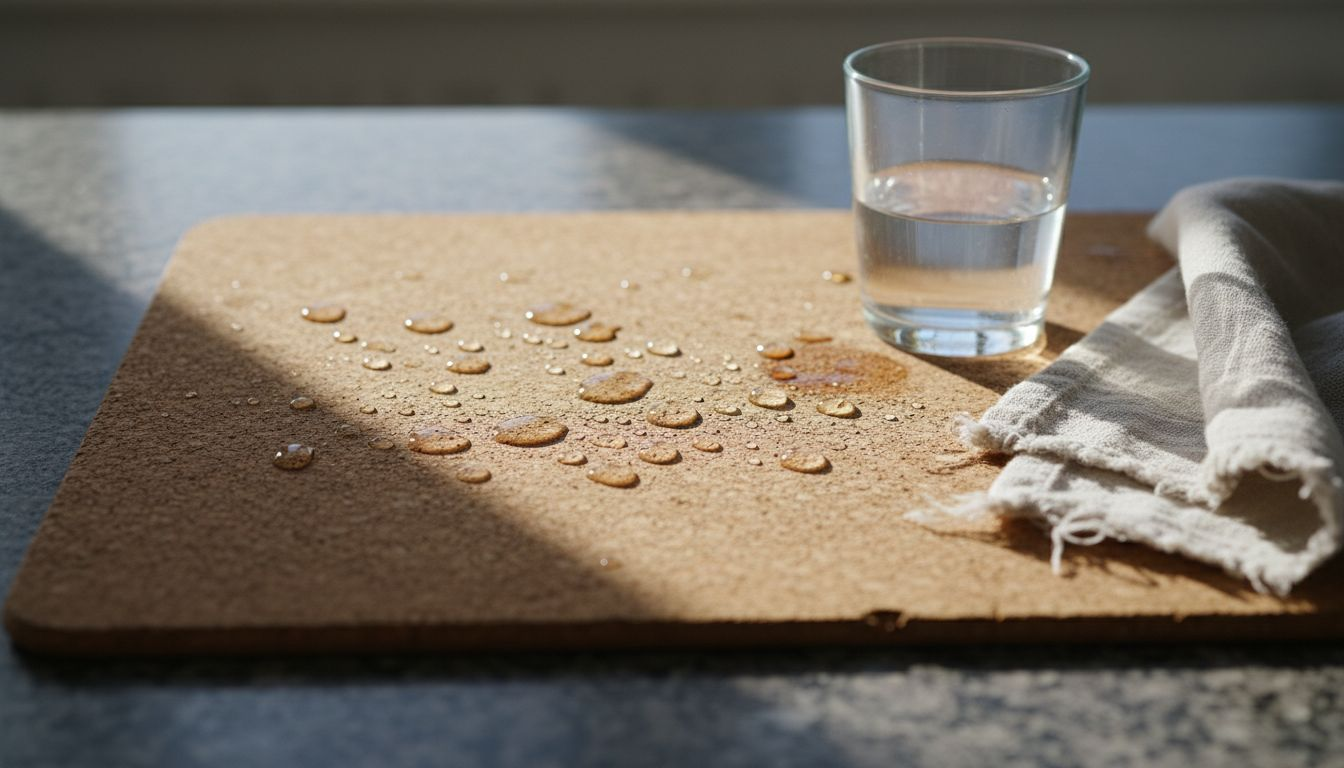
Pro tip: Test cork’s water resistance by observing how droplets bead and roll off its surface, indicating its superior hydrophobic qualities.
Cork Versus Leather and Synthetics
Sustainable material comparisons reveal cork’s remarkable superiority over traditional leather and synthetic alternatives. While conventional materials often compromise environmental integrity, cork emerges as a genuinely eco-conscious choice for discerning consumers.
Key comparative advantages of cork include:
- Negative carbon footprint
- Renewable and biodegradable composition
- Superior water resistance
- Lightweight performance
- Hypoallergenic properties
- Minimal chemical processing
- Cruelty-free production
Environmental impact assessment demonstrates cork’s significant ecological benefits. Unlike leather, which requires extensive animal farming and chemical treatments, or synthetics derived from petroleum, cork represents a naturally sustainable material solution.
The cellular structure of cork provides unparalleled thermal and acoustic insulation, outperforming both leather and synthetic materials. Its breathable nature, combined with remarkable durability, positions cork as a superior alternative for environmentally conscious consumers seeking high-performance, ethically produced accessories.
Here’s a comparative overview of cork, leather, and synthetic materials based on key sustainability and performance factors:
| Criteria | Cork | Leather | Synthetic Materials |
|---|---|---|---|
| Source | Renewable bark of cork oak tree | Animal hides, non-renewable farming | Petroleum-based, non-renewable |
| Carbon Footprint | Negative, absorbs CO₂ | High, livestock emissions | High, fossil fuel emissions |
| Water Resistance | Excellent, suberin barrier | Moderate, often needs treatment | Variable, reliant on coatings |
| Biodegradability | Fully biodegradable | Partially biodegradable | Generally non-biodegradable |
| Ethical Considerations | Cruelty-free, sustainable harvest | Animal welfare issues | No animal products, high pollutants |
| Maintenance Required | Low, gentle cleaning | Moderate, susceptible to wear | Low, but can lose integrity rapidly |
Pro tip: When selecting materials, prioritise cork’s holistic performance by considering its environmental footprint, durability, and functional characteristics.
Caring for and Maximising Cork’s Longevity
Cork’s natural durability ensures minimal maintenance is required to preserve its exceptional qualities. Understanding the right care techniques can significantly extend the lifespan of your cork accessories, keeping them looking pristine and performing beautifully.
Essential maintenance practices for cork products include:
- Clean with mild soap and lukewarm water
- Avoid prolonged direct sunlight exposure
- Use soft, non-abrasive cloths for cleaning
- Store in cool, dry environments
- Prevent contact with harsh chemicals
- Allow natural air drying after cleaning
- Rotate and redistribute wear periodically
Protective maintenance strategies are crucial for preserving cork’s protective suberin layer. pH-neutral cleaners work best, helping maintain the material’s surface integrity without compromising its natural properties.
Cork’s cellular structure inherently resists deterioration, making it remarkably low-maintenance. Minor surface changes do not typically impact functionality, which means your cork accessories can remain beautiful and practical with just minimal, thoughtful care.
For quick reference, here are recommended care techniques for maximising the life of cork accessories:
| Care Technique | Purpose | Frequency | Impact on Longevity |
|---|---|---|---|
| Mild soap with lukewarm water | Removes dirt while preserving surface | When soiled | Prevents damage, keeps pristine |
| Soft cloth cleaning | Protects cellular structure | Weekly or as needed | Avoids abrasions, maintains appearance |
| Store in cool, dry place | Minimises moisture exposure | Always | Prevents mould, prolongs durability |
| Rotate usage | Evens out wear | Monthly | Prevents stress marks, lasts longer |
Pro tip: Treat your cork items like a fine textile, handling them with gentle care and avoiding extreme environmental conditions.
Discover the Lasting Power of Cork Accessories for Sustainable Style
If you have been inspired by the unique qualities of cork discussed in the article “Qualities of Durable Cork – Why It Outshines Leather,” you understand the challenge of finding accessories that combine durability, water resistance, and eco-consciousness. Cork’s natural elasticity, hydrophobic properties, and renewable origin make it an exceptional alternative to leather and synthetics, offering you stylish options that do not compromise the planet or your values.
Explore our curated collection at The Cork Store to experience lightweight, cruelty-free handbags, wallets, and backpacks crafted to last. Each product exemplifies the remarkable chemical and structural advantages of cork, ensuring you enjoy accessories that are as resilient as they are beautiful.
Why wait to elevate your wardrobe with sustainable luxury The durability and water-resistant qualities of cork make it perfect for everyday use and special occasions alike Take your first step towards greener fashion now by browsing our range at The Cork Store and embrace eco-friendly style that truly outshines leather
Frequently Asked Questions
What are the key characteristics that make cork durable?
Cork’s durability is attributed to its high suberin content, natural water-resistant barrier, exceptional mechanical strength, remarkable elasticity, and resistance to microbial degradation. These properties enable cork to withstand significant wear and environmental challenges.
How does cork compare to leather in terms of environmental impact?
Cork has a negative carbon footprint as it absorbs CO₂, making it a more eco-friendly choice compared to leather, which generates high emissions through livestock farming. Additionally, cork is fully biodegradable, whereas leather is only partially biodegradable.
Can cork withstand moisture and water exposure?
Yes, cork has extraordinary water-resistant properties thanks to its suberin-enriched cellular walls, which create a natural barrier against moisture. It maintains structural integrity even after prolonged exposure to water.
What maintenance is required to extend the lifespan of cork products?
To maximise the longevity of cork items, clean them with mild soap and lukewarm water, avoid prolonged direct sunlight, store them in a cool, dry place, and use soft non-abrasive cloths to clean. Regular rotation of usage can also help in maintaining their appearance and functionality.