

Complete Guide to Why Cork Is So Durable
Cork does things no ordinary material can. Harvested without harming the tree, cork’s bark regrows every nine years, making it a sustainable wonder. Its natural cellular structure packs strength, flexibility, and resistance into one lightweight package. While most materials break down or lose shape over time, cork stands resilient through repeated stress. Discover what makes cork so different and why it remains unmatched from floors to fashion.
Table of Contents
- What Makes Cork a Unique Material
- Cellular Structure and Durability Factors
- Processing Methods Enhancing Cork Strength
- Applications Requiring High Durability
- Cork Versus Other Sustainable Materials
Key Takeaways
| Point | Details |
|---|---|
| Unique Properties | Cork’s microstructure provides exceptional lightweight, elastic, impermeable, and insulating qualities, making it superior to synthetic alternatives. |
| Sustainable Harvesting | Cork can be harvested without killing the source tree, allowing for renewable extraction and contributing positively to carbon absorption. |
| Processed Durability | Advanced processing techniques enhance cork’s natural properties, resulting in a high-performance material that maintains structural integrity over time. |
| Versatile Applications | Cork’s durability and unique characteristics enable its use in high-stress applications, such as acoustic insulation and thermal regulation. |
What Makes Cork a Unique Material
Cork is a phenomenal natural material that defies expectations with its extraordinary properties. According to naturalcorkcouncil.org, cork is a 100% natural substance harvested from cork oak trees, boasting an incredible composition that sets it apart from synthetic alternatives.
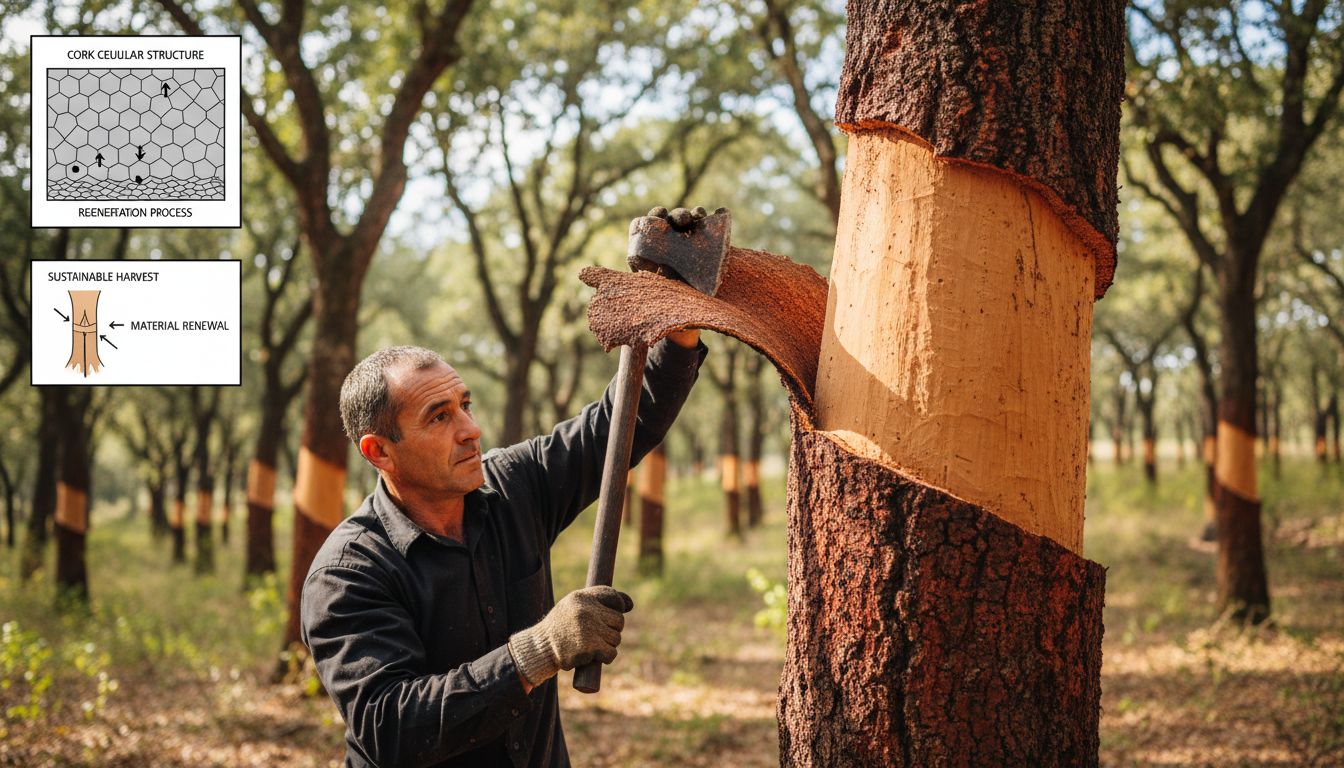
At the core of cork’s uniqueness is its remarkable microstructure. ecocorker.com explains that cork contains a closed-cell design featuring tiny, sealed air chambers that contribute to its exceptional characteristics. This intricate structure provides multiple impressive qualities:
- Lightweight: Incredibly low density due to air-filled chambers
- Elastic: Can compress and return to original shape without permanent deformation
- Impermeable: Suberin in cell walls blocks liquids and gases
- Insulating: Natural thermal and acoustic protection
The chemical composition of cork, primarily consisting of suberin and lignin, further enhances its unique attributes. These compounds create a material that is simultaneously strong, flexible, and resilient. Unlike synthetic materials that deteriorate quickly, cork maintains its integrity through repeated use, making it a sustainable and durable choice for various applications.
For more insights into cork’s incredible production process, check out our complete guide to the Cork Production Process.
Cellular Structure and Durability Factors
The remarkable durability of cork begins deep within its cellular architecture. According to Nature Research, cork possesses a unique cellular structure enriched with suberin and polyphenolic compounds that grant it extraordinary mechanical and protective properties.
At the microscopic level, cork’s cellular structure is nothing short of remarkable. Each cell is essentially a tiny, sealed compartment with incredibly thick walls composed of suberin, a waxy substance that provides exceptional resistance to moisture, compression, and environmental stressors. This intricate design creates multiple defensive mechanisms:
- Hydrophobic Protection: Suberin blocks water penetration
- Compression Resistance: Cells can compress and recover without structural damage
- Chemical Stability: Polyphenolic compounds prevent rapid degradation
- Thermal Regulation: Cellular air pockets provide natural insulation
The chemical composition of these cells is particularly fascinating. Suberin not only creates a waterproof barrier but also contributes to the material’s resilience. The polyphenolic compounds act as natural antioxidants, which means cork can withstand environmental challenges that would quickly degrade other natural materials. This makes cork an exceptionally long-lasting material, capable of maintaining its structural integrity through years of use.
Interested in understanding how these remarkable properties translate into cork production? Learn more about our comprehensive guide to the Cork Production Process and discover the intricate journey from tree bark to sustainable product.
Processing Methods Enhancing Cork Strength
The transformation of raw cork into an exceptionally durable material relies on sophisticated processing techniques that dramatically improve its inherent properties. According to Nature Research, thermal treatments play a crucial role in enhancing cork’s physical characteristics, with methods like boiling water treatment significantly impacting its strength and performance.
Traditional processing methods involve several key stages designed to optimize cork’s natural resilience:
- Thermal Treatment: Controlled heating to improve dimensional stability
- Compression Techniques: Removing air and restructuring cellular networks
- Chemical Stabilization: Reinforcing natural protective compounds
- Precision Cutting: Ensuring uniform material quality
Boiling water treatment, in particular, emerges as a groundbreaking technique. This process modifies cork’s internal structure, increasing its density and moisture resistance while maintaining its remarkable elastic properties. The heat helps redistribute suberin and other natural compounds, creating a more compact and robust material that can withstand significant environmental challenges.
These advanced processing methods transform cork from a simple tree bark into a high-performance material suitable for diverse applications. Curious about the intricate journey of cork production? Discover our comprehensive guide to the Cork Production Process and explore the fascinating world of sustainable material engineering.
Applications Requiring High Durability
Cork’s extraordinary durability makes it an exceptional material for applications demanding superior performance. According to Wikipedia, its unique properties like elasticity and near-impermeability enable it to excel in challenging environments where traditional materials would quickly fail.
In the construction and design industries, cork demonstrates remarkable versatility across multiple high-stress applications:
- Acoustic Insulation: Absorbing sound waves in buildings
- Thermal Regulation: Providing exceptional temperature control
- Fire Retardancy: Offering natural protective barriers
- Structural Reinforcement: Supporting architectural elements
As Corkeen highlights, cork’s combination of lightness, impermeability, and compressibility makes it especially valuable in scenarios requiring both strength and flexibility. From wine bottle stoppers that maintain perfect seal integrity to building materials that withstand extreme environmental conditions, cork proves its durability across diverse industries.
Want to dive deeper into cork’s remarkable journey from raw material to high-performance product? Learn more about our comprehensive Cork Production Process guide and discover how this incredible material transforms to meet modern technological challenges.
Cork Versus Other Sustainable Materials
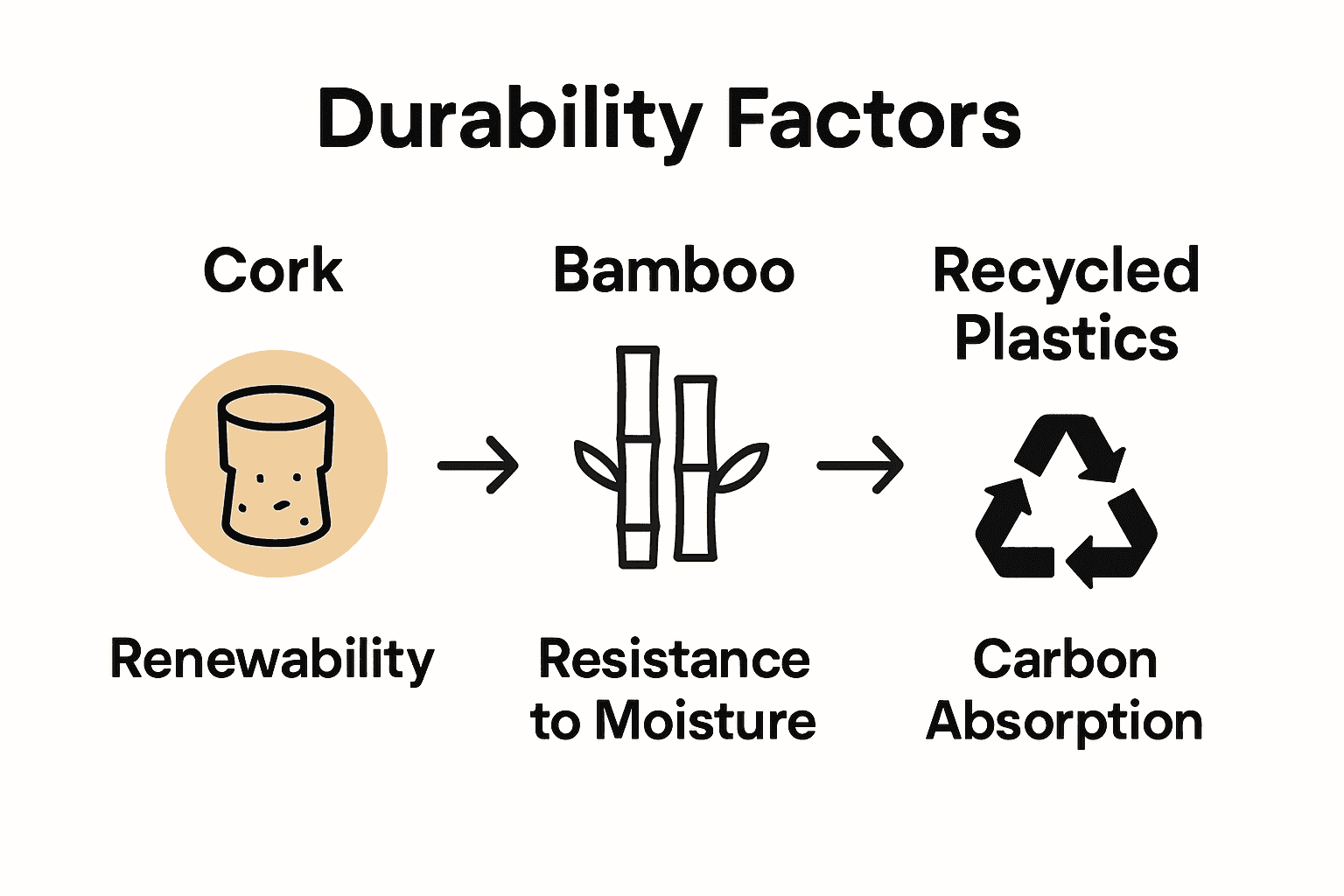
In the world of sustainable materials, cork stands out as a truly exceptional resource. According to Thred, cork offers unique environmental advantages that set it apart from other sustainable alternatives. Unlike materials that require complete tree destruction, cork can be harvested without killing the source tree, with bark regenerating every nine to twelve years.
When comparing cork to other sustainable materials, several key differences emerge:
- Renewable Harvesting: No tree destruction during material extraction
- Carbon Absorption: Actively captures more carbon during growth
- Biodegradability: Naturally breaks down without environmental harm
- Regenerative Potential: Bark regrows multiple times
The environmental credentials of cork go beyond simple sustainability. While many alternative materials claim eco-friendliness, cork actually absorbs more carbon during its growth cycle than is released during harvesting, creating a net positive environmental impact. This remarkable characteristic makes it superior to synthetic materials and many other so-called sustainable alternatives that often have hidden environmental costs.
Interested in exploring more about sustainable material choices? Discover our comprehensive guide to sustainable materials and learn how cork represents the pinnacle of environmentally responsible design.
Discover the Lasting Strength of Cork in Stylish Accessories
If you have wondered why cork is so highly praised for its durability and sustainability, this comprehensive guide reveals the natural and processed qualities that make cork a truly remarkable material. Understanding cork’s unique cellular structure and eco-friendly regeneration highlights why choosing cork accessories is not only a stylish decision but an investment in long-lasting quality and environmental responsibility.
Elevate your everyday fashion with durable and cruelty-free cork products from the cork store that embody nature’s resilience. Explore our range of vegan handbags, wallets and backpacks crafted from this unique, sustainable material. Act today to enjoy eco-conscious accessories that combine strength, beauty and planet-friendly values. Start your journey towards mindful style now at https://thecorkstore.co.uk and learn more about cork’s exceptional qualities in our complete guide to the Cork Production Process. For further inspiration on sustainable choices, visit our sustainable materials overview.
Frequently Asked Questions
What properties make cork a durable material?
Cork’s durability stems from its unique microstructure, which includes closed-cell designs featuring air chambers that provide lightweight, elastic, impermeable, and insulating properties. This structure, combined with chemical components like suberin and lignin, contributes to cork’s resilience and longevity.
How does the cellular structure of cork contribute to its strength?
Cork has a remarkable cellular architecture enriched with suberin and polyphenolic compounds. Each cell is a sealed compartment with thick, moisture-resistant walls, allowing cork to withstand compression and environmental stress without losing structural integrity.
What processing methods enhance cork’s durability?
Processing methods such as thermal treatment, compression techniques, chemical stabilization, and precision cutting significantly improve cork’s natural resilience. Techniques like boiling water treatment modify cork’s internal structure, increasing its density and moisture resistance while maintaining its elasticity.
In what applications is cork’s durability particularly beneficial?
Cork is especially valuable in applications requiring superior durability, such as acoustic insulation, thermal regulation, fire retardancy, and structural reinforcement in construction and design industries. Its combination of lightness and impermeability makes it ideal for high-stress environments.
Recommended
- Why Cork Is Durable: Complete Guide to Its Longevity – The Cork Store
- Understanding Why is Cork Sustainable for Our Planet – The Cork Store
- Complete Guide to the Cork Production Process – The Cork Store
- Why Cork Is Biodegradable: Complete Guide – The Cork Store
- How to Build a Wine Cellar in South Africa