
What does sustainable fashion actually mean?
Sustainable fashion means designing, making, and selling clothes in ways that minimise environmental harm and protect fair working conditions across a garment’s entire life, from raw fibre to final disposal. It’s not one attribute you can tick off; it’s a set of overlapping dimensions that all matter at once.
- Materials: fibre choice, water use, chemical inputs
- Manufacturing: emissions, energy source, factory conditions
- Distribution: transport miles, packaging
- Use: how long a garment lasts and how it’s cared for
- End-of-life: repairability, recyclability, landfill risk
- Social conditions: fair wages, safe workplaces throughout the supply chain
Watch for this: the fashion industry produces roughly 10% of global carbon emissions, a figure worth keeping in mind as you read on. The most reliable signals that a brand takes any of this seriously are recognised standards such as GOTS, Oeko-Tex, Fairtrade, Better Cotton, and the Responsible Wool Standard, alongside lifecycle framing from bodies like the Ellen MacArthur Foundation.
Key Takeaways
Sustainable fashion means minimising environmental harm and ensuring fair social outcomes across a garment’s full life cycle, judged through material, manufacturing, use, and end-of-life stages.
| Point | Details |
|---|---|
| Definition spans the whole lifecycle | Judge sustainability from raw material through manufacturing, use, and disposal, not fibre content alone. |
| Scale is significant | Fashion produces close to 10% of global carbon emissions and consumes roughly 93 billion cubic metres of freshwater yearly. |
| Certifications have limits | GOTS, Fairtrade, and Better Cotton each verify a specific scope; none cover every environmental or social issue alone. |
| Design decides most outcomes | Repairability and material choice made at the design stage matter more than most downstream fixes. |
| Buying less beats buying “green” | Reducing purchases and extending garment life outperforms any single sustainable material claim. |
Where to check the facts yourself
- United Nations for emissions and water-use data on the fashion sector.
- Ellen MacArthur Foundation for circular economy and lifecycle guidance.
- Good On You for brand-level sustainability ratings.
- Scientific American for a practical primer on ethical and sustainable fashion.
Table of Contents
- Why sustainable fashion meaning matters: the numbers behind the term
- What happens at each stage of a garment’s life?
- Which certifications and labels actually mean something?
- What are the most common greenwashing tactics?
- What can you actually do about it?
- What real examples show about material choice
- Making the switch to genuinely lower-impact accessories
- The take
- Frequently asked questions
- Sources
Why sustainable fashion meaning matters: the numbers behind the term
The scale here is what makes “sustainable fashion meaning” more than a semantic exercise. According to United Nations data, the industry accounts for close to 10% of global carbon emissions and consumes around 93 billion cubic metres of freshwater every year, enough to fill millions of Olympic swimming pools.
The world now produces a very large amount of textile waste annually, and in the United States a majority of unwanted clothing still ends up in landfill while a smaller portion is recycled.
That gap between what’s discarded and what’s actually recovered is the real story. Freshwater use hits cotton-growing regions and dye-heavy manufacturing hubs hardest, often communities with the least capacity to absorb the environmental cost. Waste, meanwhile, overwhelms municipal systems never built for synthetic fibres that take decades to break down. The EPA’s textile waste figures make the mismatch between consumption and recovery hard to ignore.
What happens at each stage of a garment’s life?
Judging whether something counts as sustainable clothing means tracing it through every stage of production, not just checking the fibre content on the label. Here’s the sequence that matters:
- Design: decisions made here (fabric choice, seam construction, whether a zip can be replaced) determine most of a garment’s future footprint. Design choices are among the most powerful levers for reducing overall impact, more so than almost anything downstream.
- Raw materials: organic cotton, cork, or regenerated cellulosics reduce certain harms but each brings trade-offs (recycled polyester, for instance, sheds microfibres in the wash).
- Fabric manufacture: spinning, weaving, and finishing determine chemical and water use. Look for evidence of a water-management plan or a published life cycle assessment (LCA).
- Assembly: this is where labour conditions live. Fair wages and safe factories are impossible to verify from a hangtag alone.
- Transport and retail: shipping mode and distance add up, though they’re rarely the biggest lever compared with material and manufacturing choices.
- Use and care: how you wash and dry a garment affects its footprint as much as how it was made.
- Repair and resale: brands offering repair services or resale schemes extend a product’s working life, which the Ellen MacArthur Foundation treats as the single highest-value intervention in the whole chain.
- End-of-life: recycling, incineration, or landfill. Right now, barely 1% of textiles get recycled back into new clothing, with another 12% down-cycled into lower-grade products.
Each stage has its own trade-offs, and no single material or process solves them all.
Which certifications and labels actually mean something?
Marketing copy uses words like “eco” and “green” freely, but only a handful of standards carry independent verification behind them. Knowing what each one actually checks, and what it leaves out, is the difference between reading a label and being reassured by one.
- GOTS (Global Organic Textile Standard) verifies organic fibre content and restricts hazardous chemicals in processing, but it doesn’t audit labour conditions across the full supply chain.
- Oeko-Tex tests the finished product for harmful substances, useful for skin-contact safety, though it says nothing about how the fibre was grown or harvested.
- Fairtrade focuses on fair prices and working conditions for farmers and workers, not on environmental performance.
- Better Cotton and the Responsible Wool Standard address farming practices and animal welfare respectively, each with its own defined scope.
- Textile Exchange frameworks and preferred-fibre benchmarks help brands set material targets, while independent reviewers like Good On You rate brands across environmental, labour, and animal welfare criteria when brands disclose enough to be assessed.
When you see claims like “organic cotton” or “recycled polyester,” ask for the percentage of recycled or organic content, not just the word itself. Some chemical finishing methods have recently been restricted in certain jurisdictions, including PFAS bans in parts of the US, which is reshaping what “safe” finishing even means.
Pro Tip: Cross-check a certification logo against the brand’s own transparency page. A genuine GOTS or Fairtrade claim should link to a certificate number or supplier list, not just sit as a badge on the product photo.
What are the most common greenwashing tactics?
Vague language is the biggest tell. Phrases like “eco-conscious” or “planet-friendly” with no supporting detail are marketing, not evidence. Other patterns worth flagging:
- Single-issue claims that spotlight one virtue (recycled packaging) while ignoring everything else (labour conditions, water use)
- Percentages with no defined baseline (“30% more sustainable” than what, exactly?)
- Awards or certifications from bodies with no public criteria
- Supply chains described only in general terms, with no named factories or regions
Before trusting a claim, ask three questions:
- Is there a life cycle assessment or third-party audit behind this?
- Does the brand state a concrete percentage or scope, not just an adjective?
- Does the brand offer repair or resale, showing it plans for the garment beyond the sale?
A claim like “made with sustainable materials” only becomes credible once it’s backed by a specific certification number or a published supplier list, exactly what Scientific American recommends checking before you buy.
What can you actually do about it?
Impact scales roughly in this order, so start at the top:
- Buy less. The single highest-impact choice is simply purchasing fewer items.
- Buy better. Favour durable, repairable construction over fast turnover pieces.
- Extend what you own. Repair, wash less often, and air-dry rather than tumble-dry.
- Buy secondhand or rent before buying new, especially for occasion wear.
- Choose verified certifications when you do buy new, GOTS, Fairtrade, or RWS over unverified claims.
- Ask brands for transparency, and reward the ones that provide it.
A few habits reduce impact without much effort: wash on cold, skip the dryer, and fit a microfibre filter to your washing machine if you own synthetics. Small shifts, repeated over years, matter more than one perfect purchase.
What real examples show about material choice
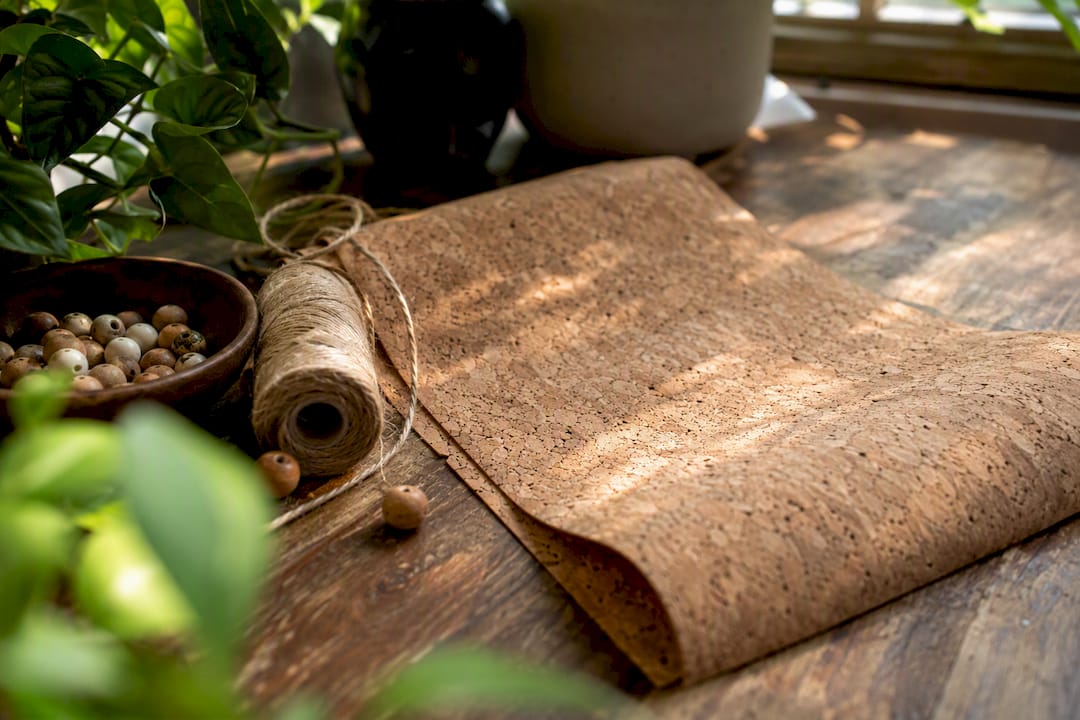
Organic cotton cuts pesticide use but still demands significant water. Recycled polyester diverts plastic from landfill yet sheds microfibres. Regenerated cellulosics like lyocell offer a lower-impact middle ground when produced in closed-loop systems. Cork sits distinctly in this group: it’s harvested from living trees without felling them, and cork production typically uses a fraction of the water leather tanning requires, which is why Thecorkstore builds its handbags, wallets, and accessories around it.
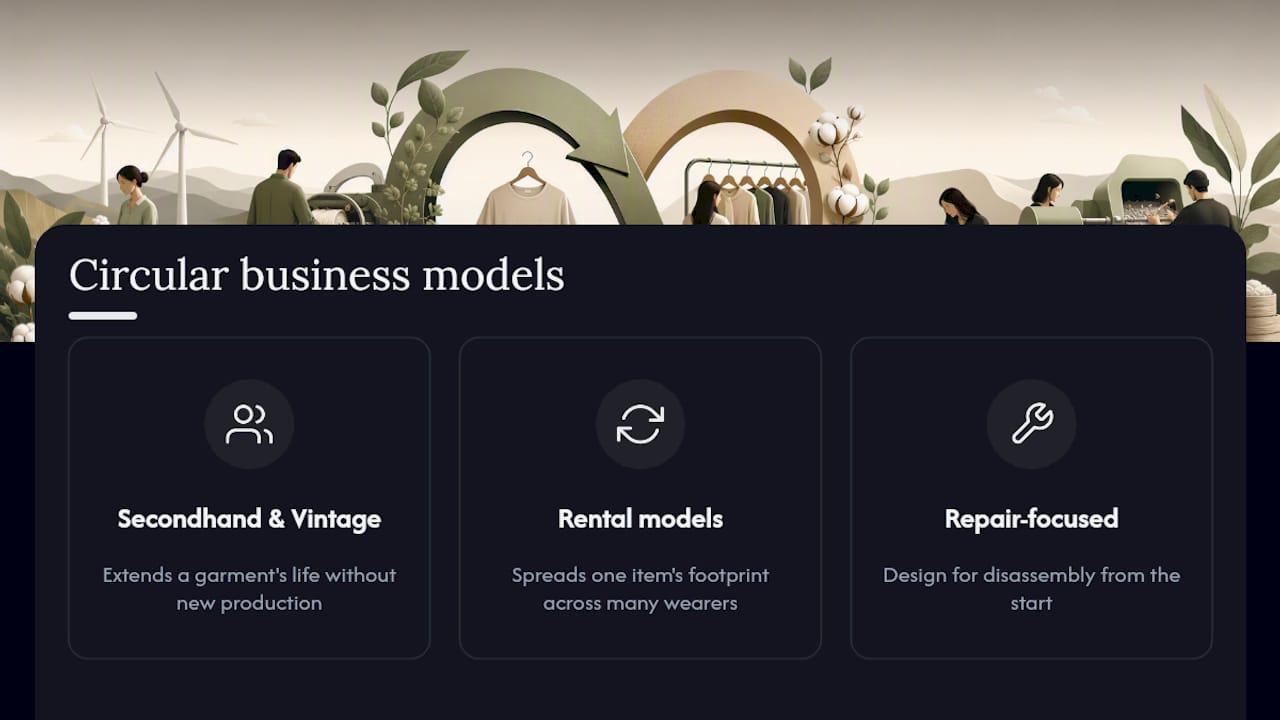
Business models matter as much as materials. Secondhand and vintage extend a garment’s life without new production. Rental and subscription models spread one item’s footprint across many wearers. Repair-focused, circular brands design for disassembly from the start, the same principle behind choosing repairable cork accessories over glued, hard-to-mend leather goods.
Making the switch to genuinely lower-impact accessories
Cork’s low-water profile and vegan credentials make it one of the more defensible material choices available right now, and Thecorkstore’s range of cork handbags, wallets, and gift sets is built around that logic rather than around vague eco-marketing. Every product page states the material honestly instead of hiding behind a badge with no substance behind it.
If you’re weighing up a new bag or a gift, browse the full cork accessory collection and judge it by the same lifecycle questions this article just walked through: what’s it made from, how long will it last, and can it be repaired.
The take
The conventional advice on this topic usually stops at “buy less, buy secondhand,” which is true but incomplete. What gets underweighted is design. Once a garment is cut and stitched, most of its environmental fate is already locked in, whether it’s repairable, whether the fibre can be recovered, whether it lasts five wears or five years. Consumers can’t fix bad design after the fact; they can only choose brands that got it right beforehand.
The gap between what “sustainable” promises and what it delivers comes down almost entirely to verification. A certification like GOTS or Fairtrade tells you something specific and checkable. A phrase like “eco-friendly fashion” on its own tells you nothing. Readers who internalise that distinction, checking scope and evidence rather than vocabulary, will make better calls than anyone chasing a perfect label.
Material choice is a legitimate signal, not a gimmick. Cork’s water profile isn’t marketing spin; it’s a structural property of how the material is harvested. That’s the kind of fact worth basing a purchase on, rather than a badge with no substance behind it.
Frequently asked questions
What is the simplest definition of sustainable fashion? It’s clothing designed and produced to reduce environmental harm and protect fair labour conditions from raw material to disposal, rather than a single feature like “organic” or “recycled.”
Is sustainable fashion the same as ethical fashion? They overlap but aren’t identical. Sustainable fashion focuses more on environmental impact (materials, water, emissions), while ethical fashion emphasises labour rights and fair wages, though most credible brands address both.
How can I tell if a brand is genuinely eco-friendly rather than greenwashing? Look for named certifications (GOTS, Fairtrade, Oeko-Tex), specific percentages rather than vague claims, and evidence of repair or resale programmes, then check whether the brand’s own transparency pages back up what the label says.
Does buying secondhand count as sustainable fashion? Yes. Extending a garment’s use through resale or rental avoids new production entirely, which the Ellen MacArthur Foundation ranks among the highest-impact circular actions available.
Why is cork considered a sustainable material? Cork is harvested from living trees without felling them, and its processing typically uses far less water than leather tanning, making it one of the more defensible vegan material choices for accessories.
Sources
- United Nations – greenwashing (climate issues)
- Scientific American — A beginner’s guide to ethical and sustainable fashion
- Ellen MacArthur Foundation — fashion overview
Recommended
- How to Spot Sustainable Fashion: A Step-by-Step Guide – The Cork Store
- How to Spot Sustainable Materials for Eco-Friendly Fashion – The Cork Store
- Sustainable Fashion Terminology: Clarity for Ethical Choices – The Cork Store
- Understanding Sustainable Fashion Essentials for Eco-Conscious Living – The Cork Store