
What is vegan craftsmanship? materials & ethics
TL;DR:
- Vegan craftsmanship involves creating durable, ethical products using animal-free materials and skilled construction methods. It emphasizes transparency, sustainability, and systemic lifecycle benefits, distinguishing it from mere material substitution. Consumers should verify full material disclosure and third-party certifications to identify genuine vegan craftsmanship.
Vegan craftsmanship is the skilled creation of products using exclusively animal-free materials, combined with expert construction methods that prioritise durability and ethical integrity. The term sits within the broader field of vegan design, defined as products not of animal origin, byproduct, nor tested on animals. Where vegan design sets the material standard, vegan craftsmanship raises the bar further by demanding that the quality of making matches the ethics of the materials. You get something built to last, not just built to label. For anyone navigating ethical fashion in 2026, understanding this distinction is the difference between buying something meaningful and falling for clever marketing.
What materials are used in vegan craftsmanship?
The materials are the foundation, and the choices here are far more varied than most shoppers realise. Plant-based craftsmanship draws on renewable agricultural inputs, each with distinct qualities that affect how a finished product looks, feels, and lasts.
The most widely used animal-free materials in skilled vegan production include:
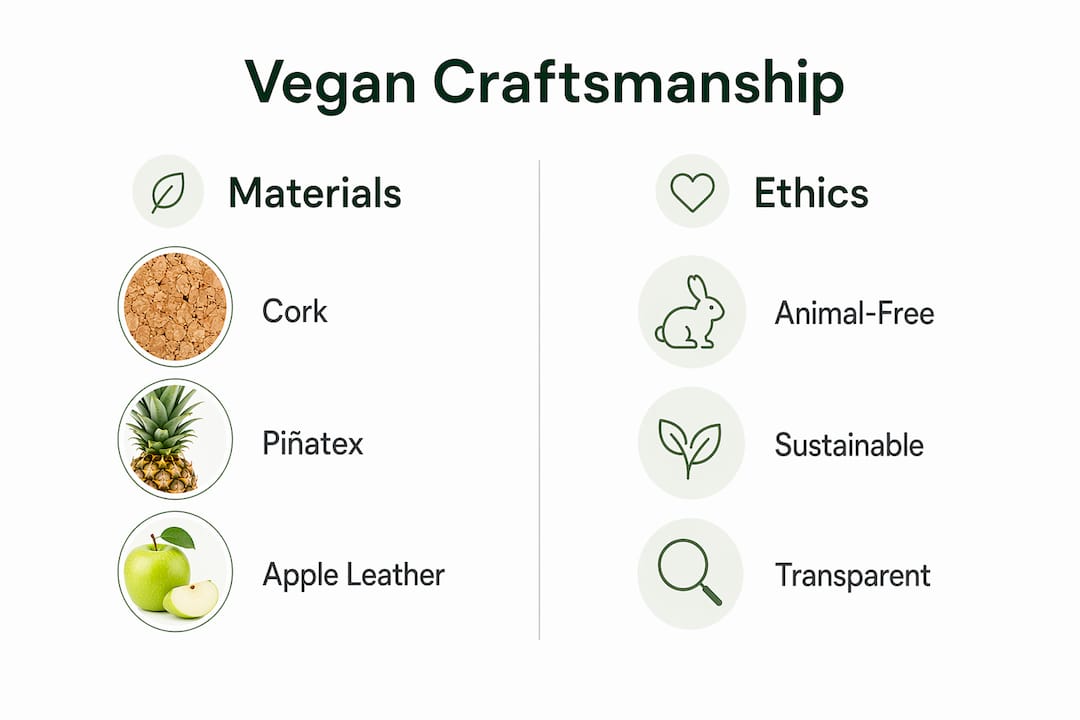
- Cork — harvested from the bark of cork oak trees without felling them, cork is naturally water-resistant, lightweight, and fully compostable. Thecorkstore specialises in cork accessories precisely because the material ages beautifully and requires no toxic finishing chemicals.
- Piñatex — derived from pineapple leaf fibres, a byproduct of pineapple farming. It has a leather-like texture and is suited to structured bags and shoe uppers, though less suited to high-abrasion zones such as heel counters where friction is constant.
- Apple leather — made from the pulp and skin waste of the apple juice industry, it offers a smooth surface and is increasingly used in wallets and small accessories.
- Organic cotton and linen — used for linings, straps, and structural layers, these fibres avoid synthetic pesticide residues and are biodegradable.
- Recycled PET — made from post-consumer plastic bottles, it offers durability in high-wear applications, though it does shed microfibres during washing, which is a genuine environmental trade-off worth acknowledging.
The key distinction between vegan, synthetic, and plant-derived materials is not just origin but lifecycle impact. Standard synthetic leather, such as PVC, is technically vegan but carries a heavy petrochemical footprint. Plant-derived alternatives like cork and Piñatex offer closed-loop potential, meaning they can be composted or recycled at end of life. That lifecycle thinking is what separates sustainable vegan craftsmanship from simple material substitution.
Pro Tip: When assessing a vegan product, check the lining and hardware as well as the outer material. Many products use plant-based exteriors but synthetic or even animal-derived linings, which undermines the entire ethical claim.

How do vegan craftsmanship techniques ensure quality?
The misconception that vegan automatically means lower quality is one worth dismantling directly. Durability depends on construction quality across every component, not on whether the outer material came from an animal. A well-made vegan shoe or bag will outlast a poorly constructed leather one every time.
Skilled vegan construction involves re-engineering the entire build, not just swapping the surface. Here is how that works in practice, using footwear as the clearest example:
- Material selection by function. Expert makers match each material to its specific role. Piñatex works well on a shoe upper but not on a heel counter. Cork suits insoles and bag panels. Getting this wrong shortens the product’s life significantly.
- Animal-free adhesives and threads. Traditional shoemaking uses animal-derived glues. Vegan-compatible adhesives and threads must bond plant-based and synthetic materials with equivalent strength, which requires careful chemistry matching and testing.
- Stitching and seam construction. Goodyear welt stitching, a technique that stitches the upper, welt, and sole together mechanically, is used by makers like NAE Vegan Shoes. This method allows resoling, which extends the product’s usable life by years.
- Component system thinking. Experienced footwear makers describe a shoe as a system. Every layer, from the insole to the outer sole adhesive, must work together. A single weak component undermines the whole.
- Pattern optimisation. Unlike irregular animal hides, standardised plant-based material rolls allow cutting patterns to be optimised by computer, reducing material waste significantly. This is a concrete point where vegan craftsmanship outperforms traditional leather production.
NAE Vegan Shoes, based in Portugal, completes over 200 steps per pair and uses centuries-old artisan techniques alongside modern material science. That level of process depth is what handcrafted vegan construction actually looks like when done properly.
Pro Tip: Look for products that specify their construction method, not just their materials. Terms like “stitched construction,” “Goodyear welt,” or “hand-finished” signal genuine craftsmanship rather than mass-produced assembly.
What are the ethical and sustainability benefits?
The ethical case for vegan craftsmanship goes well beyond avoiding animal harm. The sustainability benefits operate at the level of the entire supply chain and product lifecycle.
“Sustainability definitions emphasise sourcing and lifecycle impact, so craftsmanship is part of a systemic environmental approach, not just handiwork.” — Sustainability Directory
The core benefits break down as follows:
- Renewable inputs. Cork oak bark regenerates every nine years without harming the tree. Pineapple leaf fibre is an agricultural byproduct that would otherwise be burned. These inputs reduce pressure on finite resources.
- Reduced toxic chemical use. Conventional leather tanning uses chromium and other heavy metals that contaminate waterways. Plant-based and synthetic vegan alternatives, when chosen carefully, avoid these processes entirely.
- Closed-loop potential. Cork and natural fibre products can be composted at end of life. Some makers design products with disassembly in mind, separating components for recycling. This is the circular economy applied to fashion.
- Opposition to fast fashion. Genuine vegan craftsmanship prioritises longevity over disposability. A well-made cork bag or stitched vegan shoe is designed to last years, not seasons. That directly reduces consumption volume.
- Cultural heritage preservation. Skilled making traditions, whether Portuguese shoemaking or British leather goods craft, are adapted rather than abandoned. The techniques survive; only the materials change.
For the conscious consumer, these benefits translate into a purchase that carries less ecological debt. You are not just avoiding harm. You are actively supporting a production model that closes loops rather than opening new ones. Exploring vegan leather advantages in more depth reveals how significant these material differences become at scale.
How do you spot genuine vegan craftsmanship?
Veganwashing is the practice of using vegan marketing language to imply ethical credentials that the product does not fully possess. Misleading vegan claims are common enough that consumer vigilance is now a practical necessity, not an optional extra.
A product labelled vegan might use a plant-based outer but a wool lining, animal-derived glues, or dyes tested on animals. The label is technically accurate for the outer material and misleading in every other respect. Anti-veganwashing standards require that claims be clear, comprehensive, and verifiable across every component.
Here is what to look for when assessing a product:
- Full material disclosure. The brand lists every material used, including linings, threads, adhesives, and hardware. Vague descriptions like “synthetic upper” without further detail are a warning sign.
- Named certifications. Look for PETA-Approved Vegan, the Vegan Society Trademark, or equivalent third-party verification. These require auditing of the full supply chain, not just the outer material.
- Construction transparency. Brands that describe their construction methods in detail are demonstrating confidence in their process. Brands that only describe their materials may be hiding weak construction behind ethical marketing.
- Repairability and longevity claims. Genuine craftsmanship brands talk about how long their products last and whether they can be repaired. Fast-fashion vegan brands rarely do.
| Indicator | What It Tells You |
|---|---|
| Full material list published | Brand is transparent about every component |
| Third-party vegan certification | Supply chain has been independently audited |
| Construction method named | Maker is confident in build quality |
| Repair or resoling service offered | Product is designed for longevity |
| Only outer material described | Possible veganwashing; investigate further |
Understanding why vegan accessories represent a genuine ethical step forward requires this kind of critical reading. The label alone is never enough.
Key takeaways
Vegan craftsmanship means animal-free materials combined with skilled, transparent construction methods that prioritise durability, sustainability, and verifiable ethical standards.
| Point | Details |
|---|---|
| Definition is precise | Vegan craftsmanship covers materials, construction, adhesives, and threads, not just the outer surface. |
| Material choice matters | Cork, Piñatex, and apple leather each suit different applications; matching material to function determines longevity. |
| Construction quality is decisive | Stitched construction, animal-free adhesives, and component system thinking determine whether a vegan product lasts. |
| Sustainability is systemic | Closed-loop materials and waste-reducing cutting patterns make vegan craftsmanship environmentally superior to conventional production. |
| Veganwashing is a real risk | Verify full material disclosure and third-party certification before trusting any vegan label. |
Why i think craftsmanship is the word that changes everything
The word “vegan” in fashion has been stretched so far that it has nearly lost its meaning. I have seen products labelled vegan that use petrochemical-heavy PVC, synthetic linings that shed microfibres, and adhesives with no disclosed composition. The label satisfies a legal minimum. The craftsmanship tells the real story.
What I find genuinely encouraging is the growing number of makers who treat vegan as a construction standard, not just a marketing category. When a brand like NAE Vegan Shoes publishes the number of steps in their production process and explains why they chose Goodyear welt construction, that is a different conversation entirely. It signals that the ethics run through the making, not just the material sourcing.
My honest observation is that consumers who ask about craftsmanship get better products. The question “how is this made?” is more revealing than “is this vegan?” It forces brands to either demonstrate depth or reveal shallowness. For anyone building an ethical wardrobe, I would start there. The role of veganism in fashion is still evolving, and the makers who take craftsmanship seriously are the ones shaping where it goes.
— Aaron
Discover ethically crafted vegan cork accessories
If the principles of vegan craftsmanship resonate with you, cork products are one of the most compelling places to see them in action. Cork is harvested without harming the tree, requires no toxic processing, and ages with character rather than deteriorating. Thecorkstore applies these principles across a full range of accessories, from handbags and backpacks to wallets and gift sets, each made without animal materials and built to last.
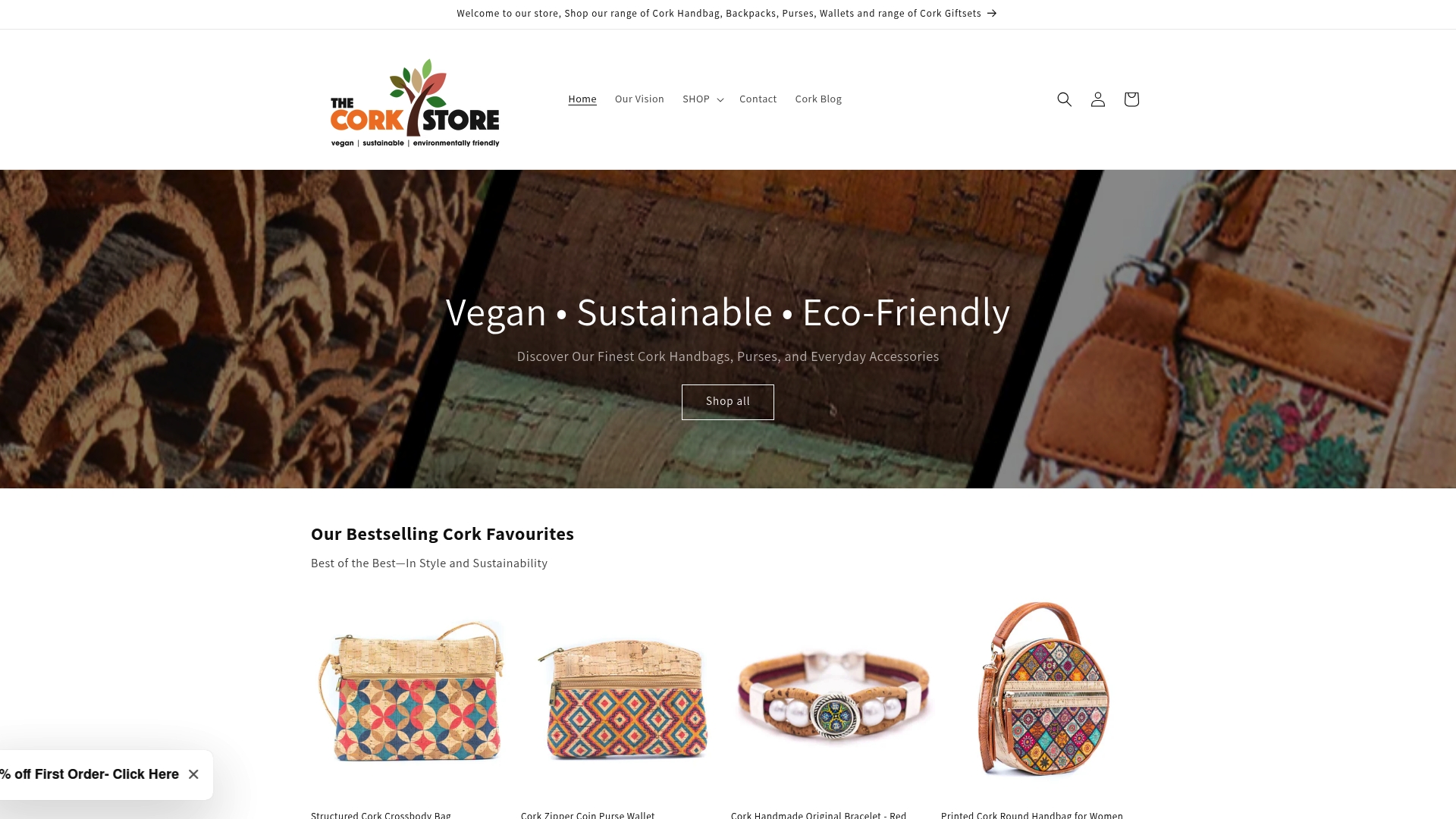
Whether you are shopping for yourself or looking for a gift that genuinely reflects ethical values, the vegan cork gift collection at Thecorkstore offers a curated selection of products that embody sustainable vegan craftsmanship. You can also explore vegan gift box ideas for inspiration on pairing cork accessories with other animal-free products for a complete ethical gift.
FAQ
What is the definition of vegan craftsmanship?
Vegan craftsmanship is the skilled production of goods using exclusively animal-free materials, including linings, adhesives, and threads, combined with construction methods that prioritise durability and ethical integrity. It goes beyond surface materials to cover every component of the finished product.
Are vegan products as durable as leather ones?
Yes, when properly made. Durability depends on construction quality across all components, and well-constructed vegan products using stitched assembly and quality plant-based materials match or exceed conventionally made leather goods.
What does veganwashing mean in fashion?
Veganwashing means using vegan marketing claims that are selective or misleading, such as labelling only the outer material as vegan while using animal-derived linings or adhesives. Verified certifications and full material disclosure are the most reliable ways to avoid it.
Which vegan materials are most sustainable?
Cork, Piñatex, and apple leather rank among the most sustainable options because they use agricultural byproducts or renewable harvesting methods and offer compostability or recycling potential at end of life. Recycled PET is durable but sheds microfibres, making it a less ideal choice for garments washed frequently.
How do i practise vegan craftsmanship as a consumer?
Choose products that disclose every material used, carry third-party vegan certification, and describe their construction method. Prioritise brands that offer repair services, as repairability is a direct indicator of genuine craftsmanship commitment rather than disposable production.